 Lynden Window
 Board & Batten Siding Built for Kendall's Weather, Not Just Its Look
Board and batten has become one of the most requested siding looks in Whatcom County, and Kendall is no exception. The vertical lines read as clean and modern on a new build, and they suit older farmhouses and cabin-style homes just as well. But board and batten isn't just a style choice out here — how it's installed matters more in Kendall's climate than it does in a lot of places. Get the assembly wrong and you're not just risking a cosmetic problem down the road. You're risking trapped moisture behind the siding, which in a wet climate is a slow, expensive mistake.
This page is about one thing: doing board and batten siding correctly on homes in and around Kendall, with the local climate factored in from the first decision (the material) to the last (the fastener pattern).
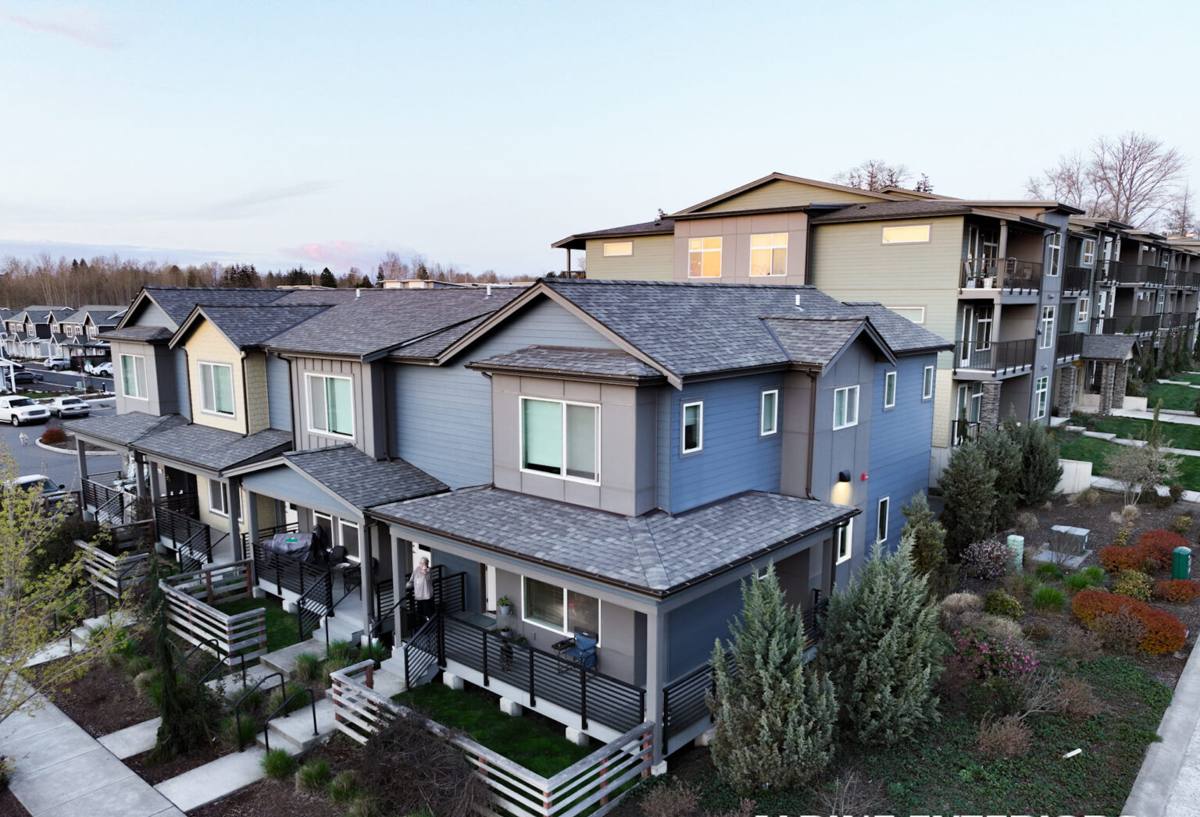
What Kendall's Climate Does to Siding Over Time
Kendall sits inland from the Salish Sea but still gets the marine air that moves through Whatcom County — a light salt component in the humidity that, combined with near-constant moisture, accelerates corrosion on unprotected fasteners and metal trim. Add in the driving rain that comes off the foothills and the tree cover common on Kendall lots, and you get a wall assembly that spends a lot more time wet than dry.
Shade and tree cover are the bigger local factor for board and batten specifically. Vertical siding on a shaded, north-facing wall in Kendall can stay damp for days after a storm. That's exactly the condition that grows moss and algae on painted wood or vinyl surfaces, and it's the condition that punishes any siding installed without a drainage gap behind it. A long moss season isn't just a cleaning nuisance — moss holds moisture against the surface and, on the wrong material, that moisture eventually finds a way in.
Why This Matters More for Board & Batten Than Lap Siding
Traditional horizontal lap siding is designed to shed water downward, panel over panel. Board and batten runs vertically, and the batten strips create seams that run the full height of the wall. Those seams have to be detailed correctly — with the right gap, the right flashing, and the right fastening — or they become a direct path for water to track down behind the siding instead of off of it.
What a Correct Board & Batten Installation Actually Involves
A lot of the difference between a board and batten job that lasts and one that fails early comes down to details you can't see once the wall is finished. In a climate like Kendall's, none of these are optional:
- A continuous weather-resistive barrier installed and lapped correctly behind the siding, with no gaps at seams or penetrations.
- A rainscreen gap — furring strips that hold the siding off the wall by roughly 3/8" to 3/4", giving any moisture that gets behind the panel a path to drain and dry instead of sitting against the sheathing.
- Correct fastener type and spacing, driven flush (not overdriven) per the manufacturer's published fastening schedule — overdriven nails are one of the most common causes of early siding failure and can void the manufacturer warranty.
- Flashing at every penetration — windows, doors, hose bibs, light fixtures, vents — so water is directed out and away rather than behind the panel.
- Proper clearance from grade and roofline — typically at least 6" above grade and 1"-2" below roof or deck lines, so siding isn't sitting where it will wick moisture from the ground or hold splashback.
- Batten layout aligned to framing, spaced consistently (commonly 16" or 24" on-center) so the reveal looks intentional and every batten has solid backing.
Any one of these done poorly can undercut the whole system, no matter how good the siding material itself is.
Material Options for Board & Batten — What We'll Tell You Honestly
Homeowners in Kendall ask us about several materials when they're planning a board and batten project. We'll give you a straight comparison, because the differences matter more here than they would in a dry climate.
| Material | Moisture Behavior in a Wet Climate | Maintenance | Typical Lifespan | Fire Resistance |
|---|---|---|---|---|
| James Hardie fiber cement (HZ10) | Engineered for high-moisture climates; won't rot or swell | Low — factory ColorPlus finish, no regular repainting | Decades with proper install | Non-combustible |
| Cedar / primed wood board & batten | Absorbs moisture, prone to swelling, cupping, and rot in shaded areas | High — regular repainting/staining, caulk maintenance | Shorter without diligent upkeep | Combustible |
| LP SmartSide (engineered wood) | Treated wood substrate, still moisture-sensitive at cut edges and joints | Moderate — repainting on a cycle, edge sealing | Solid, but installation-sensitive | Combustible |
| Vinyl board & batten profile | Won't rot, but can trap moisture behind it and distorts with heat/cold cycling | Low, but limited repair options if damaged | Variable; fades and becomes brittle over time | Combustible, can melt/warp |
Cedar looks beautiful and has a real place in architecture — we're not going to pretend otherwise. LP SmartSide is a reasonable, budget-conscious product for some homeowners. Vinyl board and batten profiles have improved. But we made a decision as a company: we install James Hardie fiber cement exclusively, because it's the one option on this list engineered specifically for climates like ours, where the siding spends a lot of the year wet.
Why We Standardized on James Hardie for Homes Like These
James Hardie's HZ10 product line is formulated for the Pacific Northwest's moisture and temperature swings. It won't absorb water and swell the way wood-based products can, it carries a non-combustible fire rating, and the ColorPlus factory finish means the color is baked on before it ever reaches your wall — not brushed on in the field where weather and prep quality vary job to job. It also carries a strong, transferable limited warranty, which matters to a lot of Kendall homeowners thinking about resale. We'd rather tell you plainly why we don't install the alternatives than sell you a product we don't stand behind.
Our Process: From Estimate to Finished Wall
For a Kendall board and batten project, the process looks like this:
- On-site assessment. We look at sun exposure, tree cover, drainage around the foundation, and the condition of the existing wall assembly — all of which affect how we detail the install.
- Tear-off and sheathing check. We remove the old siding and inspect the sheathing underneath for hidden rot or moisture damage before anything new goes up.
- Weather barrier and rainscreen installation. This is the step that gets skipped on rushed jobs and it's the one we won't skip, especially on shaded or heavily treed lots.
- Flashing and trim. Every window, door, and penetration gets flashed before the siding goes on around it.
- Panel and batten install. Fastened to the manufacturer's spec, laid out to the agreed reveal and spacing.
- Final walkthrough. We go over the finished wall with you, including what to expect for maintenance.
Maintenance Kendall Homeowners Should Actually Expect
One appeal of a correctly installed Hardie board and batten wall is how little upkeep it needs compared to wood or repainted alternatives. That said, no siding in Whatcom County is maintenance-free. Here's what's realistic:
- Rinse the siding occasionally, particularly on shaded or north-facing walls, to keep moss and algae from establishing.
- Keep gutters clear so overflow isn't running directly down the wall.
- Trim back vegetation and tree branches that keep a wall surface damp longer than the rest of the house.
- Have caulking and trim joints checked periodically, since even low-maintenance siding relies on good sealant at transitions.
Why It Matters to Hire a Crew That Already Works in Kendall
Board and batten installation isn't a one-size-fits-all process, and Kendall's mix of tree cover, rural lot sizes, and long wet stretches means the details we described above aren't theoretical — they're the difference between a wall that holds up and one that doesn't. A crew that already routes through Kendall regularly knows what these homes are up against, shows up with the right materials the first time, and isn't learning the local conditions on your project. That familiarity also means straightforward scheduling and no guesswork about site access or typical lot conditions in the area.
Get a Straight Answer for Your Kendall Home
If you're weighing board and batten siding for a home in Kendall, we're happy to walk the property, look at your specific sun and moisture exposure, and give you an honest read on what the job actually needs. There's no pressure and no pushy sales pitch — just a clear estimate and a straight answer about materials and process. The form below gets you started.