 Lynden Window
 Siding Built for the Deming Side of Whatcom County
Deming sits in the Nooksack River valley east of Lynden, tucked closer to the foothills than the open farmland most people picture when they think of Whatcom County. That location changes what a home's siding is up against day to day. Properties here tend to sit under more tree cover, see longer periods of shade, and stay damp longer after a storm than homes out on the flats. Add in the driving rain that rolls through the valley much of the year and a moss season that can stretch from fall into spring, and you've got a climate that is genuinely hard on exterior materials — especially anything with wood content or a joint system that isn't sealed right.
We install James Hardie fiber cement siding exclusively, and this page is about what that looks like specifically for a Deming home: what the climate demands, what a correct installation actually involves, and why it matters that the crew on your roofline has already worked this part of the county.
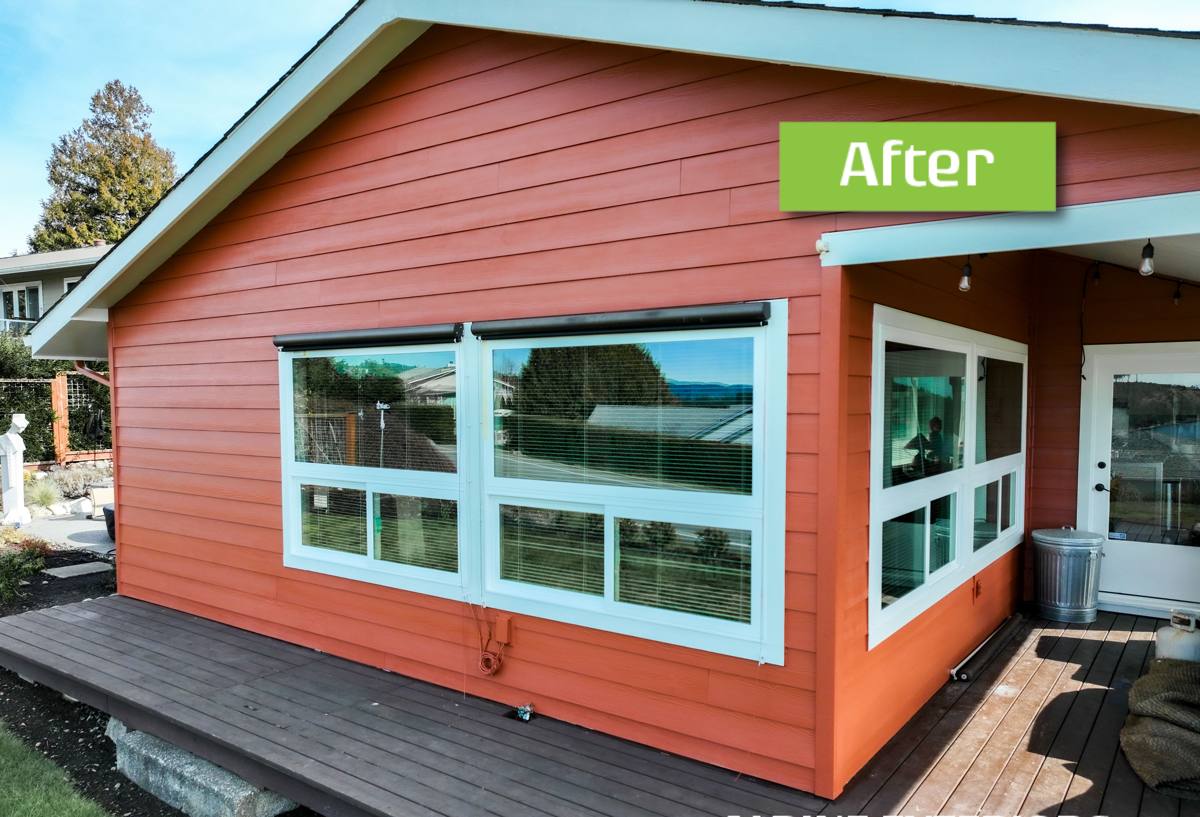
What Deming's Climate Actually Does to Siding
Driving Rain and Wind-Driven Moisture
Rain in this part of Whatcom County doesn't just fall straight down — valley wind patterns push it sideways into walls, especially on the west and south-facing sides of a house. Siding systems that rely on paint film alone, or that trap moisture behind the panel instead of shedding it, take on water at the seams and fastener points over years of this kind of exposure. That's where rot, swelling, and finish failure usually start.
Shade, Moss, and Slow-Drying Walls
Deming's tree cover is a mixed blessing. It's part of what makes the area beautiful, but it also means less direct sun hitting exterior walls, which means siding stays damp longer after every rain event. Combine that with the mild, wet winters typical here and you get ideal conditions for moss and algae growth on any surface that can't dry out and doesn't resist organic growth at a material level.
The Broader Whatcom County Picture
Whatcom County as a whole deals with a mix of coastal moisture, salt-tinged air closer to the water, and heavy annual rainfall — and even inland communities like Deming feel the humidity and precipitation load that comes with being this close to the Puget Sound weather system. A siding product that's engineered for Pacific Northwest conditions, not just "exterior use" in general, is doing real work here, not just checking a box.
Where Deming Homes Show Wear First
- North and shaded elevations that rarely get direct sun
- Areas near mature trees or dense landscaping where airflow is limited
- Lower wall sections and areas near grade where splash-back moisture collects
- Seams, corners, and trim joints where old caulking has failed
- Anywhere moss has been pressure-washed off repeatedly without addressing the underlying moisture
Why We Only Install James Hardie
James Hardie fiber cement is a cement-and-cellulose composite, not wood, and it doesn't rot, swell, or feed moss growth the way wood-based or wood-fiber siding products can. It's also non-combustible, which matters in a state that takes wildfire risk seriously even in wetter counties. The HZ5 product line is engineered specifically for regions with prolonged moisture exposure — which describes the Nooksack Valley well — and the ColorPlus factory finish is baked on under controlled conditions rather than field-applied, so it holds up more evenly against the kind of shaded, damp, algae-prone conditions Deming walls see.
We don't install LP SmartSide, vinyl, Cemplank, Allura, primed spruce, or cedar. Each of those has real strengths in the right application, but none of them match Hardie's combination of moisture performance, fire resistance, and long-term finish stability in this specific climate. Wood-based products in particular need more diligent maintenance in a shaded, wet environment like Deming's — and that's exactly the kind of environment where cutting a maintenance corner shows up fastest as visible damage.
What a Correct James Hardie Job Involves
Hardie siding performs the way it's rated to perform only when it's installed to the manufacturer's specification — and in a climate like this, the installation details matter more than they would in a drier region.
Water Management Comes First
Before any siding goes up, the wall needs a proper weather-resistive barrier, correctly lapped and taped, with flashing at every window, door, and horizontal transition. This is the layer that actually keeps water out of the wall assembly — the siding is the second line of defense, not the first. In a valley with this much wind-driven rain, skipping or rushing this step is where most long-term siding failures start, regardless of the siding material used.
Clearances and Fastening
Hardie specifies minimum clearances from grade, roofing, decks, and other transitions to keep the bottom edge of the siding from sitting in standing moisture. Fasteners need to be the correct type, spaced and set to the manufacturer's pattern — not just "close enough" — because improper fastening is one of the most common causes of premature panel movement and cracking.
Joint and Seam Treatment
Every seam is a potential water entry point. Correct caulking, or the use of Hardie's engineered joiner and trim details, keeps water from tracking behind the panels at exactly the spots where a shaded, slow-drying wall would otherwise stay damp the longest.
Our Process on a Deming Project
- On-site walkthrough — we look at sun exposure, tree cover, drainage, and existing damage or moisture signs specific to your lot
- Written estimate detailing product line, color, trim approach, and scope
- Removal of old siding and inspection of the sheathing underneath for hidden rot or damage
- Weather barrier and flashing installed correctly at every penetration and transition
- Hardie panel, plank, or shingle installation to manufacturer clearance and fastening spec
- Final walkthrough so you know what was done and why
Product Lines That Fit This Area
| Hardie Product | Best Fit For | Why It Works Here |
|---|---|---|
| HardiePlank Lap Siding | Most Deming home styles | Classic profile, strong moisture and impact resistance, wide color range |
| HardieShingle | Accent areas, gables | Cedar-look texture without the maintenance burden of real wood shingle in a shaded, wet setting |
| HardiePanel | Modern or mixed-material exteriors | Clean vertical lines, pairs well with trim accents |
| HZ5 Climate Zone Engineering | All installs in this region | Formulated for higher-moisture climates like the Pacific Northwest |
Cost Factors Specific to a Deming Project
Every home is different, but a few things tend to move the estimate on a Nooksack Valley property more than they would elsewhere:
| Factor | Why It Matters Here |
|---|---|
| Existing sheathing condition | Long-shaded walls sometimes hide moisture damage that needs repair before new siding goes on |
| Access and lot layout | Wooded or sloped lots common in the area can affect staging and scaffolding needs |
| Trim and detail complexity | Homes with more rooflines, dormers, or transitions need more flashing and joint work |
| Product line and profile | Plank, shingle, and panel styles carry different material costs |
| Color selection | Factory ColorPlus finishes are priced by line; custom field-painting is a different cost path |
We don't quote firm numbers without seeing the house — broad ranges you'll hear from any honest siding contractor mean little until someone has looked at your walls, your sheathing, and your trim details in person.
Why a Crew That Already Works Deming Makes a Difference
A contractor who only works in one part of the county tends to build habits around that area's conditions — and those habits don't always transfer. A crew used to open, sunny lots out toward the flats may not think twice about clearances or drying time on a shaded Deming wall the way a crew that works this valley regularly will. Knowing that certain elevations here almost never see direct sun, that moss comes back faster under tree cover, and that wind-driven rain hits differently in the valley than it does closer to open farmland — that's the kind of local pattern recognition that shows up in the small decisions during installation, not just the sales pitch beforehand.
It also matters for follow-up. If a question comes up after the job is done — about a caulking line, a color match, or how the siding is handling its first wet season — it's easier to get a straight answer from a contractor who's still working in your area and stands behind the install.
Signs an Existing Deming Home May Need Attention
- Moss or dark streaking that returns quickly after cleaning
- Soft or spongy spots on wood-based siding, especially near the bottom courses
- Visible gaps or cracked caulking at seams and trim joints
- Peeling or bubbling paint concentrated on shaded elevations
- Warping, cupping, or separation at panel edges
None of these are emergencies by themselves, but they're worth having looked at before the next wet season adds to the damage.
Get an Honest Look at Your Home
If you're in Deming or elsewhere around Lynden and want a straight assessment of what your siding needs — whether that's a full replacement or just an honest opinion on what shape it's in — we're happy to come take a look. The estimate is free, there's no pressure, and we'll tell you what we'd actually do if it were our own house. Use the form below to get started.