 Lynden Window
 Ferndale's Climate Is Harder on Siding Than Most Homeowners Realize
Ferndale sits close enough to open water that homes here pick up salt-laden air on top of the steady rain Whatcom County is known for. That combination is a tougher test for exterior siding than most inland climates. Salt air accelerates corrosion on anything metal, driving rain off the water finds its way into laps and seams that aren't detailed correctly, and the long stretch of gray, damp months between fall and spring keeps surfaces wet for days at a time. Add in shaded, north-facing walls that barely see direct sun, and you've got ideal conditions for moss and algae to take hold and stay there.
None of this means siding is doomed to fail in Ferndale. It means the material and the installation both have to be chosen with this specific climate in mind, not a generic one.
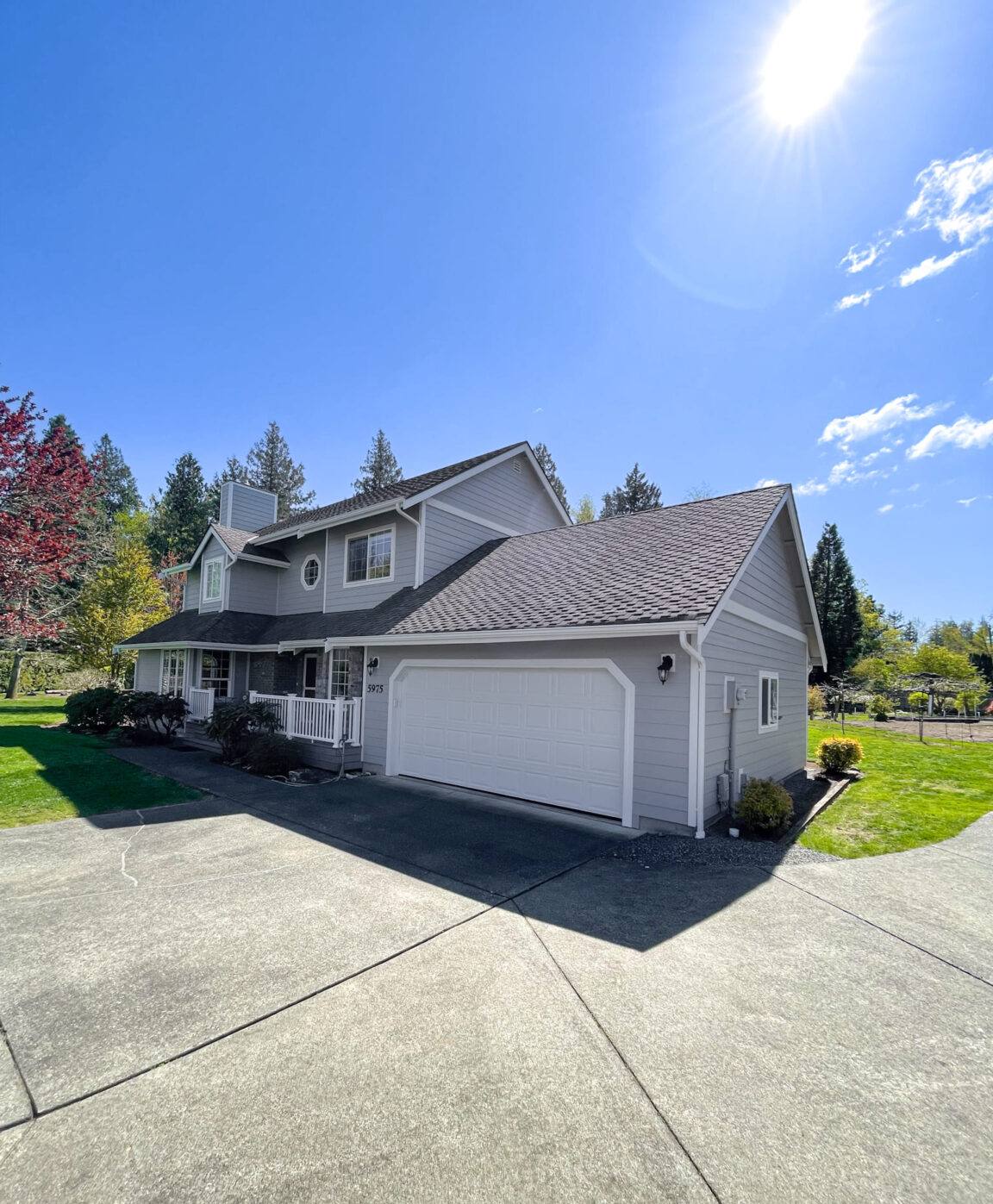
What Salt Air, Driving Rain, and Moss Actually Do to Siding
Each of these factors attacks siding differently, and understanding the mechanism is the difference between a repair that lasts and one that doesn't.
- Salt air holds moisture and speeds up corrosion on exposed fasteners, flashing, and trim — even galvanized hardware degrades faster near the water than it does further inland.
- Driving rain doesn't fall straight down here; wind pushes it sideways into vertical seams, corner joints, and anywhere flashing was skipped or installed backwards. Water that gets behind the siding is far more damaging than water that hits the face of it.
- Moss and algae thrive on damp, shaded surfaces and hold water against the material long after the rest of the house has dried out, which shortens the life of paint finishes and, on wood-based products, invites rot underneath.
A siding material — and an installer — that doesn't account for all three will show problems years before it should.
Why Fiber Cement Holds Up Where Other Materials Struggle
We install James Hardie fiber cement siding exclusively, and it's not a brand preference — it's a decision built around what this climate does to a home over time. Fiber cement is dimensionally stable, meaning it doesn't swell, cup, or warp with repeated wetting and drying the way engineered wood and some composite products can. It's non-combustible, which matters increasingly for insurance considerations even this far from wildfire country. And James Hardie's ColorPlus factory-applied finish is baked on under controlled conditions rather than field-painted, which gives it better resistance to fading and peeling than a coat of paint applied on site.
James Hardie also engineers its products by climate zone. Western Washington falls into the wetter, cooler HZ5 category, and the formulation for that zone is built to perform in exactly the conditions Ferndale sees most of the year — not a one-size-fits-all product shipped to every region regardless of rainfall or humidity.
Why We Don't Install Vinyl, LP SmartSide, or Cedar
Each of those products has legitimate uses, and none of them are junk. But in a coastal Whatcom County climate, they each carry a trade-off we're not willing to put our name behind. Vinyl expands and contracts more with temperature swings and can crack or warp under UV exposure over time. Engineered wood products like LP SmartSide use wood strand cores that, while treated, are still more vulnerable to long-term moisture exposure than a cement-based product if a seal ever fails. Cedar and other natural wood sidings look great new but demand a maintenance schedule — re-staining, caulking, spot repairs — that most homeowners underestimate, especially in a climate this wet. Fiber cement sidesteps all three of those failure points, which is why it's the only siding we put on homes.
What a Correct Installation Actually Involves
Fiber cement siding is only as good as the installation behind it. A rushed or generic install can undercut even the best product. In Ferndale's climate, a few details matter more than they would somewhere drier:
- A drainage gap (rainscreen) behind the siding so any moisture that does get past the surface has somewhere to go instead of sitting against the sheathing.
- Correct flashing sequencing at every window, door, and penetration — installed so water sheds outward and down, never trapped behind a seam.
- Corrosion-resistant fasteners appropriate for a coastal-influenced climate, spaced and driven to manufacturer specification rather than however is fastest.
- Selective caulking — James Hardie's install guidelines call for sealing specific joints, not caulking everything shut, because trapping moisture behind an over-sealed joint causes more harm than good.
- Proper clearance from grade, roofing, and decks so the bottom edge of the siding isn't sitting in a wet zone.
Every one of these is a manufacturer requirement, not an upgrade — but skipping any of them is exactly how a fiber cement install fails early, and it's usually the installation at fault, not the material.
Our Process for a Ferndale Siding Project
We walk every project through the same sequence, adjusted for what we find on your specific house:
- On-site assessment — we look at wall orientation, exposure to wind-driven rain, existing moss and staining patterns, and any soft or damaged siding before quoting anything.
- Tear-off and sheathing inspection — once the old siding is off, we check the sheathing underneath for rot or water damage that needs to be addressed before new siding goes up. Covering a moisture problem instead of fixing it just delays the failure.
- Weather-resistive barrier and rainscreen installation — the drainage layer goes on correctly before anything else.
- James Hardie installation to manufacturer spec — proper fasteners, flashing, spacing, and caulking, following Hardie's published requirements rather than shortcuts.
- Final walk-through — we check seams, corners, and penetrations with you before calling the job finished.
Fiber Cement vs. Other Siding Options in This Climate
| Material | Moisture / Salt-Air Performance | Maintenance | Typical Lifespan |
|---|---|---|---|
| James Hardie fiber cement | Dimensionally stable, engineered for wet climate zones | Occasional washing; factory finish reduces repainting | 30+ years with correct install |
| Vinyl siding | Can warp or crack with UV and temperature swings | Low, but limited repair options if damaged | 20-25 years typical |
| Engineered wood (e.g. LP SmartSide) | Treated wood core, more sensitive to sustained moisture | Periodic sealing and inspection at seams | 20-30 years, install-dependent |
| Cedar / natural wood | Attractive but vulnerable to rot without upkeep | Regular re-staining and caulking | 15-25 years without heavy upkeep |
These are general ranges, not guarantees — every material's real-world lifespan depends heavily on how it was installed and how consistently it's maintained afterward.
Signs Your Ferndale Home's Siding Needs a Closer Look
- Soft or spongy spots when you press on the siding, especially near the bottom courses
- Paint that's peeling or bubbling, particularly on shaded or north-facing walls
- Moss or algae staining that comes right back within a season of cleaning
- Visible gaps, warping, or separation at seams and corners
- Rust streaks running from fastener heads or trim
- Rooms that feel drafty or noticeably colder near exterior walls
- Siding that's 20-25+ years old and hasn't had a professional look in years
Any one of these on its own might be minor. Several at once, especially on the sides of the house that take the most wind and rain, usually means it's worth a real inspection rather than another round of patching.
Why Working With a Crew That Already Knows Ferndale Matters
A siding crew that works this area regularly already knows which walls on a typical Ferndale property take the brunt of wind-driven rain, how much of a drainage gap actually makes sense given the exposure, and what level of fastener corrosion resistance is worth the extra cost this close to the water. That's the kind of judgment that comes from doing the work here repeatedly, not from a general specification sheet. It also means fewer surprises with local permitting and inspection expectations, and a crew that isn't learning the region's quirks on your project.
Keeping Fiber Cement Siding Looking Right After Installation
Fiber cement is low-maintenance, not no-maintenance. A yearly rinse-down helps keep moss and algae from establishing on shaded walls, and it's worth doing before it builds up rather than after. Keep gutters clean and functioning so water isn't sheeting down the siding face during heavy storms, and take a look at caulked joints every couple of years to catch any cracking before it lets water in. None of this is heavy work — it's the kind of upkeep that, done consistently, is what actually gets a correctly installed system to its full lifespan.
If your Ferndale home's siding is showing its age, or you're planning ahead rather than reacting to a problem, we're happy to take a look and give you a straight, no-pressure assessment of what your house actually needs. Reach out below for a free estimate.