 Lynden Window
 Metal Roofing in Ferndale: Built for Salt Air, Driving Rain, and a Long Moss Season
Ferndale homes sit close enough to the water and to open Whatcom County farmland that they take a specific, sustained kind of weather beating. Salt-tinged marine air moves through year-round and works on any exposed metal that isn't properly rated for it. Rain here is rarely a straight-down event; wind pushes it sideways and up under roofing details that a fair-weather installation never accounts for. And a mild, damp climate means moss and organic growth get a long runway on shaded or north-facing roof planes, often for most of the year. Metal roofing can handle all three of those stresses better than almost any other roofing material available, but only when the system is specified and installed correctly for this exact climate rather than treated as a generic upgrade.
This page focuses specifically on metal roofing for Ferndale homes: what the local climate demands from a metal roof, what separates a correct installation from one that will cause problems down the road, and why a crew that already works this area matters more than it might seem.
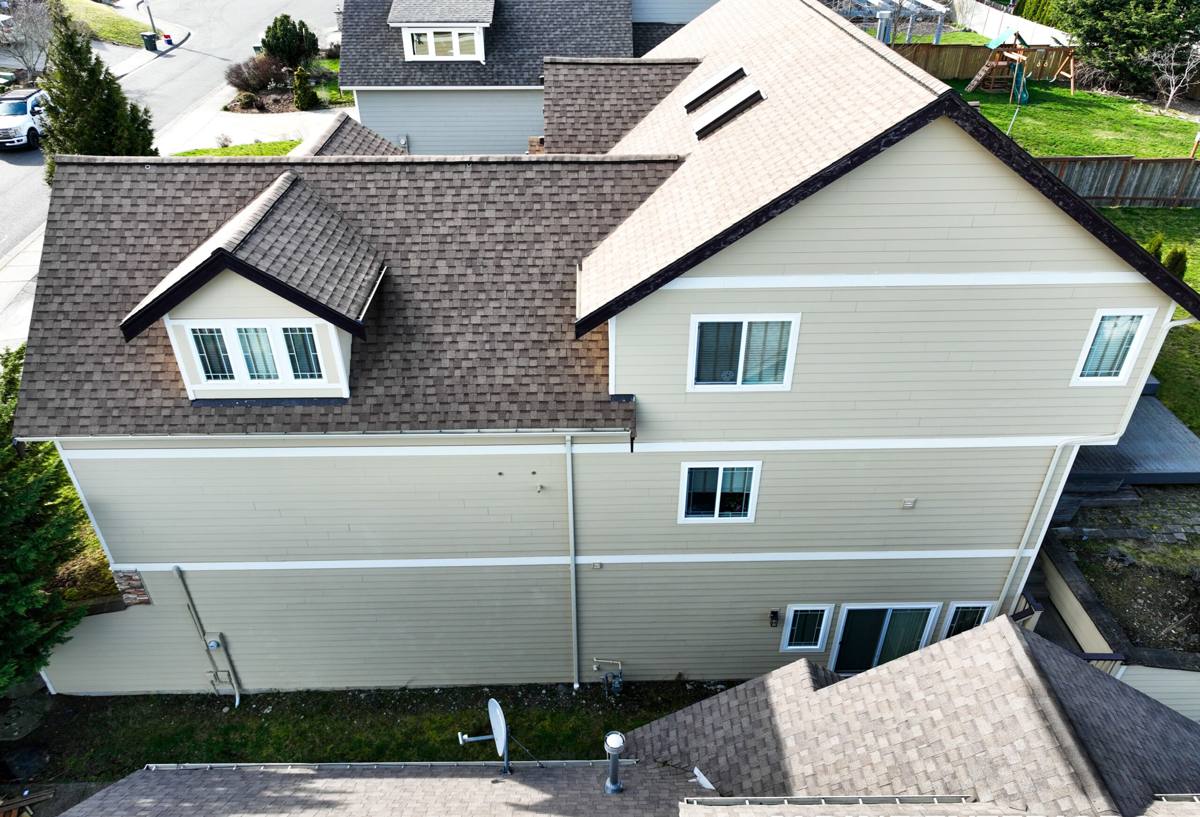
What Ferndale's Climate Does to a Roof
Salt Air and Coastal Corrosion
Even homes set back a fair distance from the immediate shoreline pick up steady exposure to salt-laden air moving through this part of the county. That matters more for metal roofing than for most other materials, since the entire roof surface is metal, and corrosion resistance is the single biggest factor separating a coating and fastener system that lasts decades from one that streaks, chalks, or rusts at the seams within a handful of years.
Wind-Driven Rain
Rain in this region routinely comes in sideways rather than falling straight down. For a metal roof, that means panel laps, seam design, and flashing at every penetration have to be built to resist water being pushed upward and under an edge, not just running off downhill. A panel system with a great warranty on paper can still leak here if the seam type or underlayment wasn't chosen with wind-driven rain specifically in mind.
Moss, Mildew, and Sustained Moisture
Whatcom County's mild temperatures and consistent moisture add up to a moss and algae season that can run most of the year on shaded roof slopes. Metal roofing has a real advantage here since it doesn't give moss the porous, organic surface it needs to root the way shingles or wood shakes can. That advantage only holds up, though, if the roof is detailed to shed standing water and debris rather than trapping it against valleys or low-slope transitions where moss can still gain a foothold over time.
Why Metal Roofing Fits This Climate Well — and Where It Doesn't Solve Everything
Metal roofing's core strengths line up well with what Ferndale weather actually does to a roof over time: it sheds wind-driven rain efficiently when seams and flashing are done right, it resists moss and algae growth far better than porous materials, and a quality coated panel system can outlast asphalt shingles by decades. It's also lighter than many alternatives, which is easier on older framing, and it holds up well against wind uplift when properly fastened.
It isn't a cure-all, though, and we tell homeowners that directly rather than overselling it. Metal is more expensive upfront than asphalt shingles. Panel and fastener quality vary widely between suppliers, and a cheap, thin-gauge panel or a mismatched fastener can corrode or oil-can within a few years in this climate. Metal roofs can also be noisier in heavy rain without proper decking and underlayment, and certain finishes fade or chalk faster than others under sustained UV and salt exposure. None of that argues against metal roofing for a Ferndale home — it argues for choosing the right system and installing it correctly, which is where most of the real difference between a 10-year problem roof and a 40-year roof actually comes from.
Choosing the Right Metal Roofing System
Standing Seam vs. Exposed Fastener Panels
Standing seam panels use hidden clips and fold-locked seams with no exposed fasteners penetrating the panel face, which is a meaningful advantage in a climate with sustained wind-driven rain and salt exposure — there are simply fewer points where water or corrosion can work its way in. Exposed fastener panels cost less upfront but rely on gasketed screws that compress over time and eventually need re-torquing or replacement, which is a maintenance burden we're upfront about before a homeowner commits to that option.
Coatings: PVDF vs. Polyester
The paint system on a metal roof matters as much as the metal underneath it. PVDF (often sold under the Kynar 500 name) resists fading, chalking, and salt-driven degradation significantly longer than standard polyester or SMP coatings, which is worth the difference in coastal Whatcom County even though it costs more per panel. A coating that looks identical on install day can perform very differently after a decade of marine air and UV exposure.
Gauge and Fastener Material
Thicker gauge steel or aluminum resists oil-canning (a rippled, wavy appearance on flat panel areas) and holds up better to foot traffic and hail. Fastener and flashing material need to match the panel metal to avoid galvanic corrosion, where two dissimilar metals in contact accelerate each other's corrosion in the presence of moisture — a detail that's easy to overlook and expensive to fix after the fact.
| System Type | Typical Lifespan | Fit for Ferndale Conditions |
|---|---|---|
| Exposed Fastener Panel | 25-35 years | Lower upfront cost, but gasketed fasteners need periodic inspection and re-torquing given sustained wind-driven rain |
| Standing Seam (Steel) | 40-50+ years | Concealed fasteners and locked seams handle this climate's wind-driven rain with the least long-term maintenance |
| Standing Seam (Aluminum) | 40-50+ years | Naturally corrosion-resistant, a strong fit for direct salt air exposure closer to the water |
| Stone-Coated Steel | 30-50 years | Textured profile can mimic shingle or tile appearance while keeping metal's moss and wind resistance |
What a Correct Metal Roof Installation Involves
Deck Inspection and Underlayment
A metal roof is only as good as what's underneath it. A full tear-off to the decking lets us find and repair any soft spots or hidden moisture damage before new panels go down, rather than fastening a 40-year roof system on top of a compromised deck. High-temperature synthetic or self-adhered underlayment provides the real water barrier beneath the panels, which matters directly in a climate where wind-driven rain gets forced under panel edges rather than simply running off.
Fastening and Panel Layout
Panel spacing, clip placement, and fastening pattern all need to follow the manufacturer's specification for this wind exposure, not a shortcut pattern that saves labor time. Panels that aren't fastened correctly for local wind loads are one of the more common causes of early failure we see on metal roofs that weren't installed by a crew used to coastal conditions.
Flashing at Valleys, Penetrations, and Walls
Just like with any roofing material, most metal roof leaks start at flashing details rather than in the open panel field. Valleys, chimney and vent penetrations, and wall-to-roof transitions all need flashing that's properly integrated with the panel system and underlayment, not caulked over as an afterthought. This is where a lot of the real skill in a metal roof installation actually lives.
Avoiding Galvanic Corrosion
Any point where the roofing metal contacts a dissimilar metal, whether that's a fastener, flashing, gutter, or even runoff from an adjacent copper feature, is a place galvanic corrosion can start. A correct installation accounts for this by matching compatible metals throughout the system and isolating dissimilar metals where contact can't be avoided.
Metal Roofing Cost Factors in Ferndale
| Factor | What It Affects | Why It Matters Here |
|---|---|---|
| Panel type and gauge | Material cost and long-term durability | Thicker gauge and standing seam profiles resist oil-canning and wind-driven rain intrusion better |
| Coating system (PVDF vs. polyester) | Finish longevity and fade resistance | Salt air and sustained UV exposure wear down lower-grade coatings faster |
| Tear-off vs. overlay | Labor scope and deck access | Tear-off finds hidden moisture damage common under older roofing in this climate |
| Flashing and penetration count | Labor time and leak risk | More valleys, vents, and wall transitions mean more detail work in a wind-driven-rain climate |
| Roof pitch and access | Labor time and safety requirements | Steeper or harder-to-access roofs take longer to stage and install safely |
Exact numbers depend on the specific home and roof geometry, which is why we walk the property in person before giving a real estimate rather than quoting off a flat per-square number.
How Our Process Works
- In-person inspection: We walk the roof and attic in person and document existing conditions, not from a photo or a drive-by estimate.
- Written estimate: You get a clear, itemized bid covering panel system, coating, underlayment, flashing scope, and cleanup — no vague single-line pricing.
- System selection: We walk through the realistic tradeoffs between panel types and coatings for your specific roof exposure, rather than defaulting to whichever product carries the best margin.
- Tear-off and deck repair: Old roofing comes off completely, and any deck damage found is addressed before panels go down.
- Underlayment, flashing, and panel installation: Each layer goes on to manufacturer specification, with extra attention at valleys, penetrations, and wall transitions.
- Final walkthrough and cleanup: We review the completed roof with you and do a full site sweep before calling the job done.
Signs a Ferndale Metal Roof Needs Attention
- Streaking, chalking, or fading concentrated on sides facing prevailing wind and salt exposure
- Rust starting at fastener heads, seams, or flashing edges rather than across the panel field
- Panels that have started to oil-can or ripple, especially on larger flat sections
- Loose, backed-out, or missing fasteners on exposed-fastener panel systems
- Moss or debris buildup collecting at valleys or low-slope transitions
- Water staining on interior ceilings or in the attic near penetrations or wall transitions
Why Hiring a Crew That Already Works Ferndale Matters
A crew that regularly installs metal roofing in and around Ferndale has already seen how salt air corrodes an underspecified fastener, how wind-driven rain finds the one seam that wasn't lapped correctly, and which roof orientations hold moss and debris longest through the wet season. That experience shows up in specific decisions on install day: which coating is worth the extra cost on a water-facing slope, where extra flashing attention pays off, and which panel systems hold up here versus which ones look fine in a showroom but underperform once they're actually exposed to this climate.
It also matters for accountability. A metal roof is a decades-long investment, and a workmanship warranty only means something if the company behind it has an ongoing, verifiable presence in the area. A crew with real local roots is the one you can still reach in year five or year fifteen if a question comes up.
A Practical Checklist Before You Choose a Metal Roofing Contractor
- Do they specify panel type, gauge, and coating system, not just "metal roof"?
- Does the estimate separate material warranty coverage from their own workmanship warranty?
- Is flashing work at valleys, penetrations, and wall transitions explicitly included in the bid?
- Do they explain how they prevent galvanic corrosion between dissimilar metals?
- Do they carry current WA contractor licensing, liability insurance, and workers' compensation?
- Can they point to real, recent metal roofing work in or near Ferndale?
If you're considering a metal roof for your Ferndale home, or want an honest second opinion on an existing one, we're glad to take a look and walk through the real tradeoffs for your specific property. Use the form below to schedule a free, no-pressure estimate.