 Lynden Window
 Building Decks for Ferndale's Weather, Not Against It
Ferndale sits close enough to Bellingship Bay and the Strait of Georgia that salt-laden air is a real factor in how outdoor structures age, and it sits inside Whatcom County's wet, gray, moss-friendly climate for most of the year. A deck built here doesn't fail because the crew used bad lumber. It fails because someone skipped a flashing detail, spaced the boards wrong, or used fasteners that weren't rated for the exposure. We build decks specifically for what this corner of Washington throws at them: salt air, driving wind-driven rain, and months where surfaces barely dry out between storms.
This page covers what a deck built for Ferndale actually needs, how we approach the build, and what to expect if you're planning a new deck or replacing one that's showing its age.
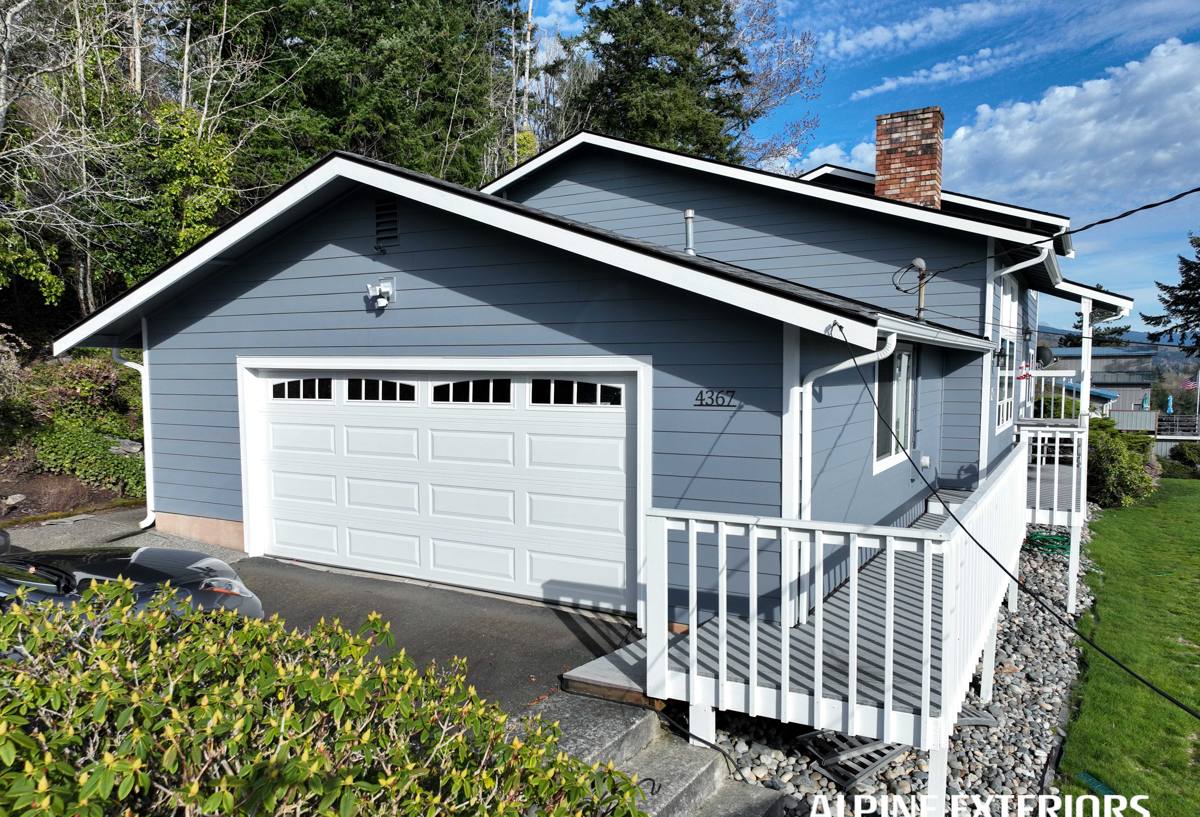
What Ferndale's Climate Does to a Deck
Salt Air
Homes closer to the water deal with airborne salt that accelerates corrosion on metal fasteners, hardware, and railing components. Standard hardware can start showing rust streaks and pitting well before a deck's wood components need replacing. This is a hardware and finish decision, not a lumber decision — and it's one that's easy to get wrong if a crew is used to building inland.
Driving Rain
Rain here doesn't just fall straight down — wind pushes it sideways into ledger boards, under railings, and into any gap that isn't properly flashed or sealed. A deck that's watertight on a calm day can still let water track behind the ledger board or pool at a post base during a real Whatcom County storm.
Moss and Prolonged Dampness
Ferndale's long wet season means deck surfaces, especially shaded ones under trees or on the north side of a house, can stay damp for days at a stretch. That's exactly the environment moss and algae need to take hold, and once established, moss holds moisture against the decking surface, which is what actually causes premature rot — not the rain itself.
What a Correctly Built Deck Needs Here
Given all of that, a deck built for this region needs a few things a generic build might skip:
- Footings set to the correct frost depth and bearing on undisturbed or properly compacted soil
- Ledger board flashing that sheds water away from the house rim joist, not just a bead of caulk
- Joist tape or an equivalent moisture barrier on top of every joist before decking goes down
- Stainless steel or heavy hot-dip galvanized fasteners and structural hardware, especially anywhere near open air or shaded, damp conditions
- Board spacing and airflow underneath the deck sized to let the structure actually dry out between rain events
- A decking material chosen with this area's moss and moisture exposure in mind, not just looks
Skip any one of these and the deck will probably still look fine for a year or two. The problems show up in year three to five, usually as soft spots near the ledger, rust bleeding through post bases, or a slick, moss-dark surface that never fully dries.
Choosing the Right Decking Material for Ferndale
There's no single "best" decking material — there's a best material for your budget, your maintenance appetite, and how exposed your particular site is to shade and moisture. Here's how the common options actually compare for a Ferndale build:
| Material | Moisture Behavior | Maintenance | Typical Lifespan Here |
|---|---|---|---|
| Pressure-treated lumber | Resists rot when properly maintained; can cup or check if it dries unevenly | Needs re-staining or sealing every 2-3 years | 15-20 years with upkeep |
| Cedar | Naturally decay-resistant, but softer and more prone to surface wear in constant damp | Regular sealing to maintain color and moisture resistance | 15-20 years with upkeep |
| Composite decking | Doesn't absorb moisture the way wood does; resists rot outright | Occasional washing; no staining or sealing | 25+ years, varies by product warranty |
| PVC decking | Fully moisture-resistant, doesn't support wood rot at all | Lowest maintenance of the group; periodic cleaning | 25+ years, varies by product warranty |
Composite and PVC decking have become common choices in this area specifically because homeowners are tired of the re-staining cycle that wood demands in a climate this wet. That said, wood decking done correctly — sealed on a real schedule and with proper airflow underneath — is still a solid, less expensive option for homeowners willing to keep up with it. We'll walk through the honest trade-offs for your specific site and budget rather than push one material across the board.
One note on moss specifically: no decking surface is moss-proof if it stays wet and shaded long enough. Material choice affects how easily moss is removed and how much damage it does while it's there, not whether it can ever appear.
Framing and Fastening Details That Actually Matter
Ledger Attachment
The ledger board — where the deck attaches to the house — is the single most common failure point on decks in wet regions. It needs proper flashing that integrates with the house's existing water management, not just sealant. Sealant alone fails; flashing sheds water by design and keeps working after the caulk has cracked.
Post Bases and Hardware
Post bases should hold the post above the concrete footing, not embed it directly, so water doesn't wick up into the end grain. Combined with corrosion-resistant hardware, this is what keeps post bases from becoming the weak point of the structure in salt-influenced air.
Joist Protection
Even with pressure-treated joists, the top edge where fasteners penetrate is exposed end grain and cut surface — the most vulnerable part of the board. A moisture barrier tape over the joist tops is inexpensive insurance against exactly the kind of slow rot that's hard to spot until a board feels soft underfoot.
Railings, Stairs, and Permitting
Most residential decks above a certain height require guardrails, and stair and railing details are one of the more heavily inspected parts of any deck permit in Whatcom County. Requirements vary by deck height, use, and the specific jurisdiction, so we handle the permit application and inspection scheduling as part of the build rather than leaving homeowners to sort out code requirements on their own.
Railing material matters here too — the same salt-air corrosion concern that applies to structural hardware applies to metal railing components and cable railing systems. We'll spec hardware and railing materials rated for exterior, coastal-adjacent exposure rather than standard interior-grade fittings.
Our Deck Building Process
- On-site assessment — we look at your site's drainage, sun exposure, soil, and how the new deck will tie into the house
- Design and material selection — layout, size, and an honest conversation about material trade-offs for your budget and maintenance preference
- Permitting — we handle the permit application and any required engineering for footings or railings
- Footings and framing — footings set to proper depth, ledger flashed correctly, frame built with corrosion-resistant hardware throughout
- Decking, railings, and stairs — installed with attention to spacing, fastening method, and airflow underneath
- Final walkthrough and inspection — we schedule the required inspection and walk the finished deck with you before calling the job done
Keeping a Ferndale Deck Looking Good Long-Term
A well-built deck still needs some seasonal attention in this climate. Before winter and again in spring, it's worth running through a short checklist:
- Sweep leaves and debris out of gaps between boards so water and moss don't have anywhere to sit
- Check that the area under the deck has clear airflow and isn't blocked by stored items or overgrown landscaping
- Look at the ledger flashing line for any signs of staining or gaps where water might be tracking behind it
- Wash moss and algae off the surface early in the season before it has a chance to spread and hold moisture
- For wood decking, keep to a real sealing schedule rather than waiting until the finish has visibly failed
- Check railing hardware and post bases for early rust or corrosion, especially if the site gets direct exposure to wind off the water
Why Local Experience Building Decks Matters
A deck built to a generic national spec can still pass a basic inspection and still fail early in a place like Ferndale. The difference is in details that don't show up on a plan set: how much flashing overlap a ledger actually needs in wind-driven rain, which fastener grade holds up in salt-influenced air over a decade rather than a couple of years, and how to space and orient decking so it actually dries out under Whatcom County's cloud cover instead of staying damp for days. A crew that already works in this area has made those calls enough times to get them right the first time, instead of learning the hard way on your deck.
If you're planning a new deck or need to replace one that's showing rot, rust, or moss buildup, we're happy to take a look and talk through what your site actually needs. Use the form below to request a free, no-pressure estimate.