 Lynden Window
 Roofing in Everson: A Longer, Wetter Wear Cycle
Everson sits in a stretch of Whatcom County where the weather does not do a roof any favors. Storm systems moving in off the Pacific and the Salish Sea bring driving rain that hits siding and roof planes at an angle, not straight down, which pushes water into laps and flashing that would stay dry in a calmer climate. That same marine air carries a faint salt content well inland, and over years it accelerates the breakdown of metal fasteners, flashing, and exposed granule surfaces. Add in the shade from mature trees on many Everson lots and river-valley humidity that lingers into the growing season, and you get a moss season that can run eight months or longer instead of the six-to-eight-week window drier climates deal with.
None of this means a roof in Everson is doomed to fail early. It means the materials, the underlayment system, and the ventilation have to be chosen and installed with this specific climate in mind, not a generic national average. A roof detailed for a dry inland state will underperform here even if it is installed correctly by that region's standards.
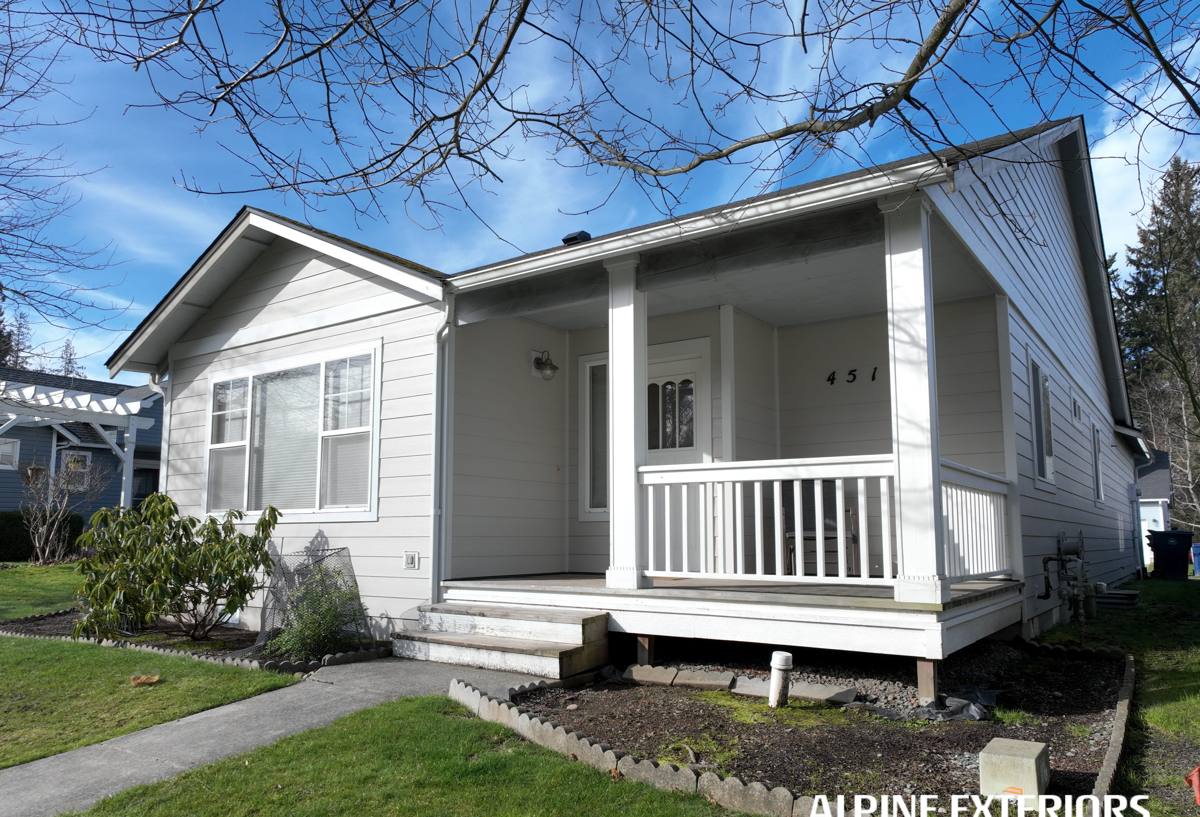
Signs Your Everson Roof Is Ready for Replacement
Most roofs in this area do not fail all at once. They give warning signs for a season or two before a leak actually shows up inside the house. Worth checking for, especially before the next round of fall storms:
- Granules collecting in gutters or at downspout outlets, or bald patches visible on the shingle surface
- Shingles that are curling at the edges or cupping in the middle
- Moss that has built up into a thick mat rather than a light surface film, especially on north-facing slopes
- Daylight visible through the attic decking, or damp insulation near the roofline
- Soft or spongy spots when walking the roof, a sign the decking underneath has absorbed moisture
- Repeated patch repairs in the same valley or around the same penetration
- Asphalt shingles older than 20-25 years, regardless of how they look from the ground
- A musty smell in the attic or visible mold on the underside of the decking
Any one of these on its own might just mean a repair. Two or three together, particularly on an older roof, usually means replacement is the more honest recommendation.
What a Correct Roof Replacement Actually Involves
The shingle or panel brand gets most of the attention, but the parts of a roof that actually keep water out in a climate like this are the layers underneath and the details around edges and penetrations. A roof that looks right from the street can still leak within a few years if these steps get rushed.
Tear-off and deck inspection
We remove the old roofing down to the decking rather than layering over it. That is the only way to actually see the plywood or plank decking underneath, which matters because it is common to find soft or delaminated sections around old flashing or in valleys that were quietly leaking for years without an obvious interior sign. Any damaged decking gets replaced before anything new goes down, not covered up.
Underlayment and ice-and-water protection
Synthetic underlayment goes down as the primary water barrier, with self-adhering ice-and-water membrane doubled up in valleys, around chimneys and skylights, and along eaves where wind-driven rain is most likely to work its way backward under the shingles. This is one of the areas where the driving rain common to this part of the county makes the extra layer worth the material cost.
Flashing at every transition
Step flashing at walls, counter-flashing at chimneys, and properly lapped valley flashing are where most roof leaks actually originate, not in the open field of shingles. Reused or caulked-over old flashing is a shortcut that shows up as a leak two or three winters later. We install new flashing at every transition as a standard part of the job.
Ventilation as part of the system
Balanced intake and exhaust ventilation keeps the attic close to outdoor temperature and humidity, which does two things: it protects the decking from the underside, and it slows the freeze-thaw and condensation cycles that shorten shingle life from below. A roof with good shingles and poor ventilation will still wear out early.
Choosing Roofing Materials for Whatcom County Weather
There is no single correct material for every Everson roof. The right choice depends on the roof's pitch, how much shade it sits under, and what the homeowner wants to manage over the next 20-40 years.
| Material | Typical Lifespan Here | Moss and Moisture Behavior | Maintenance Reality |
|---|---|---|---|
| Architectural asphalt shingle | 20-30 years | Algae-resistant granules help, but shaded slopes still need periodic moss removal | Lowest upfront cost, most common choice, straightforward repairs |
| Standing seam metal | 40-60+ years | Sheds water and moss builds up much more slowly on the smooth panel surface | Higher upfront cost, minimal ongoing maintenance, fastener quality matters over decades |
| Synthetic composite shake/slate | 30-50 years | Resists moisture absorption better than wood shake; moss still needs occasional attention in shade | Mid-to-high cost, good option where a shake look is wanted without the upkeep of real wood |
We do not install wood shake or shingle roofing as new construction. It is a fine-looking product, but it depends on consistent airflow and sun exposure to shed moisture, and much of Everson's tree cover works against that. On a shaded lot, wood roofing tends to demand more frequent maintenance and a shorter realistic lifespan than the alternatives above, and we would rather be upfront about that trade-off than sell a product that will disappoint a homeowner five years in.
What Affects the Cost of a Roof Replacement in Everson
Every estimate is specific to the house, but the same handful of factors move the price up or down on most jobs we quote in this area.
| Factor | Why It Matters |
|---|---|
| Roof pitch and access | Steeper roofs and limited ground access around the house take longer and require more safety setup |
| Number of existing layers | Removing two layers of old shingles takes more labor and disposal than removing one |
| Decking condition | Rot or delamination found during tear-off means plywood or plank replacement before new roofing goes on |
| Material selection | Standard architectural asphalt, premium asphalt, and metal sit at different price tiers with different lifespans |
| Ventilation upgrades | Adding proper intake or exhaust venting where none exists is worth the modest added cost for the decking protection it buys |
| Roof size and complexity | Valleys, dormers, skylights, and chimneys all add flashing detail and labor time |
We do not quote a price without seeing the roof in person. Photos and rough square footage can get us in the ballpark, but decking condition and flashing detail only become clear once we are actually up there.
Our Roof Replacement Process, Start to Finish
- On-site inspection and written estimate. We walk the roof, check the attic where accessible, and put the scope and price in writing before any work is scheduled.
- Material selection. We go over the options that make sense for the roof's pitch and shade exposure, with honest pros and cons rather than a single upsell.
- Scheduling around the weather. Tear-off is timed around forecasted dry windows where possible, and the roof deck is never left exposed overnight without protection.
- Tear-off and deck repair. Old roofing comes off down to the decking, damaged sections are replaced, and the deck is inspected before anything new is installed.
- Installation to manufacturer specification. Underlayment, flashing, and the roofing material go down in the order and fastening pattern the manufacturer requires, which is also what keeps material warranties valid.
- Site cleanup, including a magnetic sweep. Yards and driveways get cleared of debris and stray nails before we consider the job done.
- Final walkthrough and paperwork. We go over the finished roof together and hand over warranty documentation for both materials and labor.
Moss and Ventilation: Building In Long-Term Protection
Moss is the most visible ongoing maintenance issue for shaded roofs in this part of Whatcom County, and it is worth being realistic about it. No roofing material makes a shaded, damp roof moss-proof forever. What actually reduces how often moss comes back is a combination of factors working together: algae-resistant shingle granules, balanced attic ventilation that keeps the roof deck from staying damp from below, and keeping nearby branches trimmed back so sun and airflow can reach the roof surface. Zinc or copper control strips near the ridge can help slow regrowth on some roofs, but they are a supplement to good design, not a substitute for it. Gutters that are cleared regularly also matter more than most homeowners expect, since standing water and trapped debris at the eaves is one of the more common places moss and rot get started.
Why a Crew That Already Works in Everson Matters
Roofing crews that mostly work drier, less wooded areas sometimes underestimate what this climate actually demands, whether that is skipping ice-and-water membrane in a valley or spec'ing ventilation that would be adequate somewhere else but not here. A crew that regularly works Everson and the surrounding Lynden area already knows the local permitting process through Whatcom County, has a feel for the pitches and construction styles common on homes in this area, and plans tear-off scheduling around this region's actual rain patterns rather than a generic weather assumption. It also means being a known, reachable local business if a warranty question comes up five or ten years down the road, rather than a crew that came through once and moved on.
If your roof is showing any of the signs above, or you just want an honest read on how much life it has left, we are happy to come take a look. The estimate is free, there is no pressure to book on the spot, and you will get a straight answer either way — use the form below to get started.