 Lynden Window
 Building New in Everson? The Windows Have to Be Right the First Time
When you're framing a new home in Everson, the windows aren't a fix-it-later item. They go in once, they get sided and trimmed around, and whatever flashing and sealing decisions get made during that install are largely locked in for the life of the house. Get it right and you've got a window system that sheds water for decades with almost no attention. Get it wrong and you've built a slow leak into the wall assembly that might not show up for five or ten years — long after the framing crew has moved on to the next job.
Everson sits in a part of Whatcom County that gets a real workout from the weather: wind-driven rain off the valley, damp air that carries a faint salt note in from the Sound on a west wind, and a moss season that runs longer here than it does on the drier side of the state. New-construction windows in this area need to be selected and installed with all three of those things in mind, not just installed to code minimum and called done.
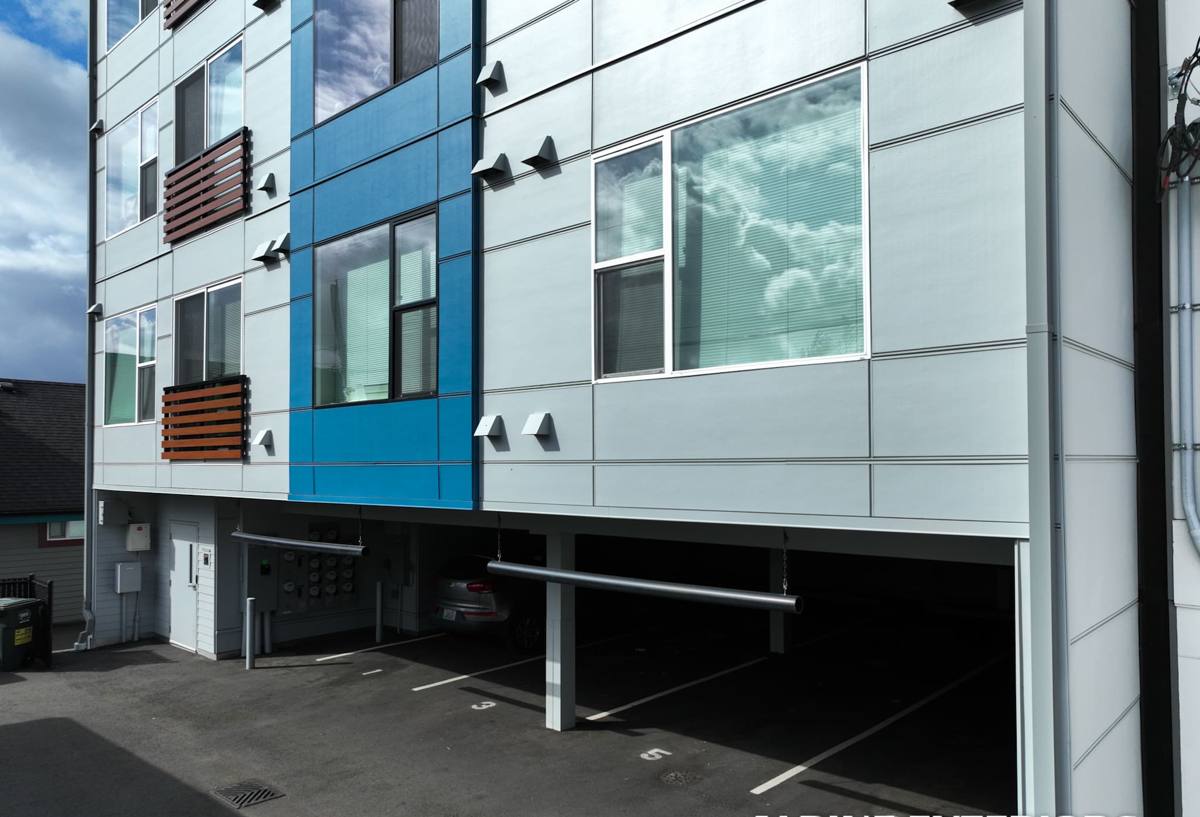
What Everson's Climate Actually Demands From a Window Install
Driving rain and wind exposure
Whatcom County storms don't just fall straight down — wind pushes rain sideways into wall assemblies, which means the window opening's flashing has to manage water that's actively trying to go uphill and sideways, not just down. A sill pan, proper shingle-lap sequencing with the weather-resistive barrier, and a head flashing with a real drip edge aren't optional extras here. They're the difference between a window that stays dry behind the trim and one that quietly rots the sill plate underneath it.
Salt-tinged air
Everson isn't right on saltwater, but this part of Whatcom County still gets salt-laced air on onshore flow, and it's harder on exposed metal than most people expect — screws, hinge hardware, and unprotected fasteners corrode faster than they would further inland. It's a good reason to pay attention to hardware finish and fastener spec, not just glass and frame.
A long moss season
Extended damp, shaded stretches of the year are exactly when moss and algae get a foothold on horizontal surfaces — window sills, exterior trim, anywhere water sits instead of shedding. A sill that's pitched correctly and finished with the right material sheds water fast enough that moss never gets the standing moisture it needs to take hold. A flat or poorly sloped sill, even a well-built one otherwise, becomes a moss strip within a couple of seasons.
What a Correct New-Construction Window Install Involves
New-construction windows are installed with a nailing flange directly into the rough opening before siding goes on, which is different from a replacement or retrofit install and gives us more control over the water management — if it's done in the right order.
- Rough opening checked for square, level, and correct dimension before the window ever gets set
- Sill pan flashing installed first, sloped to drain outward, so any water that gets past the window has somewhere to go besides the framing
- Window set, shimmed, and fastened per the manufacturer's schedule — not just "however many screws fit"
- Flashing tape or flexible flashing integrated with the weather-resistive barrier in the correct shingle-lap order: sill, then jambs, then head
- Head flashing with a drip cap so water is thrown clear of the window rather than run down the face of it
- Interior gaps insulated (not just caulked shut) to avoid both drafts and condensation points
- Interior and exterior sealant beads placed only where they're supposed to be — sealing the wrong gap can trap water instead of keeping it out
Every one of those steps matters more in a climate that throws driving rain at a wall regularly than it would somewhere dry. Skipping the sill pan or getting the flashing lap backwards is the single most common cause of a hidden leak in new construction — and it's invisible until the drywall or siding comes off.
Choosing Windows Suited to This Climate
Frame material matters as much as brand name. For new construction in Everson, we're weighing moisture behavior, hardware corrosion resistance, and long-term maintenance against upfront cost.
| Frame Material | Moisture / Damp-Climate Behavior | Maintenance | Where It Fits Best |
|---|---|---|---|
| Vinyl | Doesn't rot or corrode; handles damp exposure well | Low — occasional cleaning | Most new-construction builds, cost-conscious projects |
| Fiberglass | Very stable in wet/dry cycling, holds paint well over time | Low to moderate | Higher-exposure walls, larger openings |
| Wood-clad | Good performance if cladding and flashing are done right; wood core is vulnerable if water gets behind the clad | Higher — depends on install quality | Homeowners prioritizing a wood interior look |
| Aluminum | Prone to condensation and corrosion in damp, salt-tinged air unless thermally broken | Moderate to high | Limited use; mainly larger commercial-style openings |
We don't push any one brand — we spec what's appropriate for the opening, the exposure on that particular wall, and the budget. What we won't do is set a window whose hardware or frame material is a poor match for a damp, salt-touched climate just because it's cheaper upfront. That decision tends to cost more later in maintenance or premature failure than it saves at install.
Energy code and egress
Washington's energy code sets minimum U-factor and solar heat gain requirements for new construction, and Whatcom County's building department checks those numbers on new builds. Bedroom windows also have to meet egress size and sill-height requirements. We spec glass packages and window sizes that meet code the first time, so there's no scramble at inspection.
Our Process on a New-Construction Job
- Plan review — we look at the window schedule and rough openings before framing locks in, catching sizing or clearance issues early
- Coordination with your builder or GC — we schedule around the framing and weather-barrier install so windows go in at the right point in the sequence, not before the WRB is ready or after siding has already started
- Install — sill pan, window set, flashing integration, insulation, and sealant, done in the order that actually sheds water
- Walk-through — we check operation, egress compliance where applicable, and flashing continuity before the crew moves on to trim or siding
Because the flashing has to tie into whatever weather-resistive barrier and siding system the builder is using, timing and communication with the general contractor matter as much as the window install itself. A window crew that shows up out of sequence — before the WRB is on, or after siding has already started — creates problems that are expensive to unwind.
Why It Matters to Hire a Crew That Already Works in Everson
A window crew that's worked new construction elsewhere in Whatcom County already knows what this area's weather does to a poorly flashed opening, because they've seen the callbacks. That's not a small thing on a new build — there's no old siding or old trim to diagnose against; the wall assembly is new, and whatever goes in now is what you're living with. Familiarity with how Whatcom County's building department reviews new-construction window schedules also means fewer surprises at inspection, and a crew that's coordinated with local framers and siding installers before knows how to slot into a build schedule without slowing the job down.
Cost Factors on a New-Construction Window Job
| Factor | Why It Moves the Price |
|---|---|
| Number and size of openings | More openings and larger units mean more material and labor per window |
| Frame material | Vinyl, fiberglass, and wood-clad carry different material costs and install requirements |
| Glass package | Higher-performance glass for energy code or noise/comfort adds cost per unit |
| Wall height and access | Second-story or hard-to-access openings take longer to flash and set correctly |
| Scheduling coordination | Tight builder schedules with multiple trades on site can affect labor efficiency |
We give straight, itemized numbers up front rather than a single lump sum, so you can see exactly what's driving the cost and where there's room to adjust if the budget's tight.
A Practical Checklist Before Windows Go In
- Rough openings confirmed against the actual window schedule, not just the original plan set
- Weather-resistive barrier installed and ready before window set — not after
- Sill pan flashing specified for every opening, no exceptions
- Frame material matched to wall exposure (south/west-facing walls take more weather than north-facing ones)
- Egress sizing confirmed for all bedroom openings
- Energy code glass package confirmed against Washington's current requirements
- Install sequence coordinated with your GC's siding and trim schedule
If you're a homeowner working with a builder, it's worth asking whoever is doing the windows to walk through this list with you. It's a fair question, and a crew that's done this work in Everson before should have a straightforward answer for every line.
Get a Straight Answer on Your Build
Every new-construction job has its own window schedule, its own exposures, and its own timeline to coordinate around. If you're framing a home in Everson and want a straightforward look at what the window package should cost and how it fits into your build schedule, we're happy to walk through it with you. Use the form below to request a free, no-pressure estimate.