 Lynden Window
 Siding Built for Everson's Weather, Not Just Its Curb Appeal
Everson sits in the stretch of Whatcom County where marine air off the Salish Sea meets the Nooksack River valley, and that combination is harder on exterior siding than most homeowners realize. You get salt-laden air working into fastener heads and cut edges, long stretches of driving rain that finds every gap in a poor installation, and a moss season that can run eight months out of the year on north-facing walls and shaded elevations. Siding here isn't just a cosmetic choice — it's the first line of defense against moisture intrusion that can rot sheathing and framing long before anyone notices a problem from the street.
We install James Hardie fiber cement siding exclusively, and we've built our process around what actually holds up in this specific pocket of Whatcom County. This page covers what Everson homes need from their siding, what a correct Hardie installation looks like, and why local experience matters as much as the product itself.
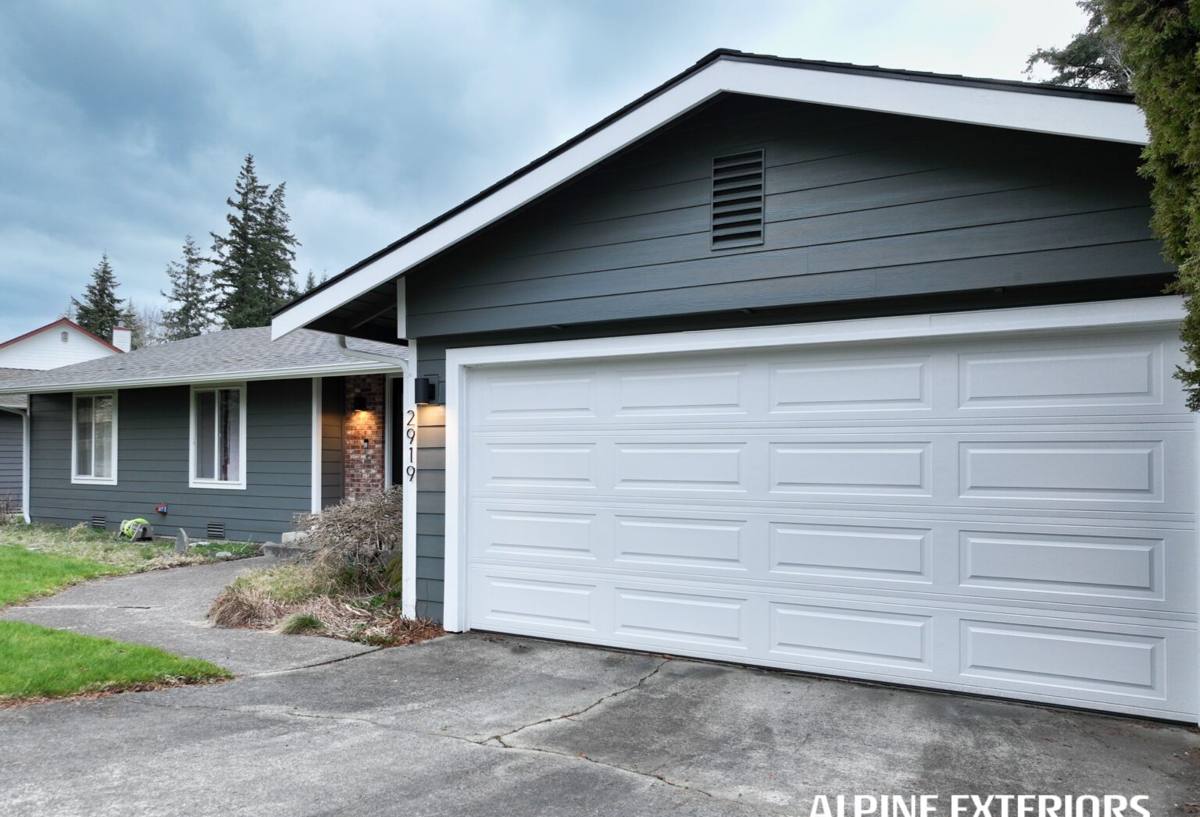
What Everson's Climate Actually Does to Siding
Salt Air and Fastener Corrosion
Everson isn't oceanfront, but prevailing air off the Salish Sea still carries enough salt to accelerate corrosion on lower-grade fasteners, trim flashing, and any siding product with exposed metal components. Over years, corroded fasteners loosen, and loose fasteners are how wind-driven rain gets behind a wall system. It's a slow failure — the kind that shows up as a stain or a soft spot five or ten years after the crew that installed it has moved on.
Driving Rain and Wind-Loaded Moisture
Rain in this part of Whatcom County rarely falls straight down. Wind off the valley pushes it sideways against west and south-facing walls, which means laps, joints, and butt seams take on real hydraulic pressure during storms — not just surface wetting. A siding system that isn't lapped, caulked, and flashed correctly at every transition will eventually let water past the face material, even if the material itself is sound.
Moss, Algae, and Shaded Exposures
Homes tucked under mature trees or facing north see moss and algae growth for most of the year. On products that absorb moisture into the substrate — engineered wood, primed spruce, uncoated cedar — that constant dampness accelerates rot from the inside out, often invisibly, since the surface can still look intact. Fiber cement doesn't feed that process the same way, but the finish and the caulking around penetrations still need to shed water, not hold it.
Why We Only Install James Hardie
We made a deliberate decision years ago to stop installing anything other than James Hardie fiber cement siding, and it's worth explaining plainly rather than just asserting it. Engineered wood products like LP SmartSide perform reasonably when maintained aggressively, but they still rely on a wood-strand substrate that swells if water gets past the coating — and in a climate with Everson's rain totals and humidity, that maintenance margin is thinner than most homeowners expect. Vinyl siding is inexpensive and low-maintenance, but it expands and contracts with temperature swings, can warp or crack in wind events, and doesn't offer the same fire resistance or long-term color retention. Cedar and primed spruce look good on day one but demand a repainting and caulking schedule that most homeowners don't keep up with, and once moisture gets behind the boards, rot spreads fast.
James Hardie fiber cement is cement, sand, and cellulose fiber — it doesn't feed rot, it doesn't burn, and it doesn't expand and contract the way wood or vinyl does. The ColorPlus factory finish is baked on under controlled conditions, so it holds color and resists the chalking and fading that field-applied paint eventually shows. It's not a product we upsell — it's the only product we've been willing to warranty our labor against in this climate.
The HZ5 Engineering Question
James Hardie makes climate-specific product lines, and the Pacific Northwest falls into a moisture-and-freeze zone that Hardie engineers for directly. For Everson and the rest of Whatcom County, that means specifying the correct HZ product line for our region rather than defaulting to whatever a supplier has in stock. The difference shows up in how the product is engineered to handle moisture cycling and freeze conditions specific to our zone — it's a detail that matters more here than in a drier, milder climate, and it's one reason we don't treat siding as a one-size-fits-all material.
What a Correct Installation Actually Involves
The siding material is maybe half of what determines how a wall performs over twenty years. The other half is installation discipline, and this is where a lot of shortcuts happen on jobs that look fine at completion and fail five years later.
- Weather-resistive barrier installed correctly: proper house wrap, lapped shingle-style so water sheds outward, with all seams and penetrations taped.
- Rainscreen or drainage gap where called for: a small air gap behind the siding lets any moisture that does get past the face material drain and dry instead of sitting against the sheathing.
- Correct fastener type and placement: corrosion-resistant fasteners, placed per Hardie's blind-nailing or face-nailing specs, driven flush — not overdriven, which cracks the board and voids the warranty.
- Proper clearances: minimum gaps from grade, roof lines, decks, and other flashing so the siding never sits in standing water or against horizontal surfaces that trap moisture.
- Caulked and flashed penetrations: every hose bib, vent, light fixture, and utility penetration sealed and flashed before the siding closes around it.
- Factory-cut edges primed or sealed: any field cut exposes raw fiber cement, which needs sealing per Hardie spec to keep the cut edge from wicking moisture.
Skip any one of these and the wall can still look correct for years while moisture builds up behind it. This is the part of the job that determines whether Everson's rain and humidity are a non-issue or a slow problem.
Our Process for Everson Jobs
1. On-Site Assessment
We walk the exterior with you, check current siding condition, look at trim, flashing, and any moisture staining, and identify problem areas — north-facing walls, shaded sections prone to moss, spots where past work may have cut corners.
2. Product and Color Selection
We help you choose the right Hardie plank profile, texture, and ColorPlus color for your home, factoring in HOA guidelines where applicable and how a given color performs against UV and the region's overcast conditions.
3. Prep and Tear-Off
Old siding comes off, sheathing gets inspected for hidden rot or water damage before anything new goes up — this is often where we find the actual cause of a homeowner's original complaint.
4. Barrier and Installation
Weather-resistive barrier, drainage plane, and Hardie siding installed to manufacturer spec, with attention to every clearance and fastening detail above.
5. Final Walkthrough
We review the completed work with you, confirm caulking and trim details, and go over any maintenance notes specific to your home's exposure.
Comparing Siding Options for an Everson Home
| Factor | James Hardie Fiber Cement | Engineered Wood (LP SmartSide) | Vinyl | Cedar / Primed Spruce |
|---|---|---|---|---|
| Moisture tolerance | Does not rot; cement-based core | Wood-strand core can swell if coating fails | Doesn't rot but can trap moisture behind it | Absorbs water; rot risk if maintenance lapses |
| Fire resistance | Non-combustible | Combustible (wood-based) | Melts/deforms under heat | Combustible |
| Finish longevity | Factory ColorPlus finish, long color retention | Factory or field-applied, moderate retention | Molded-in color, can fade/chalk | Requires repainting/staining every few years |
| Maintenance | Low — occasional wash, caulk checks | Moderate — coating inspection needed | Low but prone to cracking/warping | High — regular repainting and sealing |
| Performance in salt air / driving rain | Engineered for regional moisture zones (HZ lines) | Adequate if perfectly maintained | Adequate but can warp in wind/temp swings | Weakest without diligent upkeep |
Why Local Experience in Everson Matters
A crew that already works Everson and the surrounding Lynden area knows which walls take the worst of the wind-driven rain, which lots hold onto moss longest, and which older homes were built before modern weather-resistive barriers were standard practice. That familiarity changes how we prep a job before the first piece of siding goes up — it's not something you can get from a crew that's installing here for the first time on your house. We're a Lynden-based operation, and Everson is part of the territory we know well enough to spot problems other crews miss.
Signs Your Everson Home May Need New Siding
- Visible moss or algae buildup that returns quickly after cleaning
- Soft spots, bubbling, or warping anywhere on the siding face
- Paint that's peeling or bubbling from underneath rather than just aging on the surface
- Persistent moisture or musty smell in interior walls near exterior siding
- Visible gaps at seams, corners, or trim that weren't there originally
- Siding that's more than 20-25 years old, regardless of visible condition
If you're in Everson and thinking about your home's siding, we'd rather walk the exterior with you and give you a straight answer than talk you into anything. Reach out for a free, no-pressure estimate — we'll look at what your home actually needs and explain why we'd recommend it.