 Lynden Window
 Windows Built for Everson's Weather, Not Just the Catalog Photo
Everson sits in a part of Whatcom County where the weather doesn't do anything halfway. Winters bring long stretches of driving rain, spring and fall carry moisture-laden marine air off the Pacific through the lowlands, and shaded north walls can stay damp long enough to grow a respectable coat of moss before summer even shows up. Windows here don't just have to look good and keep the heat in — they have to survive months of standing moisture exposure without the seals, sills, or frames breaking down.
"Energy-efficient" gets used as a marketing word a lot. For a house in this area, it should mean something specific: a window and installation that stop wind-driven rain from finding a way in, resist the kind of persistent dampness that feeds moss and mildew, and keep your heating bill from spiking every time a Pacific system rolls through. That's the standard we build to on every Everson job, not just the ones where it's convenient.
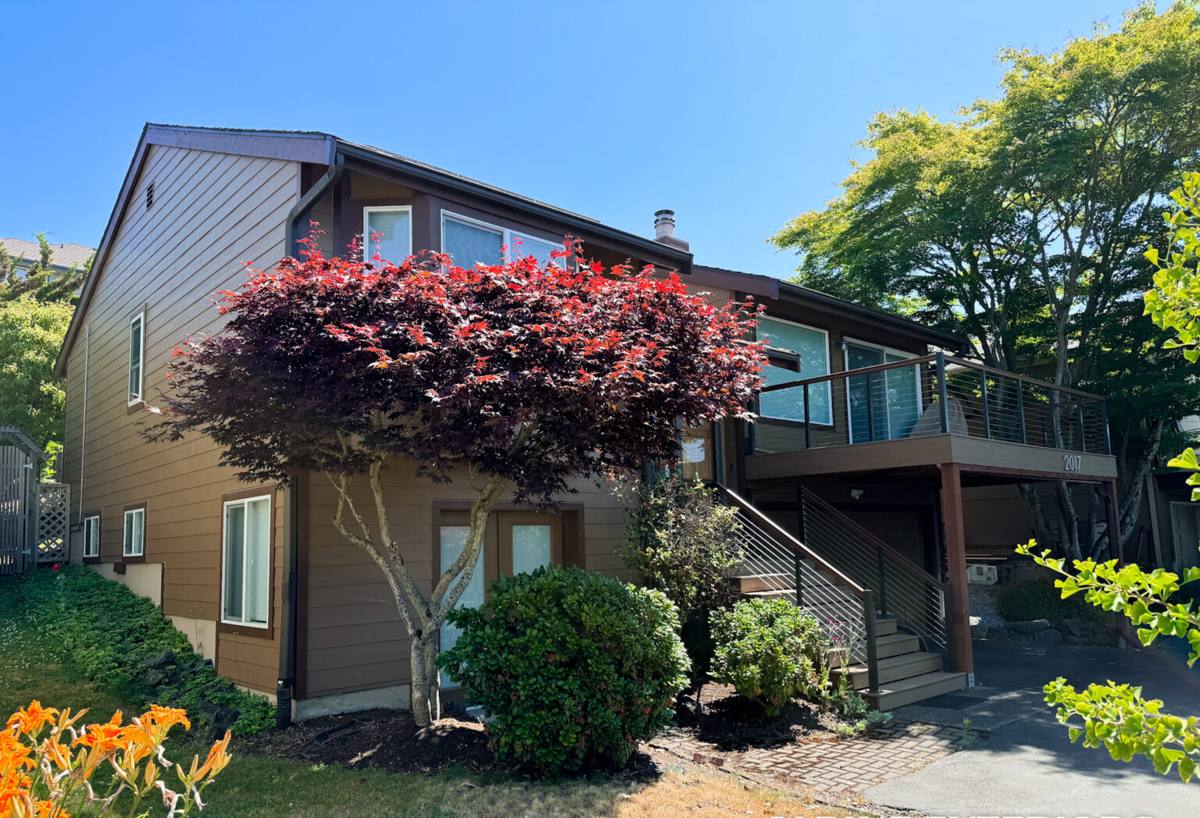
What Local Homes Are Actually Fighting
Driving Rain, Not Just Rain
A lot of window failures around here aren't about the glass — they're about wind-driven rain finding a gap at the sill or the nailing flange. Whatcom County storms frequently come with enough wind to push water sideways under a poorly flashed window, and once water gets behind the frame, it doesn't dry out fast in our climate. It sits, and it causes rot long before anyone notices a leak inside.
Moss and Sustained Moisture
The same conditions that grow moss on a roof will grow it in window tracks, on sills, and in any low spot where water collects instead of shedding. Over a long moss season, that trapped moisture works into wood trim and can degrade weatherstripping and seals faster than in a drier climate.
Salt-Laden Air and Metal Hardware
Coastal-influenced air moving through Whatcom County carries a mild salt content that's easy to overlook until you see corrosion on cheap hinges, locks, or aluminum components a few years in. It's a slow process, but it's real, and it's one more reason we pay attention to hardware quality, not just glass specs.
Temperature Swings and Condensation
Everson gets genuinely cold snaps in winter and warm, humid stretches in summer. Older single-pane or failed dual-pane windows show it fast — condensation between panes, fogged glass, and cold drafts near the frame even when the window is "closed."
What "Energy-Efficient" Means in Practical Terms
Efficiency in a window comes down to a handful of measurable things, not a sticker on the glass. The two numbers worth understanding are U-factor (how much heat the window lets escape — lower is better) and SHGC, or Solar Heat Gain Coefficient (how much solar heat comes through — matters more on south and west exposures). For our climate, a moderate SHGC with a strong U-factor tends to be the right balance, since we get less intense summer sun than drier regions but plenty of cold, wet stretches to guard against.
| Feature | What It Does | Why It Matters Here |
|---|---|---|
| Low-E coating | Reflects heat while letting visible light through | Cuts winter heat loss without darkening rooms during our already-limited daylight months |
| Argon or krypton gas fill | Insulating gas between panes | Improves U-factor for cold, damp stretches without adding bulk |
| Warm-edge spacer | Non-metal spacer between panes | Reduces condensation risk at the glass edge, a common failure point in wet climates |
| Multi-point locking hardware | Compresses the sash tight against weatherstripping | Better resistance to wind-driven rain intrusion |
| Corrosion-resistant hardware | Stainless or coated fasteners and hinges | Holds up against salt-influenced marine air over time |
Signs Your Current Windows Are Working Against You
- Visible fog or moisture between the panes (a failed seal — not fixable, only replaceable)
- Cold air noticeable near the frame even with the window latched shut
- Paint or trim rot at the sill or lower corners
- Moss, algae, or black staining building up in the frame or track
- Windows that are hard to open, close, or lock — often a sign the frame has shifted or swollen
- A noticeable jump in heating costs compared to similarly sized rooms elsewhere in the house
- Condensation forming on the inside of the glass regularly during cold months
Any one of these on its own isn't necessarily an emergency. Several together, especially rot or persistent moss at the frame, usually means the window is past the point where caulk and weatherstripping will fix it.
What a Correct Installation Actually Involves
Most window failures we get called out to inspect aren't caused by a bad window — they're caused by a rushed installation. In a climate like ours, the installation details matter as much as the product.
- Remove old flashing and trim fully rather than installing over it
- Inspect the sill and framing for existing rot or moisture damage before setting the new window
- Install a proper sill pan to direct any water that gets past the exterior seal back outside instead of into the wall cavity
- Use correctly layered flashing tape so water sheds down and out, never trapped behind the siding
- Shim and square the window before fastening so it operates correctly and seals evenly for its full life
- Insulate the gap between the frame and rough opening — not stuffed, just filled — to prevent both drafts and moisture pockets
- Seal and caulk exterior joints with a product rated for sustained wet exposure, not a general-purpose caulk
Skip any one of these steps and you can end up with a window that's technically new but still lets water in behind the trim — which is worse than the old window, because now it's hidden.
How We Approach an Everson Window Project
1. On-Site Assessment
We look at every window being replaced, not just count openings — checking existing flashing, sill condition, and any signs of past water intrusion so there are no surprises once trim comes off.
2. Honest Product Recommendation
We walk through frame material, glass package, and hardware options based on the specific wall, exposure, and budget — not a one-size answer for every window on the house.
3. Accurate Measurement and Ordering
Precise measurements matter more in a wet climate, since a loose fit means more shimming, more sealant reliance, and more chances for water to find a path.
4. Removal and Structural Check
Old windows come out carefully, with the opening inspected for hidden rot before anything new goes in. Problems found here get flagged and addressed, not covered over.
5. Installation to the Standard Above
Sill pan, flashing sequence, insulation, and sealing — done the same way whether it's one window or a full-house replacement.
6. Final Check and Cleanup
Every window gets operated, checked for square and smooth function, and the site is cleaned up before we consider the job done.
Materials We Recommend — and Why
Vinyl and fiberglass frames are our default recommendations for this climate, and for good reason: both resist moisture absorption and don't require the ongoing maintenance that painted wood or wood-clad frames need to stay watertight. Wood-frame windows can look great, but in a climate with this much sustained dampness and moss pressure, they demand more upkeep to avoid the rot issues we see on neglected older homes. If a homeowner wants a wood-look interior, we can usually get that appearance with a low-maintenance exterior frame instead of exposing solid wood to the weather side.
Fiberglass generally costs more than vinyl but holds its shape better across temperature swings and can support larger window sizes without sagging. Vinyl is a strong, cost-effective choice for most standard openings and holds up well against our moisture and salt-air conditions when it's a quality product with reinforced corners, not a bargain-bin frame.
What Affects the Cost of a Window Project
| Factor | Why It Moves the Price |
|---|---|
| Number and size of windows | More glass and larger openings mean more material and labor |
| Frame material | Vinyl, fiberglass, and composite options price differently |
| Glass package | Triple-pane, upgraded Low-E, or tinted glass add cost over a standard dual-pane unit |
| Existing damage | Rotted sills or framing found during removal require repair before the new window goes in |
| Access and height | Second-story or hard-to-reach windows take more time and equipment |
| Trim and finish work | Matching existing interior or exterior trim adds labor |
We give straightforward, itemized estimates so you can see what's driving the number — not a flat per-window rate that hides whether repair work is included.
Why It Matters That We Already Work in Everson
A crew that regularly works this specific stretch of Whatcom County has already seen how the local weather behaves on real houses — which walls take the worst of the driving rain, how fast moss builds back on a north-facing sill, and what installation shortcuts show up as callbacks two winters later. That's not something you get from a national installer passing through once. It shows up in the details: the flashing sequence, the sealant choice, the attention paid to a sill that's already showing early rot. For a homeowner, that translates into fewer surprises and a window that's still doing its job a decade from now, not just at the final walkthrough.
If you're dealing with drafty, foggy, or moss-stained windows on your Everson-area home, we're happy to take a look and give you a straightforward, no-pressure estimate — just fill out the form below.