 Lynden Window
 Window Replacement in Deming: Built for a Wet, Shaded Corner of Whatcom County
Deming sits inland from the Salish Sea, tucked against forested foothills as Whatcom County climbs toward the Cascades. That distance from open water doesn't spare it from the region's defining weather — marine air still pushes inland on winter storms, driving rain still comes through in long stretches, and the tree cover that gives many Deming properties their privacy also traps moisture against siding, trim, and window frames far longer than it would on an open, sun-exposed lot. Add a long moss season that runs through most of the wet months, and you've got a climate that's genuinely tough on window systems, even for a community that isn't sitting right on the water.
We handle windows, siding, roofing, and decks across this stretch of Whatcom County, and on window replacement specifically we treat the installation and flashing work as being just as important as the window unit itself. A quality window installed with rushed or incomplete flashing will leak here. A mid-grade window installed correctly, with flashing that ties properly into the surrounding wall and siding, will typically outperform it for decades.
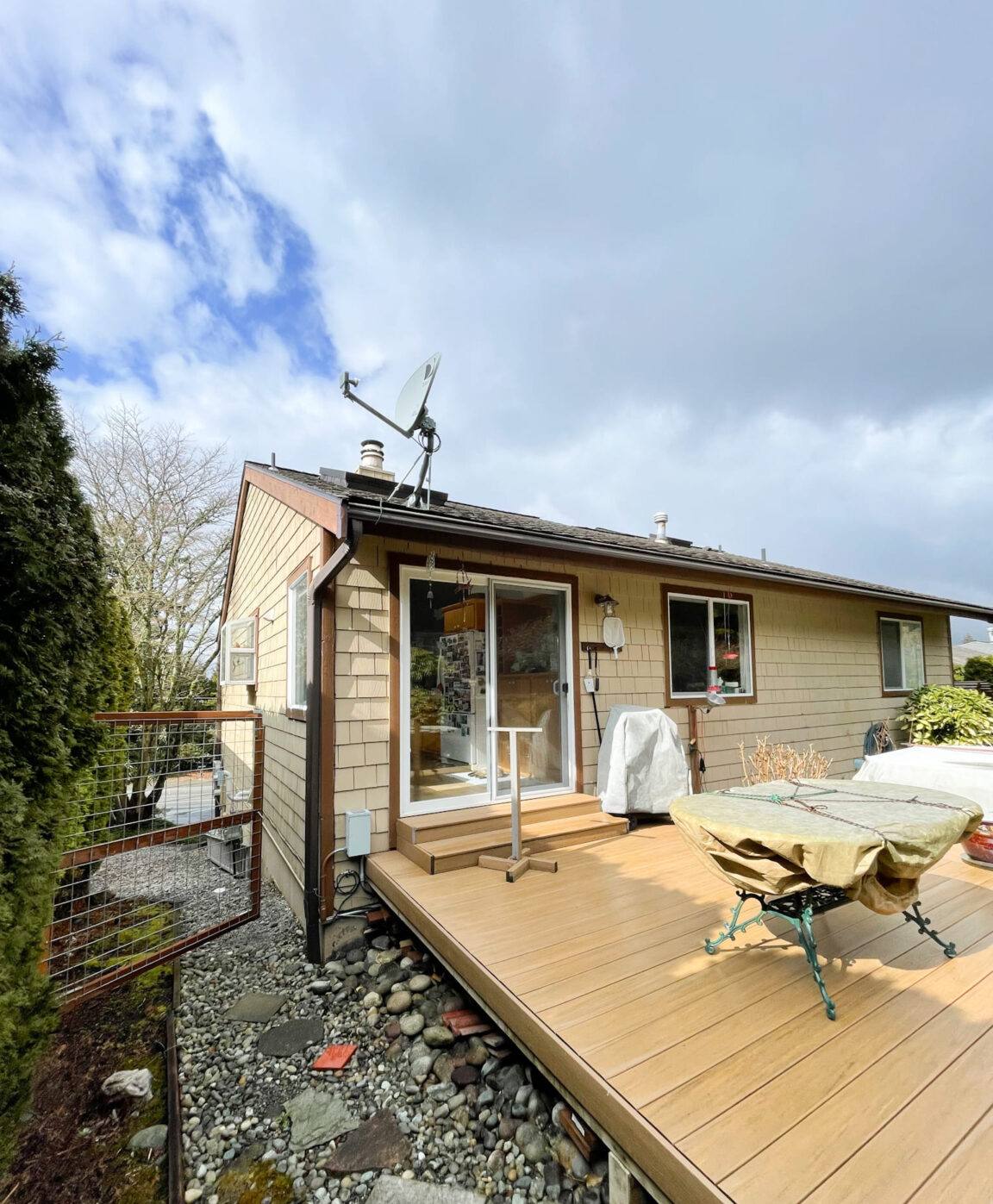
What Deming's Climate Does to Windows
Prolonged Shade and Moss
A lot of Deming properties sit under significant tree cover, whether that's a wooded lot, a tree line along a property edge, or a home tucked into a forested setting. That shade is part of the appeal, but it also means siding, trim, and window sills stay damp longer after every rain than they would on an open lot in full sun. Moss and mildew take hold fastest in exactly these conditions — anywhere water sits instead of draining and drying, and anywhere sunlight doesn't reach long enough to dry things out between storms. Window sills, the underside of trim boards, and frames on shaded, north-facing walls are common places it shows up first.
Driving Rain and Marine Air Reaching Inland
Deming is far enough from open water that homes here don't take direct salt spray, but Whatcom County's marine-influenced weather system still reaches this far inland. Winter storms bring sustained, wind-driven rain, and the humidity that comes with it is enough to accelerate corrosion on lower-grade window hardware and fasteners over time. It's a slower process than what a waterfront property deals with, but it adds up over the life of a window, especially on the cheaper end of window hardware.
Temperature Swings and Condensation
Whatcom County's damp, mild winters create real condensation pressure wherever a heated interior meets cold, wet glass. This shows up constantly on older or poorly sealed windows — fogging between panes, moisture beading on interior glass, or water collecting on sills during cold snaps. That's a sign of failed seals or an underperforming glazing package, not just a cosmetic nuisance to wipe up each morning.
Older Farmhouse and Cabin Window Stock
Deming has a mix of older farmhouses, cabins, and newer builds on wooded acreage, and a fair number of the older homes still carry original wood-frame windows or early-generation replacements that were never a great match for this climate to begin with. Wood frames without proper cladding are especially vulnerable to the combination of shade, moisture, and moss that defines a lot of this area — rot can be well underway inside a frame before it's visible from the outside.
Signs a Deming Home Needs Window Replacement
- Fogging or trapped moisture between the panes of a double-pane window
- Soft, discolored, or visibly rotted wood in the sill, jamb, or surrounding trim
- Drafts near the frame even with the window fully closed and locked
- Windows that stick, won't stay open, or are difficult to lock
- Visible gaps between the frame and siding, or daylight showing around the edges
- Moss, algae, or persistent black staining on sills and trim that keeps returning after cleaning
- Paint or finish peeling or bubbling faster on shaded elevations than on sun-exposed walls
Not every one of these means full replacement is the only answer — a sound frame with a failed seal can sometimes be repaired rather than replaced. But once wood framing is soft or a window has been patched multiple times without holding, replacement usually costs less over time than continuing to chase repairs on a failing unit.
What a Correct Window Replacement Job Involves
The window unit itself is only part of the job. What actually determines whether a replacement performs for one wet season or several decades is how it's integrated into the wall around it.
Flashing and Drainage
Flashing needs to lap correctly with the weather-resistive barrier and siding already on the wall, directing any water that gets past the window out and away from the rough opening rather than trapping it behind the siding. This is standard practice on every window we install, not an upsell. Caulk has a role in sealing, but it's a supplement to proper flashing, not a substitute for it — caulk alone breaks down and cracks over a few wet seasons, right about the time a homeowner assumes the window install was done wrong.
Air Sealing and Insulation Around the Frame
The gap between a new window frame and the rough opening needs to be properly insulated and air-sealed, not just stuffed with whatever's on hand. Done poorly, this is a common source of drafts that get blamed on the window itself when the real issue is the installation around it.
Fit for the Existing Opening
Especially on older Deming homes, rough openings aren't always square or standard-sized. A correct replacement accounts for the actual condition of the opening — including any hidden rot discovered once old trim comes off — rather than forcing a stock-sized unit into a space that needs remediation first.
Choosing Window Materials for This Setting
We install vinyl and fiberglass window systems suited to the Pacific Northwest's wet, mild climate, and we'll walk through honest trade-offs rather than push one option as the only right answer. For a shaded, damp property like a lot of what we see around Deming, frame material matters more than it does in a drier climate.
| Frame Type | Moisture Behavior | Maintenance | Typical Cost |
|---|---|---|---|
| Vinyl | Won't rot; performs well in sustained damp conditions | Low — no painting or refinishing needed | Lower |
| Fiberglass | Won't rot; dimensionally stable through temperature swings | Low; can be painted if a custom color is wanted | Mid to higher |
| Wood-clad | Cladding protects the exterior face, but any breach exposes wood to moisture | Higher — exposed wood surfaces need monitoring and upkeep | Higher |
Our default recommendation for shaded, moisture-heavy properties is vinyl or fiberglass, specifically because neither gives moss, mildew, or rot anything to take hold on. Wood-clad windows can still be the right call for a homeowner who wants a specific interior wood finish, but it's worth going in with a clear picture of the added maintenance that comes with it in this climate.
Cost Factors for Window Replacement in Deming
| Factor | Why It Affects Cost |
|---|---|
| Window count and size | Larger openings and full-house jobs naturally take more material and labor than a single-window swap |
| Frame material | Vinyl typically runs less than fiberglass; wood-clad options cost more upfront |
| Hidden rot or framing repair | Older homes with rotted rough openings need remediation before a new window goes in, which adds labor |
| Glazing package | Double-pane, triple-pane, and low-E coating options each carry a different price point |
| Access and site conditions | Upper-story windows, tight access, or long driveways on wooded lots can affect labor time |
We give broad, honest ranges during an on-site estimate rather than a number pulled from a phone call, because the biggest cost swings on Deming properties usually come from what's discovered once old trim and siding come off — not from the window unit itself.
Our Process, From Estimate to Final Walkthrough
We start with an on-site look at each window being considered for replacement — checking frame and sill condition, seal integrity, hardware function, and how the existing flashing ties into the siding. From there we give a straightforward read on what's a reasonable repair and what genuinely needs replacement, along with a written scope before any work begins. Flashing, drainage, and air-sealing detail are handled as standard practice on every job, not something a homeowner has to specifically ask for. Once materials are ordered, we schedule installation and walk through the finished work with the homeowner before calling the job done.
A Simple Checklist Before Hiring for Window Work in Deming
- Ask specifically how they handle flashing and drainage integration with your existing siding, not just which window brand they sell
- Confirm current Washington contractor licensing and active liability insurance
- Get a written scope that separates the manufacturer's product warranty from the contractor's installation warranty
- Ask them to check for hidden rot around the rough opening before quoting a final price, especially on an older home
- Ask about lead times — custom-sized window orders in this region often run several weeks before installation can start
Why a Crew That Already Works in Deming Matters
A contractor who regularly works this part of Whatcom County already understands how shade, moss, and inland marine air behave differently here than they do on an open, waterfront lot or a dry inland climate. That understanding shows up in the details that actually matter — how much lap a flashing detail gets, whether hidden rot gets checked before a quote is finalized, which frame material gets recommended for a heavily shaded elevation. Those are the decisions that determine whether a window replacement holds up for one wet winter or for decades, and they're easy to get wrong from a generic, one-size-fits-all approach.
If you're dealing with foggy, drafty, or hard-to-operate windows on a Deming property — or you're just not sure whether repair or full replacement makes more sense — we're glad to take a look and give you a straight answer. Reach out below for a free, no-pressure estimate.