 Lynden Window
 Roofing Built for Deming's Wet, Wooded Climate
Deming sits along the Nooksack River corridor east of Lynden, tucked closer to the foothills than most of Whatcom County. That location comes with a lot of tree cover, more shade than the open farmland around Lynden proper, and a climate that stays damp longer into the season. Whatcom County's marine air and driving rain off the Sound reach even the inland valleys, and combined with the shade from fir and cedar canopy around many Deming properties, roofs here deal with a long moss season that coastal or open-field homes don't see nearly as bad. A new roof installation in this area has to be built with that reality in mind from the deck up, not just installed the same way you'd do it in a drier, sunnier part of the state.
This page is specifically about installing a new roof for a home in Deming. If you're comparing materials, thinking through timing, or trying to figure out what actually matters in a quote, this is written for that decision.
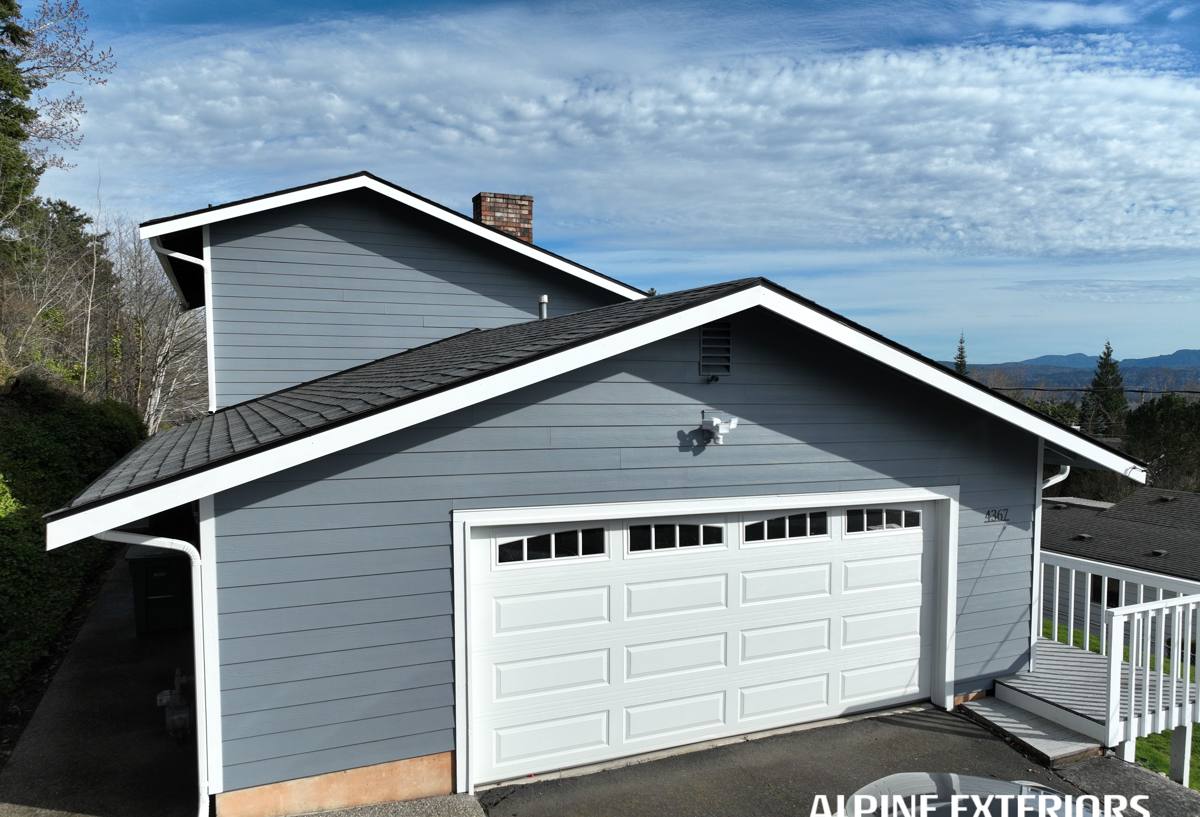
What Rain, Moss, and Shade Actually Do to a Roof Here
Homeowners in Deming usually don't lose a roof to one big storm. It's slower than that. A few things compound over years:
- Moss and moisture retention. Shaded roof sections that don't get much direct sun stay damp longer after every rain. Moss takes hold in that moisture, and its roots work under shingle edges and granules, lifting them over time.
- Debris buildup. Needles, cones, and leaf litter from surrounding trees collect in valleys and behind chimneys, holding water against the roofing material instead of letting it shed.
- Extended wet season. Long stretches of gray, damp weather mean roofing materials rarely get a full dry-out period, which speeds up wear on anything that isn't properly ventilated underneath.
- Wind-driven rain. Storms moving through the valley push rain sideways under poorly sealed flashing or aging shingle tabs, which is where most hidden leaks start.
None of this means a roof in Deming needs to be exotic or overbuilt. It means the details that are easy to skip — proper underlayment, real ventilation, correct flashing — matter more here than they would in a drier climate, because there's less margin for error.
What a Correct New Roof Installation Actually Involves
Tear-Off and Deck Inspection
A full tear-off is standard for a proper installation, not an upsell. It lets us see the actual condition of the roof deck underneath — plywood or OSB that's been absorbing moisture for years can be soft, delaminated, or stained from old leaks. Any damaged sheathing gets replaced before anything new goes down. Roofing over an existing layer or a deck with hidden rot just locks the problem in under a new surface.
Underlayment and Moisture Protection
Underlayment is the roof's real waterproofing layer — the visible shingles or panels are the first defense, but underlayment is what keeps the deck dry if wind-driven rain gets past them. In valleys, around chimneys, skylights, and eaves, we use ice-and-water shield style membrane for extra protection in the spots most prone to leaks. Given how often Deming roofs deal with prolonged wet weather, this layer isn't optional.
Ventilation
A roof that can't breathe traps moisture in the attic, which condenses, soaks insulation, and rots framing from the inside — often faster than surface weather damages the roof from the outside. Balanced intake (at the eaves) and exhaust (at the ridge) ventilation is part of a correct installation, not something added later if there's a problem.
Flashing
Flashing around chimneys, skylights, sidewalls, and roof-to-wall transitions is where the majority of real-world leaks originate — far more often than the field shingles themselves. Flashing has to be installed in the correct layered sequence with the underlayment and roofing material, not caulked on afterward as a shortcut.
Field Material Installation
Once the deck, underlayment, and flashing are right, the visible roofing material goes on to the manufacturer's nailing pattern and exposure specs. Cutting corners here — wrong nail placement, exposed fasteners, inconsistent exposure — is what voids manufacturer warranties even when the roof looks fine from the ground.
Roofing Material Options for Deming Homes
Most Deming homeowners choose between a few proven material types. Here's how they compare for a shaded, damp, valley property:
| Material | Moss/Moisture Resistance | Typical Lifespan | Best Fit |
|---|---|---|---|
| Architectural (dimensional) asphalt shingles | Good, especially with algae-resistant granules | 25-30 years | Most homes; strong value and proven performance in wet climates |
| 3-tab asphalt shingles | Fair — thinner profile sheds debris less effectively | 15-20 years | Budget-conscious projects, secondary structures |
| Metal roofing (standing seam or panel) | Excellent — sheds moss and debris, minimal seams for water intrusion | 40-50+ years | Heavily shaded lots, steep pitches, long-term ownership |
| Synthetic/composite shingles | Very good, engineered to resist moisture absorption | 30-50 years | Homeowners wanting a shake or slate look without the maintenance |
We don't push one material on every homeowner. A shaded, tree-heavy lot in Deming often makes a stronger case for metal or a higher-grade architectural shingle with algae-resistant granules than an open, sunny lot would — but budget, roof pitch, and how long you plan to stay in the home all factor into the right call.
Our New Roof Installation Process
- On-site inspection and estimate. We walk the roof, check the attic for ventilation and moisture issues, and give you a straightforward written quote — no pressure, no inflated scare tactics.
- Material selection. We go over the tradeoffs for your specific roof — pitch, shade exposure, budget — so you're picking based on what fits your home, not just what's cheapest or trendiest.
- Scheduling around weather. Roofing in this part of Whatcom County means working around rain windows. We plan installation timing to minimize the chance of an open deck getting caught in weather.
- Tear-off and deck repair. Old roofing comes off, the deck is inspected, and any damaged sheathing is replaced before we move forward.
- Underlayment, flashing, and ventilation installed correctly. This is the stage that determines whether the roof actually performs over the next 20-30 years.
- Final material installation and cleanup. New roofing goes on to spec, and the property is cleared of old materials, nails, and debris — including a magnetic sweep of the yard.
- Walkthrough. We go over the finished roof with you and answer any questions before we consider the job done.
Cost Factors for a New Roof in Deming
Every roof is different, but the main variables that move a quote up or down are consistent:
| Factor | Why It Matters |
|---|---|
| Roof size and pitch | Steeper roofs take longer and require more safety equipment and labor |
| Material choice | Asphalt shingles cost less upfront than metal or composite; lifespan and maintenance offset that over time |
| Deck condition | Rotted or delaminated sheathing found during tear-off adds material and labor to replace it properly |
| Roof complexity | Valleys, dormers, skylights, and multiple roof planes all add flashing work and labor time |
| Access | Steep driveways, tree cover, or limited staging space near the house can affect equipment and setup |
| Tear-off layers | Removing multiple existing layers of roofing takes more labor than a single-layer tear-off |
We won't quote a number without seeing the roof — anyone who does is guessing. What we can tell you honestly: the cheapest bid is rarely the best value once you account for deck repair, proper underlayment, and flashing done right the first time.
Signs Your Deming Home Might Need a New Roof
- Shingles that are curling, cracking, or losing granules in visible patches
- Moss or dark streaking covering more than isolated patches, especially on shaded slopes
- Daylight visible through the roof deck from inside the attic
- Soft spots or sagging when walked on (a sign to call a professional, not to walk it yourself)
- Water stains on interior ceilings or upper walls after heavy rain
- A roof that's approaching or past 20-25 years old, regardless of visible condition
- Missing, cracked, or lifted flashing around chimneys, vents, or skylights
Any one of these on its own isn't necessarily an emergency, but a few together usually mean it's worth getting an honest look before winter weather turns a slow problem into an active leak.
Why Hire a Crew That Already Works Deming
Roofing crews who mostly work drier, more open parts of the state don't always account for how much moss, shade, and prolonged moisture change what a roof needs. A crew that regularly works Deming and the surrounding Lynden area already knows which details — ventilation balance, moss-resistant materials, valley and flashing work — matter most for this specific climate, and doesn't need to relearn that on your roof. Local experience also means knowing realistic weather windows for scheduling, and understanding what Whatcom County permitting and inspection actually require, so the job moves without unnecessary delays.
If you're weighing a new roof for your Deming home, we're happy to take a look and walk you through what we find — no pressure, no hard sell. Use the form below to request a free estimate and we'll get back to you to schedule a time that works.