 Lynden Window
 Composite Decking Built for Deming's Foothill Climate
Deming sits closer to the Mount Baker foothills than most of the rest of Whatcom County, and that changes what a deck has to deal with. The tree canopy is heavier out here, the ground stays damp longer into the season, and a lot of homes back up to woods or sit near the Nooksack River corridor where fog and morning dew linger well past sunrise. Add in the Pacific Northwest's long, wet shoulder seasons and you get a recipe for wood decking that greys, splinters, and grows moss faster than most homeowners expect. Composite decking was built to handle exactly this kind of exposure, but only when it's installed correctly for the site it's going on.
We're not going to pretend Deming has the same conditions as a waterfront lot in Bellingham or Blaine. This far inland, salt air isn't the main threat. What matters more here is shade, standing moisture, and organic debris — pine needles, leaves, and seed litter that settle into board gaps and hold water against the decking surface. A deck built for a sunny, open backyard in Lynden proper doesn't always perform the same way once you move it under a stand of fir and cedar in Deming.
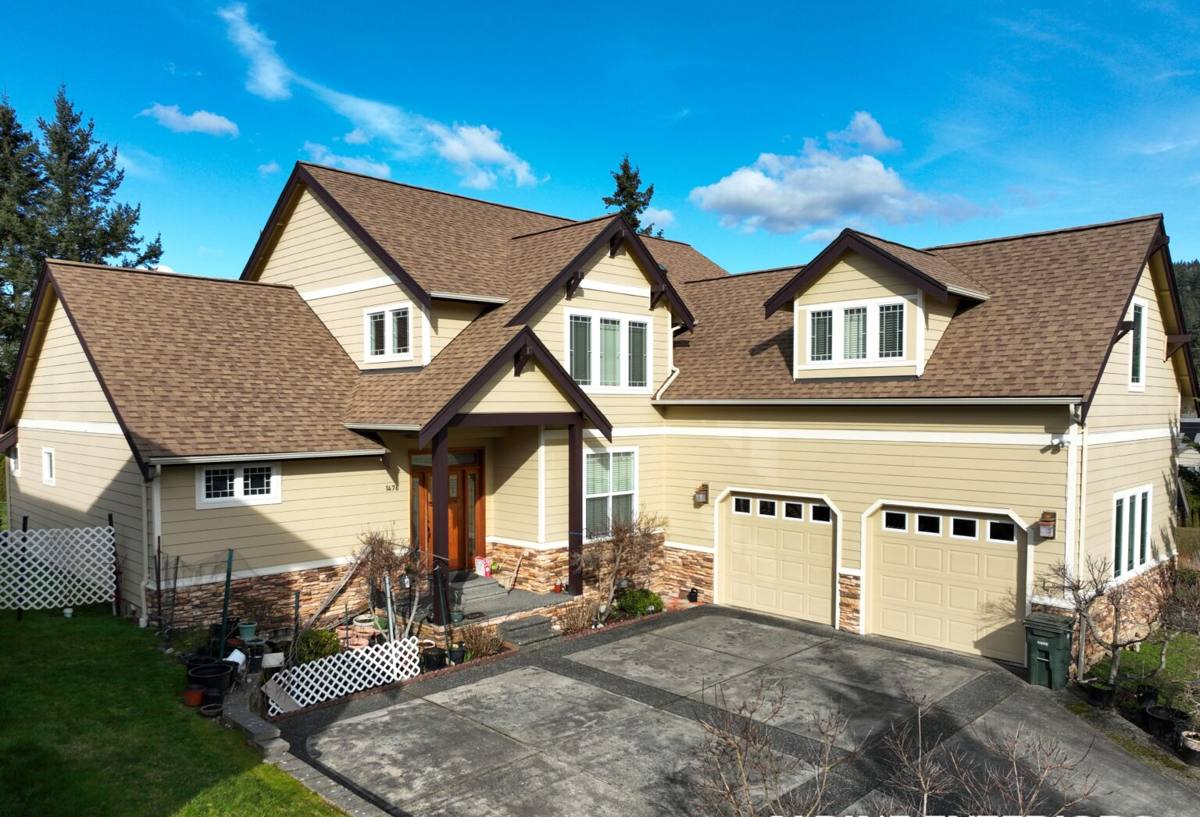
What Deming's Setting Actually Does to a Deck
Shade and Slow Drying
A deck that sits under trees for most of the day dries out slower after rain — sometimes it never fully dries between storms during a wet winter. That extended damp period is what feeds moss, algae, and mildew growth, and it's also what accelerates rot in untreated or poorly sealed wood framing underneath the decking.
Organic Debris
Needles and leaf litter collect between boards and in corners faster on a tree-lined lot than they do on an open one. Left alone, that debris holds moisture directly against the decking surface and substructure, which is a bigger factor in surface staining and mildew than most homeowners realize.
Ground and Foundation Moisture
Many Deming properties have decks built low to grade, near sloped yards, or over ground that stays soft into late spring. Poor drainage under and around the deck footings is one of the most common issues we find when we're called out to look at a deck that's failing early — it's rarely the decking boards themselves that fail first.
Why Composite Fits This Environment Better Than Wood
Wood decking can absolutely work in Deming, but it demands a maintenance schedule most homeowners don't keep up with — annual or biannual cleaning, sealing, and inspection for soft spots. Composite decking, especially capped composite, doesn't absorb water the way wood does, doesn't need staining, and resists the surface mildew and moss growth that shaded, damp lots like these produce so readily. That doesn't mean composite is maintenance-free — nothing outdoors in this climate is — but the maintenance is lighter and more forgiving if it gets skipped a season.
| Factor | Wood Decking | Composite Decking |
|---|---|---|
| Moisture absorption | Absorbs water; prone to cupping and swelling | Minimal absorption, especially capped boards |
| Moss and algae resistance | Low — needs regular cleaning and treatment | Higher, particularly with capped or textured surfaces |
| Refinishing | Sanding and staining every 1-3 years | None required |
| Upfront cost | Lower material cost | Higher material cost, lower lifetime labor cost |
| Splintering | Common as boards age and weather | Not a concern with intact capped boards |
Where composite falls short of expectations is almost always an installation problem, not a material problem — boards laid without proper gapping, framing that traps water, or a substructure that wasn't built to shed moisture in the first place. That's the part of the job that actually determines how the deck performs ten years from now.
What a Correct Composite Deck Install Actually Involves
Composite boards are more forgiving than wood in some ways and less forgiving in others. They expand and contract with temperature, they're heavier per linear foot, and they rely on the substructure underneath to be built square, level, and properly spaced — composite doesn't hide a sloppy frame the way a rough-sawn wood deck sometimes can.
- Joist spacing matched to the manufacturer's spec for the board profile — this is often tighter than typical wood-deck spacing
- Ledger board flashed correctly where the deck ties into the house, so water is directed away from the structure rather than into it
- Proper gapping between boards for drainage and thermal movement, especially important on shaded, slow-drying lots
- Hidden fastener systems where the product calls for them, to avoid surface penetrations that trap moisture
- Ventilation and clearance underneath the deck so airflow can actually dry the space out between rain events
- Footings set to current frost and load requirements for the site, not just matched to what was there before
On a shaded, tree-heavy lot like a lot of Deming properties, we also pay closer attention to how the deck is oriented relative to drainage — where water naturally wants to run off the property — so the structure isn't fighting the site's natural grade for the next twenty years.
Cost Factors for a Deming Composite Deck
Every deck is priced around its own footprint, access, and site conditions, so we won't quote a number here that doesn't mean anything until we've seen the property. What we can tell you is what tends to move the price up or down on jobs in this area.
| Cost Factor | Why It Matters Here |
|---|---|
| Deck size and shape | Larger footprints and multi-level layouts increase material and labor |
| Substructure condition | Rebuilding a rotted or undersized frame adds cost but is not optional |
| Grade and access | Sloped or wooded lots common in Deming can require more footing work and site prep |
| Board profile and capping | Fully capped composite costs more than capped-top-only or uncapped options |
| Railing and stairs | Composite or metal railing systems add cost beyond the deck surface itself |
How We Approach a Deming Deck Project
We start with a site visit, not a phone estimate, because the things that matter most — grade, shade, existing framing condition, drainage — can't be judged from a photo. From there:
- We assess the existing structure (if there is one) to determine what can be reused and what needs to be rebuilt
- We walk through decking and railing options with you, including realistic maintenance expectations for a shaded lot
- We build or repair the substructure first, correcting any drainage or ventilation issues before a single composite board goes down
- We install per manufacturer spec for fastening, gapping, and expansion, so the warranty stays intact
- We walk the finished deck with you and explain basic upkeep specific to your site
Living With Composite Decking in a High-Moss Environment
Composite resists moss and algae far better than wood, but "resistant" doesn't mean immune, especially on a lot with heavy tree cover and limited direct sun. A little seasonal upkeep goes a long way toward keeping a Deming deck looking and draining the way it should.
- Sweep off needles, leaves, and seed debris regularly during fall and into winter — don't let it pack into board gaps
- Rinse the deck surface a few times a year with plain water and a soft-bristle broom or brush
- Keep gutters and downspouts near the deck clear so roof runoff isn't dumping extra water onto the surface
- Trim back overhanging branches where practical to let more light and air reach the deck
- Check railing posts and stair stringers annually for any movement, even though composite boards themselves won't rot
- Address any standing water or slow-draining low spots on the deck surface early — it's usually a sign of a leveling issue, not a board defect
Why It Matters That We Already Work Out Here
Deming isn't downtown Lynden, and it isn't Bellingham. It's a smaller, more spread-out community with wooded lots, longer driveways, and building conditions that don't always match what a crew used to subdivision work expects. A contractor who already knows the drainage patterns, the tree cover, and the kind of framing issues that show up on foothill properties in Whatcom County is going to build a deck that's set up to handle this specific environment — not a generic one. We've built and repaired decks across this part of the county, and that local familiarity shows up in fewer surprises during the job and a deck that performs the way it's supposed to once winter rains set in.
If you're thinking about a new composite deck or replacing an aging wood one, we're happy to come take a look and give you a straightforward, no-pressure estimate — just fill out the form below and we'll set up a time to walk the property with you.