 Lynden Window
 What Whatcom County Weather Does to a Deck Over Time
Decks around Acme spend most of the year wet. Whatcom County's marine-influenced climate brings driving rain through fall and winter, salt-tinged air moving in off the Sound, and long stretches of gray, low-sun days that never quite let a deck dry out between storms. Add the heavy tree cover that shades a lot of Acme-area lots and you get the exact conditions that wear a deck down slowly — often for years before it shows up as anything more than a little green film on the boards.
None of that means a deck is doomed. It means a repair has to be built around drainage, ventilation, and materials that can take repeated wetting and drying, not just a quick board swap that looks fine for a season and fails the next.
Moss Is a Symptom, Not Just a Nuisance
A deck surface that stays green longer than it stays dry is holding moisture against the wood. Moss and algae trap water on the boards and in the gaps between them, which keeps the wood's moisture content elevated long after the rain has stopped. Moss itself doesn't rot wood — but the constant dampness it depends on is exactly what drives rot in decking boards, ledger connections, and post bases over a couple of seasons.
Moisture Cycling and Hidden Structure
The parts of a deck that fail first are usually the parts you can't see from the top: the ledger board where the deck attaches to the house, the tops of support posts, joist ends, and any hardware sitting in standing water. Whatcom County's freeze-thaw swings in the colder months add another layer — water that's worked into a crack or a fastener hole expands when it freezes, widening the damage a little more every winter it goes unaddressed.
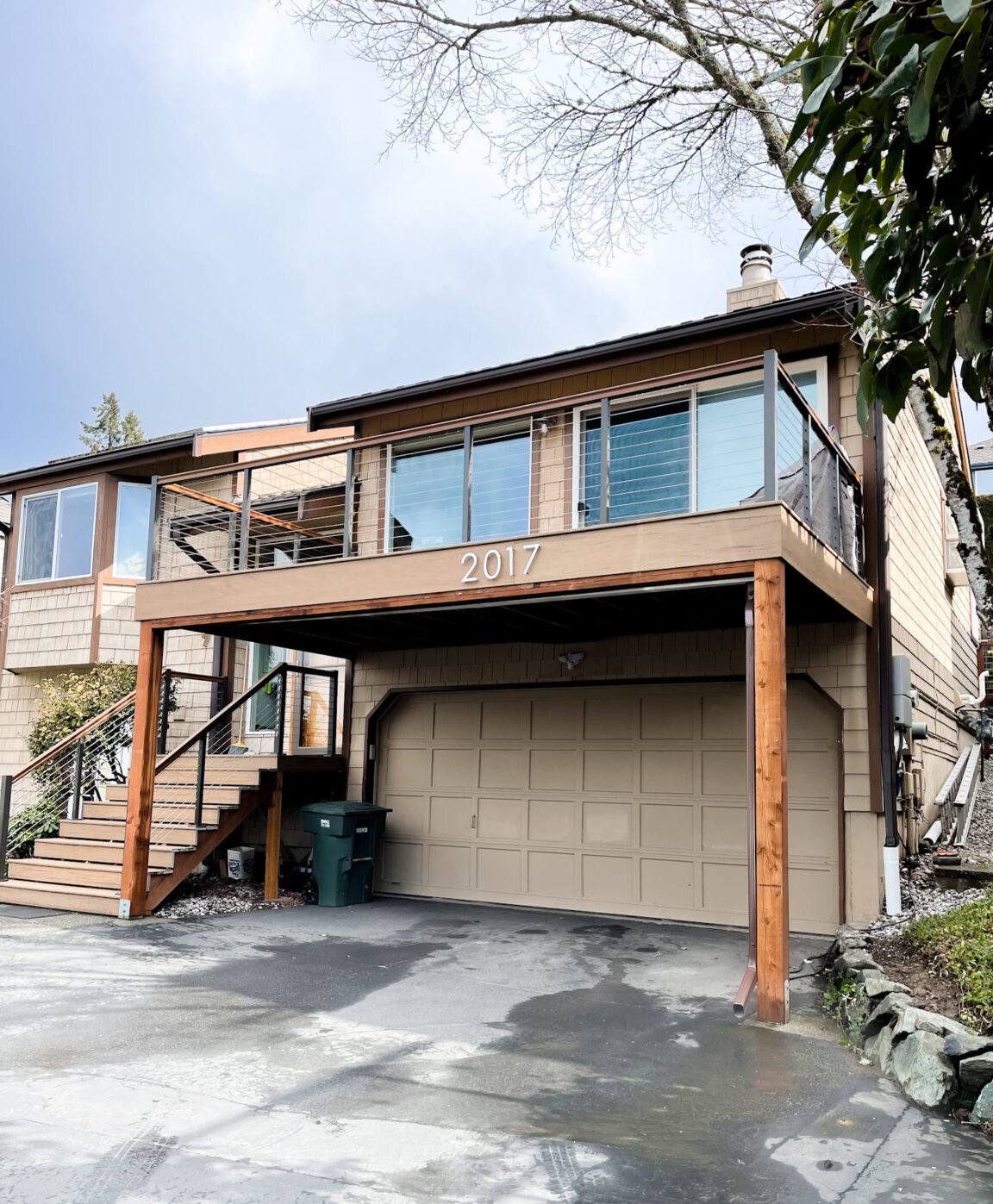
Common Deck Problems We Find on Acme-Area Homes
Every deck is different, but repair calls in this area tend to fall into a short list of recurring issues:
- Ledger board rot — moisture trapped where the deck meets the house, often from missing or failed flashing
- Soft or spongy decking boards — especially in shaded sections that stay damp longest
- Corroded or failing fasteners — old nails or non-rated screws never meant for constant wet exposure
- Post base deterioration — posts set directly in soil or concrete without proper standoff hardware
- Wobbly or undersized guardrails — a safety issue as much as a durability one
- Stair stringer rot — stairs take more direct rain exposure and foot traffic than the open deck surface
- Cupping or delaminating composite boards — usually older composite material reaching the end of its service life
Any one of these on its own is usually a straightforward repair. The trouble comes when a deck has two or three at once — that's when it's worth getting an honest read on whether targeted repair still makes sense or whether it's time to rebuild the affected section.
What a Correct Deck Repair Actually Involves
A repair that lasts starts with a real inspection, not a glance at the surface. We probe suspect boards, posts, and the ledger connection with an awl or screwdriver to find soft wood before it's visible, and we check the framing underneath — joists, beams, and footings — since surface repairs on top of failing structure don't hold.
Whatcom County follows Washington State building code for residential construction, and structural deck work — ledger reattachment, framing repair, guardrail rebuilds — generally needs to meet the same connection and fastening standards as new construction, even when it's a repair rather than a full rebuild. That means proper joist hangers rated for the load, structural screws or bolts sized correctly (not whatever was on hand), and flashing at the ledger that actually sheds water away from the house rather than trapping it against the rim joist.
Cosmetic fixes — replacing a handful of worn boards, tightening loose rail balusters, resealing a surface — don't usually trigger permit requirements, but they still need to be done with the same attention to fastener choice and drainage, or they'll fail again within a season or two.
Repair or Rebuild? How We Help You Decide
Not every deck problem calls for a full rebuild, and not every deck is worth patching. The honest answer usually comes down to a few factors:
| Factor | Repair Usually Makes Sense | Rebuild Usually Makes Sense |
|---|---|---|
| Framing condition | Isolated soft spots in a few joists or the ledger | Widespread rot across multiple framing members |
| Footings and posts | Footings solid, posts sound at the base | Footings undersized, cracked, or posts rotted through |
| Age of the structure | Under 15-20 years, built to a reasonable standard | Original construction is old, undersized, or non-code |
| Decking surface | Boards worn but framing is sound | Boards and framing are both failing together |
| Cost comparison | Repair cost is a fraction of full replacement | Repair cost starts approaching rebuild cost |
We walk through this with you on-site and give you the real numbers for both paths — we'd rather you make an informed choice than get talked into more work than the deck actually needs.
Our Deck Repair Process
- On-site inspection. We check decking, framing, ledger, posts, footings, and hardware, probing for hidden soft wood rather than judging by looks alone.
- Written scope and options. You get a clear description of what's failing, what's sound, and what repair (or partial rebuild) actually involves — no vague line items.
- Permit check. If the scope touches structural elements — ledger, framing, guardrails — we confirm what Whatcom County requires before work starts.
- The repair itself. Failed framing, boards, and hardware are replaced with materials sized and fastened correctly, with flashing and drainage addressed at the same time — not patched over.
- Final walkthrough. We check the repaired sections for solid footing, level decking, and secure railings before we call it done.
Materials and Hardware We Use, and Why
What goes into a repair matters as much as the workmanship. In a climate that keeps wood wet for long stretches, the wrong fastener or an untreated cut end can undo an otherwise good repair within a year or two.
| Material | Moisture Behavior | Maintenance | Best Used For |
|---|---|---|---|
| Pressure-treated lumber | Resists rot when properly sealed and fastened; end cuts need field treatment | Periodic sealing or staining | Framing, joists, posts, budget-conscious decking |
| Composite decking | Doesn't absorb water like wood, but poor drainage underneath can still trap moisture and promote mold on the surface | Low — occasional cleaning | Decking surface where low upkeep matters most |
| Cedar | Naturally decay-resistant but still needs sealing in a wet climate; softer surface | Regular sealing to hold appearance and durability | Visible decking and rail elements where appearance matters |
For fasteners, we use stainless steel or hot-dip galvanized hardware rated for contact with modern treated lumber — older electroplated screws and nails corrode quickly against today's treatment chemicals, and a corroded fastener is one of the most common causes of a "repaired" deck failing again within a year. We also flash and tape ledger connections and exposed end grain rather than relying on caulk alone, since caulk is the first thing to fail under constant rain.
Keeping a Repaired Deck in Good Shape
A correct repair buys you years, but a little seasonal attention buys you more. This is the checklist we give Acme-area homeowners after a repair:
- Sweep debris and moss out of board gaps each fall before the wet season sets in
- Check ledger flashing and any caulked joints once a year for gaps or cracking
- Press-test boards near stairs and railing posts periodically for soft spots
- Make sure gutters and downspouts direct water away from the deck, not onto it
- Reseal or restain wood decking on the schedule the product calls for — don't wait until it looks bad
- Trim back overhanging branches and vegetation to let the deck surface get more air and light
Why a Crew That Already Works Acme Makes a Difference
A lot of deck problems in this area aren't from bad original construction — they're from repairs that were done to a dry-climate standard and never stood a chance against a wet one. A crew that works Whatcom County regularly knows which fastener grades hold up, where flashing tends to fail first on a ledger, and which shortcuts show up as callbacks a year later. That local experience is the difference between a repair that gets you through one dry season and one that holds up through several wet ones.
If you're noticing soft spots, a green film that won't scrub off, or a rail that's started to move, it's worth getting a straight assessment before the damage spreads further into the framing. We offer free, no-pressure estimates — use the form below to get one scheduled.