 Lynden Window
 Building a Deck for Sumas's Valley Climate
Sumas sits out at the far northeast corner of Whatcom County, in the flat farmland of the Sumas Prairie where the Nooksack River valley opens up against the Canadian border. It's a different setting than Lynden proper — lower, flatter, and more exposed across open agricultural ground — but it shares the same wet, marine-influenced weather pattern that shapes exterior work across this part of Washington. For an outdoor deck, which has no roof or wall to shelter it, that combination of valley humidity, driving rain, and a long moss season matters more than it does for almost any other part of a house.
Lynden Window Co is based a short drive away in Lynden and is best known for window work, but we also design and build custom decks across Whatcom County, including in Sumas. This page covers what a deck in Sumas specifically needs to hold up, what a correctly built one involves, and how our process works when we take on a deck project out here.
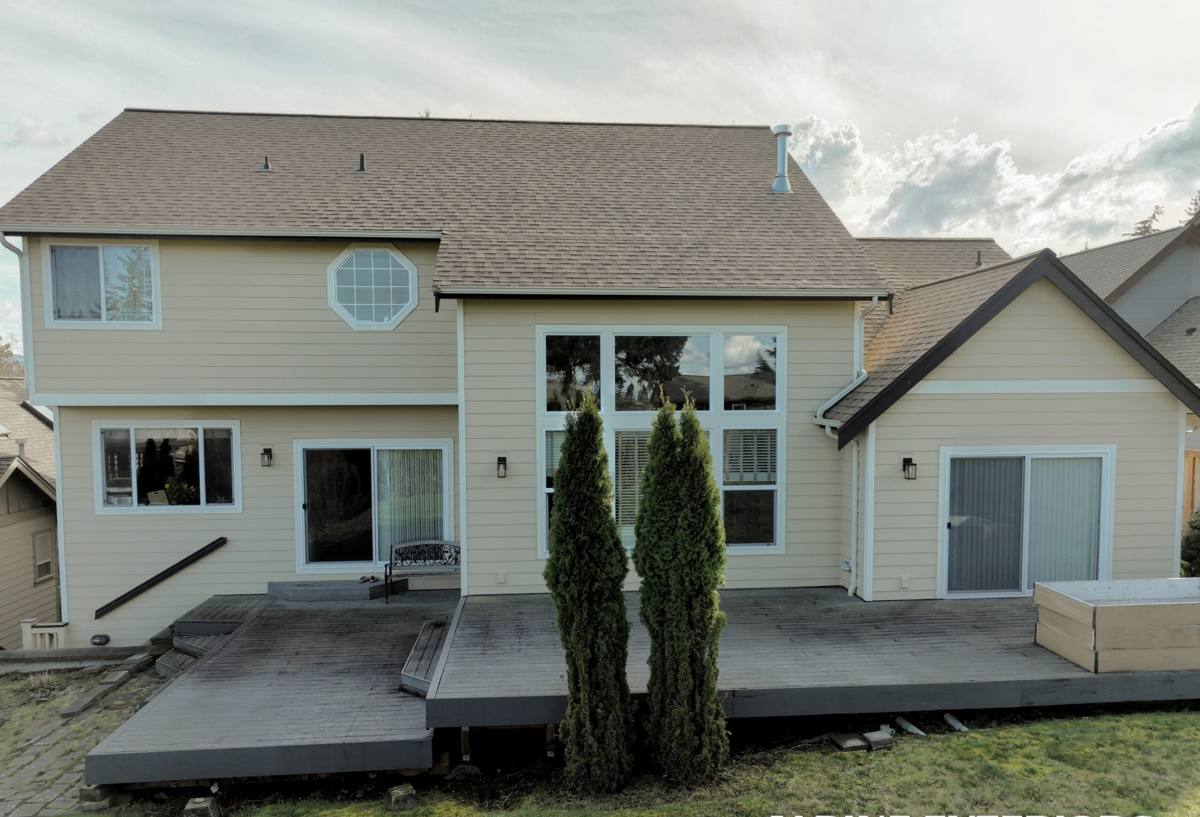
What Sumas's Climate Actually Does to an Outdoor Deck
A Valley Floor That Holds Moisture
Sumas sits low, on flat prairie ground near the Nooksack River system, and low-lying flat terrain holds humidity and fog differently than the higher, more broken ground closer to Lynden. Moisture that would drain or blow off a hillside site tends to linger longer here, which means a deck surface, its framing, and its fasteners all spend more hours damp after a storm than the same deck would somewhere with better natural drainage or air movement.
Driving, Wind-Pushed Rain
Storms moving through this part of Whatcom County rarely drop rain straight down. Wind pushes it sideways, driving it up under railings, into ledger connections where the deck meets the house, and between boards that aren't gapped correctly. A deck built for calm, dry weather can shed water fine on a still day and still trap it the moment wind gets involved — and out on Sumas's open farmland, there's less tree cover and fewer structures to break that wind before it reaches a house.
Cold Outflow Wind and Winter Snaps
Sumas sits near the mouth of the corridor that funnels cold air down out of British Columbia's Fraser Valley, and homes here can see sharper winter cold snaps, with real wind behind them, than towns set farther south or west in the county. That combination of cold and wind-driven moisture is hard on exposed fasteners, railing hardware, and any framing connection that wasn't detailed for it.
Marine Air, Even This Far Inland
Sumas doesn't take the direct salt spray that our waterfront service areas see, but it still sits inside the same marine-influenced weather system that reaches up the valley from Puget Sound. Combined with the valley's own humidity, that's enough salt-tinged moisture over time to matter for exposed metal — which is one more reason we don't treat deck hardware as a place to cut corners here.
Choosing a Decking Material for This Valley
The gap between a decking material that's suited to Sumas's combination of valley humidity, driving rain, and a long moss season and one that isn't shows up faster here than it would in a drier climate. Homeowners generally choose between pressure-treated or cedar wood, capped composite, and cellular PVC.
Wood
Pressure-treated lumber and cedar are the traditional choice and look great new, but both need regular sealing or staining to hold up against sustained valley moisture, and both are more vulnerable to fastener corrosion over time than the alternatives. Left unsealed even a season or two, wood in this climate is usually the first material to show moss, graying, and soft spots.
Capped Composite
Capped composite boards wrap a wood-fiber composite core in a plastic shell, which resists moisture absorption, staining, and UV fade far better than uncapped composite or wood. In a damp valley climate like Sumas's, that cap layer is doing real work — it's the difference between a board that needs occasional washing and one that needs ongoing sealing.
Cellular PVC
PVC decking has no wood fiber at all, so it doesn't absorb moisture the way even capped composite can at cut edges or fastener holes. It costs more than composite and can flex more under heavy point loads, but for a shaded or low-lying section of a Sumas property that holds moisture longer than the rest of the lot, some homeowners find the added cost worth the extra resistance.
| Material | Handling Valley Moisture | Moss Resistance | Upkeep |
|---|---|---|---|
| Cellular PVC | Excellent — no wood fiber to absorb moisture | Strong, smooth non-porous surface | Occasional washing |
| Capped composite | Strong — cap layer resists moisture and staining | Good on most product lines | Occasional washing |
| Uncapped composite | Moderate — some absorption at exposed fiber | Fair; more prone to buildup over time | Periodic cleaning |
| Cedar | Moderate — natural resistance, but needs sealing | Fair when sealed and maintained | Regular oiling or sealing |
| Pressure-treated wood | Weak against sustained valley humidity over time | Poor without regular treatment | Regular sealing or staining |
What a Correctly Built Deck Involves Here
The decking surface gets most of a homeowner's attention, but in Sumas's climate, the framing, fasteners, and drainage details underneath are what actually decide how long the deck lasts. A build done right for this area includes:
- Footings sized for the load and set below the code-required frost depth, which matters more here given the valley's colder winter snaps
- Framing lumber rated for sustained moisture exposure, sized correctly for the span and load it carries
- Stainless steel or coastal-grade corrosion-resistant fasteners throughout, not standard hardware that starts corroding within a few seasons out here
- Ledger flashing where the deck attaches to the house, installed to shed wind-driven rain rather than just water falling straight down
- Joist tape or another moisture barrier across framing members to slow water absorption at the most exposed connection points
- Board spacing and orientation that lets water and airflow move through the deck surface instead of pooling or trapping debris
- Guardrail posts and hardware rated for the wind loads an open, low-lying Sumas lot can see during a cold outflow event
Designing for Sumas's Open, Low-Lying Lots
Sumas properties tend to sit on flatter, more open ground than lots closer in to Lynden, with less tree cover to break the wind and more exposure across farmland. That changes some of the design decisions that go into a custom deck here. A more open railing design might need a partial wind screen that wouldn't be necessary on a more sheltered lot, while stair placement and orientation benefit from accounting for which direction winter outflow wind tends to come from on a given site. Flat terrain also means drainage and grade around the deck's substructure deserve extra attention up front, since water doesn't always have an obvious downhill path to follow the way it would on a sloped lot. None of these are one-size-fits-all answers — they depend on the specific property — which is part of why a deck designed for a Sumas lot doesn't always look like one designed for a shadier, more sheltered site in town.
How Our Process Works
We start with a site visit to look at what's actually there — existing deck condition if it's a replacement, drainage and grade around the build area, sun and wind exposure through the day, and how open or sheltered the specific lot is. From there we go over decking material options that fit the budget and how the space will actually get used.
Permitting in Sumas and the rest of Whatcom County generally follows standard setback, structural, and frost-depth requirements, and we handle that as part of the job rather than leaving it for the homeowner to sort out. Once permitted, the build follows the sequence above — footings and framing first, sized and fastened for the site's actual exposure, then the decking surface, railing, and any stairs or trim. We finish with a walkthrough covering what the material you chose actually needs going forward, which for most modern decking is minimal, but not nothing.
Keeping a Sumas Deck Performing Over Time
Even a well-built deck in the right material needs some routine attention in this climate. A short list worth keeping in mind:
- Rinse the deck surface periodically to clear pollen, farmland dust, and organic buildup before it works into the surface or cap layer
- Keep gaps between boards clear of leaves and debris so water and air can move through the way the design intends
- Check railing posts and fastener hardware once a year for early corrosion or loosening, especially heading into the wet season
- Watch low or shaded corners of the deck for standing water or slower drying after storms — these spots typically need attention first
- Address any soft framing or persistent moisture underneath right away; that's a structural issue, not a cosmetic one
Why a Crew That Already Works Sumas Matters
A crew that mostly builds decks closer to Lynden's town center can still do competent work, but a Sumas job has variables that don't come up as often elsewhere in the county — colder outflow wind events, flatter and more open lot exposure, and a valley floor that holds moisture longer than higher ground does. Working this area regularly means we're not guessing at those requirements on your property. We've seen which decking materials and fastener grades actually hold up against Sumas's specific mix of valley humidity, driving rain, and moss pressure, and which details are worth the extra time rather than an unnecessary upsell.
That familiarity also shows up in smaller judgment calls — how to orient a deck for the wind a specific open lot actually sees, or being straightforward about what a deck out here realistically needs to last, rather than padding the job with extras that don't matter for this climate.
Get a Free Estimate for Your Sumas Deck
Whether you're replacing a tired deck, building new, or just want a straight answer about what a deck project would take on your Sumas property, we're happy to walk the site with you and go over the options plainly. Reach out below for a free, no-pressure estimate.