 Lynden Window
 Windows Built for Everson's Weather, Not Just Its Views
Everson sits in a stretch of Whatcom County where the weather does real work on a house year-round. You get driving rain off the Nooksack valley, damp air that never fully dries out between storms, and long stretches of gray that let moss and algae get a foothold on anything that stays wet too long. Windows here aren't just a design choice — they're one of the hardest-working parts of the building envelope. A window that's a few degrees off-level, sealed with the wrong material, or flashed incorrectly won't fail today. It'll fail in year three or four, quietly, behind the trim, where you can't see it until the sill is soft and the wall cavity is wet.
We've replaced and repaired enough windows in this area to know the failure patterns are predictable. Most problems trace back to the same handful of causes: skipped or improperly lapped flashing, caulk used as a substitute for flashing instead of a supplement to it, and window units chosen for looks rather than for how they perform in sustained wind-driven rain. Getting custom windows right for an Everson home means addressing all three from the start.
What "Custom" Actually Means for This Job
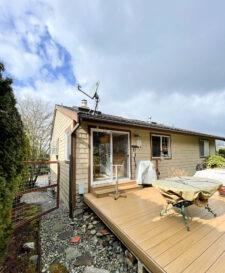
Custom windows aren't just about picking a grid pattern or a trim color. For most Everson homes — a mix of older farmhouses, mid-century ranches, and newer construction spread across acreage and in-town lots — custom sizing and detailing solves real problems:
- Out-of-square openings on older homes, where stock sizes leave gaps that get filled with excess caulk instead of proper shimming and insulation
- Matching sightlines and sash proportions across additions or mixed-era construction so the house doesn't look patched together
- Deeper jamb extensions for thicker wall assemblies, common in homes with added insulation or rainscreen siding
- Specialty shapes and larger fixed units that need site-specific structural and flashing plans, not a catalog cutout
- Matching historic or period-appropriate profiles on farmhouses where a standard vinyl replacement window would look wrong from the road
None of that is exotic work, but it does mean measuring twice, ordering to the actual opening rather than a nominal size, and having a crew that's comfortable adjusting details on site instead of forcing a stock unit to fit.
The Everson Climate Checklist
Before we quote a window job in this area, we're thinking through a short list of climate-specific questions. This is the same list we walk through on-site with homeowners:
| Climate Factor | Why It Matters in Everson | What We Check For |
|---|---|---|
| Wind-driven rain | Storms off the valley push water sideways, not straight down | Sill pan flashing, proper head flashing lap, weep path clearance |
| Persistent damp / low sun exposure | Surfaces stay wet longer, feeding moss and mildew growth | Frame material resistance to moisture, drainage gaps behind trim |
| Coastal-influenced salt air | Accelerates corrosion on hardware and fasteners | Stainless or coated fasteners, corrosion-resistant hardware and screens |
| Seasonal temperature swings | Expansion and contraction stresses seals over time | Glazing seal quality, proper expansion gap at rough opening |
| Wood-frame farmhouses and older construction | Original openings are rarely square or plumb | Custom sizing instead of forcing stock units into an imperfect frame |
None of this is guesswork — it's the same handful of failure points that show up again and again when we're called out to fix a window job someone else did fast and cheap.
Our Installation Process, Step by Step
1. On-Site Assessment and Measurement
We start by measuring every opening individually — not assuming they match, even in a home built in a single phase. We also check the existing flashing and sheathing condition around each opening while it's still exposed, since that's often where we catch a problem before it becomes a bigger repair.
2. Product Selection
We walk through frame material, glazing package, and hardware options based on the specific exposure of each wall — a window on the weather side of the house facing prevailing storms often warrants a different spec than one on a sheltered elevation.
3. Removal and Opening Prep
Old units come out carefully to avoid damaging the surrounding siding and trim. We inspect the sheathing and framing for rot or moisture staining before anything new goes in — this is the point where hidden water damage gets found and fixed, not covered up.
4. Flashing and Sealing
This is the step that determines whether a window lasts ten years or thirty. We install sill pan flashing, lap house wrap and flashing tape in the correct shingle-style order (bottom to top, so water always sheds outward), and use sealants rated for the exposure rather than whatever's cheapest.
5. Setting, Shimming, and Insulating
Windows get shimmed level, plumb, and square, with low-expansion foam or backer rod and sealant in the gap — never packed solid with foam, which can bow the frame and bind the sash.
6. Trim, Cleanup, and Walk-Through
Interior and exterior trim goes back on or gets replaced to match, and we walk the homeowner through operation, locking hardware, and basic care before we consider the job done.
Frame Material: What Holds Up in This Climate
There's no single "best" window material for every home — it depends on the house, the budget, and how exposed the wall is. Here's how the common options compare for Everson's conditions specifically:
| Material | Moisture Performance | Maintenance | Best Fit |
|---|---|---|---|
| Vinyl | Good — won't rot, resists moss growth on frame surfaces | Low — occasional cleaning | Most replacement projects, budget-conscious remodels |
| Fiberglass | Excellent — dimensionally stable through wet/dry cycles | Low | Larger openings, high-exposure walls, long-term durability priority |
| Wood (clad exterior) | Good on the exterior face; interior wood needs protection from condensation | Moderate — exterior clad reduces upkeep, interior finish needs occasional attention | Historic or period-style homes wanting a traditional look |
| Aluminum | Fair — prone to condensation and thermal transfer unless thermally broken | Moderate — watch for corrosion near salt-influenced air | Specific architectural or commercial-style applications |
For most Everson homes, we lean toward vinyl or fiberglass for full replacements because both shrug off the freeze-thaw and wet-dry cycling this area gets without the maintenance burden of exposed wood. Where a homeowner wants a wood look on a farmhouse-style home, clad-exterior wood units let us keep the traditional profile while protecting the part of the window that takes the weather.
Signs Your Current Windows Are Losing the Fight
Whatcom County's damp winters and mossy shoulder seasons speed up window failure in ways that aren't always obvious from inside the house. Walk your exterior and check for:
- Soft or spongy wood at the sill or bottom corners of the frame
- Moss or dark streaking building up on the frame or the siding just below the window
- Fogging or a permanent haze between panes — a sign the seal has failed and the gas fill is gone
- Drafts you can feel with a hand near the frame on a windy day
- Paint or finish that's peeling or bubbling specifically around the window, not the wider wall
- Difficulty opening, closing, or locking the sash — often a sign the frame has racked out of square
- Visible daylight or gaps between the frame and the siding trim
Any one of these on its own might just need a repair. Several together, especially on an older home, usually means the window and its flashing are due for full replacement rather than a patch.
What Drives the Cost
Every Everson home is different, and we'd rather walk your specific job than quote a number without seeing it. That said, the main factors that move a window project up or down in cost are consistent:
| Factor | Impact |
|---|---|
| Number and size of openings | Larger and more numerous windows mean more material and labor |
| Frame material chosen | Vinyl is typically the most budget-friendly; fiberglass and clad wood cost more upfront |
| Condition of the existing opening | Rot repair or reframing adds labor beyond the window itself |
| Custom sizing or shapes | Non-standard sizes and specialty shapes cost more than stock sizes |
| Glazing package | Upgraded low-E coatings or gas fills add cost but improve comfort and efficiency |
| Trim and siding tie-in | Matching existing trim profiles or repairing siding around the opening adds time |
We'll always tell you honestly if we find rot or structural issues once an opening is exposed — better to know and fix it right than to seal a problem behind new trim.
Why It Matters to Hire a Crew That Already Works in Everson
Window installation looks similar everywhere on paper, but the details that keep a window watertight are regional. A crew that mostly works in drier climates may not think twice about flashing lap order or weep hole clearance, because where they work, a small gap doesn't get tested by sideways rain for weeks at a stretch. In Whatcom County, it does. We've seen the callbacks that come from installers who treated caulk as the primary water barrier instead of proper flashing — it holds for a season or two, then fails right when the rain picks up.
Working regularly in and around Lynden and Everson also means we're familiar with the age and construction style of homes out here — from older farmhouses with balloon framing to newer builds on acreage lots — and we're not guessing at what's behind the wall when we open things up. That familiarity shows up in fewer surprises and fewer callbacks.
Permits and Local Code Considerations
Window replacement in Whatcom County generally doesn't trigger a major permitting process for like-for-like replacements, but structural changes — resizing an opening, adding a new window, or altering a load-bearing wall — typically do require review. Energy code compliance (glazing U-factor and performance ratings) also applies to replacement windows in Washington State. We handle these requirements as part of the project rather than leaving homeowners to sort them out separately, and we'll flag early on if your project needs a permit before work starts.
Get a Straight Answer for Your Home
If you're dealing with a window that's fogged, drafty, or showing soft spots, or you're planning a full replacement across your Everson home, we're happy to come take a look and give you an honest read on what's needed — no pressure, no inflated scope. Fill out the form below for a free estimate, and we'll walk the property with you and talk through the options that make sense for your home and your budget.