 Lynden Window
 Why Bellingham Homes Need a Different Approach to Windows
Bellingham sits close enough to the bay that salt-laden air is a real factor in how fast hardware corrodes and finishes break down, and Whatcom County's wet season isn't a few weeks in November — it's most of the year. Add wind-driven rain off the water and the long stretch of gray, damp months that keep north-facing siding and trim under a film of moss, and you've got a climate that is genuinely harder on window openings than most of the country deals with. A window that's rated fine for a dry inland climate can still underperform here if it isn't installed with this specific combination of moisture, salt, and cool damp air in mind.
"Custom" in this context doesn't just mean a nonstandard size. It means matching the window unit, the flashing detail, and the installation sequence to what a Bellingham wall assembly actually has to shed and drain — reliably, for the next 20-plus years, not just through the first inspection.
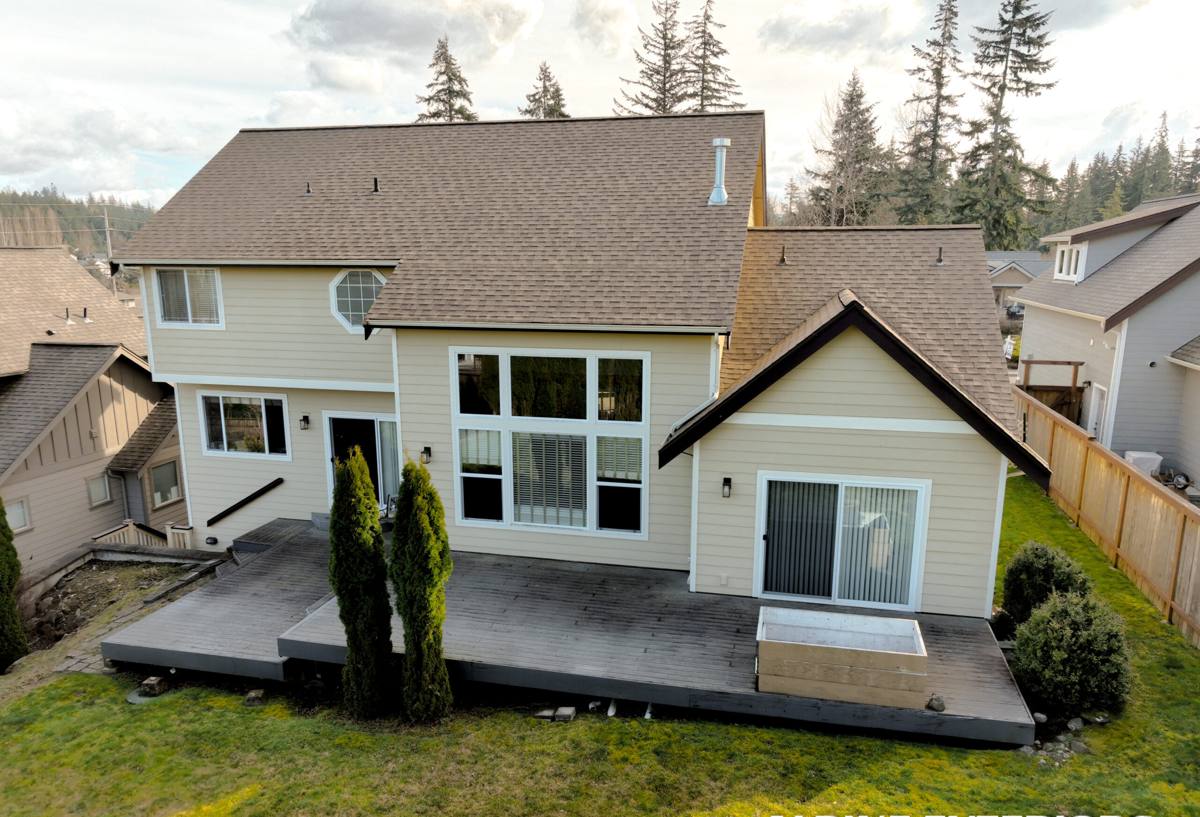
What Custom Actually Means for a Bellingham Job
Non-Standard Openings
Older Whatcom County homes rarely have openings that match today's standard window sizes exactly. Settling, past remodels, and older framing methods all mean an opening might be an inch off in either direction, out of square, or built for a window style that isn't made anymore. Custom sizing means the new window is built to fit the actual opening, rather than forcing the opening to fit a stock size — which usually means less shimming, fewer gaps to seal, and a cleaner moisture path.
Matching the House
Custom also covers matching sightlines, grid patterns, and trim profiles so a new window doesn't look like an obvious retrofit next to its neighbors. On a bay window, a specialty shape, or a run of matching windows across a facade, getting the proportions and configuration right is as much a part of the job as the glass itself.
Performance Tuned to Exposure
A window on the west or south wall taking direct driving rain needs a different glass and frame spec than one tucked under a deep eave on a protected side of the house. Custom work means those calls get made room by room, not with a single spec applied to the whole house.
What We See Going Wrong in Bellingham Homes
Most of the window failures we get called out to in this area trace back to a small set of recurring problems:
- Sills and lower frame corners holding moisture long enough to grow moss or soft rot, especially on north- and west-facing walls
- Corroded or seized hardware — locks, cranks, balances — from years of salt-tinged, humid air, even where the wood or vinyl itself still looks fine
- Failed seals on older double-pane units, showing up as fogging or condensation trapped between the panes
- Flashing that was taped or caulked instead of properly lapped, so wind-driven rain gets forced behind the trim during storms
- Condensation on the interior glass and sill in winter, a sign the unit isn't holding its rated insulation value or the room isn't ventilating properly
None of these are exotic problems — they're what you'd expect from a coastal, high-rainfall climate wearing down window assemblies over time. The fix isn't a fundamentally different product so much as installation and material choices that respect what the climate is doing.
What a Correct Installation Actually Involves
Prep and Removal
The old unit comes out carefully so we can see the actual condition of the framing underneath — this is where hidden rot or old water damage shows up, and it needs to be dealt with before a new window goes in, not covered over.
Flashing and Drainage
Flashing gets installed in proper shingle-lap order — sill pan first, then jambs, then head flashing — so any water that does get behind the siding has a built-in path back out rather than a place to collect. This is the single most important step for a house getting driving rain off the water, and it's also the step that's easiest to shortcut if a crew is moving fast.
Air and Moisture Sealing
Proper backer rod and sealant at the interior and exterior, plus correct insulation in the gap between the frame and the rough opening, keeps both bulk water and humid air from working their way into the wall cavity — which is exactly where mold and rot get started unseen.
Fastening and Finish
Fasteners, cladding, and trim go in per the manufacturer's installation instructions, since that's also what keeps the warranty valid if something does go wrong down the road.
Choosing Frame and Glass Options for a Coastal, Wet Climate
There's no single "best" window material — every option is a set of trade-offs, and the right call depends on the wall, the exposure, and your maintenance preferences. Here's how the common frame materials generally stack up for a Whatcom County home:
| Frame Material | Moisture & Salt Air Behavior | Maintenance | General Cost Position |
|---|---|---|---|
| Vinyl | Won't rot or corrode; performs well in damp, salty air | Low — occasional cleaning | Most affordable |
| Fiberglass | Very stable in temperature and moisture swings; holds paint well if color changes are wanted later | Low | Mid to upper range |
| Aluminum-Clad Wood | Exterior clad protects from weather while keeping a wood interior; cladding seams need good detailing to stay watertight | Moderate | Upper range |
| Solid Wood | Best classic look, but most vulnerable to Bellingham's rain and moss exposure without diligent upkeep | High — regular painting/sealing | Upper range, varies by species |
For glass, an argon-filled double-pane unit is standard and performs well here. Homeowners on exposed or noise-sensitive lots sometimes step up to triple-pane for the added insulation and sound dampening, though it adds cost and weight. Whatever the glass package, we pay close attention to the low-E coating spec, since that affects how much winter heat you keep and how much summer glare and UV you block.
Our Process, Start to Finish
- On-site assessment — we look at every opening individually, not just the house as a whole, and check for existing moisture or rot issues before quoting anything
- Custom measurement and product selection — sizes, frame material, glass package, and grid style are chosen per opening and per exposure
- Ordering and lead time review — custom units take longer than stock sizes, and we'll give you a realistic timeline up front
- Removal and framing check — old windows come out, framing is inspected and repaired if needed
- Installation with proper flashing and sealing — sill pan, jamb and head flashing, insulation, and sealant, in that order
- Interior and exterior finish work — trim, caulking, and touch-up so the new window looks finished, not patched in
- Final walkthrough — we test operation, locks, and seals with you before calling the job done
How to Vet Any Contractor Before You Sign
Whether you call us or someone else, these are the questions worth asking before a single window comes out of your house:
- Are you licensed and insured to do exterior work in Washington State, and can you provide proof?
- Will you inspect and, if needed, repair the framing and sheathing before installing the new window — or does the quote assume the opening is already sound?
- What flashing method do you use, and will it be done in proper shingle-lap order?
- What's the manufacturer's warranty, and does your installation method keep that warranty valid?
- Do you have current references or completed work in Whatcom County you can point to?
- What's the realistic timeline from signed order to finished installation, including lead time for custom sizes?
A contractor who answers these clearly and without hesitation is generally a safe bet. Vague answers about flashing or warranty terms are worth pushing on before you commit.
Why Local Experience in This Climate Matters
A crew that already works Bellingham and the surrounding Whatcom County area has seen how this specific climate treats window installations over years, not just at the moment of install. That means knowing which exposures need extra flashing attention, which older home styles tend to have out-of-square openings, and which frame materials hold up best against the salt air rolling in off the bay. It also means we're not learning the local building department's requirements on your job — permitting and inspection expectations here are already familiar territory.
Just as important, a local crew is accountable locally. If a seal needs adjusting or a question comes up two years after installation, we're not a call center — we're down the road.
Living With Your New Windows: Simple Upkeep for This Climate
Custom, correctly installed windows still benefit from a little seasonal attention in a climate like this:
- Rinse sills and tracks periodically to keep moss and organic buildup from taking hold
- Check exterior caulk lines once a year, especially after a hard winter, for cracking or separation
- Operate locks and cranks a few times each season so hardware doesn't seize from disuse and moisture
- Keep gutters and downspouts clear so roof runoff isn't dumping extra water past window heads
- Watch for condensation patterns on interior glass — a sudden change can be an early sign of a seal or ventilation issue worth checking
If you're weighing a custom window project for a Bellingham home, we're happy to take a look and give you a straightforward, no-pressure estimate — just use the form below to get started.