 Lynden Window
 Building a Deck That Actually Holds Up at Wiser Lake
Wiser Lake sits in one of the wetter pockets of Whatcom County, and any deck built here has to deal with more than just rain. Lake humidity lingers in the air well past a storm, morning fog off the water keeps wood surfaces damp longer than they would be a few miles inland, and the tree cover around many lake properties means less direct sun to dry things out. Add in the salt-tinged marine air that moves through this part of Washington off the Salish Sea, and you've got a combination that's hard on fasteners, hard on finishes, and very good at growing moss. A deck built without that in mind will look fine for a season or two and then start showing problems — soft spots, black streaking, rust bleed at the screws, slick planks underfoot.
We're a Lynden-based crew, and Wiser Lake is part of our regular service area. That matters more than it sounds like it should. A contractor who's framed decks on lake lots before already knows where the moisture problems tend to start and builds around them from day one, instead of learning it on your project.
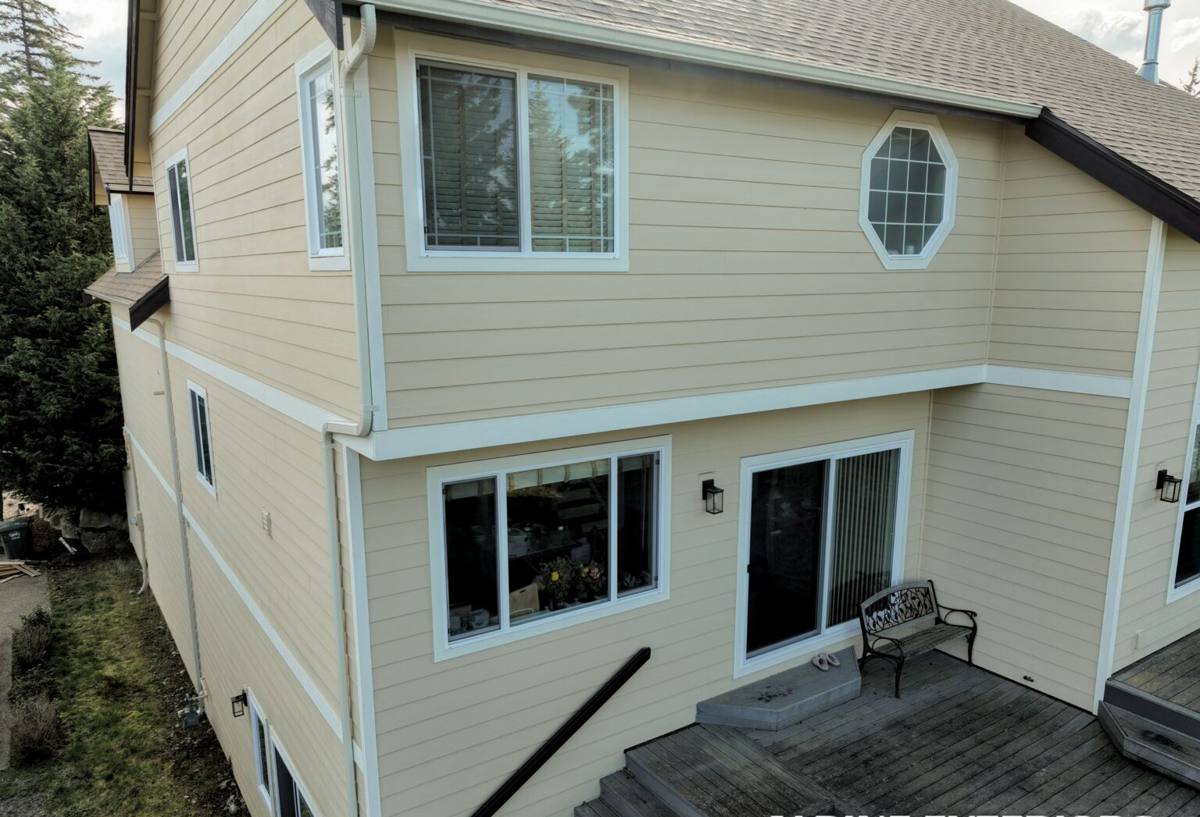
What Whatcom County's Climate Does to a Deck
This isn't about one bad storm — it's the cumulative effect of a long wet season, close to a lake, in a county that rarely gets long dry stretches to let structures fully dry out.
Moss and Algae Growth
Shaded, damp decking near a lake is close to ideal moss habitat. Once moss establishes itself in a deck surface, it holds moisture against the wood or composite cap, which accelerates rot underneath and makes the surface genuinely slippery — a real fall hazard on stairs and near water.
Driving Rain and Wind-Blown Moisture
Rain here doesn't always fall straight down. Wind off the lake can drive moisture sideways into ledger connections, under railings, and into any gap where end grain is exposed. Those are exactly the spots where standard construction tends to fail first if it isn't detailed properly.
Salt-Tinged, Humid Air
The marine influence that reaches inland through this part of Washington keeps humidity elevated and speeds up corrosion on unprotected metal hardware — screws, joist hangers, bolts. Cheap or mismatched fasteners are one of the most common failure points we find on older decks in this region.
Decking Material Choices for a Lake Property
There's no single "best" decking material — the right choice depends on how much sun exposure your deck gets, how much maintenance you're willing to do, and your budget. Here's how the common options actually perform in this specific climate.
| Material | How It Handles Moisture & Moss | Maintenance | General Cost Range |
|---|---|---|---|
| Pressure-treated wood | Good if properly sealed and re-sealed on schedule; absorbs moisture if neglected, which invites moss and rot | Annual cleaning and re-staining/sealing recommended | Lower upfront cost |
| Cedar | Naturally rot-resistant but still needs sealing in shaded, damp spots; can gray and stain if untreated | Regular cleaning, periodic oiling or sealing | Mid-range |
| Composite decking | Doesn't absorb water like wood, but can still grow surface moss/mildew in shaded areas — needs washing | Low — periodic washing, no sealing or staining | Mid to upper-mid range |
| PVC/capped polymer decking | Best moisture resistance of the group; least prone to rot since there's no wood fiber to absorb water | Low — occasional washing | Highest upfront cost |
For lakefront or heavily shaded lots specifically, we generally steer clients toward composite or capped polymer if budget allows, simply because the maintenance burden of keeping wood sealed in a shaded, humid spot is real and easy to fall behind on. That's a maintenance and moisture-behavior tradeoff, not a knock on wood decking done right — a well-built and consistently maintained cedar or treated-wood deck holds up fine here too.
What a Correctly Built Deck Needs in This Climate
Materials only matter if the structure underneath is built to shed water and dry out. A few things we treat as non-negotiable on lake-area builds:
Ledger Flashing and Water Diversion
The ledger board connection — where the deck attaches to the house — is the single most common spot for hidden rot on older decks. Proper flashing that directs water away from the house band joist, rather than letting it wick in behind the ledger, is essential and is not optional in this climate.
Joist Protection
Joist tape or an equivalent moisture barrier on top of each joist keeps water from pooling in screw holes and starting rot from the inside out — a slow failure mode that's invisible until the decking is pulled up.
Fastener Grade
Given the humid, salt-tinged air, we use corrosion-resistant fasteners and hardware rated for ground contact and coastal-influenced conditions, not general-purpose hardware store screws that will streak and weaken over a few wet seasons.
Footing Depth and Drainage
Lake-adjacent soil can hold more moisture and shift more with freeze-thaw cycles than soil further inland. Footings need to be set to proper frost depth with drainage considered, especially on sloped lots running down toward the water.
Airflow Underneath
Decks built low to the ground or over poorly ventilated crawlspaces trap humidity underneath, which is exactly what accelerates joist rot. Where grading allows, we build in enough clearance and, where it doesn't, we plan drainage and ventilation solutions into the design instead of ignoring the problem.
Design Considerations Specific to Wiser Lake Lots
Lake properties often have their own layout quirks — sloped grades down to the water, mature trees that create heavy shade, and sightlines toward the lake that homeowners want to preserve or open up. A few things worth thinking through before we design:
- How much of the deck will be shaded most of the day — this drives both material choice and how aggressive the moss/mildew maintenance plan needs to be
- Whether the deck will be close enough to the water to warrant extra attention to railing height and baluster spacing for safety, especially with kids or guests around
- Grade and drainage direction — water needs somewhere to go that isn't back toward the house foundation
- Whether stairs down toward the lake need a slip-resistant surface given the added moss risk near water
- How much of the existing tree canopy you want to keep versus opening up for more sun exposure on the deck surface
Our Process for a Wiser Lake Deck Project
We keep the process straightforward and transparent from the first walkthrough to final sign-off:
- On-site assessment. We look at grade, shade patterns, existing structure (for replacements), and how the site drains, since that shapes both design and framing decisions.
- Material and design discussion. We walk through the tradeoffs above in plain terms — no pushing a product because it's what we happen to have on hand.
- Permitting. Deck projects in Whatcom County and the City of Lynden generally require permits depending on size and height — we handle that process as part of the job.
- Build. Proper footings, ledger flashing, joist protection, and corrosion-resistant hardware as standard practice, not an upsell.
- Final walkthrough. We go over basic care — cleaning schedule, sealing timeline if applicable — so the deck actually reaches its expected lifespan.
Keeping a Lake-Area Deck in Good Shape
Even a well-built deck needs some seasonal attention in this climate. A simple maintenance checklist we give clients:
- Sweep debris and standing leaves off the deck regularly, especially in fall — trapped organic matter is what starts moss colonies
- Wash the surface at least once or twice a year with a deck-safe cleaner to knock back algae and moss before it takes hold
- Check and re-seal wood decking on the manufacturer's recommended schedule — don't wait until it visibly grays or absorbs water
- Inspect railings, stair connections, and ledger flashing annually for loose fasteners or early rust staining
- Keep nearby shrubs and tree limbs trimmed back so the deck surface gets what sun exposure is available to help it dry between rains
Why a Local Crew Matters for This Job
A deck contractor who mostly works drier, sunnier parts of the state doesn't build with the same habits a Lynden-based crew does. We're used to designing for a long wet season, a real moss problem, and lake-adjacent sites where drainage and shade genuinely change the right answer. That local experience shows up in small decisions — fastener choice, flashing details, how much clearance we leave underneath the joists — that don't show up on a quote but absolutely show up ten years down the line.
If you're planning a new deck or replacing one that's showing its age at Wiser Lake, we're happy to come take a look and talk through what makes sense for your site. There's no pressure and no cost to get a straightforward estimate — just an honest read on what your property needs, using the form below.