 Lynden Window
 Deck Repair in Custer
Decks in Custer take a beating that decks twenty miles inland don't. Between the salt-laden air blowing in off the water, the long stretches of driving rain that Whatcom County sees every fall and winter, and a moss season that can run from October clear into April, an outdoor deck here ages faster than most homeowners expect. A deck that would need minor upkeep in a drier, inland climate can develop real structural problems in Custer within a few seasons if it's not built and maintained with that reality in mind.
This page is about deck repair specifically for Custer homes — what the local conditions actually do to a deck, what a correct repair involves, and how we approach the work when we're called out to a job in this part of the county.
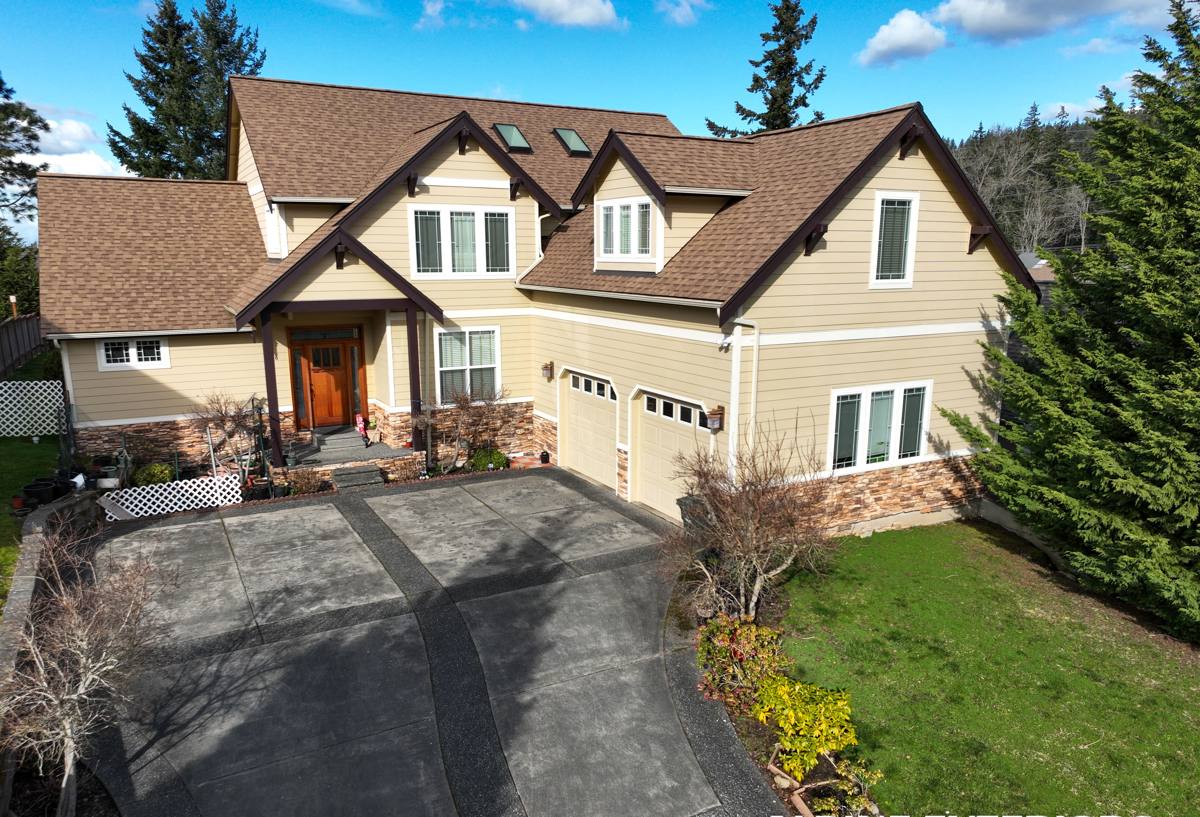
What Custer's Coastal Climate Does to a Deck
Salt Air and Corrosion
Proximity to the water means airborne salt settles on everything outdoors, including deck hardware. Fasteners, joist hangers, and railing brackets that aren't rated for a coastal environment corrode faster than their inland counterparts. Once a fastener starts rusting, it loses grip strength long before the rust is visible from the surface — which is why a deck can look fine from a few feet away while the connections holding it together are already compromised underneath.
Driving Rain and Moisture Intrusion
Whatcom County's rain doesn't just fall — it drives sideways in a lot of storms, which pushes moisture into places a vertical rain would never reach: under railing base plates, behind ledger boards, into the end grain of decking boards, and around post bases. Wood that stays wet longer than it stays dry starts to break down from the inside, and that process is often well underway before it shows on the surface.
Moss Season
A long, wet moss season means moss and algae get a real foothold on any deck surface that doesn't get regular sun or airflow — north-facing decks and shaded corners especially. Moss holds moisture directly against the wood or composite surface, and on wood decking it also makes boards slick and dangerous underfoot long before rot sets in.
Signs Your Deck Needs Repair, Not Just Cleaning
Some deck problems are obvious. Others hide in plain sight until they become a safety issue. Walk your deck and check for these:
- Boards that feel soft, spongy, or springy when you step on them
- A screwdriver or awl that sinks easily into wood at board ends, around posts, or near the ledger board
- Railings or guard posts that wiggle or flex when pushed
- Rust streaks running down from fasteners or metal connectors
- Gaps opening up where the deck ledger meets the house
- Stair stringers that feel uneven, bouncy, or have visible splitting
- Persistent green or black growth that comes back within weeks of cleaning
- Standing water that doesn't drain off the surface within an hour or two after rain
Any one of these on its own might be minor. More than one, especially near a structural connection point, usually means it's time for an inspection rather than another round of pressure washing.
Common Deck Problems We Find in Custer Homes
The specific failures we see in this area follow a pattern shaped by the local climate:
- Ledger board rot — where the deck attaches to the house is the single most important structural connection on the deck, and it's also the spot most exposed to trapped moisture if flashing was skipped or has failed
- Corroded fasteners and hangers — especially on decks built before coastal-rated hardware became standard practice
- Post base rot — wood posts set in or near soil, or sitting on bases that don't shed water, break down from the bottom up
- Warped or split decking boards — from repeated wet-dry cycling over multiple seasons
- Loose or failing railings — a safety issue as much as a repair issue, since railing connections take direct load
- Moss-slick surfaces on stairs — a fall hazard that's easy to underestimate until someone's on the stairs in the rain
Repair vs. Replacement: How We Make the Call
Not every problem deck needs to come out. A lot of what we do in Custer is targeted repair — replacing a ledger board, swapping out corroded hardware, sistering a rotted joist, or rebuilding a section of railing — rather than tearing off the whole structure. Here's generally how that decision gets made:
| Factor | Leans toward repair | Leans toward replacement |
|---|---|---|
| Framing condition | Joists and beams are solid; damage is localized | Rot has spread through multiple structural members |
| Ledger board | Sound connection, isolated flashing failure | Ledger itself is compromised or improperly attached |
| Decking surface | Individual boards failing, structure below is fine | Most boards are warped, splitting, or rotted |
| Age of the deck | Relatively recent build with an isolated defect | Original construction is old and undersized by current code |
| Cost comparison | Repair cost is a fraction of a full rebuild | Repair cost starts approaching what a rebuild would run |
We'll always tell you honestly which side of that line your deck falls on, and why — including when a repair now is a reasonable choice even if replacement is likely a few years down the road.
Our Deck Repair Process
- Inspection. We check the ledger connection, framing, posts, fasteners, railings, and decking surface, including probing wood in suspect areas rather than relying on a visual look alone.
- Honest assessment. We walk you through what we found, what's structural versus cosmetic, and what your realistic options are — repair, partial rebuild, or full replacement.
- Scope and plan. We agree on exactly what's being repaired, what materials and hardware will be used, and roughly what it will cost before any work starts.
- Repair work. This might mean replacing rotted framing members, resetting or rebuilding post bases, correcting flashing at the ledger, swapping corroded hardware for coastal-rated fasteners, or replacing individual decking boards and railing sections.
- Final check. We test the repaired sections under load — walking, leaning on railings, checking stairs — before calling the job done.
Straightforward board or railing repairs are often a one-day job. Repairs involving the ledger board, framing, or multiple post bases take longer, since that work needs to be done right rather than fast.
Material Choices That Hold Up Locally
What we repair with matters as much as the repair itself. In a salt-air, high-moisture climate like Custer's, some material choices simply require less fighting against the environment over time.
| Material | How it holds up here | Maintenance burden |
|---|---|---|
| Pressure-treated lumber | Good rot resistance if properly sealed and maintained; still vulnerable at cut ends and fastener holes | Needs re-sealing every 1-2 years in this climate |
| Cedar | Naturally rot- and insect-resistant, ages gracefully, but softer and more prone to surface wear | Regular staining or sealing to preserve appearance and protection |
| Composite decking | Resists rot and moisture intrusion in the board itself; framing underneath still needs to be wood or approved substructure | Low — mainly cleaning to keep moss and algae from taking hold |
| Hardware and fasteners | Stainless steel or heavy hot-dip galvanized resist salt-air corrosion far longer than standard coated fasteners | Minimal once installed correctly |
We don't push composite as a blanket answer for every repair — sometimes matching existing wood decking is the right call, and sometimes swapping a failure-prone section to composite is the smarter long-term move. That's a case-by-case conversation, not a one-size-fits-all pitch.
Why Hire a Crew That Already Works Custer
A deck repair contractor who only occasionally works this stretch of Whatcom County can miss things that are obvious to someone who sees this climate's effects every week — where moisture tends to collect on a north-facing deck, how fast unprotected hardware corrodes this close to the water, or which framing details tend to fail first on older builds in this area. That familiarity shows up in faster, more accurate diagnosis and in repairs that are built to actually hold up against the conditions they'll face, not just conditions in general.
It also means straight answers. We're not going to tell you a deck needs a full rebuild when a targeted repair will genuinely hold, and we're not going to patch over a structural problem to save a callback. Broad repair costs for a deck in this area typically run from a few hundred dollars for board, railing, or hardware repairs up to a few thousand for framing or ledger work — the actual number depends entirely on what we find once we're up close.
Keeping Your Repaired Deck Solid Year-Round
Once repairs are done, a little seasonal attention goes a long way toward not repeating them:
- Clean moss and algae off the surface before it has a chance to establish, especially on shaded sections
- Keep gutters and downspouts clear so runoff isn't dumping extra water directly onto or under the deck
- Check railings and stair connections for movement once or twice a year
- Re-seal or re-stain wood decking on the schedule appropriate to the product — don't wait until it visibly fails
- Look at the ledger board area annually for any sign of gapping, staining, or trapped moisture
- Keep planters and anything holding standing moisture off direct contact with decking boards
If your deck in Custer is showing any of the signs above, or you just want an honest read on where it stands, we're happy to come take a look. Fill out the form below for a free, no-pressure estimate.