 Lynden Window
 Windows Built for Blaine's Coastal Climate
Blaine sits right on the water at the edge of Whatcom County, which means its homes take a different kind of weather beating than houses even a few miles inland in Lynden or Ferndale. Salt-laden air off Semiahmoo Bay and the Strait of Georgia works on metal and finishes year-round. Wind-driven rain off the water finds any gap in a window's seal. And the long, gray, wet stretch of fall through spring gives moss and algae months to take hold on shaded siding and trim. Windows here don't fail because they're old — they fail because they were never built or installed for this specific combination of salt, wind, and standing moisture.
This page is about one job done right in one place: window installation for homes in and around Blaine. Not a general overview of window types, but what actually matters when the house is a few blocks from saltwater and gets weather most inland Whatcom County homes never see.
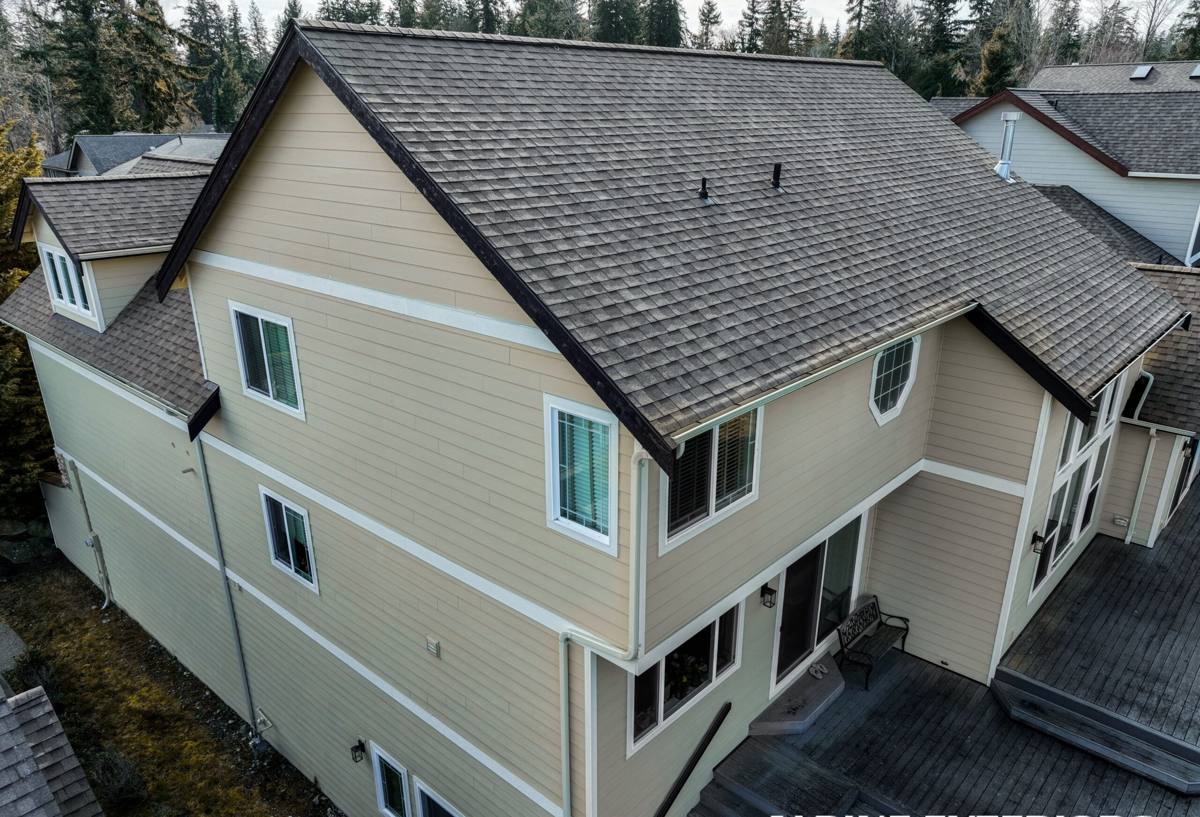
What Salt Air, Driving Rain, and Moss Actually Do to a Window
Salt Air and Corrosion
Airborne salt is corrosive to exposed metal — window hardware, screen frames, and especially lower-grade aluminum components. In a coastal town like Blaine, hardware that would last decades in Lynden can start pitting or seizing up in half that time if it isn't rated for a marine environment. This is one of the biggest differences between a window that's "fine" and one that's actually suited to this location: the hinges, locks, and cranks matter as much as the glass.
Wind-Driven Rain and Seals
Rain that comes in sideways off the water tests a window's weatherstripping and flashing in a way that straight-down rain never does. A window that's watertight in calm conditions can still leak during a wind event if the flashing details around it were rushed. Most of the water damage we find around older windows in this area didn't come through the glass — it came through gaps at the sill and jambs where wind pushed rain past an incomplete seal.
Moss, Algae, and Shade
North-facing walls and windows tucked under eaves or tree cover stay damp for days after a storm. That constant moisture is exactly what moss and algae need to establish on trim, sills, and cladding. Once organic growth takes hold against wood trim or a window frame, it holds moisture against the surface and accelerates rot underneath — often before it's visible from a normal distance.
Warning Signs Worth Acting On
Homeowners in Blaine often live with early window problems longer than they should, because the symptoms look minor at first. Watch for:
- Fogging or a permanent haze between panes — the sign a seal has failed and the gas fill is gone
- Soft, spongy, or discolored wood at the sill or lower corners of the frame
- Hardware that's stiff, corroded, or hard to lock — especially on windows facing the water
- A draft you can feel with your hand along the frame edge on a windy day
- Visible moss, algae, or dark streaking on the trim or sill
- Paint or caulk that's cracked, peeling, or pulling away from the frame
- Windows that are noticeably harder to open and close than they used to be
Any one of these on its own isn't an emergency. Several together, especially on the side of the house that faces prevailing wind and rain, usually means moisture has been getting past the seal for a while.
What a Correct Installation Actually Involves
Window installation quality shows up in the parts you can't see once the trim goes back on. In a wind- and rain-exposed location like Blaine, these details aren't optional extras — they're the difference between a window that lasts and one that fails early.
Flashing and Moisture Management
Every opening needs a proper drainage path: sill pan flashing so any water that does get past the window has somewhere to go besides your wall framing, plus correctly lapped flashing tape at the jambs and head so water sheds outward and down, not into the wall cavity. This is the single most common shortcut on rushed jobs, and it's the one that causes hidden rot years later.
Fastening and Air Sealing
Windows need to be shimmed level, plumb, and square before they're fastened — an out-of-square window stresses its own seals from day one. Gaps between the frame and rough opening get sealed with a proper low-expansion foam or backer rod and sealant, not just caulked over on the surface. On a windy site, air sealing here is what keeps drafts and moisture out over the long run.
Interior and Exterior Finish Work
Exterior trim and caulking need to be rated for sustained UV and moisture exposure, not just whatever was on the shelf. Interior sills and casing get sealed too — condensation happens on both sides of a window, and a coastal home's higher ambient humidity makes interior moisture management part of the job, not an afterthought.
Choosing Window Materials and Glass for a Blaine Home
Material choice matters more here than in a drier, inland location. Some materials simply hold up better to salt air and constant moisture cycling.
| Frame Material | Coastal Durability | Maintenance | Typical Fit |
|---|---|---|---|
| Vinyl | Good — won't corrode or rot, handles salt air well | Low | Most Blaine homes; strong value and performance |
| Fiberglass | Very good — dimensionally stable, resists warping in temperature and moisture swings | Low | Higher-exposure walls facing the water or prevailing wind |
| Aluminum | Fair unless marine-grade — prone to pitting and corrosion in salt air over time | Moderate | Limited use; needs upgraded hardware and finish for this climate |
| Wood / Wood-clad | Fair — attractive but vulnerable where cladding or finish is compromised near moisture | Higher | Homes prioritizing a specific traditional look, with realistic upkeep expectations |
On glass, we generally recommend dual-pane with a Low-E coating and argon fill as the baseline for this area — it manages both heat loss and the condensation risk that comes with Whatcom County's damp winters. On walls that take the brunt of wind and driving rain, we'll also talk through upgraded weatherstripping and hardware finishes rated for coastal exposure, since that's often what determines how the window performs in year eight or ten, not year one.
Our Installation Process
The process is straightforward, but each step is where the coastal-specific details actually happen:
- On-site assessment — we look at existing windows, framing condition, and which walls take the most wind and rain exposure before recommending anything
- Product selection — we walk through frame material, glass package, and hardware based on that specific wall's exposure, not a one-size answer for the whole house
- Removal and inspection — old windows come out carefully so we can check the rough opening and framing underneath for hidden moisture damage before it's covered back up
- Flashing and installation — sill pan flashing, properly lapped jamb and head flashing, correct shimming, and low-expansion foam sealing at the perimeter
- Finish work — exterior trim and caulking rated for sustained moisture exposure, interior sill and casing sealed and finished
- Final check — we verify the window operates smoothly, locks properly, and there are no gaps before we call the job done
Why a Crew That Already Works Blaine Matters
A contractor who mostly works drier, inland jobs can still install a window correctly on paper and still get it wrong for this location — because the failure points here aren't obvious until you've seen them. Knowing which walls in a coastal Whatcom County town actually need upgraded hardware, where moss buildup tends to hide early rot, and how much margin to build into flashing details for wind-driven rain isn't something you learn from a manual. It's something you learn from doing this work, in this climate, on homes like the ones in Blaine. That's the experience we bring to every install, whether it's one window or a whole house.
What It Costs
Every home and window count is different, so we don't quote pricing sight unseen — but these are the main factors that drive the cost of a window installation project in this area:
| Factor | How It Affects the Price |
|---|---|
| Window size and style | Larger windows and operable styles (casement, awning) generally cost more than fixed or standard single/double-hung units |
| Frame material | Fiberglass typically runs higher than vinyl; aluminum with marine-grade upgrades can push costs up too |
| Glass package | Low-E coatings, argon fill, and upgraded weatherstripping add cost but pay off in coastal durability and comfort |
| Number of windows | Whole-house projects typically bring a better per-window cost than one-off replacements |
| Existing damage | Rot repair or rebuilding a compromised rough opening adds labor and material beyond a straightforward swap |
| Full-frame vs. insert replacement | Full-frame replacement costs more but is often the right call when flashing or framing needs to be corrected, not just covered over |
We'll walk through all of this on-site and give you real numbers for your specific windows and walls — not a generic estimate that ignores which side of the house faces the water.
Get a Free, No-Pressure Estimate
If your windows are showing wear, drafting, or just due for an honest second opinion, we're happy to take a look. Fill out the form below and we'll set up a time to walk your home, talk through what we see, and give you a straightforward estimate — no pressure, no upsell, just what your Blaine home actually needs.