 Lynden Window
 Building Decks for Blaine's Coastal Conditions
Blaine sits right up against Semiahmoo Bay and the Strait of Georgia, which means homes here deal with a combination most inland Whatcom County properties don't: salt-laden air, wind-driven rain coming off the water, and a moss and algae season that can stretch nearly eight months out of the year. A deck built the same way you'd build one in Lynden or Everson often won't hold up the same way a few miles west in Blaine. The fasteners corrode faster, the wood stays damp longer between rain events, and north-facing or shaded decks can grow a slick green film well before spring even arrives.
None of that means a deck in Blaine is a bad idea — it just means the design, material choices, and fastener selection need to account for the environment from the start rather than get patched later. That's the difference between a deck that looks good for two summers and one that's still solid in fifteen years.
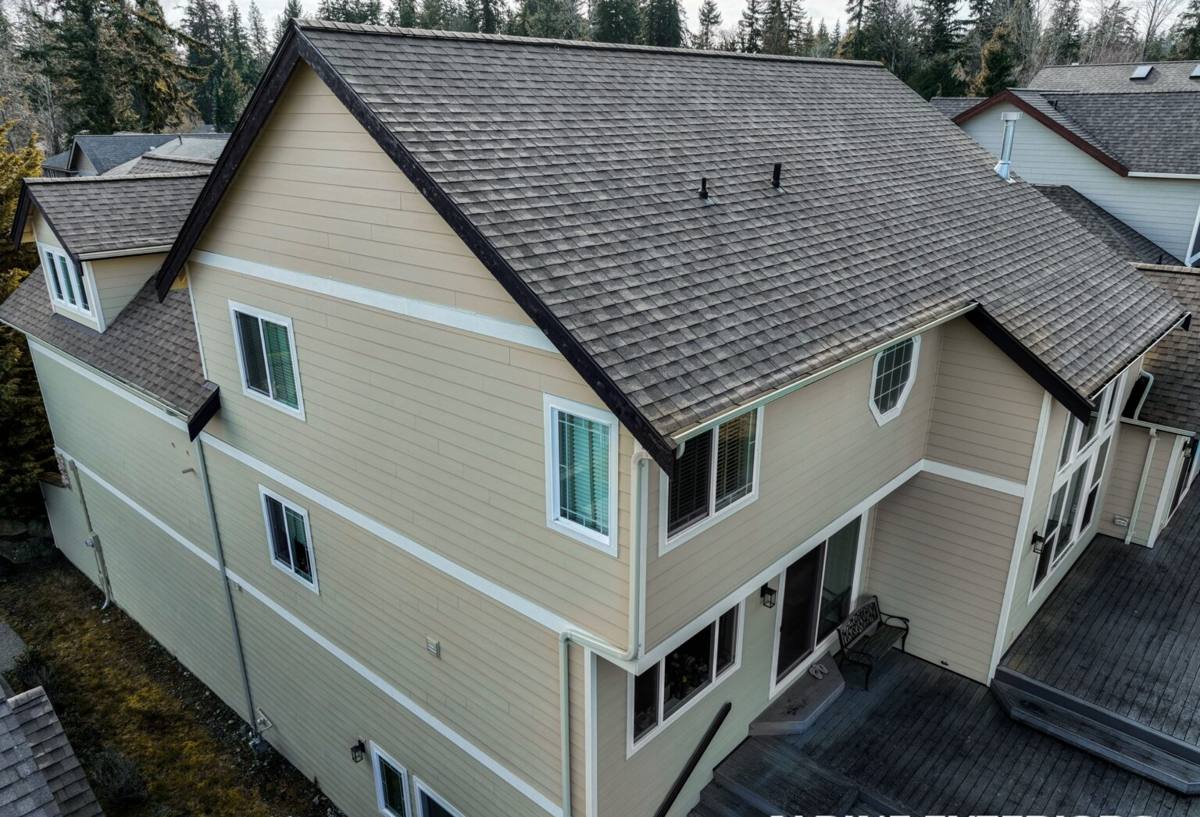
What Blaine's Climate Actually Does to a Deck
Salt Air and Metal Fasteners
Standard galvanized screws and joist hardware can start showing surface rust within a couple of seasons this close to the water. Once corrosion starts on structural fasteners, it's not just cosmetic — it weakens the connection between joists, beams, and ledger boards over time. We spec stainless steel or marine-grade coated fasteners and hardware for any deck within a few miles of the water, which costs a bit more up front but avoids a re-fastening job down the road.
Driving Rain and Moisture Trapping
Rain in Blaine doesn't always fall straight down — wind off the strait pushes it sideways, which means it gets up under railings, behind fascia boards, and into any gap that isn't properly flashed. Moisture that gets trapped and can't dry out is what causes rot, not moisture exposure by itself. Proper flashing at the ledger board, gapped decking for airflow, and drainage planning underneath the deck all matter more here than they would in a drier part of the county.
Moss, Algae, and Surface Traction
Shaded or north-facing decks in Blaine can develop moss and algae growth almost year-round. Beyond the maintenance nuisance, a mossy deck surface gets genuinely slippery — which matters for stairs and any area near a door. Board spacing, surface texture, and how much sun exposure a deck gets all factor into how much of a moss problem a homeowner will actually deal with.
Choosing the Right Decking Material for This Environment
There's no single "best" decking material — the right choice depends on budget, how much upkeep the homeowner wants to do, and how exposed the deck is to salt air and shade. Here's how the common options actually perform in Blaine's conditions:
| Material | Moisture & Salt Air Behavior | Moss/Algae Resistance | Maintenance |
|---|---|---|---|
| Pressure-treated wood | Good if properly sealed and re-sealed; end grain is a weak point near salt exposure | Moderate — needs regular cleaning in shaded areas | Annual sealing recommended |
| Cedar | Naturally moisture-resistant but softer; benefits from a protective finish near the water | Moderate — same as PT, needs periodic cleaning | Sealing every 1-2 years |
| Composite decking | Excellent — doesn't absorb moisture or corrode | Can still grow surface algae in shade; cleans off easily | Occasional washing, no sealing |
| PVC/capped decking | Excellent — fully moisture-sealed board | Low, especially with textured caps | Lowest — rinse as needed |
For decks close to the water or heavily shaded by trees, we typically steer homeowners toward composite or capped decking not because wood is a bad product, but because it demands more consistent upkeep to perform well in this specific environment. If a homeowner wants the look and feel of real wood and is committed to annual maintenance, cedar or PT wood is still a perfectly sound choice — it just needs a realistic maintenance plan behind it.
Railings, Fasteners, and Hardware
Whatever decking material gets chosen, the hardware underneath matters just as much. We use stainless steel or coated structural screws, corrosion-resistant joist hangers, and hidden fastener systems where possible to reduce the number of exposed metal points on the top surface. For railings, aluminum and composite systems tend to outperform untreated wood balusters this close to the coast since they don't need repainting or re-staining to keep from graying and cracking.
What a Correct Deck Build Involves
A deck that's going to last in Blaine's conditions comes down to what happens below the surface as much as what the decking boards look like. The core elements we don't skip:
- Proper ledger board flashing where the deck attaches to the house, so wind-driven rain can't work its way behind the siding
- Footings set below frost depth and sized for the actual load of the deck, not just code minimums
- Joist spacing appropriate to the decking material — composite and PVC boards often need tighter spacing than wood
- Gapping between boards that allows for drainage and airflow underneath
- Corrosion-resistant fasteners and hardware throughout, not just on the visible surface
- Grading or drainage planning underneath the deck so water doesn't pool against footings
- Stair and railing details that meet current code for rise, run, and railing height
Skipping any one of these doesn't usually show up right away — it shows up in year three or four as soft spots, rust streaks, or a railing that's started to wobble. That delayed failure is exactly why cutting corners on a deck build is a bad trade against the upfront savings.
Permits and Local Requirements
Most deck projects in Whatcom County that are attached to the house or elevated above a certain height require a building permit, and if the property is within a shoreline jurisdiction or close to Semiahmoo Bay's shoreline, there can be additional review involved. We handle the permit process as part of the project so homeowners aren't left figuring out county requirements on their own. If a deck is being replaced in the same footprint as an existing one, the process is usually more straightforward, but new footprints or elevated decks typically warrant a closer look before work starts.
Our Process for a Blaine Deck Project
1. On-Site Assessment
We look at sun exposure, prevailing wind and rain direction, existing drainage, and how close the site is to salt air influence. This is what actually drives material and hardware recommendations rather than a generic template.
2. Design and Material Selection
We walk through decking material, railing style, and layout with the homeowner, including honest tradeoffs between upfront cost and long-term maintenance for each option.
3. Permitting
We prepare and submit what's needed for county approval before any construction starts, so the project isn't held up mid-build.
4. Construction
Footings, framing, flashing, decking, and railings are installed in sequence with inspections at the appropriate stages. We don't cover up framing or flashing work before it's been checked.
5. Final Walkthrough
We go over the finished deck with the homeowner, including basic maintenance guidance specific to the material chosen and the site's exposure.
Why Local Experience Matters for This Job
A contractor who mostly builds decks inland doesn't always think about ledger flashing details for driving rain, or spec stainless hardware as a default rather than an upsell. Working in Blaine and along the rest of the Whatcom County coastline regularly means those decisions are already built into how we plan and price a project, not something we figure out after a callback. It also means we've seen how different materials actually hold up here over years, not just in a showroom or a manufacturer's spec sheet.
Maintenance Expectations After the Build
Whatever material a homeowner chooses, a little seasonal attention keeps a Blaine deck performing well:
- Sweep debris off the deck regularly, especially in fall — trapped leaves hold moisture against the boards
- Clean shaded or north-facing sections periodically to stay ahead of moss and algae buildup
- Check railings and stair connections once a year for any looseness
- Reseal wood decking on the schedule recommended for that specific product — don't wait until it's visibly weathered
- Keep gutters and downspouts near the deck clear so runoff isn't dumping directly onto or under the structure
If you're planning a new deck or replacing an aging one in Blaine, we're happy to walk the site with you and talk through what makes sense for your home's specific exposure and budget. There's no pressure and no obligation — just a straightforward estimate based on what your property actually needs. The form below is the easiest way to get started.