 Lynden Window
 Why Birch Bay Homes Ask Different Questions About Window Installation
Birch Bay sits right up against the water, and that changes what a window installation needs to hold up against. A house a few miles inland in Lynden deals with rain and cold snaps. A house in Birch Bay deals with all of that plus near-constant marine air, salt carried on the wind, and long stretches of gray, damp weather that keep north- and west-facing walls wet for days at a time. None of that is a reason to panic about your windows, but it is a reason to think harder about materials, flashing, and sealing than you would for a typical inland remodel.
We install windows throughout Whatcom County, and Birch Bay jobs get treated differently from the start. The frame material, the flashing detail, and even the caulking product get chosen with shoreline exposure in mind, not just whatever's fastest to install.
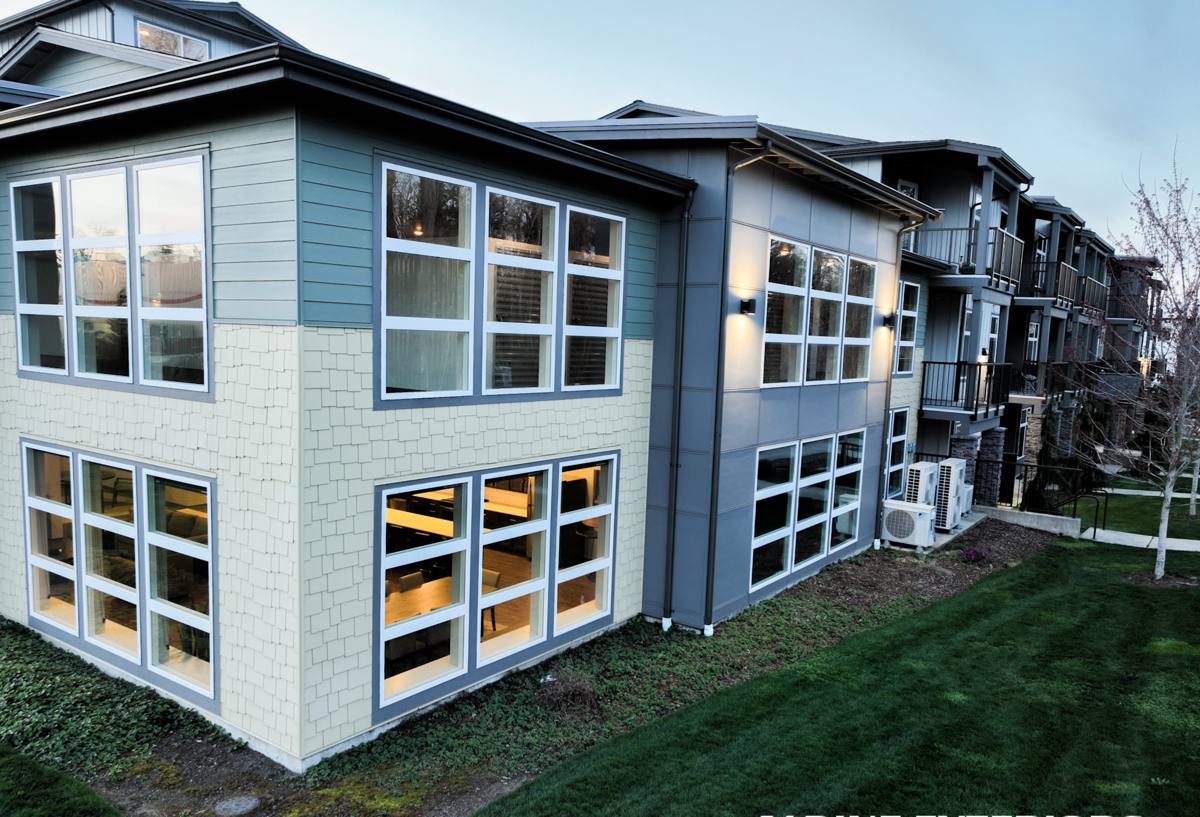
What Salt Air, Driving Rain, and Moss Actually Do to Windows
Salt-Laden Air and Hardware
Salt in the air doesn't just affect boats and railings. It settles on window frames, tracks, and hardware, and over years it accelerates corrosion on anything with exposed metal fasteners, hinges, or crank mechanisms. Cheaper hardware finishes pit and seize up faster in a shoreline environment than they would a few miles inland. It's not dramatic — it's slow, and it's the kind of thing that shows up as a window that suddenly won't latch right five years after you stopped thinking about it.
Wind-Driven Rain
Birch Bay gets rain that doesn't fall straight down — it gets pushed sideways by wind coming off the water. That matters because a window installation that would keep out a gentle inland rain can still let water in when rain is being driven horizontally into a wall. The vulnerable points are almost always at the edges: the flashing above the window, the sill pan below it, and the seal where the window frame meets the rough opening.
Moss, Shade, and Trapped Moisture
A lot of Birch Bay properties have mature trees and shaded north sides, which is great for the yard and rough on building materials. Moss and algae hold moisture against siding and trim longer than bare wood or vinyl would dry on its own, and that trapped moisture works its way toward whatever's underneath — including window frames and the wall assembly around them. A window that's watertight on install day can still fail years later if the wall around it stays damp long enough.
What a Correct Installation Involves in This Climate
Flashing and Water Management
The single biggest factor in whether a window lasts in a coastal-influenced climate isn't the window itself — it's how the opening is flashed. That means a proper sill pan to catch and direct any water that gets past the window, head flashing that sheds water out and away from the wall, and integration with the house wrap or weather-resistive barrier so water is directed down and out, never trapped behind the siding.
Sealing That's Actually Built for Moisture Cycling
Sealants and backer rod matter more here than in a dry climate, because Birch Bay walls go through more wet-dry cycling over a year. We use sealant products rated for continuous moisture exposure and UV, not general-purpose caulk, and we make sure the interior air seal and exterior water seal are treated as two separate jobs — sealing air infiltration inside and shedding bulk water outside.
Frame and Hardware Choices
For homes with direct water views or exposed west/north walls, we lean toward frame materials and hardware finishes that are more corrosion-resistant, and we're upfront when a lower-cost option is likely to need more attention sooner in this environment. That's a maintenance conversation, not a sales pitch — you should know what you're signing up for either way.
Choosing Window Materials for a Shoreline-Influenced Property
There's no single "best" window material for every home — it depends on your exposure, your budget, and how much upkeep you want to take on. Here's how the common options generally perform in a salt-air, high-moisture setting like Birch Bay:
| Material | Salt Air / Corrosion | Moisture Behavior | Maintenance |
|---|---|---|---|
| Vinyl | Doesn't corrode; hardware inside still needs a corrosion-resistant finish | Won't rot; performs consistently in wet cycling | Low — occasional track and weep-hole cleaning |
| Fiberglass | Very stable, minimal corrosion risk | Dimensionally stable through wet/dry and temperature swings | Low |
| Aluminum | Can pit or corrode over time near salt air without a marine-grade finish | Conducts cold and can condense more in damp weather | Moderate |
| Wood (unclad) | No direct corrosion risk, but hardware does | Most sensitive to prolonged moisture and moss/algae contact | Highest — regular refinishing and moisture checks |
| Wood with exterior cladding | Cladding protects the wood; hardware finish still matters | Good, as long as the cladding and flashing are intact | Moderate |
We're not going to tell you unclad wood is a bad product — it isn't, and plenty of Birch Bay homes have it. But we will tell you honestly that it asks more of you in upkeep than a shoreline property with vinyl or clad fiberglass, and we'd rather you know that before install day than find out later.
Our Installation Process for Birch Bay Homes
- On-site assessment — we look at each opening's exposure (which walls take the most wind-driven rain, which stay shaded and damp longer) before recommending anything.
- Existing condition check — we check the rough opening and surrounding wall for any hidden moisture damage or rot before setting a new window, since covering up a wet wall is how small problems become expensive ones.
- Material and product selection — matched to that specific wall's exposure, not a one-size-fits-all default.
- Removal and opening prep — old window out, opening squared, sill pan and flashing set correctly before anything new goes in.
- Installation and sealing — window set, shimmed level and plumb, air-sealed on the interior and water-sealed on the exterior as two distinct steps.
- Final check — operation, seal, and finish work confirmed before we call it done.
Signs Your Windows Need Attention in a Climate Like This
A few things tend to show up sooner in Birch Bay than they would further inland. Worth checking for:
- Hardware (latches, cranks, hinges) that feels gritty, stiff, or corroded rather than smooth
- Persistent condensation between panes, which usually means a failed seal on a double- or triple-pane unit
- Visible moss or algae buildup on the sill, trim, or siding right around the window
- Drafts or a noticeable temperature difference near the window on windy days
- Soft or discolored trim or wall material below or beside the window frame
- Windows that are harder to open and close than they used to be
- Visible daylight or gaps around the frame from outside
Any one of these on its own isn't an emergency. A few of them together, especially on a wall that takes the brunt of the weather, is a good reason to get it looked at before it turns into a wall repair instead of a window replacement.
Why Hiring a Crew That Already Works Birch Bay Matters
Window installation isn't a different skill in Birch Bay than anywhere else in Whatcom County — but the judgment calls are different. Knowing which walls on a shoreline property need extra flashing attention, which hardware finishes hold up and which don't, and how long moisture tends to sit against a shaded north wall before it becomes a problem — that comes from working this specific area repeatedly, not from a general installation checklist. A crew that only occasionally works this close to the water is more likely to default to standard practices that are fine inland and undersized for here.
What Affects the Cost of a Window Installation Here
| Factor | Why It Matters in Birch Bay |
|---|---|
| Window material | Vinyl and fiberglass are generally lower cost upfront; clad wood and premium hardware finishes cost more but reduce coastal maintenance |
| Number and size of openings | Larger or more numerous windows mean more flashing and sealing work, not just more glass |
| Wall exposure | West- and north-facing walls that take direct wind-driven rain often warrant upgraded flashing details |
| Existing damage | Any rot or moisture damage found at the opening needs repair before the new window goes in, which adds time and material |
| Access | Second-story or hard-to-reach openings take more labor time regardless of the window itself |
We won't quote a job over the phone with any real confidence — too much depends on what we find at the opening itself. A walk-through gives you an honest, specific number instead of a range that may not hold once we're actually at the wall.
Keeping New Windows Performing in a Salt-Air, High-Moisture Climate
A correct installation gets you most of the way there, but a little seasonal attention keeps it working as intended. Rinsing salt residue off frames and hardware a few times a year, clearing weep holes so water can drain out instead of pooling, and keeping moss and organic buildup off the sill and surrounding trim all go a long way. None of it is complicated, but skipping it is how a well-installed window ages faster than it should have.
If you're weighing a window replacement or new installation for a Birch Bay home, we're glad to come take a look and give you a straight, no-pressure estimate — what we'd actually recommend for your specific walls and exposure, and why. Use the form below to get started.