 Lynden Window
 Birch Bay is one of the more demanding places in Whatcom County to keep a home's exterior looking and performing the way it should. It sits right on the water, which means siding here deals with a combination that inland Lynden homes simply don't face in the same way: salt-laden marine air, wind-driven rain that comes at the wall sideways instead of straight down, and a moss and mildew season that can stretch through most of the year on shaded or north-facing elevations. We install James Hardie fiber cement siding exclusively, and Birch Bay is one of the areas where that decision matters the most.
This page is specifically about James Hardie siding installation for Birch Bay homes — what the local climate does to siding out here, what a correctly done Hardie installation involves, and why a crew that already works this community brings something a first-time visitor can't.
What Birch Bay's Climate Actually Does to Siding
It's easy to talk about coastal weather in general terms. It's more useful to break down what specifically happens to a wall assembly over years of exposure in a place like Birch Bay.
Salt Air and Corrosion
Homes sitting close to the water pick up airborne salt on a near-constant basis. That salt doesn't just sit on the surface — it accelerates corrosion on fasteners, flashing, and any lower-grade metal trim, and it can break down cheaper paint and coating systems faster than a drier, more inland climate would. Every material and every fastener on the exterior of a Birch Bay home needs to be selected with that corrosion risk in mind, not just picked because it looked fine in a showroom or on a spec sheet.
Driving Rain, Not Just Rainfall
Waterfront exposure also means more sustained wind, and wind-driven rain behaves differently than rain falling straight down. It gets pushed sideways into seams, laps, and penetrations that would never get tested in a sheltered inland location. A siding system that performs fine on a calm site a few miles inland can fail on a Birch Bay wall for the simple reason that water is finding its way in horizontally, at joints and terminations that weren't detailed to handle it.
A Long Moss and Mildew Season
Mild temperatures, shade, and near-constant moisture combine to give this part of Whatcom County a moss and mildew season that can run most of the year on the wrong exposures. North-facing walls and anything shaded by trees or a neighboring structure are usually the first places it shows up. Any siding material that's even slightly porous, or that holds moisture against the substrate, becomes a growth surface over time — and once moss and mildew get established, they hold additional moisture against the wall, which compounds the problem.
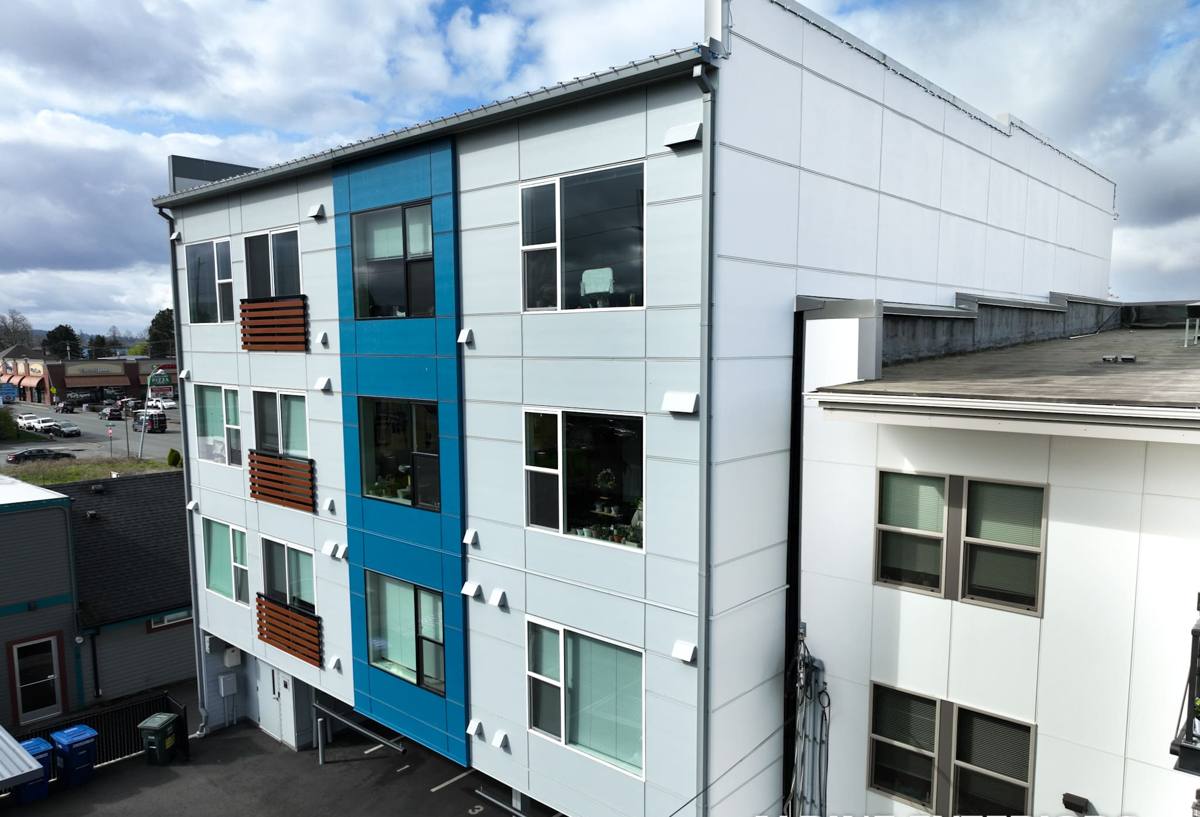
Why James Hardie Is the Right Answer for This Exposure
James Hardie fiber cement is engineered from portland cement, sand, and cellulose fiber — a composition that doesn't absorb and release moisture the way wood-based or wood-fiber siding products do, and doesn't corrode the way raw metal trim can. That matters directly in a place like Birch Bay, where the exterior envelope is under near-constant moisture and salt pressure.
Hardie's HZ5 product line is engineered specifically for climate zones with heavy moisture exposure and freeze-thaw cycling — which describes waterfront Whatcom County well. Using the correct HZ line for the region isn't a minor spec detail; it's part of what makes the material perform the way it's designed to over decades rather than years. The factory-applied ColorPlus finish is also part of the equation here: it's baked on and cured under controlled conditions, which gives it better adhesion and UV resistance than a field-applied paint job going onto a jobsite in variable weather.
None of that means Hardie siding is maintenance-free or immune to problems. It means the material itself isn't the weak link in a Birch Bay installation — the installation details are, which is why so much of this page is about process rather than the product alone.
What a Correct Installation Involves Here
A James Hardie job that looks right on day one and still looks right in year fifteen depends on a handful of details that are easy to shortcut and expensive to fix later. In a coastal environment like Birch Bay, these matter more than they would on a sheltered inland lot.
Flashing and Water Management First
Siding is the last layer, not the water barrier. Behind every properly installed Hardie board is a weather-resistive barrier, correctly lapped and taped seams, and flashing at every horizontal transition — window and door heads, deck ledgers, roof-to-wall intersections, and the bottom termination near grade or a foundation. On a waterfront lot getting sideways rain, these transition points are where water actually gets in, not through the face of the board itself.
Fastening and Clearances to Manufacturer Spec
Hardie publishes specific fastener types, spacing, and embedment requirements, along with minimum clearances from grade, roof lines, and decks. Those clearances exist so that splash-back, ponding, and direct water contact don't sit against the bottom edge of the siding. Skipping them to save an inch of coverage is one of the most common ways an otherwise correct-looking installation starts failing early, especially in a wet climate.
Caulking and Joint Treatment
Butt joints, trim intersections, and penetrations need the right sealant, applied correctly, or they become entry points instead of seals. In a salt-air environment, sealant quality and application matter more than they would somewhere drier, because the joints are wet more often and for longer stretches at a time.
Fastener and Trim Material Selection
Corrosion-resistant fasteners and trim components aren't optional upgrades on a Birch Bay home — they're a baseline requirement given the salt exposure. The wrong fastener choice can lead to streaking, staining, and eventually loosened boards well before the siding material itself would have failed on its own.
Comparing Installation Approaches
| Detail | Minimum-code approach | Coastal-spec approach we use in Birch Bay |
|---|---|---|
| Weather-resistive barrier | Basic wrap, minimal seam treatment | Fully lapped and taped, integrated with flashing at every penetration |
| Fasteners | Standard galvanized | Corrosion-resistant fasteners rated for coastal/salt exposure |
| Clearance from grade/decks | Sometimes tight to manufacturer minimums or under | Held to or beyond Hardie's published clearances |
| Joint sealant | General-purpose caulk | Sealant selected and applied for sustained wet-joint exposure |
| HZ product line | Whatever's in stock | HZ5, matched to this climate zone |
Why a Crew That Already Works Birch Bay Matters
Siding installation isn't a one-size-fits-all process, and a crew that mostly works drier, more sheltered sites doesn't automatically bring the same habits to a waterfront job. A crew that already works in Birch Bay has already run into the specific failure points this exposure causes — where wind-driven rain tends to find gaps, which elevations need extra attention for moss, and how fastener corrosion shows up over time on homes out here. That familiarity shows up in small decisions made throughout the job, not just in the finished appearance.
There's also a practical side to it. A local crew can typically get to a Birch Bay job site, follow up on a punch-list item, or respond to a warranty question without the delay and cost of dispatching from farther away. For a coastal property where conditions can change a project's timeline, that responsiveness matters.
Our Process for a Birch Bay Siding Project
- On-site assessment — we walk the exterior, check the current condition of the wall assembly, and note which elevations face the most direct weather exposure.
- Scope and product selection — we confirm the right Hardie profile (lap, shingle, board and batten, or panel) and HZ5 color and trim package for the home.
- Removal and substrate check — old siding comes off and we inspect the sheathing underneath for any moisture damage that needs to be addressed before new material goes on.
- Weather barrier and flashing installation — this is the step that determines whether the wall stays dry, done before a single piece of visible siding goes up.
- Hardie installation to manufacturer spec — correct fastening, clearances, and joint treatment throughout, not just on the elevations that are easiest to reach.
- Final detailing and walkthrough — trim, caulking, and touch-up, followed by a walkthrough so the homeowner understands what was done and why.
Signs Birch Bay Homeowners Should Watch For
Whether your current siding is Hardie, another fiber cement product, or something else entirely, these are the signs that show up first in this specific climate:
- Dark staining or streaking below fastener heads, which often points to corroding hardware behind the finish
- Persistent moss or mildew buildup on north-facing or shaded walls that comes back quickly after cleaning
- Soft spots, bubbling, or visible swelling near the bottom courses, especially close to grade or decks
- Cracked or missing caulk at trim joints, window heads, and butt joints
- Visible gaps or lifting at the bottom termination near the foundation
Catching these early is almost always cheaper than waiting until they turn into sheathing or framing repairs, which is a very different scope and cost than a siding job.
What Correct Maintenance Looks Like Out Here
James Hardie siding installed to spec is genuinely low-maintenance compared to wood-based alternatives, but "low-maintenance" isn't "no-maintenance," especially in a coastal environment. A simple annual routine covers most of what a Birch Bay home needs:
- A gentle wash once a year to clear salt residue, dust, and early moss growth before it establishes
- A visual check of caulking at trim and joints, since sealant is the first thing to wear out under sustained wet-joint exposure
- Keeping gutters and downspouts clear so water isn't overflowing directly onto siding below
- Trimming back vegetation that shades walls and keeps them damp longer than they'd otherwise stay
None of this requires a professional visit every time, but a periodic professional inspection — every few years, or after a particularly rough storm season — catches the kind of small issues that are easy to miss from the ground.
The Warranty Side of the Equation
James Hardie backs its siding with a transferable limited warranty, and the ColorPlus finish carries its own separate finish warranty. Warranty coverage on a coastal home is only as good as the installation underneath it, though — manufacturer warranties typically require installation to their published specifications, which is another reason the flashing, fastening, and clearance details covered above aren't optional extras. A poorly installed job can leave a homeowner with siding that's technically still under a material warranty but failing for reasons the warranty doesn't cover, because the failure traces back to installation rather than the product itself.
Ready to Talk About Your Birch Bay Home
If your current siding is showing wear, if you're planning ahead for a remodel, or if you just want an honest read on what your home's exterior actually needs in this climate, we're glad to walk the property with you. We'll give you a straightforward assessment and a free, no-pressure estimate — no upsell to a product we don't stand behind, just what we'd recommend for a Birch Bay home and why.