 Lynden Window
 Building a Deck That Actually Holds Up in Bellingham
A deck in Bellingham does not live an easy life. Between the salt-tinged air rolling in off Bellingham Bay, the long stretch of driving rain that defines a Whatcom County fall and winter, and a moss season that seems to start earlier every year, a deck here is under near-constant pressure from moisture. A design and a build method that would hold up fine in a drier inland climate can fail early here — cupping boards, rusted fasteners, soft framing, slick surfaces. Building decks for this specific coastline and county is different work than building decks somewhere dry, and it should be treated that way from the first conversation about the project.
This page is about one thing: custom deck construction for Bellingham homes, done in a way that accounts for what this climate actually does to wood, metal, and coatings over years of exposure. Not a generic overview of decks everywhere — what matters specifically here.
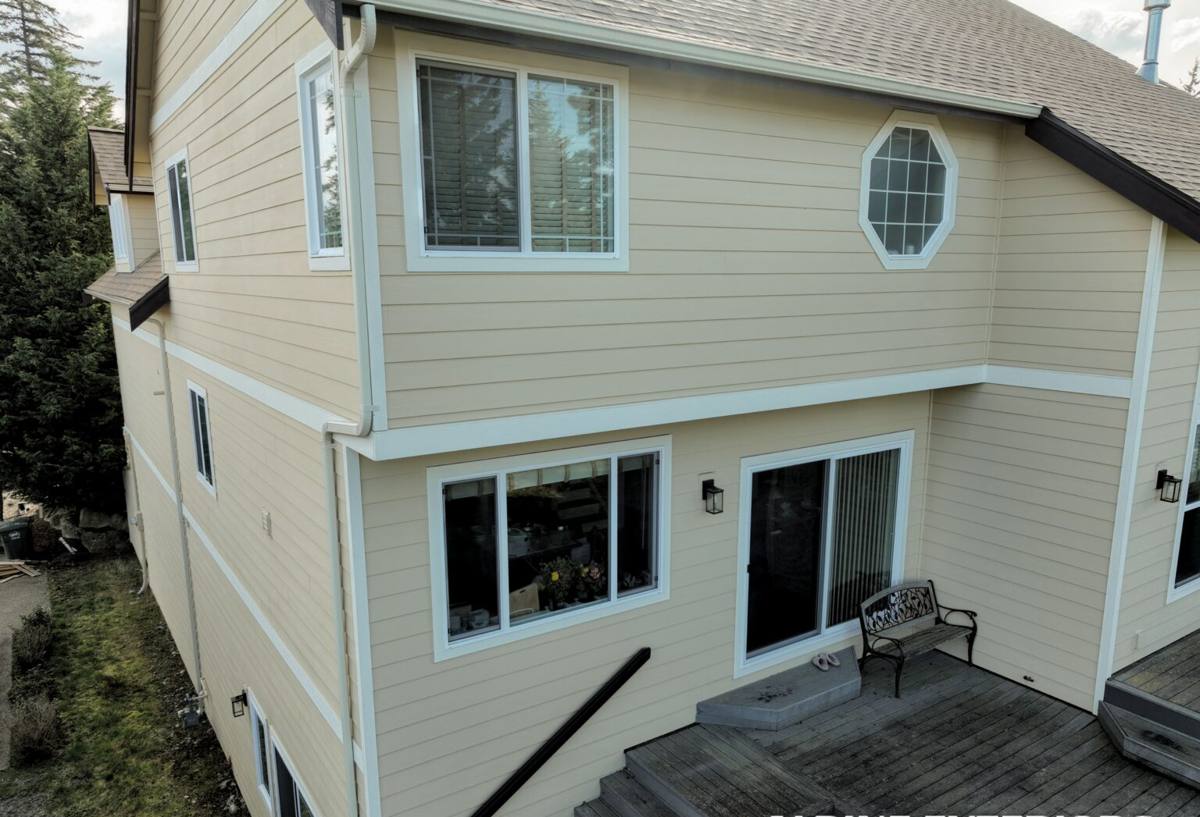
What Bellingham's Climate Does to a Deck
Salt Air
Properties closer to the water deal with airborne salt that settles on every exposed surface. Over time, salt exposure accelerates corrosion on fasteners, brackets, and any exposed metal hardware. It also speeds up the breakdown of lower-grade finishes and can leave a dull, gritty film on decking that needs regular rinsing. This doesn't mean a deck near the bay can't be built to last — it means the hardware and finish choices matter more here than they would twenty miles inland.
Driving Rain
Bellingham and the surrounding county see sustained periods of wind-driven rain, not just the occasional shower. Rain that comes in at an angle finds its way into places vertical rain never would — ledger board connections, stair stringers, the underside of railings, gaps between decking boards. A deck built without real attention to water shedding and drainage will trap moisture in exactly those spots, and trapped moisture is what actually rots wood and rusts steel, not rain itself.
Moss Season
Moss and algae growth on north-facing or shaded deck surfaces is a fact of life in this part of Washington. Moss holds moisture against the deck surface far longer than open air would, and it turns a deck surface slick and genuinely dangerous underfoot when wet. Deck orientation, board spacing, and surface texture all affect how much moss becomes a problem — and how much work it takes to keep it under control.
Decking Material Options for This Climate
There is no single "correct" decking material for every Bellingham home — it depends on budget, how much maintenance the homeowner wants to do, sun exposure, and how the deck will be used. Here's an honest look at the common options through the lens of this specific climate.
| Material | How It Handles This Climate | Maintenance | General Cost Range |
|---|---|---|---|
| Pressure-treated wood | Solid performer if properly sealed and re-sealed; needs a real maintenance commitment against moss and moisture | Annual cleaning and re-sealing recommended | Lower |
| Cedar | Naturally moisture- and insect-resistant, ages to a silver-gray if left unfinished; still needs periodic care in this rain | Moderate — cleaning, occasional oil or stain | Mid-range |
| Composite decking | Does not absorb moisture the way wood does, resists rot; surface texture and drainage gaps still matter for moss control | Low — occasional washing | Higher |
| PVC decking | Fully moisture-resistant, holds up well to salt air exposure near the water | Low | Higher |
Composite and PVC products have earned their popularity in wet coastal climates because they remove wood's biggest weakness — moisture absorption — from the equation. That said, a well-built and well-maintained wood deck can absolutely last for decades here too. The honest tradeoff is upfront cost versus ongoing maintenance time, not one material being "good" and another "bad."
What a Correctly Built Deck Involves
The decking material gets most of the attention, but the parts of a deck a homeowner never sees are what actually determine whether it survives Bellingham's weather for the long haul.
Footings and Framing
Footings need to be sized and set to local frost depth and soil conditions, not just poured to the minimum. Framing lumber should be rated for ground contact or exterior exposure where it's called for, and joist spacing needs to account for the actual decking material chosen — composite and PVC products often have different span requirements than solid wood.
Ledger Attachment and Flashing
Where a deck attaches to the house is the single most common failure point we see on older decks in this region. Without proper flashing that directs water away from the ledger board and the house's wall assembly, driving rain works its way behind the connection over years and rots both the ledger and the framing behind it — sometimes long before it's visible from outside. This detail alone is worth getting right the first time.
Fasteners and Hardware
Given the salt air exposure much of the county deals with, hardware grade matters. Stainless steel or high-grade coated fasteners and structural connectors cost more upfront than standard galvanized hardware, but they resist corrosion far longer in a salt-air environment — and a rusted-out connector is a structural problem, not a cosmetic one.
Drainage and Board Spacing
Correct board spacing lets water shed through the deck surface instead of pooling on it, which reduces both rot risk and moss buildup. On decks over living space or a lower patio, a proper drainage system underneath is worth discussing so water is actively directed away rather than just left to find its own way out.
Our Process From First Call to Finished Deck
- On-site assessment. We walk the property, look at sun and shade exposure, drainage, soil, and how the deck ties into the house, and talk through how the space will actually be used.
- Design and material selection. We go over material options honestly — including maintenance expectations — and design the deck to fit the home and the site, not a one-size-fits-all layout.
- Permitting. Deck permits are typically required by the local jurisdiction; we handle that process so it's not left to the homeowner to sort out.
- Build. Footings, framing, ledger flashing, decking, and railing, built to hold up to the moisture load this climate puts on it — not just to pass inspection.
- Final walkthrough. We go over the finished deck together, including basic care guidance specific to the material installed.
Design Considerations for Bellingham Properties
A few decisions come up repeatedly on decks in this area, and they're worth thinking through early rather than after the deck is built.
Covered vs. Open Decks
A partial or full roof over a deck cuts down significantly on how much rain the deck surface takes on directly, which reduces both moss growth and long-term wear. It's not required, but for homeowners who want to actually use the deck through a Whatcom County fall and winter, it's worth serious consideration.
Railing Material
Wood, metal, cable, and composite railings all perform differently in wet, salt-tinged air. Metal railing components should be corrosion-resistant hardware, especially closer to the water. This is a smaller decision than decking material, but it affects long-term maintenance in the same way.
Orientation and Shade
North-facing decks and decks shaded by mature trees hold moisture longer and grow moss faster. That doesn't rule those layouts out — plenty of Bellingham lots don't leave much choice — but it does mean surface texture and drainage deserve extra attention on those builds.
Maintenance Checklist for Long Deck Life
Whatever material is chosen, a little regular attention goes a long way in this climate:
- Sweep debris off the deck regularly, especially fallen leaves and needles that trap moisture against the surface
- Rinse off salt residue periodically if the property is close to the water
- Check and clear drainage gaps between boards so water isn't pooling
- Address moss growth early with an appropriate cleaner rather than letting it establish
- Inspect fasteners and hardware yearly for early signs of corrosion
- Re-seal or re-stain wood decking on the schedule appropriate to the product used
- Check the ledger board area annually for any signs of water intrusion where the deck meets the house
Why Hire a Crew That Already Works in Bellingham
Deck-building fundamentals don't change from region to region, but the details that determine how long a deck lasts absolutely do. A crew that already builds decks throughout Whatcom County knows what the salt air near the bay does to hardware over time, what driving rain does to a poorly flashed ledger connection, and where moss becomes a real problem versus a minor nuisance. That's not something learned from a manual — it's learned from building and repairing decks in this exact climate, year after year. It shows up in the small decisions: fastener grade, flashing detail, board spacing, where a covered section actually earns its cost. Those are the decisions that separate a deck that looks good for a season from one that's still solid in fifteen years.
If you're planning a new deck or replacing one that hasn't held up to a few Bellingham winters, we're happy to take a look and talk through honest options for your property. Reach out for a free, no-pressure estimate using the form below.