 Lynden Window
 Window Replacement for Aldergrove, BC Homes
Aldergrove sits just across the border crossing from our home base in Lynden, and the two communities share the same weather system almost hour for hour. Homes here deal with damp coastal air, wind-driven rain that hits windows sideways instead of straight down, and a moss season that can stretch from October well into spring. Windows built or installed without that climate in mind tend to fail early — not dramatically, but quietly, through fogged glass, soft trim, and drafts that show up a few winters in. Window replacement done right for this area accounts for all of that from the start, not as an afterthought.
This page covers what Aldergrove homes specifically need from a window replacement project, what a correct installation actually involves, and how we approach these jobs given the climate and the cross-border logistics that come with working this stretch of the Whatcom County–Fraser Valley border.
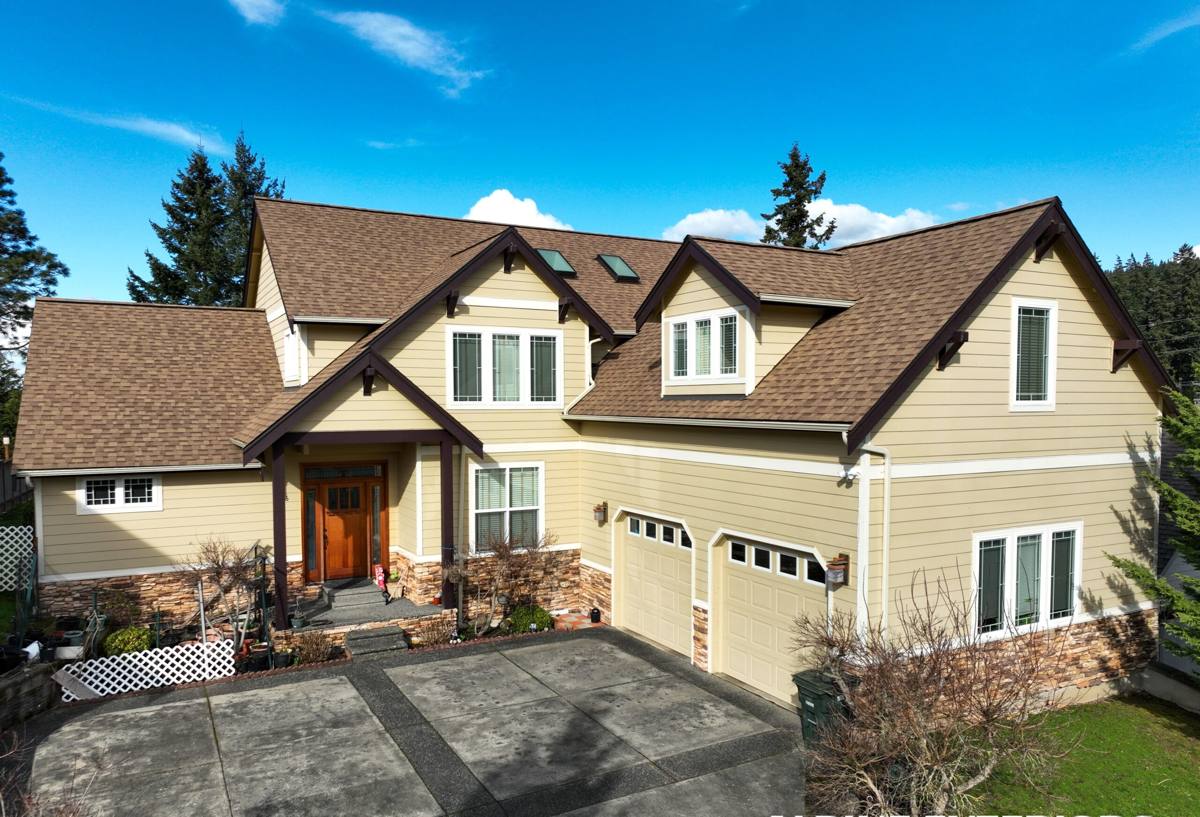
What This Climate Does to Windows Over Time
Moisture and Driving Rain
Rain here rarely just falls — it's pushed sideways by wind off the water, which means it hits window assemblies at angles standard flashing details don't always anticipate. Water finds its way behind trim and into framing through gaps that would never leak in a drier, calmer climate. Over years, that moisture works into wood sills and sheathing, and by the time it's visible as a stain or soft spot, the damage underneath is usually further along than it looks.
Salt-Influenced Air
Proximity to the coast means the air carries a fine salt content that accelerates corrosion on unprotected metal hardware — hinges, balances, cranks, and fasteners. Cheaper window hardware or poorly finished metal components can start showing pitting and stiffness years before the glass or frame itself has any issues. It's one of the reasons hardware quality matters as much as glass quality in a coastal-influenced climate like this one.
The Long Moss Season
Moss doesn't just grow on roofs here — it establishes itself in any spot that stays shaded and damp long enough, including window sills, exterior trim, and the gaps around older frames. Once moss takes hold near a window, it holds moisture directly against wood and caulking, which shortens the life of both. A window replacement that doesn't address drainage and airflow around the frame is setting up the same moss problem to return.
Signs Your Windows Need Replacing, Not Just Repair
Not every window problem calls for full replacement. But in this climate, certain signs usually mean the window has moved past the point where caulk or weatherstripping will fix it:
- Fogging or a visible haze between panes of double-glazed glass (a failed seal — this cannot be repaired, only replaced)
- Soft, spongy, or discolored wood at the sill or bottom corners of the frame
- Persistent drafts you can feel even with the window fully latched
- Windows that are difficult to open, close, or lock — often a sign the frame has shifted or swollen
- Visible moss or black staining building up in the frame's drainage channels year after year
- A noticeable jump in heating costs without any other explanation
- Condensation forming on the inside of the glass regularly during cold, wet stretches
What a Correct Window Replacement Job Involves
Removal and Framing Inspection
Every job starts with removing the old unit and actually looking at what's behind it — the rough opening, the sheathing, and any signs of past water intrusion. Skipping this step and just fitting a new window into a damaged opening is how homeowners end up paying for the same repair twice. If we find soft or rotted framing, we address it before the new window goes in, not after.
Flashing and Moisture Barrier Detail
Given how much wind-driven rain this area sees, the flashing and house-wrap integration around each window matters as much as the window itself. Water needs a clear path to shed away from the opening, not toward it. This is the step that's easiest to rush and hardest to fix later, so we treat it as non-negotiable.
Insulation and Air Sealing
The gap between the new window frame and the rough opening gets properly insulated and air-sealed — not just stuffed with excess fiberglass, which can actually trap moisture. Done correctly, this step is a big part of why a replacement window performs better than the one it replaced, even before you factor in newer glass technology.
Sealants Rated for This Climate
Not all exterior caulks and sealants hold up the same way under constant damp-and-dry cycling. We use sealants chosen for long-term flexibility and adhesion in wet, marine-influenced conditions, applied at the joints most exposed to driving rain.
Choosing Materials That Hold Up Locally
Material choice affects how a window performs against moisture, salt air, and moss over the long run — not just how it looks on day one. Here's how the common options compare for this specific climate:
| Frame Material | Moisture Resistance | Maintenance | Typical Cost Position |
|---|---|---|---|
| Vinyl | Strong — won't rot, low corrosion risk | Low; occasional cleaning | Lower to mid |
| Fiberglass | Very strong — dimensionally stable in wet/dry cycling | Low | Mid to higher |
| Wood (unclad) | Weakest in this climate without diligent upkeep | High — regular painting/sealing required | Mid to high |
| Wood-clad (metal or vinyl exterior) | Good — exterior shell protects the wood core | Moderate | Higher |
| Aluminum | Weaker — prone to condensation and corrosion near coastal air without a thermal break | Moderate | Lower to mid |
We generally steer Aldergrove-area homeowners toward vinyl or fiberglass for most applications, and toward clad wood when the look of interior wood trim matters more than minimizing upkeep. This isn't a knock on wood or aluminum — it's about being honest that both carry a higher maintenance burden in a climate that stays wet for so much of the year, and we'd rather set that expectation up front than have a homeowner discover it the hard way.
Glass Packages Worth Prioritizing
For this area, a double- or triple-pane unit with Low-E coating and an argon or krypton gas fill is generally worth the upgrade over basic clear glass — it cuts down on the interior condensation that's common during the wettest, coldest stretches of the year, and it helps offset heating costs during the long stretches of overcast weather typical here.
Our Process for Aldergrove Projects
- Free on-site estimate — we look at existing windows, framing condition, and any moisture or moss issues specific to the home before quoting anything.
- Measurement and material selection — exact sizing plus a frank conversation about which material and glass package fits the budget and the climate.
- Scheduling around weather and logistics — because Aldergrove sits just across the border crossing from our Lynden base, we build project timelines that account for crew and material movement across the line, so there are no surprise delays mid-project.
- Removal, inspection, and installation — including any framing repair, proper flashing, insulation, and sealant work described above.
- Final walkthrough — checking operation, seals, and cleanup before we consider the job finished.
Why Hire a Crew That Already Works in Aldergrove, BC
A contractor who mostly works inland or in drier climates can install a technically correct window that still underperforms here, simply because the details that matter most — flashing angles, drainage, sealant choice — are calibrated for conditions this area doesn't have. A crew that already works this specific stretch of the border region has seen how these homes actually age under real Whatcom County and Fraser Valley weather, not just on paper.
There's also a practical logistics side to working across the border: coordinating delivery of materials, scheduling crews, and timing a project so a border crossing never becomes the reason a job runs late. That's routine for us because it's part of how we already operate serving both sides of the line.
Cost Factors Worth Knowing Upfront
Every project is different, but the biggest cost drivers for a window replacement in this area are generally:
- Number of windows and whether it's a full-frame replacement or an insert replacement into an existing, sound frame
- Frame material chosen (see the comparison above)
- Glass package — single- vs. double- vs. triple-pane, and coatings or gas fills
- Condition of the existing framing — hidden rot or water damage adds labor and material
- Window size, shape, and access (second-story or hard-to-reach openings take more time)
We'd rather walk through these factors in person and give a real number based on your home than quote a broad range that doesn't mean much either way.
If your windows are showing any of the signs above, or you're just planning ahead for a home in Aldergrove, we're happy to come take a look. The estimate is free, there's no pressure to move forward, and you'll get a straight answer about what your windows actually need — use the form below to get started.