 Lynden Window
 Why Roofs in Acme Wear Differently Than Roofs Elsewhere
Acme sits back from the coast, closer to the tree line and the foothills leading up toward Mount Baker, but it still sits inside the same marine weather pattern that moves through all of Whatcom County — long stretches of driving rain, damp air carrying a faint edge of salt, and short winter days that don't give a roof much time to dry out between storms. Add in heavier tree cover than you'll find on an open lot closer to town, and you get roofs that stay wet longer, grow moss faster, and can hide a small leak for months before it finally shows up as a stain on a ceiling.
None of that means an Acme roof needs more work than any other roof in the Lynden area. It means repairs have to account for how this particular setting behaves — where water actually collects, where moss actually takes hold, and where a small fix done correctly now prevents a much larger one in a few years.
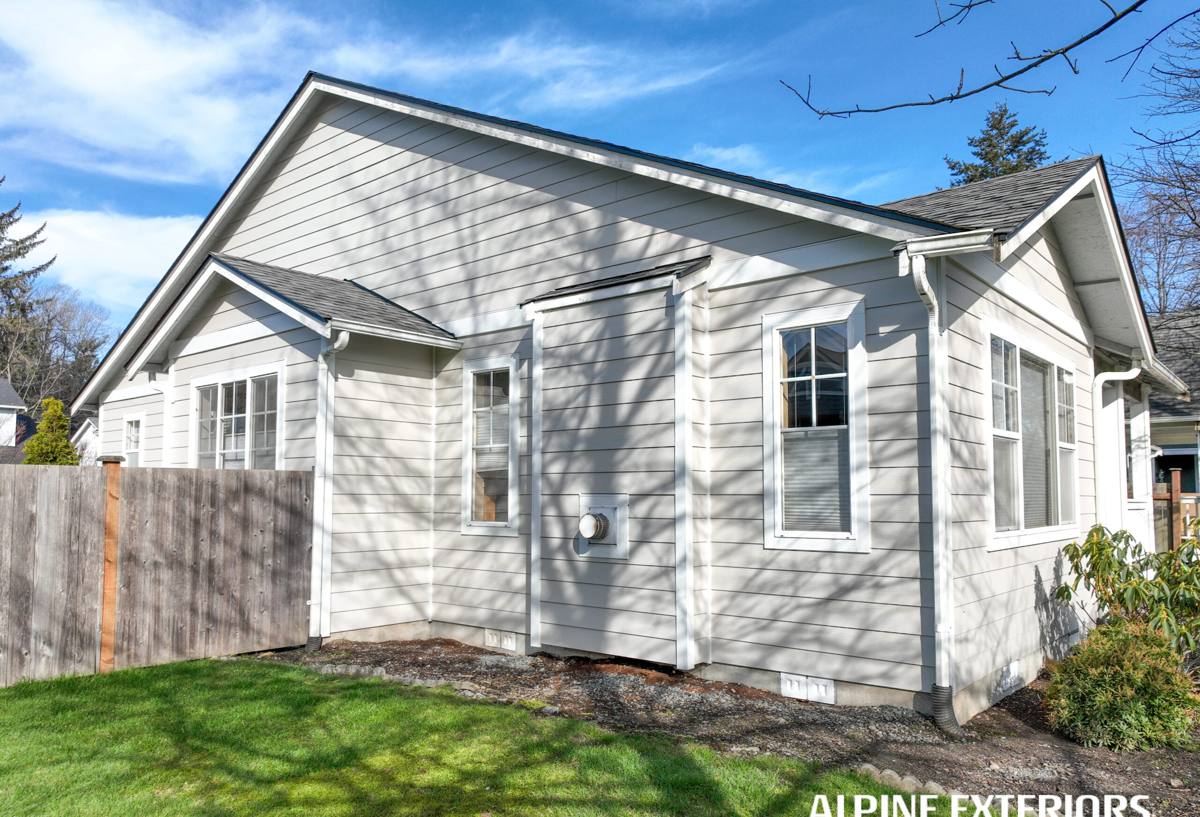
The Roof Problems We See Most Often Around Acme
Moss and Organic Growth
Shaded roof sections, north-facing slopes, and areas under overhanging trees stay damp far longer than the rest of the roof. Moss doesn't just look bad — its root structure lifts shingle edges and holds water directly against the roofing material, which is how a moss problem quietly turns into a rot problem underneath.
Valley and Flashing Leaks
Roof valleys, chimney flashing, and pipe boots are where most real leaks start, not in the open field of the roof. Flashing takes the brunt of driving rain because wind pushes water sideways and uphill under shingle edges, and a flashing seam that's shifted, corroded, or was sealed with caulk instead of properly lapped metal will eventually let water through.
Gutter and Drainage Backups
Needles, leaves, and moss debris from surrounding trees load up gutters faster here than on a more open property. A blocked gutter forces water to back up under the drip edge and along the fascia, which shows up first as rot at the roof edge, not as an obvious leak inside the house.
Wind-Driven Rain Intrusion
Heavy, sideways rain finds gaps that a straight-down rain never would — lifted shingle tabs, under-sealed ridge caps, or nail heads that have backed out slightly over time. These leaks are often intermittent, showing up only during a specific wind direction, which is part of why they get misdiagnosed if the person looking at them isn't used to this climate.
What a Proper Roof Repair Actually Involves
A repair that lasts starts with finding the actual source of the problem, not just patching where the water appeared inside the house. Water can travel several feet along rafters or sheathing before it drips somewhere visible, so the stain on a ceiling is rarely directly below the entry point.
- Inspecting the surrounding roof area, not just the spot that's leaking, to catch related wear before it becomes the next call-back
- Removing and replacing any wet or rotted decking underneath the roofing material, not just covering over it
- Installing new underlayment and flashing at the repair site, matched to how water actually moves through that section of roof
- Matching shingle or panel material as closely as possible in type, profile, and color so the repair doesn't stand out or create a new failure point at the seam
- Checking that the repaired section ties back into proper drainage — valleys, gutters, and drip edges all need to work together
A repair that skips any of these steps — sealing over a symptom with roofing cement, for example — tends to fail again within a season or two, especially once winter rain returns.
Repair or Replace? What Actually Decides It
Most of the time a repair is the right call. Full replacement only makes sense when the damage is widespread or the roof is old enough that more repairs would just be delaying an expense that's coming anyway. Here's how we think through it:
| Factor | Leans Toward Repair | Leans Toward Replacement |
|---|---|---|
| Roof age | Under 15-20 years, depending on material | At or beyond the material's expected service life |
| Damage pattern | Isolated to one section, valley, or penetration | Spread across multiple slopes or the whole roof |
| Repair history | First or second repair in this area | Same section has needed repair more than twice |
| Decking condition | Sound plywood or boards once opened up | Soft, delaminated, or rotted decking found underneath |
| Moss/algae extent | Manageable with cleaning and localized shingle work | Heavy growth has caused widespread granule loss or lifting |
We'll always tell you honestly which side of that line your roof is on, including when a repair is genuinely the smarter financial choice rather than pushing you toward a bigger job.
How We Handle a Roof Repair, Start to Finish
- Inspection. We get on the roof (or use a camera where access or pitch makes that unsafe) and trace the actual water path, not just the visible symptom.
- Honest assessment. You get a plain explanation of what's actually wrong, what caused it, and what it will take to fix — including if replacement makes more sense than repair.
- Written scope and price. No verbal estimates that change once work starts. You know the material, the process, and the cost before we begin.
- The repair itself. Proper tear-out of the affected area, decking repair if needed, new underlayment and flashing, and matched roofing material installed correctly the first time.
- Cleanup and check. Debris and old material hauled off, gutters and drainage in the repaired area checked to make sure water has somewhere to go.
- Follow-up. If anything about the repair doesn't hold up as expected, we come back and make it right.
Signs Your Acme Home Needs a Roof Repair Now
Some of these are obvious, others are easy to miss from the ground, especially on a shaded or tree-lined lot:
- Visible moss buildup, especially in a band along a north-facing slope or under tree cover
- Shingle granules collecting in gutters or at downspout outlets
- Curling, cracked, or lifted shingle edges you can see from the ground
- Daylight visible through the roof deck from inside the attic
- Water stains on ceilings or upper walls, especially ones that appear only during heavy wind and rain
- Sagging or soft-feeling sections when walked on during inspection
- Rusted, lifted, or missing flashing around chimneys, skylights, or vent pipes
- Gutters that overflow during normal rain rather than only during the heaviest storms
If you're seeing more than one of these, it's worth having someone look before the next storm system moves through rather than after.
Materials and Methods We Use for This Climate
What works on a roof repair in a drier climate doesn't always hold up here, so we build repairs around what this part of Whatcom County actually throws at a roof:
- Ice-and-water shield at valleys and eaves — a self-adhering waterproof membrane under the shingles at the spots most exposed to driving rain and wind-driven water
- Synthetic underlayment over traditional felt where a section is opened up, since it holds up better to prolonged moisture exposure and resists tearing during install in wet conditions
- Properly lapped metal flashing at chimneys, walls, and penetrations, rather than relying on caulk or roofing cement as the primary seal
- Matched shingle, metal, or shake material so the repaired section performs — and weathers — the same way as the rest of the roof over time
- Moss-conscious details like zinc or copper strip installation where appropriate, to slow regrowth in the shaded areas that are prone to it
None of this is exotic — it's just doing the ordinary steps correctly, with materials chosen for a climate that stays wet for a good part of the year.
Why It Matters to Hire a Crew That Already Works in Acme
Roofing in this area isn't the same job as roofing in a dry climate, and it isn't identical to roofing on an open lot in the middle of town, either. A crew that regularly works properties around Acme already knows how tree cover and terrain change where moss and moisture problems actually show up, what roof ages and styles are common on homes in the area, and how to plan repair work around a wet-weather window instead of getting caught mid-job by a storm system. That familiarity shows up in fewer surprises once a roof gets opened up, and in a repair that's built to handle the conditions it actually has to survive, not generic conditions from somewhere drier.
If you're seeing moss, a stubborn leak, or storm damage on your roof, we're happy to take a look and give you a straightforward, no-pressure estimate — just fill out the form below and we'll get in touch.