 Lynden Window
 Why Windows Take a Beating in the Abbotsford–Lynden Border Area
Homes on both sides of the Lynden–Abbotsford line sit in the same weather system. Moist, salt-tinged air moves in off the Strait of Georgia and works its way up the Fraser Valley, and by the time it reaches Whatcom County it's still carrying enough moisture to soak into anything with a gap, a failed seal, or a worn-out sash. Add driving rain that comes in sideways during fall and winter storms, and a moss season that can stretch for months in the shade of a north-facing wall, and you've got a climate that's genuinely hard on window assemblies — even good ones, if they weren't installed correctly to begin with.
This isn't a climate where you can treat a window as a one-time purchase and forget about it. Frames absorb moisture cycle after cycle, seals stretch and shrink with temperature swings, and moss and algae find every north-facing sill and horizontal trim piece to take hold on. Homeowners in Abbotsford, BC dealing with these same conditions know the pattern: it's rarely a single dramatic failure, it's slow moisture creep that shows up as a soft spot, a musty smell, or a window that suddenly won't latch right.
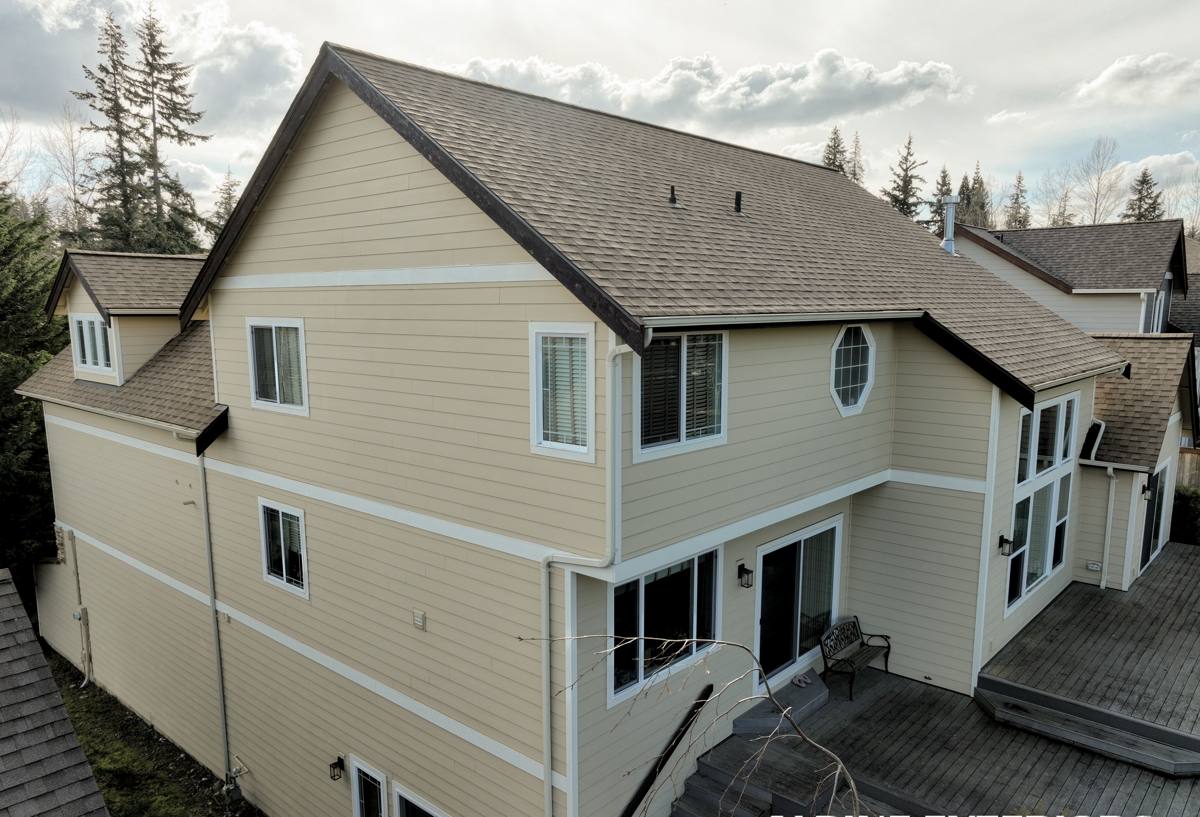
Signs Your Windows Are Overdue for Replacement
Most window failures give warning signs long before glass cracks or a frame falls apart. Here's what we look for, and what you can check yourself before calling anyone:
- Fog or moisture trapped between panes — the seal has failed and the insulating gas is gone
- Sashes that stick, won't stay open, or need a shoulder to close
- Visible gaps around the frame, or daylight showing at the corners
- Soft or discolored wood on the sill, jamb, or exterior trim
- A cold draft near the window even with it fully latched
- Condensation forming on the inside of the glass regularly, not just on the coldest mornings
- Paint that keeps peeling or bubbling on the frame no matter how often it's redone
- Rooms near the window that feel noticeably colder or more humid than the rest of the house
Any one of these can be a minor fix. Several of them together, especially on a window over 15–20 years old, usually means the unit has reached the end of its useful life and repair is throwing money at a losing battle.
What a Correct Window Replacement Actually Involves
Removing the old unit without damaging the opening
The rough opening around a window is often the first casualty of a rushed job. Pulling the old frame carelessly can crack trim, tear existing weather-resistive barrier, or hide rot that needs to be addressed before a new window ever goes in. A careful crew opens things up enough to actually see what's behind the old frame — not just what's visible from the outside.
Flashing and moisture management
This is where most bad installs go wrong, and it's invisible once the trim goes back on. Proper flashing directs water that gets past the exterior cladding down and out, not into the wall cavity. In a climate with as much driving rain as this one, a window that looks fine but was flashed incorrectly can rot a wall from the inside out over several winters before anyone notices. We treat flashing sequence — not the window brand — as the single biggest factor in whether an installation actually holds up here.
Insulation and air sealing
The gap between the new frame and the rough opening needs to be filled with the right material and the right amount — not packed so tight it bows the frame, not left so loose that air and moisture move through it freely. Done right, this step is a big part of why a new window replacement improves comfort and lowers utility bills, on top of whatever the glass itself contributes.
Choosing a Frame Material for This Climate
There's no single "best" window material — there's a best fit for your home, budget, and exposure. Here's how the common options stack up specifically against wet, moss-prone conditions:
| Frame Material | Moisture/Rot Resistance | Maintenance | Typical Lifespan | Best Fit For |
|---|---|---|---|---|
| Vinyl | Excellent — won't rot or absorb water | Low — occasional cleaning | 20–30+ years | Most homes wanting value and low upkeep |
| Fiberglass | Excellent — very stable in wet/dry cycles | Low | 30+ years | Larger openings, exposed walls, long-term owners |
| Wood (clad exterior) | Good on the clad side, vulnerable if the seal at joints fails | Higher — interior wood still needs attention | 20–30 years with upkeep | Homeowners prioritizing interior wood appearance |
| Aluminum | Fair — prone to condensation without a thermal break | Moderate | 20–25 years | Specific architectural or commercial applications |
Our standard for this region leans toward vinyl and fiberglass for most residential replacements simply because they hold up to repeated wetting and drying without the ongoing maintenance wood products demand. We're happy to talk through wood-clad or other options if the look matters more to you than the maintenance schedule — it's a legitimate trade-off, not a wrong choice.
What Drives the Cost of a Window Replacement Project
Every home is different, so we won't put a number on your project without seeing it, but the factors that move the price are consistent:
- Number and size of openings — larger and more numerous windows mean more material and labor
- Frame material — vinyl is typically the most affordable, fiberglass and wood-clad options cost more
- Glass package — double vs. triple-pane, low-E coatings, and gas fill all add incremental cost
- Condition of the rough opening — hidden rot or framing damage found during removal adds time and material
- Access and second-story work — upper-floor windows or tight access can add labor time
- Trim and finish work — matching existing interior or exterior trim can add scope
Get a firm, itemized quote before work starts, and be wary of a bid that's dramatically lower than others — it usually means something's being skipped, whether that's flashing detail, disposal, or the trim work to finish the job properly.
Cross-Border Considerations for Abbotsford, BC Homeowners
Because Lynden sits right on the line, we get calls from Abbotsford homeowners who'd rather work with a crew that's a short drive away than wait on a company based deep in the Fraser Valley or Metro Vancouver. That proximity is useful, but a cross-border project does have a few extra moving parts we handle on your behalf: confirming current customs and duty requirements for materials crossing into Canada, making sure any required registration or permitting on the BC side is squared away before work starts, and being upfront with you about how currency and payment are handled. None of it is complicated, but it does need to be planned for rather than discovered mid-project, and we build that coordination into the schedule from the first conversation.
The practical upside for you is service. If a warranty issue comes up down the road, you're not waiting on a company that has to schedule a special trip — we're already routinely working in the area.
Our Process, Start to Finish
- Free on-site assessment — we look at every opening, not just the ones you're worried about
- Honest recommendation on frame material and glass package based on exposure, budget, and how long you plan to stay in the home
- Written, itemized quote with no surprise line items added later
- Scheduling that accounts for weather — we avoid installing in active driving rain whenever the calendar allows it
- Careful removal, inspection of the opening, correct flashing and air sealing, and installation of the new unit
- Trim and finish work to match the surrounding wall
- Walkthrough and cleanup before we consider the job done
Energy Performance and Code Considerations on Both Sides of the Line
Washington and British Columbia both push toward better energy performance in newer building codes, but they use different rating systems and different minimum requirements. If you're replacing windows in an Abbotsford home, your local code and utility incentive programs may specify performance levels that differ from what applies just across the line in Whatcom County. We'll help you understand what your specific project needs to meet, but we'd encourage you to confirm current local requirements with your municipality before finalizing a glass package, since code minimums do get updated periodically on both sides.
Independent of code minimums, in this climate the practical benefit of a good low-E coating and proper gas fill is less about hitting a number and more about comfort — fewer cold spots near the glass, less condensation on the interior in winter, and a noticeably quieter room during a windstorm.
Keeping New Windows Performing for the Long Haul
A correct installation gets you most of the way there, but a little seasonal attention keeps it that way. Clear moss and debris from sills and adjacent trim before it holds moisture against the frame. Check weep holes on vinyl and fiberglass units so they can actually drain. Keep an eye on caulking at the exterior trim line and touch it up if it starts to crack or pull away — that's the first line of defense against the driving rain this area is known for. None of this takes long, and it's a lot cheaper than dealing with hidden rot five years from now.
If your windows are showing any of the signs above, or you'd just like a straight answer on whether replacement makes sense yet, we're happy to take a look. Fill out the form below for a free, no-pressure estimate — there's no obligation, and we'll tell you honestly if repair is still a reasonable option.