 Lynden Window
 Windows Built for Abbotsford's Side of the Fraser Valley
Abbotsford sits in the same weather system as Lynden and the rest of Whatcom County — the low, flat stretch of the Fraser Valley where marine air off the Strait of Georgia and Boundary Bay pushes inland almost year-round. That air carries moisture, a faint edge of salt, and enough wind to drive rain sideways into window assemblies that weren't built or installed to handle it. Homes here don't fail because of one bad storm. They fail slowly, from years of water finding the same weak seam every winter.
We're based just across the border in Lynden and have worked Abbotsford-area homes long enough to know the pattern: aging wood-frame windows with swollen sashes, older aluminum-frame units with pitted hardware, and vinyl replacements from a prior decade that were installed without proper flashing and are now fogging between panes. This page is about one job — window installation — done right for this specific climate, not a general overview of everything we do.
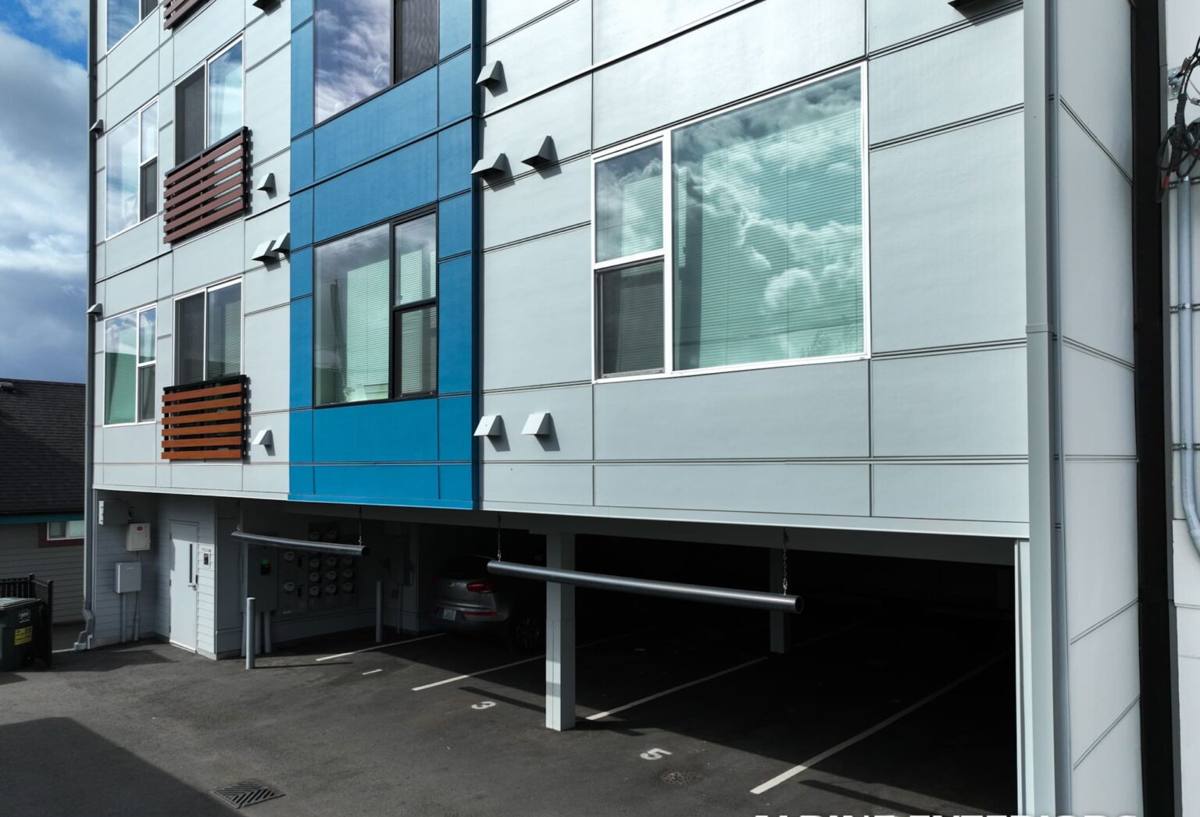
What This Climate Does to a Window Over Time
Driving Rain and Wind-Driven Water
Wind in the Fraser Valley doesn't just blow rain against a wall — it pushes it upward and sideways under trim and around frames that rely on caulk alone to stay dry. A window that's merely "sealed" with a bead of exterior caulk, rather than properly flashed and integrated with the house's water-resistive barrier, will eventually let water behind the frame. That water doesn't show up as an obvious leak at first. It shows up as soft trim, staining on interior sills, or a musty smell in the wall cavity below the window.
Marine Air and Hardware Corrosion
The air moving in off the Strait carries enough salt content to matter over a couple of decades, especially on older aluminum-frame windows and their fasteners. Locks, hinges, and balance hardware corrode faster here than they would further inland, which is part of why a window that "still looks fine" from the street can be seized or failing to latch properly up close.
Moss, Mildew, and Shaded Exposures
North- and east-facing walls, and anything shaded by mature trees or a neighboring structure, stay damp longer after a rain. Over years, that constant dampness feeds moss and mildew growth on sills, trim, and low-quality caulk lines — and it accelerates rot in any wood component that isn't well-drained or properly primed and painted.
What a Correct Window Installation Actually Involves
Most window failures we're called out to replace aren't glass failures — they're installation failures. The window itself was fine; the flashing, sealing, or fit wasn't. A correct installation isn't complicated, but it has to happen in the right order and none of the steps can be skipped to save time.
Flashing and Water Management
Every opening gets flashed so that water is directed out over the surface below it, never trapped behind the siding or sheathing. This means proper sill pan flashing, side flashing that laps correctly over the sill pan, and head flashing that laps under the house wrap above — shingle-style, so water always sheds downward and outward no matter which direction the wind is pushing it.
Insulation and Air Sealing
The gap between the window frame and the rough opening needs to be filled with a proper low-expansion foam or backer rod and sealant — not stuffed with fiberglass batting, which does nothing to stop air movement and can actually hold moisture against the frame. Over-filling with high-expansion foam is just as much of a problem, since it can bow the frame and cause the sash to bind.
Sill Pans and Sloped Sills
Any water that does get past the exterior seal — and eventually, some always does — needs somewhere to go. A sloped sill pan with a back dam gives it a path back outside instead of a path down into the wall framing. This is a small detail that's easy to skip and expensive to fix once siding and interior trim are back in place.
Choosing Materials and Glass for This Climate
There's no single "best" window frame material — there's a right trade-off for the exposure, the budget, and how long the homeowner plans to stay in the house. Here's how the common options stack up for Abbotsford and Lynden-area conditions specifically.
| Frame Material | How It Handles This Climate | Maintenance |
|---|---|---|
| Vinyl | Good moisture resistance, no corrosion risk; performs well in most exposures | Low — occasional cleaning, no painting |
| Fiberglass | Very stable in temperature swings, holds up well to wind-driven rain, minimal expansion/contraction | Low — durable finish, rarely needs attention |
| Wood-clad | Attractive interior wood look; cladding protects the exterior but any breach exposes wood to rot | Higher — exterior cladding and interior finish need periodic inspection |
| Aluminum | Prone to condensation and corrosion in marine air unless thermally broken; not our first recommendation here | Higher — hardware and finish degrade faster in salt-tinged air |
On glass, a good dual-pane package with a warm-edge spacer and an appropriate low-E coating handles the region's mild-but-damp winters well. Triple-pane is worth discussing for north-facing rooms or homes right along the more exposed, wind-heavy stretches of the valley, but it's not a blanket requirement for every opening — we'll tell you honestly where it earns its keep and where it's extra cost without much benefit.
Our Installation Process, Start to Finish
- On-site assessment. We look at each opening individually — exposure, existing flashing condition, sill and framing condition — rather than quoting the whole house off a driveway estimate.
- Accurate measurement and product selection. We measure every opening (older homes are rarely square) and walk you through frame material, glass package, and grille options based on that opening's exposure.
- Removal and opening inspection. Once the old window is out, we check the rough opening and sheathing for hidden rot or water damage before anything new goes in — this is often where problems from a prior bad install turn up.
- Flashing and sill pan installation. Proper water management goes in before the new window does, not after.
- Setting, shimming, and fastening. The window is leveled, plumbed, and squared, then fastened per the manufacturer's schedule — not just caulked into place.
- Insulation, sealing, and trim. Gaps are filled correctly, exterior sealant is applied at the right joints, and trim is finished to match the home.
- Final check. We test operation, confirm the seal, and walk the job with you before we call it done.
Why a Crew That Already Works Abbotsford Matters
We're a short drive from the border, and Abbotsford has been part of our regular service area for a while now — not a one-off trip we make when the calendar's slow. That matters for a few practical reasons. We're familiar with the housing stock common to the area and the kinds of installation shortcuts that show up in older builds. We can get back out quickly if something needs a follow-up look after a hard storm, instead of a homeowner waiting on a crew that has to travel a long way to reach them. And because window installation is what we focus on, we're not learning the flashing details for this climate on your house — we've already worked through them on others nearby.
Cost Factors for Abbotsford-Area Window Projects
Every quote depends on the specific opening, but these are the main variables that move the price up or down on most jobs in this area:
| Factor | Why It Matters |
|---|---|
| Frame material | Vinyl is generally the most budget-friendly; fiberglass and wood-clad cost more up front |
| Opening condition | Rot or water damage found behind an old window adds repair work before the new one goes in |
| Glass package | Upgraded low-E coatings and triple-pane glass add cost but can matter on exposed or north-facing walls |
| Number and size of openings | Larger units and full-house projects have different labor and material needs than a single replacement |
| Access and site conditions | Second-story openings, tight setbacks, or difficult access affect labor time |
Signs Your Windows Need Attention
- Fogging or a visible haze between panes of glass — the seal has failed and it won't clear
- Sashes that stick, won't latch, or have gone stiff to open and close
- Soft or discolored trim and sill material, especially on shaded or north-facing walls
- A cold draft near the frame on a windy day even with the window fully closed
- Visible moss or persistent mildew staining on sills or exterior trim
- Noticeable condensation on the interior glass or frame during cold, damp weeks
- Peeling paint or bubbling finish on wood-frame windows near the sill
If a few of these sound familiar, it's worth having someone look at the openings individually rather than assuming the whole house needs the same fix — sometimes it's one bad install, not the windows themselves.
If you're in Abbotsford and thinking about window replacement, we're happy to come take a look and give you a straight answer — no pressure, no inflated estimate to "leave room to negotiate." Use the form below to request a free estimate and we'll get back to you.