 Lynden Window
 Fiber Cement Siding for Abbotsford, BC: Built for the Fraser Valley
Abbotsford sits in the Fraser Valley just north of the Washington border, close enough to Lynden that our crew treats it as regular territory rather than an occasional trip. It's a different setting than towns right on the open coast, more valley floor and farmland, more distance from open salt water, but homes here still take on a steady mix of marine-influenced air moving up the valley, long stretches of driving rain through fall and winter, and a moss season that can run most of the year on shaded roofs and walls. That combination wears down the wrong siding material a lot faster than most homeowners expect, and it's exactly the kind of climate that separates a fiber cement installation built to last decades from one that starts showing problems in five years.
This page is specifically about fiber cement siding for Abbotsford homes, not a general overview of every exterior trade. We install James Hardie fiber cement siding exclusively, and we've spent enough time working on both sides of the border to know how this valley's weather actually behaves on a real wall, not just how a product performs on a spec sheet.
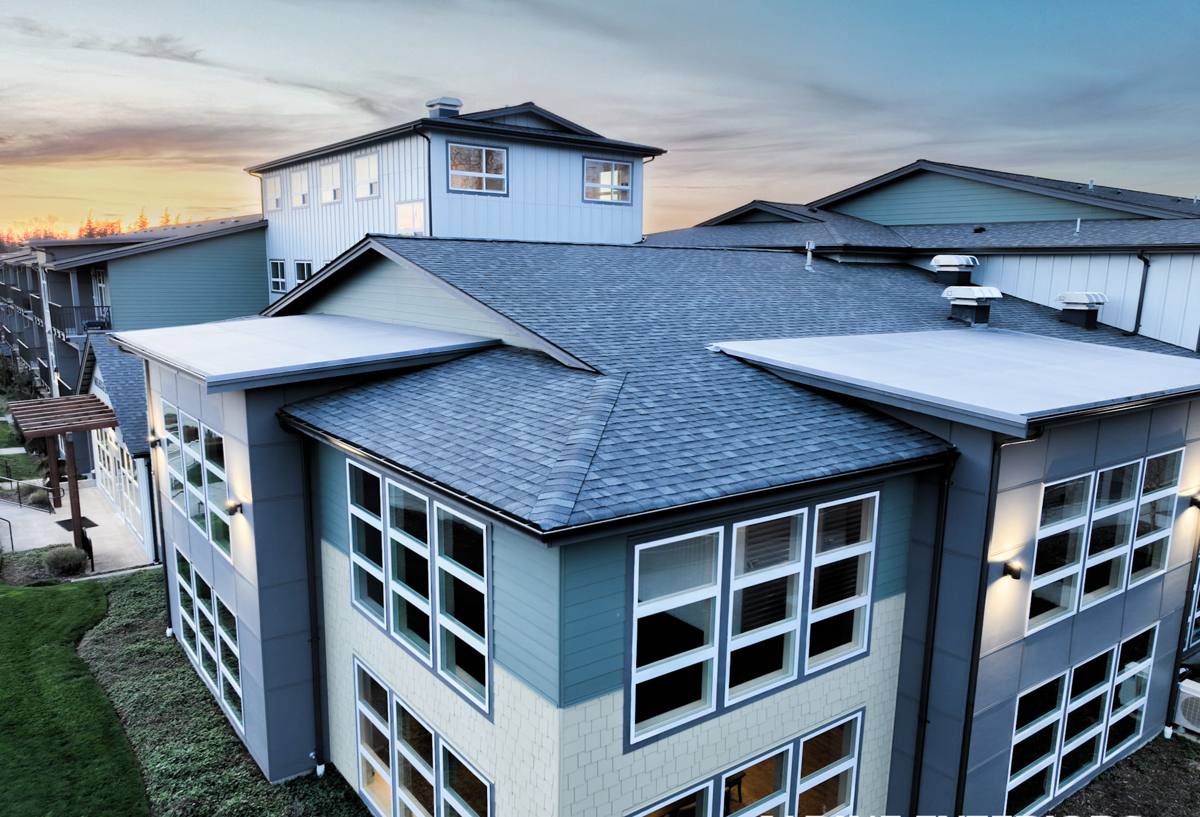
What the Fraser Valley Climate Does to Siding
Marine-Influenced Air and Salt-Tinged Moisture
Abbotsford isn't directly on the coast, but the valley pulls in moisture-laden air off the Salish Sea and Georgia Strait regularly, especially during the wetter months. That air carries enough salt-tinged moisture to matter over time, slowly working on fasteners, flashing, and lower-grade finishes even when it isn't dramatic or obvious from the street. It tends to show up years later as rust bleed at nail heads, degraded caulking, or a paint finish that's chalked and faded well ahead of schedule.
Driving Rain Through the Valley
Fall and winter storm systems moving through the Fraser Valley don't just drop rain straight down, wind pushes it sideways into lap joints, trim seams, and wherever a roofline meets a wall. That sideways-driven moisture finds gaps a careless installation leaves behind, and it's a bigger factor in Abbotsford than homeowners moving from drier regions usually expect. A siding system that performs fine in a calmer climate can still take on water here specifically because of how wind and rain interact across open valley terrain.
A Long Moss and Mildew Season
Mild temperatures and near-constant dampness add up to a moss and mildew season that can run most of the year on north-facing walls and anywhere shade keeps a surface from drying out between storms. Any siding material with even a little surface porosity becomes a growth surface over time. In Abbotsford, that shows up earliest on tree-shaded lots and on walls that get little direct sun through the winter months.
Why We Install Only James Hardie Fiber Cement Siding
We used to work with a wider range of siding products. We stopped, and the reason came from what we kept finding on tear-offs and service calls in wet, valley climates like this one, not from a supplier deal or a marketing angle.
- Non-combustible core: Fiber cement doesn't feed a fire the way wood-based siding products can, which matters for both household safety and insurance considerations.
- Factory-applied ColorPlus finish: The color coat cures under controlled factory conditions instead of being brushed on at the job site, so it holds up against fading, chalking, and moisture exposure far longer than field-applied paint.
- Climate-engineered HZ product lines: Hardie's HZ5 formulation is built for regions with sustained moisture and freeze-thaw cycling, a closer match to the Fraser Valley than a generic warm-climate spec.
- Dimensional stability: Fiber cement doesn't swell, cup, or warp the way engineered wood products can after repeated exposure to a wet Pacific Northwest year.
- Strong transferable warranty: Hardie backs its products with one of the stronger warranty structures in the industry, provided the installation follows spec.
We won't install LP SmartSide, vinyl siding, Cemplank, Allura, primed spruce, or cedar. Each of those products has a place in the market and homeowners who are satisfied with them. But in a valley climate this consistently wet, we've made a professional call to install and stand behind one system completely rather than offer a cheaper option that quietly shifts maintenance risk onto the homeowner a few years down the road.
What Correct Fiber Cement Installation Involves
Hardie siding only performs the way it's engineered to when it's installed correctly, and in the Fraser Valley, the installation details matter more than they would in a drier region. A few of the basics we won't shortcut:
- Rain screen gap: A small drainage cavity behind the siding lets any moisture that gets past the exterior surface drain and evaporate instead of sitting against the wall sheathing.
- Correct fastener spacing and type: Hardie specifies fastener placement and corrosion-resistant fastener types for a reason; loose spacing or the wrong fastener is one of the more common causes of early siding failure we find on tear-offs.
- Properly lapped house wrap and flashing: Every seam and penetration needs to shed water downward and outward, especially on walls that catch wind-driven rain moving through the valley.
- Sealed butt joints and trim transitions: Open or poorly sealed joints are where moisture finds its way behind the siding first.
- Correct clearance from grade and hard surfaces: Siding installed too close to soil, decking, or paving wicks moisture upward and shortens the material's real-world lifespan.
None of this is exotic. It's the manufacturer's own installation spec, followed consistently, including on the parts that are hardest to see once the job is finished.
Our Process for an Abbotsford Siding Project
We walk every Abbotsford property in person before quoting anything. A phone estimate or a number pulled from square footage alone can't account for the substrate condition behind existing siding, the amount of trim and roofline detail on a given home, or how much sun and shade a particular wall actually gets through the year. Once we're on-site, the process generally runs like this:
- On-site assessment: We inspect the existing siding, trim, and any visible moisture damage, and check how the home's grading, gutters, and roofline interact with the walls.
- Tear-off versus overlay decision: Some homes can take new siding over a sound existing surface; many older installations need a full tear-off to check the sheathing underneath for hidden moisture damage before anything new goes up.
- Material and color selection: We help homeowners choose the right Hardie product line and ColorPlus finish for the home's exposure and style, including HZ5 where sustained moisture makes it the right call.
- Installation to spec: Rain screen gap, fastener pattern, house wrap, and flashing go in as one integrated water-management system, not as separate steps done in isolation.
- Final walkthrough: We go over the finished work with the homeowner and address anything that needs a second look before calling the job done.
Why Hiring a Crew That Already Works Abbotsford, BC Matters
Abbotsford sits close enough to Lynden that a crew based on the Washington side can reasonably serve it, but that only works well when the crew has actually done the logistics before, not when they're figuring it out for the first time on your job. Scheduling material delivery and crew time around a border crossing, coordinating a job site that spans two countries, and understanding that Fraser Valley homes see a slightly different mix of marine air, valley humidity, and wind exposure than towns right on the open coast are all things that come from repetition, not from a sales pitch. A crew that's worked this specific stretch of the valley knows which wall orientations stay damp longest, where extra flashing attention actually pays off, and which details are worth the extra time so an Abbotsford homeowner isn't dealing with a callback after the next wet season.
What to Ask Before Hiring Anyone for a Cross-Border Project
- Ask how they handle scheduling and material delivery across the border, and whether that's a routine part of their operation or a first-time arrangement
- Ask exactly which siding brand and product line they install, and why
- Ask how they handle hidden substrate damage discovered once old siding comes off
- Confirm current licensing and insurance, and ask directly how it applies to work performed in Canada
- Get a written scope that specifies flashing and house wrap details, not just "new siding installed"
Cost Factors for Abbotsford Siding Projects
| Factor | What It Affects | Fraser Valley Consideration |
|---|---|---|
| Home size and trim complexity | Total material and labor | More trim detail and roofline intersections give wind-driven rain more places to work its way in |
| Tear-off vs. overlay | Labor scope and substrate access | Tear-off exposes hidden moisture damage common under older siding in a wet valley climate |
| Substrate condition | Repair costs before new siding goes on | Years of trapped moisture behind failing siding can rot sheathing before it's ever visible from outside |
| Product line and finish | Material cost and long-term durability | HZ5 and ColorPlus finishes cost more upfront but outlast standard lines against sustained moisture |
| Site access and logistics | Scheduling and setup time | Cross-border delivery and crew scheduling add planning steps a purely local job doesn't need |
These are general drivers, not a quote. Every Abbotsford home sits under different tree cover and takes on a slightly different mix of sun, shade, and wind exposure, so we walk the property before putting a real number on the work.
Signs an Abbotsford Home Needs New Siding
- Moss or dark staining on siding that returns quickly after cleaning, especially on shaded or north-facing walls
- Soft or spongy siding, particularly low on the wall or around window and door trim
- Peeling, bubbling, or chalking paint on siding boards or trim
- Visible gaps at seams, corners, or trim joints where water can track in
- Rust staining around fasteners or flashing, an early sign of sustained moisture exposure
- Cracked, warped, or missing siding sections after a wind event
- Rising heating bills that may point to a wall assembly that's no longer sealing properly
Timing a Siding Project Around the Valley's Wet Season
The Fraser Valley's wettest, windiest stretch typically runs from late fall through winter, and spring through summer generally offers the driest, most stable conditions for a fiber cement installation. That matters because house wrap, flashing, and the siding itself all perform better when they can be installed and allowed to set up under dry conditions rather than between storm systems. That said, siding that's already letting moisture into the wall assembly is worth addressing on its own timeline rather than waiting for the ideal season, since active water intrusion tends to get worse, not better, the longer it sits.
If your Abbotsford, BC home needs new siding or you're not sure whether what you're seeing is a repair or a full replacement, we're glad to take a look and give you a straightforward, honest assessment. Reach out using the form below to schedule a free, no-pressure estimate.