 Lynden Window
 Decking in a Climate That Doesn't Let Up
Abbotsford sits in a stretch of the Pacific Northwest where wood decks take a beating. Between the Fraser Valley's rainfall totals, the salt-laden air that drifts in off the coast, and the long stretch of fall through spring when everything north-facing stays damp, a deck here spends most of the year wet, shaded, or both. That combination is exactly what grows moss, softens fasteners, and rots wood decking from the inside out before most homeowners notice a problem. Composite decking was built for conditions like this, and when it's installed correctly, it holds up to the Fraser Valley's moisture cycle far better than pressure-treated lumber ever will.
We work this area regularly, and the deck problems we get called out for are consistent: boards cupping near the house where drainage is poor, mildew staining on the shaded side of the yard, and hardware that's rusted out from years of standing water. A well-built composite deck addresses all three, but only if the person installing it understands how this climate actually behaves.
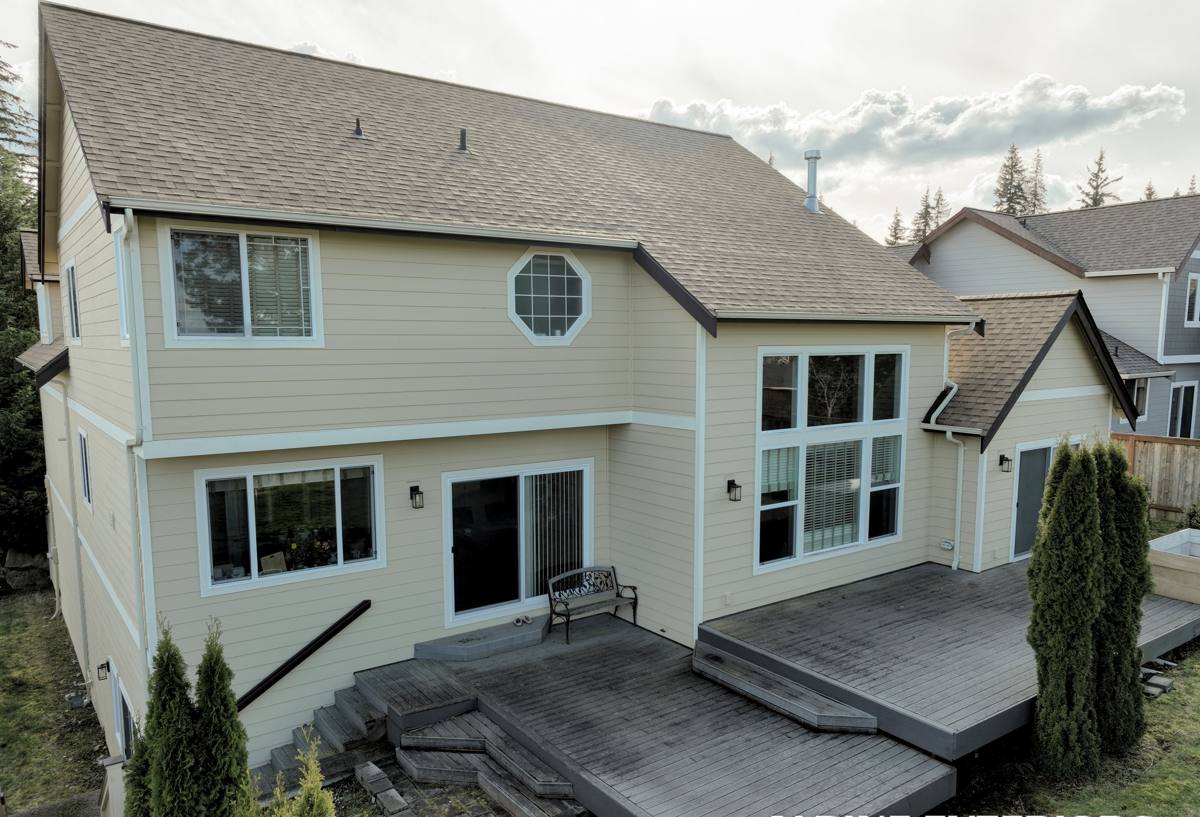
Why Composite Makes Sense for Abbotsford Homes
Composite decking is a blend of wood fiber and plastic, usually with a protective outer cap. It doesn't absorb water the way solid wood does, it won't splinter, and it doesn't need to be stained or sealed on a yearly schedule. For a region where a deck can go weeks without a dry day in the winter, that matters more than it does somewhere drier.
What the Local Climate Actually Does to a Deck
- Driving rain gets pushed sideways by wind off the valley, soaking board ends and any exposed cut edges, not just the top surface.
- Salt air, even well inland from the coast, accelerates corrosion on screws, joist hangers, and any exposed metal hardware.
- Moss and algae take hold fastest on shaded, north-facing decks and anywhere airflow underneath the boards is restricted.
- Freeze-thaw swings in the colder months stress any wood that's already holding moisture, which is how rot gets started at fastener points.
Composite boards resist most of this on their own, but the deck as a whole is still a wood-framed structure underneath. The composite decking itself isn't the part that usually fails first — the framing, flashing, and fasteners underneath it are.
What a Correctly Built Composite Deck Actually Involves
A lot of composite decking problems we see aren't the product's fault — they're the result of a builder treating composite like standard lumber and skipping steps that matter more with composite than with wood.
The Framing and Substructure
Composite boards are heavier than most people expect and behave differently than wood under load, so joist spacing has to match the manufacturer's spec for the specific board profile, not a generic "16 inches on center" rule of thumb. In a climate this wet, we also treat the framing lumber and any cut ends with a quality sealant, and we use structural screws and connectors rated for exterior, high-moisture use — standard interior-grade hardware corrodes fast once salt air gets into the mix.
Joist Protection and Drainage
Every joist should be capped with a self-adhering flashing tape before boards go down. This is one of the most-skipped steps on a budget deck build, and it's the single biggest reason wood framing rots out under a composite deck within a decade. We also make sure the deck has a slight pitch away from the house and that water has somewhere to go — standing water under a deck in a shaded Abbotsford backyard is a moss and mildew problem waiting to happen.
Fastening and Board Layout
Hidden fastener systems keep the surface free of exposed screw heads, which both looks cleaner and removes another point where water can sit and work its way into the board. Board gaps need to account for composite's expansion and contraction with temperature — too tight and boards buckle in summer heat, too loose and they trap debris and moss over the winter.
Ventilation Underneath
Low-clearance decks are common on older Abbotsford-area homes, and low clearance means poor airflow, which means moisture sits underneath the deck longer after every rain. Where clearance allows, we build in ventilation gaps or skirting with airflow designed in, rather than skirting that seals the underside completely.
Comparing Composite Board Types
Not all composite decking is built the same, and the differences matter more in a wet, mossy climate than they would somewhere dry. Here's how the main categories stack up for a project in this area:
| Board Type | Moisture Resistance | Maintenance | Typical Lifespan |
|---|---|---|---|
| Capped composite | High — outer shell resists moisture and staining | Occasional wash-down | 25–30+ years |
| Uncapped composite | Moderate — more prone to surface staining and mildew | Periodic cleaning, more attention to moss | 15–20 years |
| Pressure-treated wood | Low — absorbs water, prone to rot and splitting | Annual staining/sealing | 10–15 years, often less in shade |
For most Abbotsford-area yards — especially anything with shade or limited sun exposure — we steer homeowners toward capped composite. The upfront cost is higher than uncapped or wood, but the reduced maintenance burden and better moisture resistance pay for themselves over the life of the deck, particularly on decks that don't get much direct sun to dry out between rains.
How We Approach a Composite Decking Project
- Site visit and assessment. We look at drainage, sun exposure, existing framing (if it's a resurface), and how the deck ties into the house.
- Design and board selection. We walk through board colors, profiles, and railing options, and give straight answers about which products actually hold up in shaded, damp spots versus sunnier parts of the yard.
- Framing and structural work. Any rot, undersized joists, or missing flashing gets addressed before a single composite board goes down — building over a bad substructure is how "new" decks fail early.
- Installation. Joist tape, correct fastening, proper board spacing, and attention to drainage and ventilation throughout.
- Final walkthrough. We go over basic care and answer questions before we consider the job done.
Maintenance: What Composite Still Needs in This Climate
Composite decking is low-maintenance, not no-maintenance. In a region with a long moss season, a little seasonal attention goes a long way toward keeping a deck looking good and draining properly.
- Sweep debris and fallen leaves off regularly — trapped organic matter is what feeds moss and mildew growth.
- Rinse the deck a few times a year with a hose or low-pressure wash, focusing on shaded areas and board gaps.
- Check that drainage gaps between boards stay clear, especially after a windy fall when leaves pile up fast.
- Inspect railings, stairs, and any exposed hardware annually for corrosion, particularly on decks facing prevailing wind and weather.
- Keep nearby shrubs and trees trimmed back so more of the deck sees sun and airflow through the year.
Cost Factors to Expect
Every deck is different, but a few factors consistently drive the price of a composite decking project in this area:
| Factor | Why It Matters |
|---|---|
| Deck size and shape | More linear footage and cutting for angles or curves increases material and labor |
| Board tier (capped vs. uncapped) | Capped boards cost more upfront but need less long-term maintenance |
| Substructure condition | Rotted or undersized existing framing adds repair work before decking can go on |
| Height and railings | Elevated decks and code-required railings add material, labor, and sometimes permitting |
| Site access | Tight side yards or limited equipment access can add labor time |
We give straightforward, itemized estimates so homeowners can see exactly where the cost is going, rather than a single lump number with no explanation behind it.
Why It Matters to Hire a Crew That Works This Area
Deck-building fundamentals don't change from town to town, but how a deck is detailed for a specific climate does. A crew that mostly works drier inland areas may not think twice about flashing every joist, ventilating the underside, or picking hardware rated for salt-air exposure — because where they usually work, skipping those steps doesn't cause problems for years. Abbotsford's combination of coastal-influenced rain, valley moisture, and moss pressure doesn't offer that grace period. We build decks in Whatcom County and the surrounding border communities regularly, and the details we build in — joist protection, drainage, fastener selection — come from seeing firsthand what actually fails on decks in this climate, not from a generic install checklist.
Signs an Existing Deck Needs Attention
If you're deciding between repairing an aging wood deck or replacing it with composite, a few warning signs are worth checking for before winter sets in:
- Soft or spongy spots underfoot, especially near the house or along board ends
- Persistent moss or algae that comes back within weeks of cleaning
- Rust staining around screw heads or visible hardware
- Gaps or movement where the deck ledger board meets the house
- Boards that stay damp long after the rest of the yard has dried out
Any of these can usually be traced back to moisture getting trapped somewhere it shouldn't — which is the exact problem a correctly built composite deck is designed to solve.
If you're weighing a new composite deck or wondering whether an existing one is worth repairing, we're happy to take a look and give you a straight, no-pressure estimate — just fill out the form below.