 Lynden Window
 Window Installation Around Wiser Lake
Wiser Lake sits in the rural country northwest of Lynden, in Whatcom County — a mix of lakefront homes, wooded lots, and farmland properties that sit a little further from town services than a house in the middle of Lynden itself. That setting changes what a window installation actually needs to hold up to. Mature tree cover keeps whole sides of many homes shaded for most of the day, lake-adjacent lots hold humidity longer after a storm passes, and the same marine-influenced weather that moves through the rest of Whatcom County still brings salt-tinged air, wind-driven rain, and a long moss season up the valley. A window installed without accounting for those specifics is starting its clock on failure the day it goes in.
Lynden Window Co installs and replaces windows for homes in and around Wiser Lake, and we treat it as its own kind of job, not a copy-paste of what we'd do on a dry, open, in-town lot. This page focuses specifically on window installation for this area: what the site conditions demand, what a correct installation actually involves, how our process runs from first look to final walkthrough, and why it matters to hire a crew that already knows this particular pocket of the county.
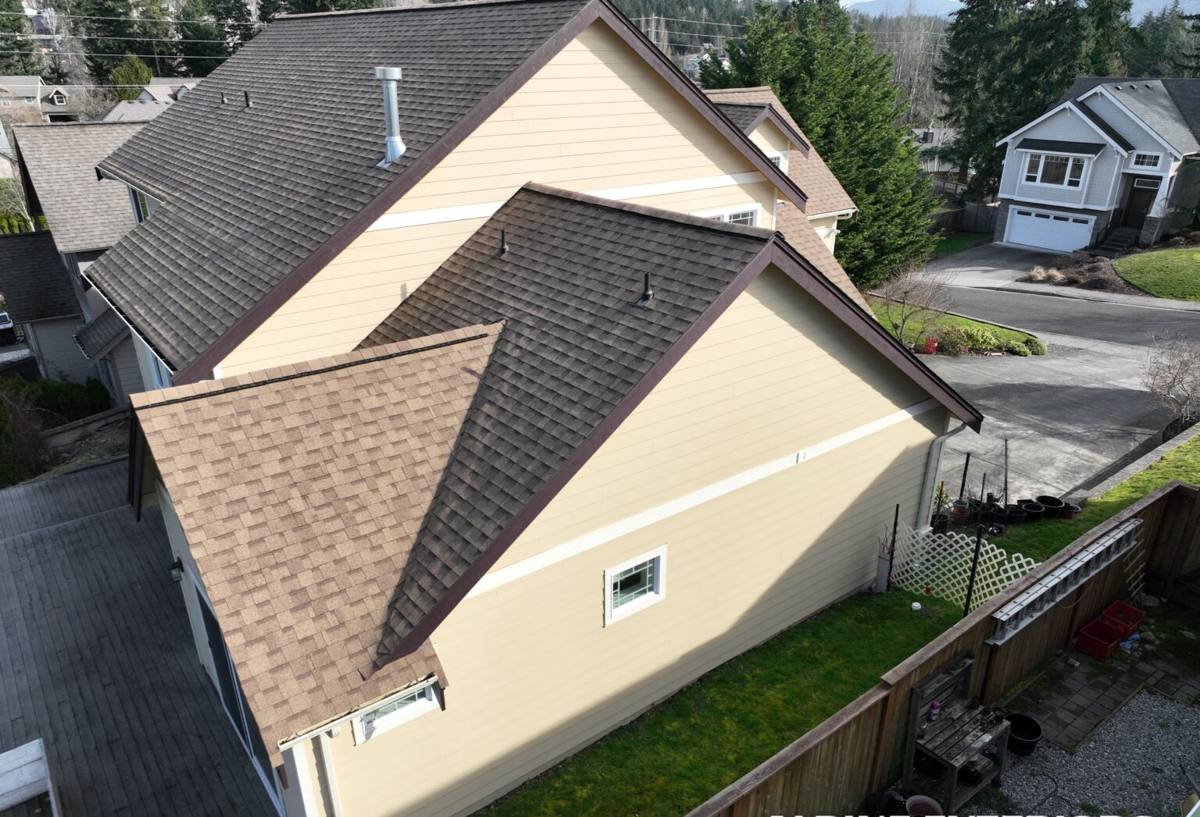
What Wiser Lake's Setting Does to a Window Installation
Shade, Moisture, and Slow Drying
A lot of homes around Wiser Lake sit under significant tree cover or close to the water itself, and both of those things slow down how fast a wall and its windows dry out after rain. Where a sun-exposed wall in town might dry within a day, a shaded, lake-facing wall here can stay damp for several days at a stretch. That matters most at the window sill and the lower corners of the frame, which is exactly where sustained moisture does its damage over time if the flashing and drainage details weren't done right at installation.
Wind-Driven Rain Off the Lake
Open water changes how rain hits a house. Instead of falling straight down, wind off the lake can drive rain sideways into window openings, especially on the water-facing side of a home. That sideways load puts real pressure on head flashing, sill pans, and the seal around the window frame — it's a bigger test of installation quality than of the window itself.
Salt Air and Long Moss Seasons
Even away from the immediate waterfront, Whatcom County's marine air carries a steady dose of salt that accelerates corrosion on window hardware, screens, and lower-grade fasteners over the years. Combined with mild, wet winters that give moss and mildew a long window to establish themselves on shaded sills and trim, it's a climate that rewards good materials and correct installation and punishes shortcuts on both.
Rural Access and Site Logistics
Properties around Wiser Lake are often on longer driveways, gravel or unpaved access, septic systems, or private wells, which is a different logistical picture than a standard in-town lot. It affects how we stage equipment and materials and how we plan a job around weather, since a rural site can be harder to protect from an unexpected downpour mid-installation than a house with easy street access and a garage to duck into.
Window Materials That Actually Hold Up Here
There's no single right answer for every home on the lake — sun exposure, budget, and how long you plan to own the property all factor into the decision. What matters is understanding the real trade-offs for a shaded, humid, wind-exposed setting before you commit to a material.
| Frame Material | Moisture & Corrosion Behavior | Typical Maintenance | Realistic Lifespan Here |
|---|---|---|---|
| Vinyl | Won't rot; performs well if seams and welds are installed correctly | Low; occasional track and weep-hole cleaning | 20-30 years |
| Fiberglass | Dimensionally stable, resists moisture and corrosion well even on shaded, damp walls | Low | 30-40+ years |
| Wood, painted or clad | Attractive but vulnerable to rot at joints and sills in a slow-drying, shaded setting | Higher; regular paint or finish upkeep | 15-30 years depending on upkeep |
| Aluminum | Conducts cold and is more prone to corrosion over time in salt-influenced, humid air | Moderate | 20-30 years |
On a shaded or lake-facing wall in particular, we lean toward materials that shrug off sustained moisture with minimal upkeep, since that side of the house doesn't get the natural drying time a sunnier elevation would. We'll walk through what fits your specific lot and budget rather than pushing one product across every wall of the house.
Full-Frame Replacement vs. Insert Replacement
The first real decision on most window projects is whether to do a full-frame replacement, which strips the opening down to the rough framing and rebuilds the flashing from scratch, or an insert replacement, which fits a new window into the existing, still-sound frame. Insert replacement is faster and less disruptive to surrounding siding and trim, and it's a good option when the existing frame is structurally solid and was flashed correctly the first time. Full-frame replacement takes longer and costs more, but it's the honest call when there's already moisture damage at the sill or jambs — which we see more often on shaded, slow-drying walls around the lake than we do on open, sun-exposed lots in town. We'll tell you which situation your home is actually in, not default to the cheaper option and seal a moisture problem up behind a new window.
Installation Details We Treat as Non-Negotiable
Most window failures we get called out to fix aren't failures of the window product — they're shortcuts in flashing and sealing that don't show up until a wet season or two later, and a shaded, humid site punishes those shortcuts faster than a dry one. On every Wiser Lake installation, that means:
- A properly pitched sill pan that sheds water outward instead of letting it pool under the frame
- Head flashing integrated with the housewrap above the window, lapped correctly so water sheds down and out, not behind the wall
- Jamb flashing tied into the surrounding wall assembly, not left to caulk alone to keep water out
- Weep holes and drainage paths left clear and functional, never sealed shut by accident during install
- Corrosion-resistant fasteners and hardware suited to a consistently damp, salt-influenced climate
- Insulation and air sealing around the frame that doesn't trap moisture against the framing behind it
None of this adds meaningful cost relative to the window itself. Skipping it is what turns a window that should last decades into one that's rotting the wall behind it within a few wet seasons — and on a shaded lake lot, that clock runs faster than most homeowners expect.
How We Run a Wiser Lake Window Project
Assessment
We start by walking the exterior and looking at each window's exposure individually — which walls face the lake and prevailing wind, which sit under tree cover, and whether there's already visible sill damage, soft trim, or failed seals. Two windows on the same house can be in very different condition depending on which direction they face.
Scope and Recommendation
From there we give you a clear read on which windows need full-frame replacement versus insert replacement, which material makes sense for each elevation, and a realistic estimate with no pressure to decide on the spot.
Installation
We stage materials to account for rural access and weather timing, since a driveway or gravel approach on a lake property doesn't always allow for the same quick load-in as an in-town job. Flashing, sill pans, and sealing are done to the same standard on every window, not scaled back on the ones that are harder to reach.
Walkthrough
We walk the finished work with you, operate every window, and confirm the fit and finish before we call the job done.
Signs a Window Around Wiser Lake Needs Attention
- Visible fogging or condensation trapped between panes, which usually means a failed seal on a double- or triple-pane unit
- Noticeable drafts or a cold spot near a closed window, especially on lake-facing or shaded walls
- Soft, discolored, or spongy sill and trim material
- A window that's become difficult to open, close, or latch smoothly
- Peeling paint or bubbling finish on wood-framed windows
- Visible gaps, cracked caulk, or daylight around the frame from inside
- Water staining on interior wall or ceiling surfaces near a window
Any one of these is worth a look. Caught early, most point to a repair or resealing job rather than full replacement. On a shaded, slow-drying wall near the water, though, these signs tend to progress faster than they would on a drier, sun-exposed lot, so we'd rather look sooner than later.
Why a Crew That Already Works Wiser Lake Matters
A crew that installs windows across this part of Whatcom County season after season learns which elevations around the lake actually need extra attention, how much a given amount of tree shade slows drying time, and which flashing details are worth the extra minutes on install day so you're not dealing with a leak two winters later. It also means showing up already familiar with rural access, well and septic layouts, and the practical logistics of a lake-area property, instead of relearning that on your job. We also handle siding, roofing, and decks, so if a window project turns up moisture damage in the surrounding wall or trim, we can address it as part of the same conversation instead of sending you to find a second contractor.
Get a Free, No-Pressure Estimate
If your Wiser Lake home has windows that are fogging, drafty, hard to operate, or just past their useful life, we're glad to take a look and give you a straightforward, honest read on what it actually needs. Reach out using the form below to schedule a free estimate — no pressure, no upsell script.