 Lynden Window
 Why Ferndale Windows Wear Differently Than Windows Inland
Ferndale sits close enough to Bellingham Bay and the open water of Whatcom County that homes here take a different kind of weathering than a house twenty minutes inland. Salt-laden air moves through on the marine breeze and settles on everything it touches, including window frames, hardware, and exposed fasteners. Add driving, wind-pushed rain off the water and a moss season that can stretch from fall through spring, and you get a specific combination of stresses: corrosion on metal components, moisture intrusion at poorly sealed joints, and organic growth wherever water sits instead of shedding.
None of that is dramatic on its own. It's slow. A window that's a little under-sealed doesn't fail in one storm — it fails after a few winters of small amounts of water finding their way behind the trim, softening wood, and feeding rot that isn't visible until it's advanced. That's the pattern we see most often on replacement calls in this area: damage that built up quietly because the original install wasn't matched to what this stretch of Whatcom County actually deals with year-round.
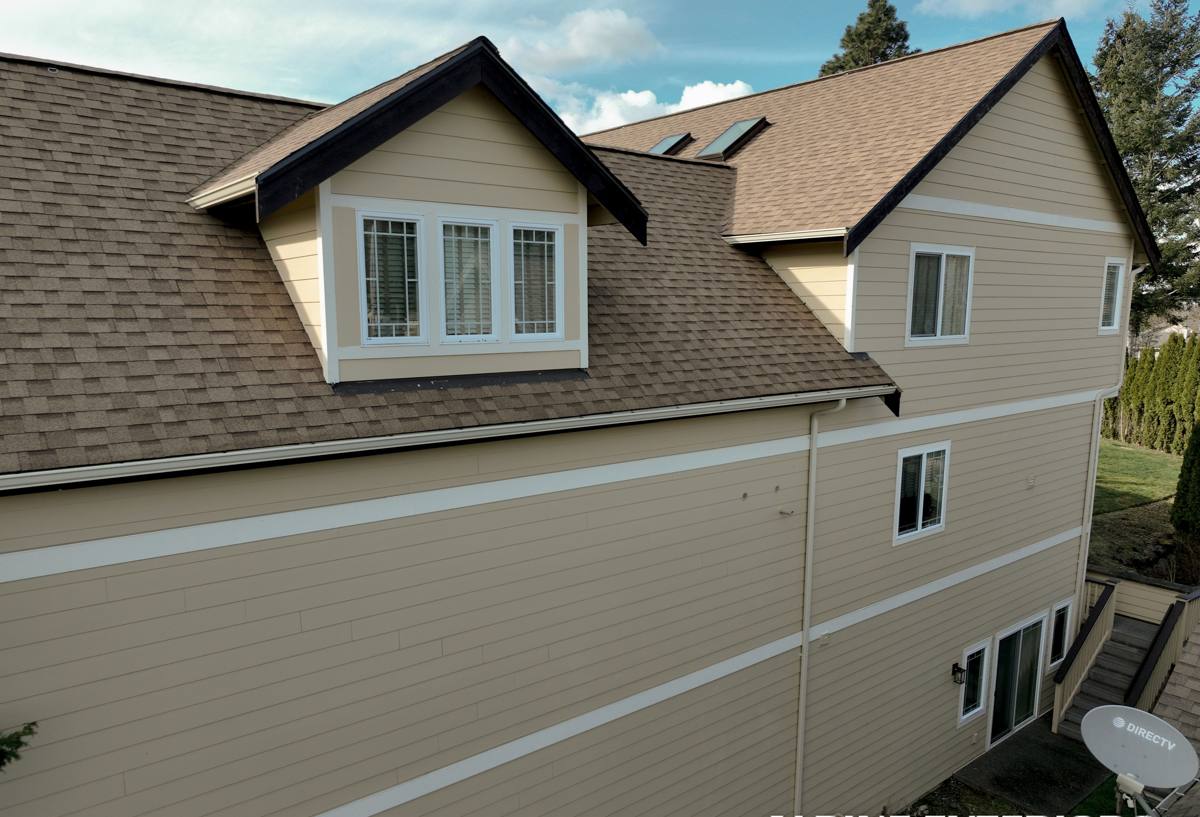
Signs a Ferndale Home Needs Window Replacement, Not Just Repair
Some problems are worth fixing in place. Others mean the window unit itself has reached the end of its useful life. A quick honest read on which category you're in:
- Condensation forming between the panes (not on the inside surface) — this means the seal has failed and the insulated glass unit needs replacing, not just cleaning
- Visible daylight or a draft you can feel at the frame edge when it's windy outside
- Wood trim or sill that's soft, discolored, or crumbling to the touch
- Frames that are hard to open, don't latch flush, or have warped enough that the sash binds
- Persistent black or green staining on the sill or lower frame that returns within weeks of cleaning — a sign moss and mildew have a moisture source to keep feeding on
- Visible corrosion or pitting on aluminum frames or hardware, common closer to the water
- Noticeably higher heating bills in a room with older single-pane or early dual-pane glass
If you're only seeing one or two of these and the frame itself is sound, a repair or re-seal may buy you more years. If you're seeing several at once, or the frame material itself is failing, replacement is usually the more honest recommendation — and cheaper over time than repeated patch repairs.
What a Correct Window Replacement Actually Involves
Full-Frame vs. Insert Replacement
Not every job is the same job. An insert (or "pocket") replacement fits a new window into the existing frame and is faster and less invasive — appropriate when the existing frame is still square, dry, and structurally sound. A full-frame replacement removes the old unit down to the rough opening, which is the right call when there's any rot, the frame has shifted out of square, or the original flashing was done poorly. Given how much water this area sees, we check for hidden moisture damage before recommending either approach — an insert installed over a frame that's already compromised just seals the problem behind new trim.
Flashing and Water Management Come First
The window itself is rarely where a leak starts. Most moisture problems trace back to how the opening was flashed — the layered sequence of house wrap, sill pan, and flashing tape that directs water down and out instead of letting it track behind the siding. In a climate with sustained driving rain, this step matters more than which brand of window goes in the opening. We treat the sill pan and flashing detail as non-negotiable on every job, not an upsell.
Sealing and Insulation
After the unit is set and shimmed level, the gap between the window frame and the rough opening gets insulated (typically low-expansion foam, not just fiberglass batting, which settles) and sealed with an exterior-grade sealant rated for the temperature swings and UV exposure this region actually gets. Interior and exterior trim goes back on last, once the water management layer is confirmed to be continuous.
Frame Material: What Holds Up Near the Water
Every frame material has trade-offs. None of them is the "wrong" choice universally — the right one depends on exposure, budget, and how much upkeep a homeowner wants to take on.
| Material | Salt Air / Moisture Behavior | Maintenance | Typical Lifespan |
|---|---|---|---|
| Vinyl | Won't corrode or rot; performs well in coastal-adjacent conditions | Low — occasional cleaning | 20-30+ years |
| Fiberglass | Excellent stability, minimal expansion/contraction, handles moisture well | Low | 30-40+ years |
| Wood / Wood-clad | Attractive but needs consistent sealing to resist moisture and rot in this climate | Higher — periodic repainting/resealing | Varies widely with upkeep |
| Aluminum | Prone to corrosion and pitting in salt-air exposure over time | Moderate | Shorter in coastal-adjacent settings |
For a Ferndale property, we most often steer homeowners toward vinyl or fiberglass specifically because of the salt-air and moisture combination — not because wood or aluminum are bad products, but because they demand more upkeep to hold up here than in a drier, inland location. If a homeowner wants the look of wood and is willing to keep up with maintenance, that's a legitimate choice too — we'll walk through what that commitment actually looks like before you decide.
Glass Packages Worth Considering in This Climate
Frame material gets the attention, but the glass package does a lot of the actual work. In a region with long grey stretches and real winter cold snaps, a few options matter more than they would somewhere milder:
- Double-pane with Low-E coating and argon fill — the standard baseline for new installs; solid performance-to-cost ratio
- Triple-pane — worth discussing for north-facing rooms or homes closer to open water with more wind exposure; better sound dampening too, which matters if you're near a road
- Warm-edge spacers — reduce condensation risk at the glass edge, which is exactly where we see seal failures start in humid, moisture-heavy conditions
We'll spec glass to the specific exposure of each wall of the house, not apply one package uniformly — a west-facing wall catching driving rain and wind doesn't need the same spec as a sheltered interior courtyard window.
Our Process for a Ferndale Job
Because our crew already works this stretch of Whatcom County regularly, the process is straightforward and doesn't require us to relearn local conditions on your job:
- On-site assessment — we check every opening individually, not just the ones you've flagged, since moisture damage doesn't always show from inside
- Honest scope decision — insert vs. full-frame, based on what we actually find, explained in plain terms
- Material and glass selection — matched to each wall's exposure, not a blanket spec
- Removal and flashing repair — old units come out, any damaged sheathing or framing gets addressed before anything new goes in
- Install, seal, and trim — set, shim, insulate, seal, finish
- Walkthrough — operation check on every window before we consider the job done
We schedule around the weather where we can, since a dry install window matters more here than in a lot of places — but we also know how to sequence a job so openings aren't left exposed longer than necessary if the forecast turns.
Why Local Experience Matters for This Kind of Job
A crew that only occasionally works Whatcom County will spec the same window package they'd use anywhere else. A crew that works Ferndale and the surrounding area regularly already knows which walls on a given lot orientation take the worst of the wind-driven rain, how fast moss establishes on north-facing trim here, and which older housing stock in the area is more likely to have flashing shortcuts from a previous remodel. That local pattern recognition is the difference between a window that's rated correctly on paper and one that's actually specified for the wall it's going into.
It also matters for something less visible: permitting and inspection familiarity. Local building department expectations for window replacement — especially full-frame jobs that touch structural framing or egress requirements in a bedroom — are easier to navigate correctly the first time when a crew has already pulled permits in the jurisdiction.
Cost Factors to Expect
Every quote should reflect the actual scope of the job, not a flat per-window rate that ignores condition. The factors that most commonly move a Ferndale estimate up or down:
| Factor | Why It Affects Cost |
|---|---|
| Insert vs. full-frame replacement | Full-frame requires more labor, framing repair, and exterior trim work |
| Hidden rot or water damage found at removal | Framing repair is priced once the extent is visible, not guessed upfront |
| Frame material chosen | Vinyl, fiberglass, and wood-clad carry different material costs |
| Glass package (double vs. triple-pane, coatings) | Higher-performance glass costs more per unit but reduces long-term energy loss |
| Number and size of openings | Larger or custom-sized windows and higher window counts scale cost directly |
| Access and site conditions | Second-story or hard-to-access windows take more labor time |
We won't quote a number without seeing the openings first — anything else is a guess, and guesses on window jobs tend to be wrong in the direction that costs a homeowner money later.
Living With New Windows Through Moss Season
New windows reduce moisture problems, but they don't eliminate the need for basic upkeep in a climate like this. A short list that keeps a correct install performing the way it should:
- Clear moss and organic debris off sills and tracks before it holds moisture against the frame
- Check exterior caulk lines annually, especially after a hard winter, and re-seal any hairline gaps early
- Keep weep holes on operable windows clear so water can drain instead of pooling
- Rinse salt residue off frames and hardware periodically if the home is closer to open water
- Report interior condensation between panes right away — it's a seal failure, not a cleaning issue, and it's covered under most manufacturer warranties if caught in time
If you're weighing whether your current windows need replacing or just some seasonal attention, we're glad to take a look and give you a straight answer — including telling you when replacement isn't the right call yet. Reach out for a free, no-pressure estimate using the form below, and we'll walk the property with you before recommending anything.