 Lynden Window
 Acme's Climate Is Harder on Siding Than People Realize
Acme sits in the wooded foothill country of Whatcom County, where tree cover, shade, and persistent moisture combine to create conditions that are genuinely tough on exterior siding. Homes out here don't get the same drying wind that open farmland closer to town does. Instead, they hold dampness longer after every storm, and Whatcom County gets no shortage of those. Add the marine air that moves through the county off the Sound and Strait, and you have a steady cycle of driving rain, humid shade, and slow-drying wood and siding surfaces that never fully catch a break between fall and spring.
That combination is exactly what grows moss. Whatcom County's long moss season isn't a cosmetic nuisance here — it's a maintenance problem. Moss holds water against a wall surface for weeks at a time, and any siding product or installation detail that isn't built to shed water aggressively will eventually let that moisture find a way in. We've installed and repaired enough siding around Acme's tree-lined lots to know that the homes that hold up longest are the ones where the water management was done right the first time, not patched after the fact.
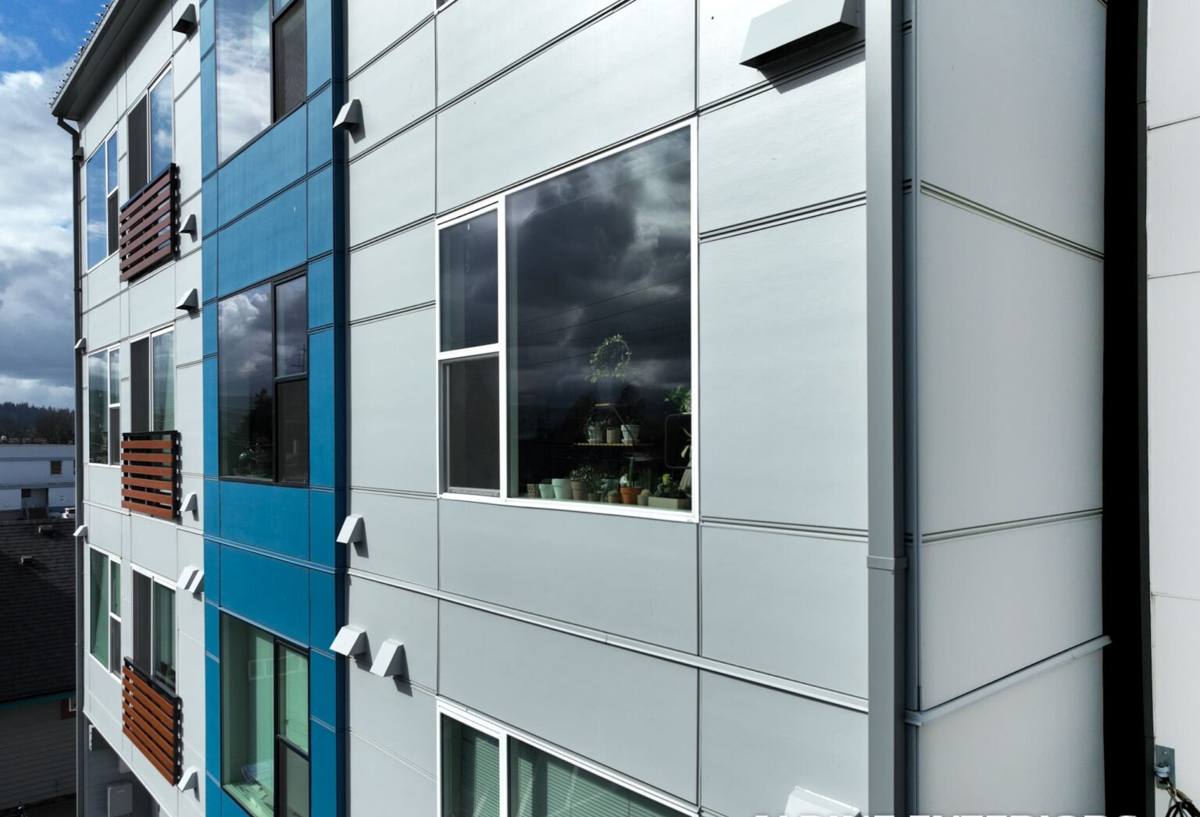
What Acme Homes Actually Need From a Siding Job
A siding installation in this part of Whatcom County has to do three things well, or it fails early no matter how good the material looks on day one:
- Shed water fast. Every lap, joint, and penetration needs to move water down and away from the wall, not let it sit or wick inward.
- Resist sustained moisture, not just rain events. Shaded, tree-covered lots stay damp longer after a storm passes, so the siding and everything behind it needs to tolerate extended dampness without swelling, softening, or feeding rot.
- Hold a factory finish through repeated wet-dry cycles. Field-applied paint and caulk are the first things to fail under Acme's moss and moisture load — factory-cured finishes hold up dramatically longer.
This is precisely why we standardized on James Hardie fiber cement and stopped installing wood-based, vinyl, and other fiber cement alternatives. It's not a marketing position — it's what held up when we compared how different products actually performed on homes in this climate over time.
Why We Don't Install the Alternatives Here
Cedar and primed spruce look great going up, but wood siding depends entirely on paint film integrity. In a shaded, moss-prone area like Acme, that film breaks down faster than it would in open sun, and once water gets behind a board, rot follows. Vinyl siding sheds water on the surface but isn't rigid enough to resist warping in temperature swings and doesn't hold paint if a homeowner ever wants a different color. LP SmartSide is an engineered wood product, which means it shares wood's core vulnerability — end-grain and cut-edge moisture exposure — even with better resin treatment than older wood siding. Other fiber cement brands like Cemplank and Allura are legitimate cement-based products, but we've standardized on one manufacturer, one installation system, and one warranty structure so every crew member installs to the same spec, every time, with no guesswork about product-specific details.
What Correct Siding Installation Actually Involves
The siding itself is only part of the system. Most siding failures we get called out to inspect in Whatcom County didn't start with bad siding — they started with a shortcut underneath it. A correct installation includes:
- Removal and inspection of the old wall assembly. We check sheathing, framing, and window/door flashing for hidden rot before anything new goes up. Covering up existing moisture damage guarantees a callback.
- A continuous weather-resistive barrier, lapped correctly from the bottom up so every seam sheds water downward and outward.
- Proper flashing at every penetration — windows, doors, hose bibs, light fixtures, vents — installed to send water out and over the barrier below, never trapped behind it.
- Correct fastener placement and depth per the manufacturer's engineering specs, not "close enough." Overdriven or underdriven nails are one of the most common causes of premature siding failure, and it's invisible until the board fails years later.
- Manufacturer-specified clearances from grade, roofing, decks, and patios, so siding never sits in standing water or snowmelt.
- Correct joint and butt-seam treatment, sealed and flashed per spec rather than caulked and hoped for.
Any one of these steps done wrong will eventually show up as a moisture problem, and in Acme's shaded, slow-drying microclimate, "eventually" tends to arrive sooner than homeowners expect.
Our Installation Process
We run the same process on every Acme-area home because consistency is what prevents callbacks:
- On-site assessment — we walk the exterior, check existing siding and trim condition, and look for signs of past moisture intrusion around windows, roof lines, and grade.
- Written scope and product selection — we walk you through the relevant James Hardie HZ product line and ColorPlus color options for your home and site conditions.
- Tear-off and substrate repair — any compromised sheathing or framing is repaired before new barrier or siding goes on.
- Barrier and flashing install — done to manufacturer spec, inspected before siding covers it.
- Hardie panel or lap installation — fastened, gapped, and sealed to spec, with attention to every corner, penetration, and trim detail.
- Final walkthrough — we go over the finished job with you and explain basic care going forward.
Common Siding Problems We See Around Acme
| Problem | What's Usually Behind It | Why It's Common Here |
|---|---|---|
| Soft or delaminating siding near the bottom edge | Missing or incorrect clearance from grade/decking | Wet ground conditions persist longer under tree cover |
| Moss buildup along shaded walls | Slow-drying surfaces, poor sun exposure | Heavy tree canopy and long wet season |
| Paint failure and visible seams | Field-applied finish breaking down, caulk-only joints | Repeated wet-dry cycling degrades site-applied coatings faster |
| Rot around window and door trim | Poor flashing integration at penetrations | Driving rain forces water into any gap in flashing |
| Warping or buckling panels | Wrong fastener depth, no expansion gap | Temperature swings between damp mornings and sun exposure |
Cost Factors for Siding Installation in Acme
Every home is different, but the line items that actually move the price are consistent. We give firm, written numbers only after seeing the house — the table below is meant to help you understand what you're paying for, not to serve as a quote.
| Factor | Why It Matters |
|---|---|
| Substrate condition | Hidden rot or sheathing damage found during tear-off adds repair scope before new siding can go on |
| Home size and wall complexity | More corners, dormers, and penetrations mean more flashing and cutting labor |
| Product line and profile | Panel vs. lap siding, plank width, and texture affect material cost |
| Trim and accessory scope | Fascia, soffit, and trim work done alongside siding affects total project size |
| Site access | Tree cover, slope, and driveway access around Acme properties can affect staging and labor time |
Why Hiring a Crew That Already Works in Acme Matters
Siding installation isn't just about following a manufacturer's manual — it's about applying that manual correctly to the conditions a specific home actually faces. A crew that regularly works Whatcom County's foothill and rural properties already knows to size up shade patterns, grade slope, and moisture exposure on sight, before the first board goes up. That familiarity shows up in decisions a homeowner never sees: where extra flashing attention goes, which walls need a closer look at existing rot risk, and how clearances should be set given the site's drainage.
It also matters for accountability. A local crew that installs Hardie siding across this county has a reputation to protect on every job, not just the one in front of them. When you're vetting any siding contractor — us included — ask directly about manufacturer certification, warranty terms in writing, and whether the crew installing your home is the same crew doing the sales pitch.
A Quick Checklist for Vetting a Siding Contractor
- Are they installing to the manufacturer's written specifications, or their own shortcuts?
- Will the flashing and barrier details be inspected before siding covers them, and can you ask to see that?
- Is the warranty from the manufacturer, the installer, or both — and what voids it?
- Do they work in your specific area regularly, or is this their first job out this way?
- Will you get a written scope of work, not just a verbal estimate?
What Correct Installation Means for Long-Term Maintenance
Even the best siding still needs basic homeowner care, especially in a moss-prone climate. James Hardie's ColorPlus factory finish resists fading and holds up to moisture far better than field-applied paint, but it isn't maintenance-free. We recommend an annual walk-around: check for moss buildup on shaded walls, confirm gutters and downspouts are directing water away from the foundation and siding base, and look for any caulk lines around trim that have started to crack. Catching a small gap early is a five-minute fix. Left through another wet season, it's a repair.
If you're planning a siding project for a home in the Acme area, we're happy to walk the property, look at what's there now, and give you a straight answer about what it needs — no pressure, no upsell into a product we don't stand behind. Reach out for a free estimate using the form below.