 Lynden Window
 Windows Built for Bellingham's Coastal Climate
Bellingham sits close enough to the water that salt air is a real factor in how windows age, and far enough into the Pacific Northwest rain belt that wind-driven water intrusion is a routine test every window assembly has to pass. Add a moss season that can stretch from October well into spring, and you have a climate that is unusually hard on window frames, sills, and the flashing details most homeowners never see. A window that performs fine in a drier inland town can fail here within a few years if it wasn't installed with this specific climate in mind.
We install windows throughout Whatcom County, and Bellingham jobs get the same approach we use everywhere near the water: materials chosen for moisture and salt exposure, flashing sequenced to shed water at every layer, and a punch-out process that checks the details other crews skip. This page covers what that actually looks like, so you know what to expect and what to ask for.
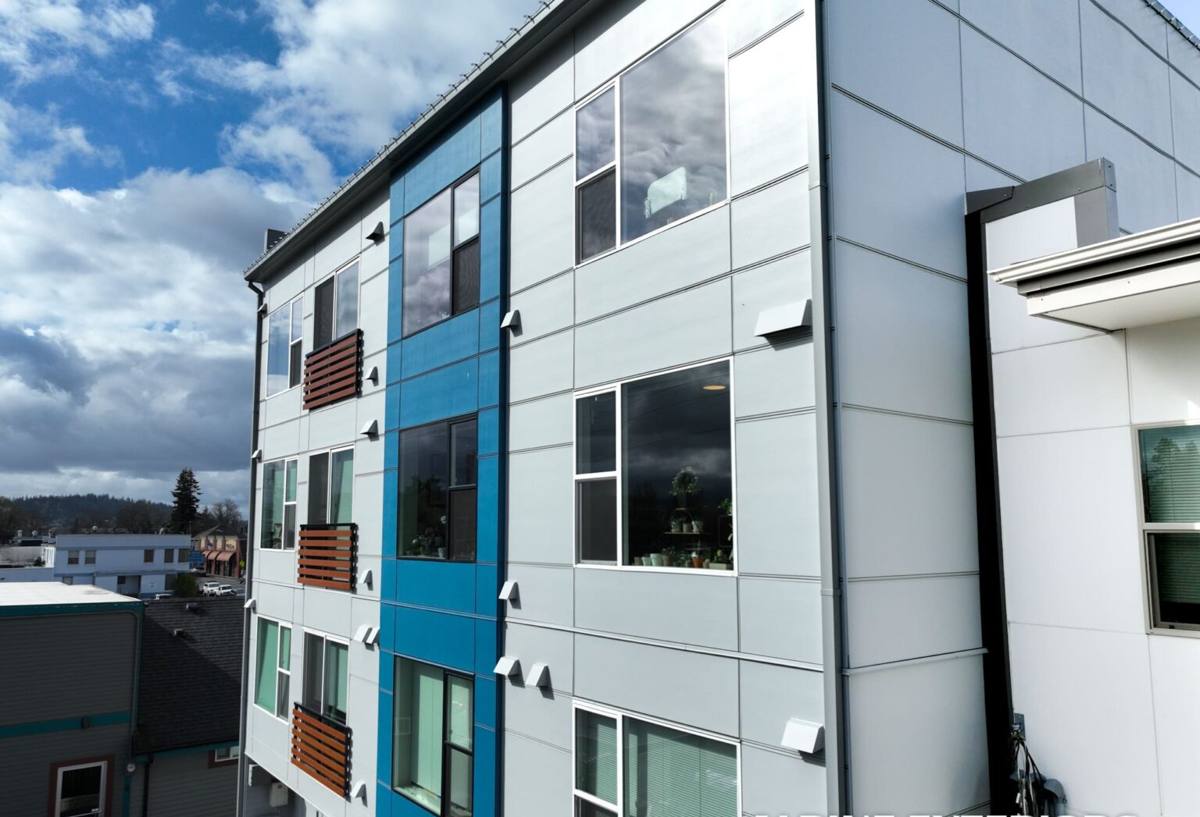
What Bellingham's Climate Does to Windows
Salt Air and Metal Fatigue
Proximity to Bellingham Bay means airborne salt is present even a few miles inland, especially with onshore wind. Salt accelerates corrosion on hardware, fasteners, and any exposed metal components in a window assembly. Cheaper hinges, cranks, and screws corrode faster than the frame around them, which is often the first sign a window is failing well before the glass or frame shows any problem.
Driving Rain and Wind-Driven Water
Storms coming off the Strait of Georgia and Puget Sound don't just drop rain straight down — wind pushes it sideways into wall assemblies. That means a window's weakest point usually isn't the glass, it's the perimeter: the gap between the window unit and the rough opening, and how well that gap is flashed, sealed, and drained. A window that's caulked shut with no drainage path will eventually trap water instead of shedding it.
Moss Season and Sustained Moisture
Whatcom County's long wet season keeps north-facing walls, sills, and shaded exterior trim damp for extended stretches. Moss and algae growth on sills and lower sashes isn't just cosmetic — sustained dampness against wood trim or poorly sealed frame edges is exactly the condition that leads to rot and finish failure over time.
What a Correct Window Installation Actually Involves
Window installation quality is decided almost entirely by what happens before and after the window itself goes into the opening. The unit is the easy part. Here's what separates a durable install from one that looks fine at handoff and fails in a few winters.
1. Opening Inspection Before Anything Goes In
Every opening gets checked for existing rot, soft framing, or prior water damage before a new window goes in. Installing a new window into a compromised opening just hides the problem — it doesn't fix it. If we find damage, we tell you before we proceed, not after.
2. Flashing Sequenced Correctly
Flashing has to be layered so each piece sheds water onto the one below it, like shingles — sill pan first, then side flashing, then head flashing integrated with the house wrap above. Get the order wrong and you can create a pocket that holds water against the frame instead of directing it out.
3. Sill Pans With a Drainage Path
A sill pan under the window creates a backstop and a way for any water that does get past the exterior seal to drain back out instead of soaking into the rough sill framing. This matters more in Bellingham than in drier climates, because it's not a question of if water will occasionally reach the sill — it's how often, and where it goes when it does.
4. Sealant as a Backup, Not the Whole Plan
Caulk and sealant matter, but they're the last line of defense, not the strategy. A window that relies entirely on a bead of sealant to stay dry will fail as soon as that sealant ages, shrinks, or gets punctured. Correct flashing and drainage should keep the window dry even if the sealant isn't perfect.
5. Insulation Without Overpacking
The gap between the window frame and the rough opening needs insulation, but overpacking it with expanding foam can bow the frame and cause the window to bind or operate poorly. Low-expansion foam or backer rod, installed correctly, insulates without distorting the unit.
Our Process on Bellingham Jobs
- On-site assessment — we look at existing window condition, framing, and any signs of past water intrusion before quoting.
- Product selection — we walk through material and glass options suited to sun exposure, wind exposure, and how close the home is to the water.
- Removal and opening prep — old units come out carefully, and we inspect and repair framing before anything new goes in.
- Flashing and sill pan installation — done in the correct sequence, every time, not just on jobs where it's easy.
- Window setting and shimming — units are set plumb, level, and square, and shimmed to manufacturer spec so hardware operates correctly for years, not just at install.
- Insulation and air sealing — perimeter gap filled without overpacking.
- Interior and exterior trim — finished to match the home, with attention to how trim details will hold up against moss and moisture.
- Final walkthrough — every window opened, closed, and locked in front of you before we call the job done.
Choosing the Right Frame Material for This Area
There's no single "best" window material — the right choice depends on the home, the budget, and how exposed it is to salt air and driving rain. Here's how the common options hold up in Bellingham conditions specifically.
| Material | Salt Air Behavior | Maintenance | Typical Fit |
|---|---|---|---|
| Vinyl | Resists corrosion well; no metal hardware exposed on frame | Low — occasional cleaning | Most homes; strong value for coastal exposure |
| Fiberglass | Excellent — dimensionally stable, doesn't corrode or rot | Low | Higher-exposure walls, homes wanting a longer service life |
| Wood (clad exterior) | Good if cladding is intact; interior wood needs protection from condensation | Moderate — finish and seals need periodic attention | Homes prioritizing interior wood appearance |
| Aluminum | Poor without upgraded coatings — prone to corrosion and thermal bridging near salt air | Higher | We generally steer clients away from bare aluminum this close to the water |
We don't push one brand or material on every job. What we do insist on is being honest about the trade-offs — including telling a homeowner when a product they've asked about isn't a good match for their specific wall exposure, even if it costs us the upsell.
Glass and Performance Options Worth Understanding
Glass package matters as much as frame material for comfort and long-term performance in this climate.
- Double vs. triple pane: Double-pane low-E glass is standard and performs well for most Bellingham homes; triple-pane adds cost but improves comfort on north- and west-facing walls that take the most wind and weather.
- Low-E coatings: Help manage heat loss in winter and glare in summer — worth having on nearly every window in this region.
- Argon or krypton gas fill: Improves insulating performance between panes; a reasonable upgrade on most quotes.
- Warm-edge spacers: Reduce condensation risk at the glass edge, which matters in a climate with long stretches of humid, cool weather.
- Impact or laminated glass: Not a Whatcom County necessity the way it is in hurricane regions, but some homeowners choose it for sound reduction or added security.
Signs a Bellingham Home Needs New Windows Now
- Visible fogging or moisture between panes — a sign the seal has failed.
- Soft or discolored wood at the sill or lower frame, especially on north-facing or shaded walls.
- Windows that are hard to open, close, or lock, which often points to a frame that's shifted or swollen.
- Persistent moss or algae buildup on sills that keeps returning after cleaning.
- Noticeable drafts or cold spots near the frame during windy, wet weather.
- Visible gaps in exterior caulk or trim that haven't been addressed in several years.
Cost Factors for Bellingham Window Projects
Pricing depends on more than the window unit itself. The factors below tend to move a Bellingham quote up or down the most.
| Factor | Why It Matters Here |
|---|---|
| Frame material | Fiberglass and higher-end vinyl cost more upfront but hold up better against salt air over time |
| Existing damage | Rot or soft framing found during removal adds repair cost before the new window can go in |
| Wall exposure | West- and north-facing walls exposed to driving rain sometimes warrant upgraded flashing details |
| Window count and size | Larger openings and full-home replacements bring per-unit costs down versus one-off replacements |
| Trim and finish work | Matching existing trim profiles or repairing damaged trim adds labor time |
We give straightforward, itemized estimates so you can see what's driving the cost, rather than a single lump number with no explanation.
Why a Locally Experienced Crew Matters Here
A crew that regularly works Bellingham and the rest of Whatcom County knows which details actually matter for this climate versus a generic install checklist written for a drier region. That shows up in small decisions — how much drainage capacity a sill pan needs, which fastener materials hold up against salt air, how to sequence flashing on a wall that takes rain sideways rather than straight down. Those aren't judgment calls you want made by a crew installing windows in Bellingham for the first time.
It also means we've seen how different products and installation choices actually perform in this specific climate over years, not just at the walkthrough. That experience shapes the recommendations we make, including which upgrades are worth the money here and which aren't.
Get a Free, No-Pressure Estimate
If your Bellingham home has windows showing their age — fogged glass, sticking sashes, drafts, or sills that never seem to dry out — we're happy to take a look and give you an honest assessment. Fill out the form below for a free estimate with no pressure and no obligation.