 Lynden Window
 Siding Repair Built for Sumas and Lynden Weather, Not Just Any Weather
Homes around Sumas and Lynden sit in one of the wetter corners of Whatcom County, and the siding on those homes knows it. Winters bring long stretches of driving rain that hits walls sideways more often than straight down. Shaded north walls and tree lines hold onto moisture long after a storm passes, which is exactly what moss needs to get established and spread. And because this part of Washington sits close enough to marine air moving in off the Sound and the Strait, siding here deals with a low-grade dose of salt exposure on top of everything else. None of that is dramatic on its own. Together, over years, it's what turns a small siding problem into a bigger one if repairs get put off or done with the wrong approach.
A siding repair in this area isn't just patching a hole and moving on. It's understanding why that spot failed in the first place — usually water finding a way in, sitting somewhere it shouldn't, and slowly breaking down whatever material is fighting it. Get that part right and a repair holds for decades. Get it wrong and you're back out here in two or three years fixing the same wall again.
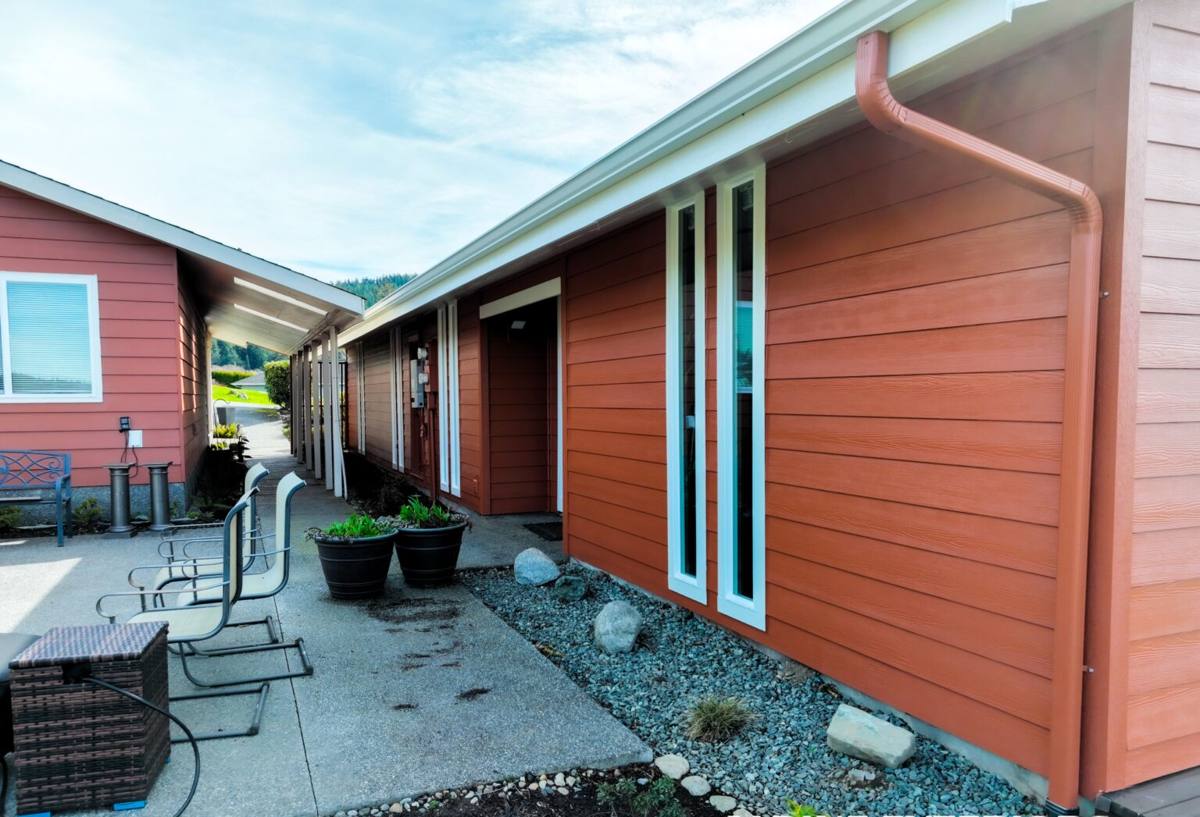
What "Siding Repair" Actually Covers
Siding repair is a broad term, and it's worth being specific about what falls under it, because the right fix depends entirely on what's actually wrong.
Localized Panel or Board Repair
This is swapping out one damaged board or panel, or a small run of them, while leaving the rest of the wall alone. It's the most common repair call and, done correctly, the least invasive.
Corner, Trim, and Transition Repair
Corners, window trim, and the transitions where siding meets a roofline or a deck ledger are where water intrusion problems usually start. These spots take repeated soaking and often need attention even when the field of the siding looks fine.
Impact and Storm Damage
Wind-driven debris, a falling branch, or a ladder mishap can crack or dent a section of siding. These repairs are usually straightforward as long as a matching replacement material is available.
When Repair Stops Being the Right Call
If damage is scattered across multiple walls, if the sheathing underneath is showing rot, or if the existing material is old enough that a matching replacement doesn't exist anymore, patch-and-repair starts costing more in labor and disappointment than a planned re-side. Part of an honest repair visit is telling you when you're at that line.
Why What We Repair With Matters
We install James Hardie fiber cement siding exclusively, and that shapes how we approach every repair call, even on homes that don't currently have Hardie on them.
If your home already has James Hardie siding, a repair is usually the simplest kind of job there is: swap the damaged board for the same profile and, where needed, have the replacement finished to match the existing ColorPlus color. Because Hardie's factory finish is baked on rather than field-applied, a proper color match on a repair board is a real consideration, not an afterthought — we account for that up front rather than surprising you with a mismatched patch.
If your home has vinyl, LP SmartSide, cedar, or another fiber cement brand, we'll still repair what's there when a repair is the right call — we're not going to talk you into a premature re-side over a cracked panel. But we won't pretend those materials don't have real trade-offs. Vinyl expands and contracts with temperature swings and can warp or fade unevenly over time. Engineered wood products like LP SmartSide rely on their surface coating staying intact to keep moisture out, which makes them more sensitive to nicks, gaps, and caulking failures than fiber cement. Cedar and primed spruce look great new but need ongoing maintenance — recoating, caulking, moisture monitoring — to hold up in a climate that stays wet as much of the year as this one does. When a repair job turns into a "should I just replace this wall" conversation, we're honest that James Hardie is what we'd put back up, and why: it's non-combustible, engineered for climates like ours, and backed by a strong, transferable warranty when installed to spec.
Signs Your Siding Needs a Look
Most siding problems give warning signs well before they become structural. Homeowners in Sumas and Lynden should watch for:
- Soft or spongy spots when you press on a wall, especially near the bottom courses or under windows
- Persistent moss or dark streaking on the same section of wall every year, even after cleaning
- Visible cracks, splits, or buckling in individual boards or panels
- Paint or finish that's peeling, bubbling, or flaking in a localized area rather than evenly across the whole house
- Gaps opening up at seams, corners, or trim joints that weren't there when the siding was newer
- Water stains or discoloration on interior walls near an exterior corner — a sign moisture has already gotten past the siding
- A musty smell in a room that backs up to an exterior wall with siding issues
Any one of these on its own might be minor. Two or three showing up together, especially on a wall that faces prevailing weather or sits in shade most of the day, is worth a proper look before the next wet season.
What a Correct Repair Actually Involves
Diagnosing the Cause, Not Just the Symptom
Before anything gets replaced, we want to know why that section failed. Was it a flashing detail that was missed originally? A caulk joint that dried out and opened up? A downspout dumping water against the wall in the wrong spot? Replacing the visible damage without fixing the underlying cause just buys you a few more years before the same repair call.
Checking What's Behind the Siding
Once a section is opened up, we check the sheathing and house wrap behind it. If moisture has been getting past the siding for a while, there can be damage back there that isn't visible from outside. This is the part of a repair that can't be skipped — covering up compromised sheathing with new siding just hides the problem for a little longer.
Water Management First
Flashing, weather-resistant barrier, and proper overlaps go in before any new siding does. In a climate that gets as much driving rain as Whatcom County does, the water management layer is doing more of the real work than the siding itself — the siding is the visible finish, but the flashing and barrier underneath are what actually keep the wall dry.
Matching Materials and Finish
For Hardie repairs, that means matching plank profile, exposure, and ColorPlus color as closely as the product line allows. For other materials, it means sourcing a genuine match where one exists, and being upfront when it doesn't.
Finishing Details
Proper fastening, correctly sealed joints where sealant is called for, and paint or touch-up work blended into the surrounding area so a repair doesn't stand out as an obvious patch.
Repair or Replace: How to Think About It
There's no single rule that decides this for every house, but a few factors consistently point one direction or the other.
| Factor | Repair usually makes sense | Replacement usually makes sense |
|---|---|---|
| Extent of damage | Isolated to one or two walls or sections | Spread across most or all of the exterior |
| Sheathing condition | Dry and sound behind the damaged area | Rot or moisture damage found behind multiple sections |
| Age of existing siding | Under roughly 15-20 years, in otherwise good shape | Original material is at or past its practical service life |
| Material match | Matching board/panel and finish are available | Discontinued profile, color, or product line |
| Underlying cause | A single fixable detail (one flashing spot, one gutter issue) | Systemic issue — bad original install, no water barrier, widespread past leaks |
| Budget timing | Stabilize now, plan a full re-side for later | Repair cost approaches a meaningful share of replacement cost |
When it's genuinely a close call, we'll say so and lay out both paths rather than pushing you toward the bigger job.
Our Process for Sumas and Lynden Homes
We work this part of Whatcom County regularly, which changes how a repair visit actually goes.
- Assessment. We look at the damaged area and the surrounding siding, and check for related issues at corners, trim, and penetrations nearby.
- Cause check. We identify what let water or damage in, since that's what determines whether repair alone will actually hold.
- Straight answer on scope. You get a clear recommendation — repair, repair-plus-fix-the-cause, or a conversation about replacement — with the reasoning behind it, not just a number.
- Scheduling around weather. Siding repair work needs a reasonably dry window to do right. We plan around Whatcom County's wetter stretches rather than rushing a repair in the rain and compromising it.
- The repair itself. Matched materials, proper flashing and sealing, and a finish that blends rather than stands out.
Why a Crew That Already Works This Area Matters
Siding repair in Sumas and Lynden isn't the same problem as siding repair in a drier inland climate, and it isn't quite the same as repair work right on the coast either. A crew that works this specific stretch of Whatcom County regularly already knows which details tend to fail here — which wall orientations hold moss longest, which flashing shortcuts show up on older homes in this area, how much of a role wind-driven rain plays in where damage shows up first. That local pattern recognition is the difference between a repair that treats the visible symptom and one that actually addresses why that spot failed. It also means faster response and straightforward scheduling, since we're not treating a trip out to Sumas as a special case.
Get a Straight Answer on Your Siding
If you're seeing damage, moss buildup, or soft spots on your siding, it's worth getting a professional look before the next wet season sets in. We'll give you an honest read on whether a repair will hold, what caused the problem, and what your options are — no pressure, no upsell. Reach out for a free estimate and we'll take it from there.