 Lynden Window
 Roofing in Sumas: What the Climate Actually Does to a Shingle Roof
Sumas sits in a corner of Whatcom County that takes weather from more than one direction. Marine air pushes in off the Sound and up the river valleys, the Nooksack drainage and nearby foothills funnel wind and driving rain against north and west-facing roof slopes, and the surrounding tree cover keeps things damp and shaded for long stretches of the year. None of that is dramatic on its own. What it does is add up, roof after roof, into a specific set of problems: shingles that stay wet longer than the manufacturer's testing ever accounted for, moss that gets a foothold in shaded valleys and north slopes, and flashing details that get tested by wind-driven rain instead of straight-down rain.
A shingle roof built for a dry climate, or installed by someone used to dry-climate assumptions, will often look fine for the first few years here. The failures we get called out for are almost never "the shingles wore out." They're moisture that found a gap in the underlayment, a nail pattern that let a shingle lift in wind, or moss that held water against the roof deck long enough to start rot underneath. Those are installation and detailing problems, not shingle problems, and they're preventable if the person on the roof understands what this specific climate does over ten or twenty years, not just what it looks like on install day.
Why Asphalt Shingles Still Make Sense for Sumas Homes
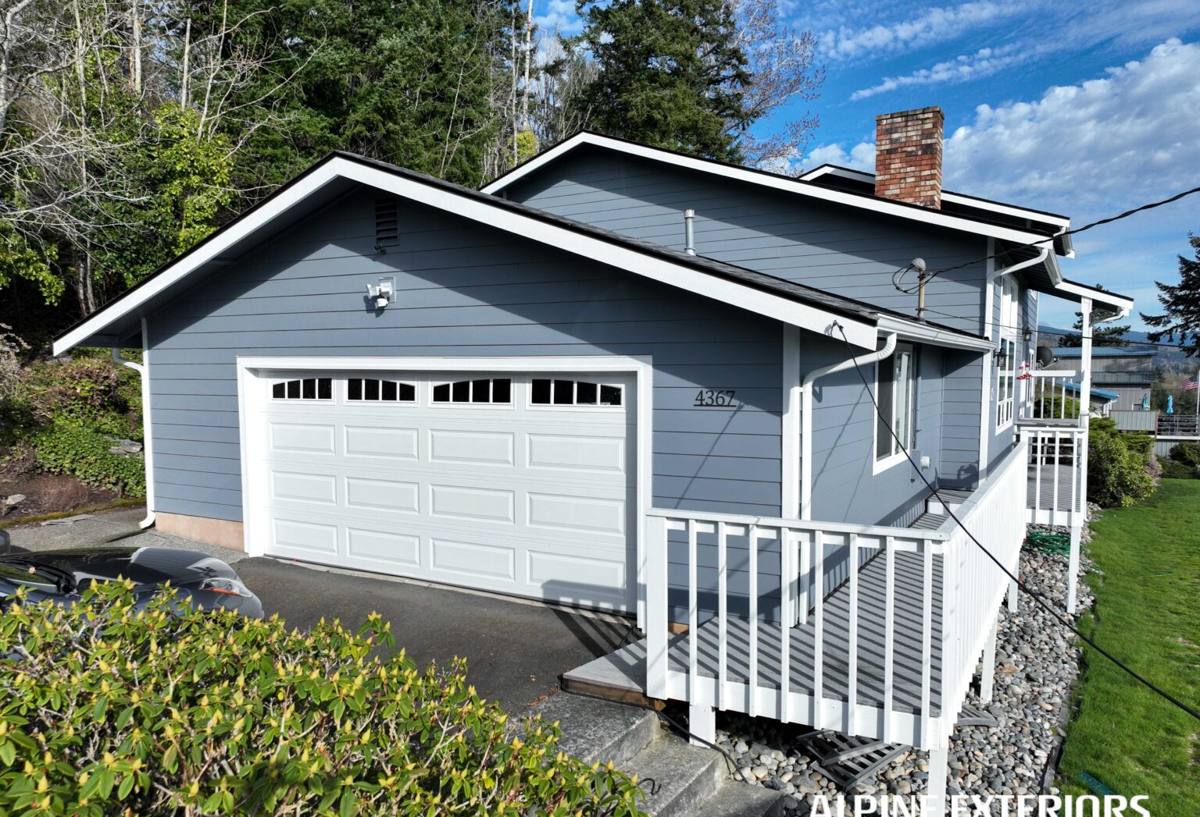
Asphalt shingles remain the most common roofing material in this part of Whatcom County for good reason. They're proven in wet Pacific Northwest climates when installed correctly, they're serviceable (a damaged section can be repaired without redoing the whole roof), and the cost-to-lifespan ratio is hard to beat for most home styles in Sumas. They also give homeowners a wide range of looks, from a simple 3-tab profile to heavier architectural shingles that read almost like a shake or slate roof from the street.
The trade-off is that asphalt shingle roofs are more sensitive to installation quality than some other materials. A metal roof or a well-installed membrane can forgive a little sloppiness in the details. A shingle roof generally can't — the underlayment, flashing, ventilation, and fastening all have to be right, because the shingles themselves are only one layer in a system that has to shed water, not just cover the roof deck.
Where Asphalt Shingles Struggle Without Good Detailing
- Valleys and low-slope transitions where water concentrates and moves fast
- North-facing slopes and shaded sections that stay damp longer after rain
- Roof-to-wall intersections and chimney flashing, where a lot of leaks actually start
- Eaves without proper ice-and-water protection, where wind-driven rain can back up under the shingle edge
What a Correct Asphalt Shingle Installation Involves
"Correct" isn't a marketing word here — it's a specific, checkable list of things that either happened on your roof or didn't. If a roofer can't walk you through each of these, that's worth asking about before they start.
Roof Deck and Underlayment
The plywood or OSB deck has to be sound, flat, and properly fastened before anything goes on top of it. Over that, a synthetic or felt underlayment goes down as the roof's real waterproofing layer — the shingles are the weather-facing surface, but the underlayment is what actually keeps the deck dry if wind, ice, or a failed shingle lets water through. In our climate, self-adhered ice-and-water membrane at eaves, valleys, and around penetrations isn't optional extra credit — it's the difference between a roof that shrugs off a wind-driven storm and one that leaks into the attic.
Flashing
Flashing around chimneys, skylights, vent pipes, and roof-to-wall junctions is where the majority of real-world leaks originate, not in the open field of shingles. Step flashing, counter-flashing, and properly lapped pipe boots all have to be installed in the correct order relative to the underlayment and shingle courses — not just caulked over and hoped for.
Ventilation
A shingle roof needs balanced intake and exhaust airflow through the attic. Without it, moisture gets trapped under the deck, shingles can bake and age faster from beneath, and in a moss-prone climate like ours, a poorly ventilated attic makes ice damming and condensation problems worse, not better.
Fastening and Exposure
Nail count, placement, and shingle exposure all matter more in high-wind, high-rain conditions. Under-nailed or improperly placed fasteners are one of the most common causes of shingle blow-off in a windstorm, and they're invisible from the ground until the storm happens.
Our Process for a Sumas Roofing Job
We keep the process straightforward because a roof replacement is disruptive enough without added confusion. Here's what it typically looks like:
- On-site inspection. We look at the current roof from the ground and, where safe and useful, up close — deck condition, flashing, ventilation, moss and algae growth, and any soft or discolored spots that suggest trapped moisture.
- Written estimate. You get a clear scope of work: tear-off or overlay (we'll tell you honestly which one your roof actually qualifies for), underlayment type, flashing plan, ventilation changes if needed, and shingle options.
- Scheduling around weather. Shingle roofing needs a dry, workable window. We plan around the forecast rather than rushing a roof onto a deck in the rain, which is exactly the kind of shortcut that causes the problems described above.
- Tear-off and deck check. Old material comes off, and the deck gets inspected for rot or soft spots before anything new goes down — this is the point where hidden moisture damage from years past finally gets addressed instead of covered up.
- Underlayment, flashing, and shingle installation in that order, following manufacturer specifications for nailing and exposure so the warranty is actually valid, not just implied.
- Cleanup and walk-through. Magnetic sweep for nails, debris hauled off, and a final walk-through so you know what was done and why.
Shingle Options and What Drives the Cost
Most Sumas homeowners are choosing between two general shingle categories, with cost driven less by the shingle itself and more by roof complexity, access, and the condition of what's underneath.
| Factor | 3-Tab Shingles | Architectural (Laminate) Shingles |
|---|---|---|
| Typical lifespan | Shorter, lower end of the asphalt range | Longer, heavier construction |
| Wind resistance | Lower rating, more exposed edges | Higher rating, better suited to exposed or wind-prone slopes |
| Appearance | Flat, uniform look | Dimensional, shadow-line look |
| Upfront cost | Lower material cost | Higher material cost |
| Long-term value in this climate | Adequate on simple, low-exposure roofs | Generally better match for wind, rain, and moss exposure here |
Beyond the shingle itself, the biggest cost drivers on any given job are roof pitch and access, the number of valleys, penetrations, and flashing points, whether the existing deck needs repair, and whether a full tear-off is required versus a single-layer overlay. We'll walk through all of that in the estimate rather than quoting a number before we've actually looked at the roof.
Moss, Algae, and Long-Term Maintenance
Moss is one of the most consistent complaints we hear from homeowners in shaded, tree-lined parts of Whatcom County, and Sumas has plenty of both. Moss itself doesn't destroy a shingle roof overnight, but it holds moisture against the shingle surface and roof deck far longer than open air and sun would, and over years that trapped moisture is what leads to granule loss, deck softening, and eventually leaks — especially in valleys and shaded north slopes where moss tends to establish first.
A few things genuinely help extend a shingle roof's life here:
- Keeping overhanging branches trimmed back so the roof gets more light and airflow
- Clearing gutters and valleys of needles and debris before they trap standing water
- Gentle, low-pressure moss removal rather than aggressive pressure washing, which can strip protective granules
- Zinc or copper strips near the ridge on moss-prone roofs, which release trace metals that discourage regrowth over time
- Catching small flashing or granule issues early, before a wet winter turns them into a deck repair
None of this replaces a correctly installed roof — it just protects the investment once it's in.
Signs Your Sumas Roof Needs a Closer Look
Most roof problems don't announce themselves with a dramatic leak. They show up as smaller signs first, and catching them early is usually the difference between a repair and a full replacement.
- Granules collecting in gutters or at downspout outlets
- Shingles that look curled, cupped, or cracked, especially on south or west-facing slopes
- Dark streaking or thick moss growth, particularly in shaded valleys
- Soft or spongy spots when the roof is walked, or sagging visible from the ground
- Daylight visible through the roof deck from inside the attic
- Water stains on interior ceilings or in the attic near chimneys, vents, or valleys
- Shingles missing or lifted after a windstorm
If you're seeing any of these, it's worth getting a straightforward inspection rather than waiting for a leak to show up on a ceiling.
Why a Crew That Already Works Sumas Matters
A lot of roofing problems in this area come down to a crew applying assumptions from a drier or less wind-exposed region. Underlayment coverage that's adequate in a mild climate can be undersized here. Ventilation that's fine in a dry attic can trap moisture in a Whatcom County winter. Flashing details that pass in calm weather can fail the first time wind pushes rain sideways into a wall-to-roof junction.
Working roofs in and around Sumas and Lynden regularly means we're not guessing at how this climate behaves — we're building to it. That includes sizing ice-and-water protection appropriately for the eaves and valleys that actually see the worst of the wind-driven rain here, choosing ventilation strategies that hold up under sustained damp conditions, and knowing which north-facing, tree-shaded roof sections are going to need extra attention to moss control regardless of shingle brand. It also means we're a known, reachable local crew if a question comes up two years after the job is done, not a name from an out-of-area lead-generation site.
Getting Started
If your roof is showing wear, if you're planning ahead for a replacement, or if you just want an honest read on what shape it's really in, we're happy to take a look. The estimate is free, there's no pressure to move forward, and you'll get a clear explanation of what we see and what your real options are — use the form below to get started.