 Lynden Window
 Storm Damage Roof Repair in Sumas, Washington
Sumas sits right up against the Canadian border in Whatcom County, and the roofs out here take a beating that's a little different from what you'd see further south or further inland. Winter storms roll through with sideways rain and gusty wind, snow load shows up some years and not others, and the long, damp shoulder seasons keep moss and moisture working on a roof almost year-round. When a storm cracks a ridge cap, lifts a run of shingles, or drives water under flashing, the damage is often bigger than what you can see from the ground. This page covers what storm damage roof repair actually involves for homes in and around Sumas, and how to tell a real fix from a patch that'll fail again next winter.
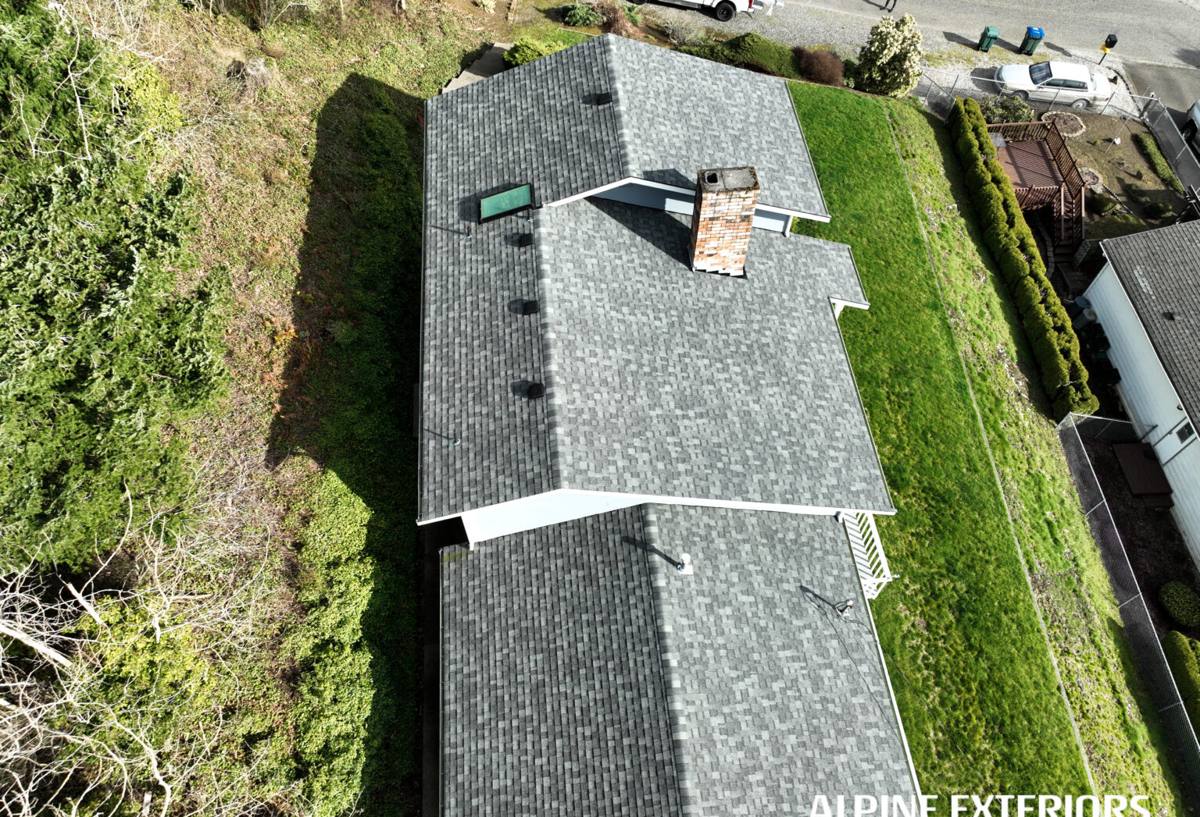
What Whatcom County Weather Does to a Roof
Every region has its own pattern of roof failure, and ours is driven by a combination of driving rain, wind, and a moss season that never really ends. Homes near Sumas deal with a marine-influenced Pacific Northwest climate — the same damp air and heavy annual rainfall that affects roofs across Whatcom County — plus wind funneling down from the Fraser Valley during winter storms. That combination shows up in a few predictable ways.
Wind and Wind-Driven Rain
Strong gusts don't just tear shingles off outright — more often they lift a corner or edge just enough to break the seal strip underneath, without pulling the shingle free. The roof looks intact from the driveway, but the next hard rain gets pushed sideways under that loosened edge and finds its way into the decking. This is the single most common storm-damage call we see: water damage inside a home with no obvious missing shingles outside.
Moss and Prolonged Moisture
Our long, mild, wet season is ideal moss-growing weather, and moss does more than look bad. It holds water against the roofing material, works its way under shingle tabs and around fasteners, and accelerates the granule loss and wood rot that turn a minor storm ding into a real repair. A roof with heavy moss coverage going into a windstorm is far more likely to lose shingles than a roof that's been kept clean.
Ice, Snow Load, and Freeze-Thaw
Sumas doesn't get snow every year, but when it does, wet Pacific Northwest snow is heavy, and a sudden freeze after rain can turn a roof's edges into an ice dam. Ice dams back water up under shingles well above the eave line, which is why storm-related leaks sometimes show up several feet from where the actual damage occurred.
Signs of Storm Damage Worth a Closer Look
Most homeowners call us after they see a stain on a ceiling, but by that point water has usually been getting in for a while. It's worth doing a quick check after any significant windstorm.
- Shingles that look curled, cracked, or creased, especially along ridges and edges
- Granules collecting in gutters or at the base of downspouts
- Missing or bent flashing around chimneys, vents, or skylights
- Soft spots or sagging when walking the attic (never the roof itself after a storm)
- New or spreading water stains on interior ceilings or in the attic
- Debris — branches, moss clumps, gravel from shingle surfaces — collected in valleys
- Gutters pulling away from the fascia or holding standing water
None of these guarantee a major problem, but any one of them is a reason to get a roof looked at rather than wait for a leak to announce itself.
What a Correct Storm Damage Repair Involves
A lot of storm repair calls we take over started as someone else's shortcut — a tube of roofing cement smeared over a lifted shingle, or a patch that covers the visible damage but not the water path underneath it. Doing it right means understanding where the water actually went, not just where it showed up.
Inspection Before Anything Gets Fixed
We start on the roof itself, not just from a ladder at the eave. That means checking the decking under any lifted or missing shingles for soft spots, tracing flashing at every penetration (chimney, plumbing vents, skylights), and checking the attic from the inside for moisture, staining, or insulation that's been compressed by a leak. Storm damage often extends further than the obvious entry point, and skipping this step is how repairs end up getting redone within a year or two.
Matching the Repair to the Roof
Repairing storm damage on a 3-year-old roof is a different job than patching a roof that's already 18-20 years in. On a newer roof, we match shingle type, color, and exposure as closely as possible so the repair blends in and the existing warranty stays intact. On an older roof, we're honest about whether a targeted repair makes sense or whether the surrounding shingles are brittle enough that a "repair" would just create the next leak six feet over. We'd rather tell a homeowner that upfront than sell a patch we don't believe in.
Flashing and Underlayment, Not Just Shingles
A large share of storm leaks trace back to flashing — around chimneys, at wall-to-roof transitions, in valleys — rather than the shingles themselves. Replacing a shingle over compromised flashing just hides the problem. Correct storm repair addresses the flashing and underlayment first, then the visible shingle layer on top of that.
Our Process for Sumas Storm Repairs
- Assessment. We inspect the roof, attic, and interior ceilings where relevant, and document what we find with photos.
- Honest scope. We tell you plainly whether this is a spot repair, a larger section replacement, or something better handled as part of a fuller roof plan — and why.
- Written estimate. You get a clear breakdown of materials and labor before any work starts, no surprise add-ons mid-job.
- Repair. We fix the actual water path — decking, flashing, underlayment, and shingles — not just the visible symptom.
- Cleanup and check. Debris and old material are cleared, and we do a final check for anything that could reopen in the next storm.
If your homeowner's insurance is involved, we can document the damage in a way that's useful for a claim, though we'll always give you our own honest read on the roof's condition separate from whatever the claims process decides.
Repair vs. Replacement: What Drives the Decision
| Factor | Leans Toward Repair | Leans Toward Replacement |
|---|---|---|
| Roof age | Under 10-12 years | Past 18-20 years or original warranty period |
| Damage extent | Isolated to one section or slope | Spread across multiple slopes or valleys |
| Shingle condition nearby | Still flexible, granules intact | Brittle, curling, heavy granule loss |
| Moss/moisture history | Minimal, well-maintained | Long-term heavy moss, visible rot |
| Underlying decking | Solid, dry to the touch | Soft, delaminating, or stained |
These are general guidelines, not a formula — the only way to know for sure is a hands-on inspection. But this table is a useful gut check before you decide how urgently to act.
Why Local Experience with Sumas Roofs Matters
Storm patterns, moss growth, and even the way wind hits a roof shift block by block and slope by slope across Whatcom County. A crew that regularly works Sumas and the surrounding Lynden area already knows which roof styles and slopes tend to take wind damage first, how aggressively moss builds up locally, and what flashing details tend to fail under our specific combination of driving rain and long wet seasons. That local pattern recognition is the difference between a repair that addresses today's leak and one that also heads off the next one.
It also matters for response time. Storm damage doesn't wait for a convenient week, and a roof with exposed decking or lifted shingles needs a tarp and a real fix sooner rather than later, especially with more rain in the forecast.
Maintenance That Reduces Storm Damage Risk
- Keep gutters and downspouts clear so water sheds off the roof instead of backing up under the edge
- Treat or remove moss buildup before it works its way under shingle tabs
- Trim back overhanging branches that can scrape shingles loose in wind or drop debris into valleys
- Have flashing checked periodically, not just after a storm — flashing failure is often gradual
- Do a visual roof check after any named windstorm, even if nothing seems obviously wrong
None of this prevents every storm problem, but it meaningfully cuts down how often a storm turns into an interior leak.
If a recent storm has you wondering about your roof, we're happy to take a look and give you a straight answer — no pressure, no upsell. Fill out the short form below for a free estimate on storm damage roof repair for your Sumas home.