 Lynden Window
 Siding Repair for Laurel-Area Homes
Laurel sits just outside Lynden proper, in the stretch of Whatcom County where dairy pasture, older farmhouses, and newer subdivisions all share the same weather. That weather is the reason siding repair calls out here look different from a repair call in a drier part of the state. Homes in this area deal with a long wet season, low winter sun that keeps north and east walls damp for days at a time, and enough salt-tinged marine air moving in off the Strait and Bellingham Bay to accelerate corrosion on fasteners and trim. Add a moss season that can run from October through April, and you have conditions that expose weak points in siding faster than almost anywhere else in the state.
We work Laurel and the surrounding Lynden countryside regularly, which matters more than it sounds like it should. A crew that already knows which subdivisions have wind-driven rain problems on the west-facing walls, which older farmhouses still have the original cedar under later re-siding, and how the local moss cycle behaves on shaded north elevations can diagnose a repair correctly the first time instead of guessing.
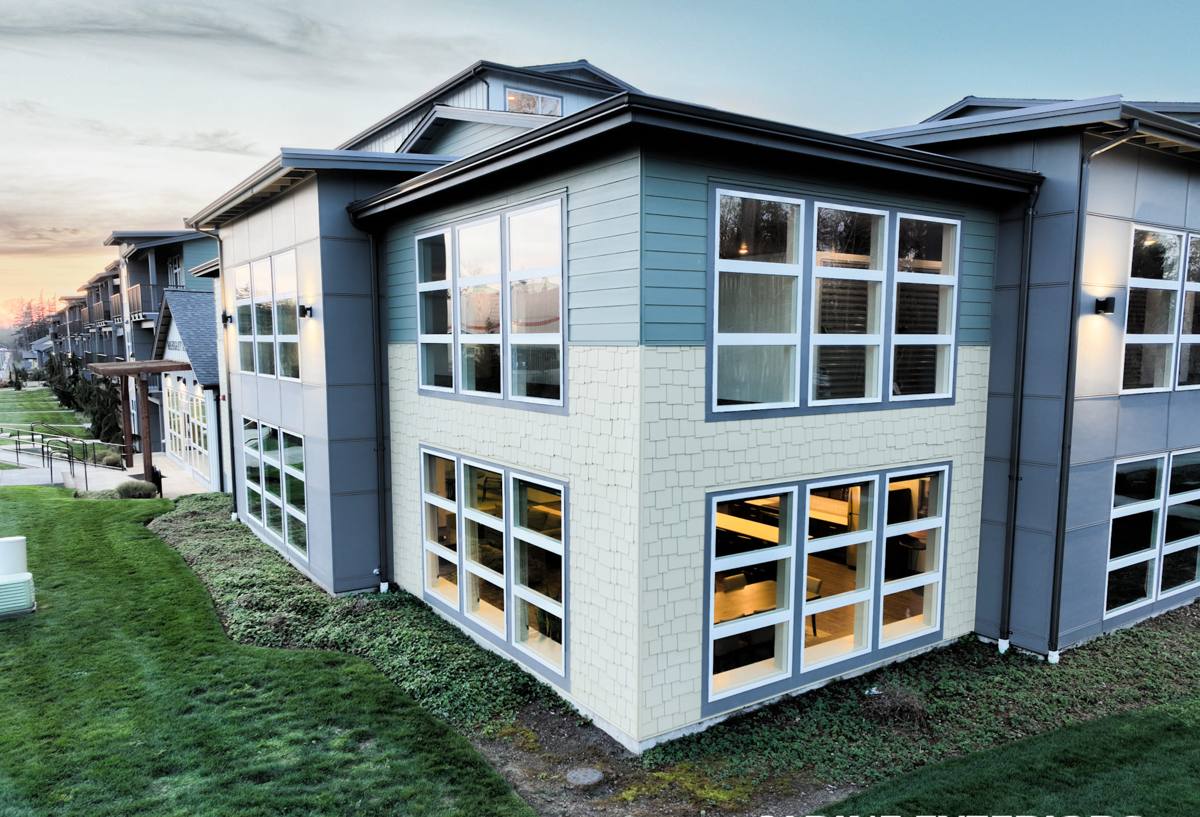
What This Climate Does to Siding
Driving Rain and Wind Exposure
Laurel's open farmland gives storms room to build speed before they hit a house. That means rain doesn't just fall here — it drives sideways into lap joints, corner boards, and window trim. Siding that's caulked and flashed correctly sheds that water. Siding with even a small gap, a failed caulk joint, or a missing kick-out flashing lets water track behind the cladding, where it can sit against sheathing for weeks between dry spells.
Moss, Algae, and the Long Wet Season
Shaded walls and roof-adjacent siding sections in this area grow moss and algae readily. Beyond the cosmetic staining, moss holds moisture against the siding surface far longer than open air would, which is especially hard on wood-based products and on paint film. It also tends to creep into seams and butt joints, which can pry them open over time.
Salt Air and Fasteners
You don't have to be waterfront to feel the effects of marine air in Whatcom County. Salt-laden moisture corrodes exposed or under-spec fasteners over years, which shows up as rust streaking below nail heads and, eventually, fasteners that no longer hold siding tight to the wall.
Signs Your Siding Needs Repair, Not Just Paint
A lot of Laurel homeowners call us after noticing a paint or stain problem, only to find the real issue is underneath. Before you repaint, it's worth checking for these:
- Soft, spongy, or crumbling spots when you press on the siding, especially near the bottom courses and around windows
- Visible gaps, cracks, or separated seams at butt joints and corners
- Paint or finish that's peeling, bubbling, or alligatoring in patches rather than evenly across the wall
- Dark staining, streaking, or a persistent musty smell near an exterior wall
- Moss or algae buildup that keeps coming back within a season or two of cleaning
- Nail heads popping through the surface or visible rust bleeding from fastener locations
- Siding that's warped, buckled, or pulling away from the wall in sections
- Warm, damp, or discolored drywall or trim on the interior wall directly opposite a suspect exterior section
What a Correct Repair Actually Involves
Finding the Real Cause, Not Just the Symptom
Patching a cracked board or re-caulking a joint without figuring out why it failed usually means doing the same repair again in a year or two. Correct repair work starts with tracing the water path: is it a flashing failure above the damaged section, a caulk joint that dried out and cracked, a missing or torn piece of house wrap, or ground-level moisture wicking up from grade? On older Laurel-area homes we often find the damage is a symptom of a flashing or trim detail installed decades ago that was never quite right for this climate.
Checking What's Behind the Siding
Any time we open up a damaged section, we check the sheathing and house wrap underneath before closing it back up. Rotted sheathing, saturated insulation, or torn weather-resistive barrier all need to be addressed — replacing the siding over a compromised wall assembly just hides the problem for a while.
Matching the Repair to the Existing Siding
On homes finished in James Hardie fiber cement with a factory ColorPlus finish, a well-matched repair is realistic because the color system is consistent and long-lasting, and specific profiles and colors can be matched to the existing run. On homes with older cedar, LP SmartSide, or vinyl siding, exact matching is harder — colors fade unevenly, discontinued profiles can't always be sourced, and repaired sections may always read slightly differently than the surrounding wall. We'll tell you honestly which situation you're in before we start.
Sealing and Flashing Details
Every repair we do gets the flashing and sealant details brought up to a standard that actually holds up to Whatcom County weather — proper head flashing above window and door trim, correctly lapped house wrap, and sealant only where sealant belongs (fiber cement systems rely on overlap and drainage, not caulk, for most joints).
Repair vs. Replace: How to Think About It
Not every damaged section needs a full re-side, and we won't sell you one you don't need. But repair isn't always the economical choice either. The table below covers the main factors we weigh when advising a Laurel homeowner.
| Factor | Favors Repair | Favors Replacement |
|---|---|---|
| Extent of damage | Isolated to one or two wall sections | Recurring damage across multiple elevations |
| Underlying material | Sound sheathing and wrap found behind damage | Rot or saturation found in sheathing/framing |
| Siding age and material | Newer fiber cement, matchable finish | Original material discontinued, faded, or failing generally |
| Cause of failure | One-time flashing or caulk defect, now fixable | Systemic issue (no house wrap, bad original install) |
| Cosmetic tolerance | Slight color variation acceptable | Visible mismatch unacceptable to homeowner |
Where we consistently steer people away from repeated patch repairs is on homes where the underlying material itself is the problem — engineered wood siding with ongoing delamination at the edges, or cedar that's been through enough wet-dry cycles that it's checking and cupping across the whole elevation. In those cases, spending repair money over and over is money that would go further toward a proper re-side in James Hardie fiber cement, which is what we install and stand behind. We won't push a full replacement on a home that just needs a solid, well-diagnosed repair.
Why a Local Crew Matters for This Kind of Work
Siding repair is diagnostic work as much as it's carpentry. A crew that's worked Laurel and the Lynden area knows the local building patterns — where older farmhouses tend to have added-on sections with different wall assemblies, where newer subdivisions used builder-grade trim details that don't hold up to driving rain, and which walls in a given neighborhood catch the worst of the moss season based on tree cover and sun exposure. That local knowledge shortens the diagnosis and reduces the odds of missing a second problem while fixing the first one.
It also means we're not guessing at material availability or drive time when we schedule a repair. We carry what we need for Hardie repair work and can get to Laurel without a long commute eating into the job.
Our Repair Process
- On-site inspection of the damaged area and a check of adjacent sections for related issues
- Where damage is more than surface-level, opening the section to inspect sheathing and house wrap
- A straightforward explanation of what caused the failure and whether repair or replacement makes sense
- Repair using correctly detailed flashing, fastening, and (on Hardie siding) color- and profile-matched materials
- A final check of the surrounding trim and joints so we're not leaving a second failure point nearby
Maintaining Siding After a Repair
A good repair should hold up, but a little seasonal attention extends the life of any siding in this climate. Keep gutters clear so overflow doesn't run down the wall face, trim back vegetation that's shading a wall and feeding moss growth, and do a quick visual check each fall for new gaps or soft spots before the wet season sets in. Fiber cement siding with a factory finish needs far less of this than wood-based products, but a yearly look costs nothing and catches small problems before they become repair calls.
Get an Honest Look at Your Siding
If you're seeing staining, soft spots, gaps, or recurring moss on a Laurel-area home, it's worth having someone look before it turns into a bigger repair. We'll give you a straight answer on what's causing it and what it'll take to fix, with no pressure either way. Request a free estimate using the form below and we'll get you scheduled.