 Lynden Window
 Ferndale's Roofs Work Harder Than Most
Ferndale sits close enough to the water that salt-laden air is a constant, low-grade stress on anything metal, painted, or granular on your roof. Add Whatcom County's long wet season, where driving rain comes sideways off frequent storms, and a shaded, tree-heavy lot that barely dries out between November and April, and you've got a roof environment that punishes shortcuts. We've replaced enough roofs in this area to know the failure patterns are consistent: fastener corrosion happens faster here than in drier inland climates, moss gets a foothold in valleys and north-facing slopes within a couple of seasons if nothing is done about it, and underlayment that's "good enough" for a drier climate lets moisture creep in at the laps during the region's heaviest rain events.
None of this means Ferndale homes need exotic materials or gimmicks. It means the ordinary parts of a roof replacement — flashing, underlayment, fastener choice, ventilation — have to be done correctly and specifically for this climate, not just to a generic code minimum.
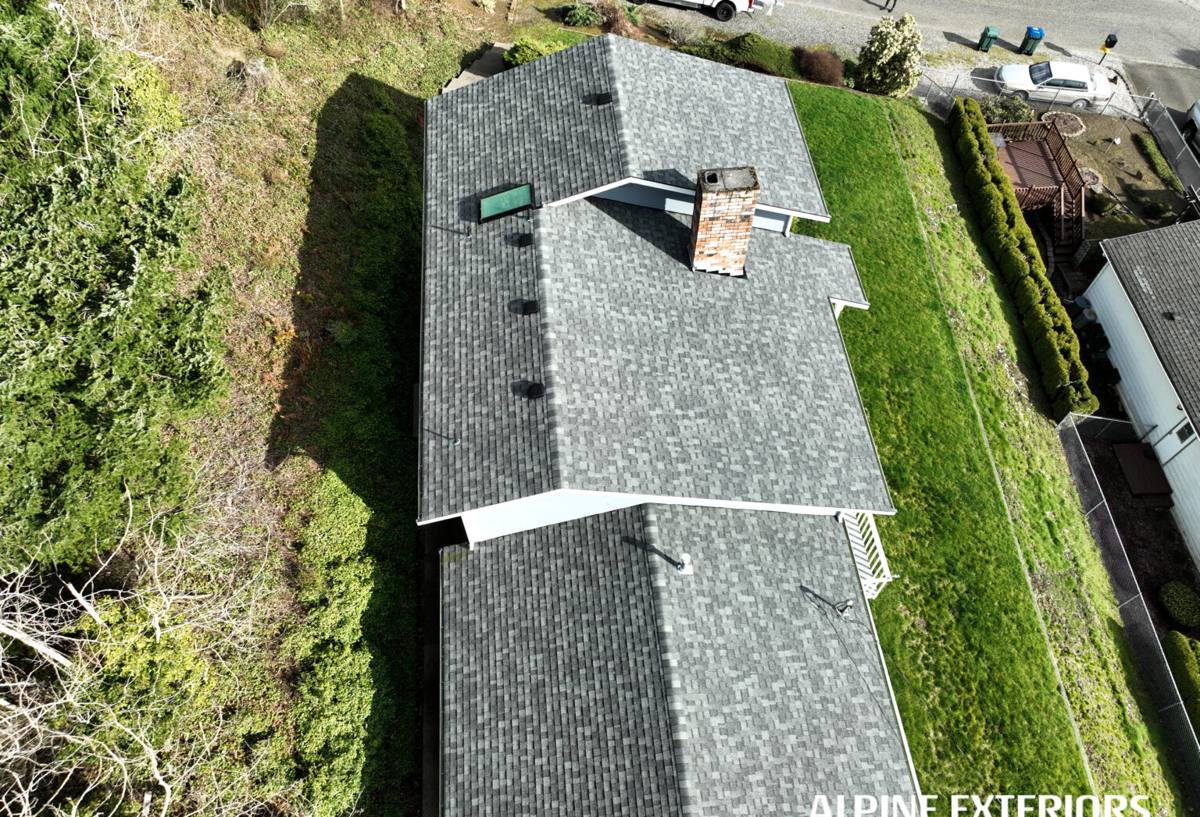
What Actually Wears Out a Roof Here
Salt Air and Corrosion
Airborne salt accelerates the breakdown of unprotected or lower-grade metal — flashing, fasteners, drip edge, and roof vents all take the hit over time. Roofs installed with standard electro-galvanized fasteners or thin, unpainted flashing tend to show rust streaks and early metal fatigue well before the shingles themselves are due for replacement. It's a slow process, but it's a real one, and it's specific to homes within a few miles of the water, which describes a good portion of Ferndale.
Driving Rain and Wind-Driven Moisture
Whatcom County storms don't always drop rain straight down. Wind-driven rain gets pushed sideways and upward under eaves, around chimneys, and along wall-to-roof transitions. A roof that isn't detailed with that in mind — meaning insufficient underlayment lap, missing or undersized kick-out flashing, or step flashing that wasn't properly woven with the siding — will eventually leak, sometimes years after installation, and often in a spot that's hard to trace back to the actual entry point.
Moss and Prolonged Moisture
Ferndale's tree cover and extended damp season give moss everything it needs: shade, moisture, and time. Moss holds water against the shingle surface, works its way under tabs, and lifts granules loose. Left unaddressed for a few years, it can shorten a roof's usable life significantly, especially on north-facing slopes and in valleys where debris collects and drainage is slower.
What a Correct Roof Replacement Includes
A roof replacement is more than swapping old shingles for new ones. Done right, it includes:
- Full tear-off to bare decking — never a layover on top of old roofing, which traps moisture and hides existing damage
- Decking inspection and repair or replacement of any soft, delaminated, or water-stained sheathing before anything new goes down
- Ice-and-water shield membrane at eaves, valleys, and around penetrations, where wind-driven rain and ice-damming risk are highest
- A synthetic or high-quality underlayment across the full deck, properly lapped against the direction of prevailing wind and rain
- Corrosion-resistant flashing and fasteners suited to a coastal-influenced climate, not generic inland-grade hardware
- Balanced intake and exhaust ventilation, so the attic can actually dry out between wet spells instead of holding moisture against the underside of the deck
- Correct flashing details at every chimney, skylight, and wall intersection — step flashing woven with siding, not just caulked over
Skipping any one of these doesn't usually cause an immediate problem. It shows up two, five, or ten years later as a leak, premature granule loss, or rot in the decking — problems that cost far more to fix than they would have to prevent.
Choosing the Right Material for This Climate
There's no single "best" roofing material for every home — it depends on your roof's exposure, slope, budget, and how much maintenance you're willing to keep up with. Here's how the common options stack up for a Ferndale property:
| Material | Salt Air Resistance | Moss Resistance | Maintenance | Typical Lifespan |
|---|---|---|---|---|
| Architectural asphalt shingle | Good, with corrosion-resistant flashing | Fair; algae-resistant granules help | Low to moderate | 25–30 years |
| Standing seam metal | Very good with proper coating | Very good — sheds moss more easily | Low | 40–50+ years |
| 3-tab asphalt shingle | Fair | Fair | Moderate | 15–20 years |
| Cedar shake | Requires diligent upkeep near salt air | Poor without regular treatment | High | 20–30 years with upkeep |
For most Ferndale homes, an architectural shingle rated for algae resistance, paired with correctly detailed flashing and ventilation, hits the right balance of upfront cost and long-term performance. Metal roofing costs more initially but earns that back in reduced maintenance and a much longer service life — worth considering if you plan to stay in the home long term or if your roof has heavy tree exposure.
Dealing With Moss the Right Way
We treat moss as a design problem, not just a cleaning problem. That means:
Zinc or Copper Strips
Installed near the ridge, these metals release trace amounts of ions during rain that inhibit moss and algae growth on the slope below. It's a passive, low-maintenance approach that works well on shaded roofs.
Algae-Resistant Shingles
Most quality architectural shingles now come with algae-resistant granules built in. It's a reasonable baseline, though it works best in combination with good airflow and periodic gentle cleaning rather than as a complete substitute for maintenance.
Trim Back What You Can
Where practical, opening up overhanging branches lets more sun and airflow reach the roof surface, which slows moss regrowth more than any product applied after the fact.
Our Replacement Process
- On-site inspection — we walk the roof and attic, check decking condition, ventilation, and flashing points, and identify anything salt or moisture exposure has already affected.
- Straightforward proposal — materials, scope, and pricing explained in plain terms, with options at different budget levels rather than a single take-it-or-leave-it quote.
- Full tear-off — old roofing removed down to the deck, with any damaged sheathing flagged and repaired before underlayment goes down.
- Underlayment and flashing — ice-and-water shield at vulnerable points, synthetic underlayment across the field, and new corrosion-resistant flashing throughout.
- Installation — shingles or panels installed to manufacturer spec, with attention to nailing pattern and exposure, since both affect wind and rain performance.
- Ventilation check — intake and exhaust confirmed balanced so the finished roof can actually manage moisture over time.
- Cleanup and walkthrough — magnetic sweep for stray fasteners, debris hauled off, and a final walkthrough so you know exactly what was done.
Signs Your Roof Needs Replacement, Not Repair
Not every roof problem calls for a full replacement. But a few signs usually mean repair is just delaying the inevitable:
- Granules collecting heavily in gutters, especially on a roof over 15 years old
- Multiple past repairs in different areas of the roof rather than one isolated spot
- Visible sagging anywhere along the roofline
- Daylight visible through the attic decking
- Persistent moss growth that returns quickly after cleaning
- Water stains on interior ceilings that reappear after repairs
- Shingles that are curling, cracking, or missing across large sections rather than isolated spots
What Affects the Cost of a Replacement
| Factor | Why It Matters |
|---|---|
| Roof size and number of slopes | More material and more edges, valleys, and flashing points to detail correctly |
| Current layers of roofing | Removing multiple old layers adds labor and disposal cost |
| Decking condition | Rotted or soft sheathing needs replacement before new roofing goes down |
| Material choice | Asphalt, metal, and specialty materials carry different upfront costs and lifespans |
| Roof pitch and accessibility | Steep or hard-to-access roofs take longer and require more safety setup |
| Ventilation upgrades | Adding or correcting intake/exhaust vents protects the new roof's lifespan |
We'd rather walk your specific roof and give you real numbers than throw out a broad range that doesn't mean much until we've seen the condition of your decking and the scope of flashing work involved.
Why a Local Crew Matters for This Job
Roofing crews that mostly work drier, inland climates sometimes under-detail for what Whatcom County actually throws at a roof — lighter underlayment, standard-grade fasteners, minimal ventilation planning. A crew that already works Ferndale and the surrounding area knows which slopes hold moss longest, which flashing details actually stop wind-driven rain in this climate, and which materials hold up against salt air over the long run rather than just on paper. That local knowledge shows up in fewer callbacks and a roof that's still doing its job well past the warranty period.
If your roof is showing its age or you just want an honest read on its condition, we're happy to take a look. Fill out the form below for a free, no-pressure estimate.