 Lynden Window
 Birch Bay's Coastal Climate Is Hard on Roofs
Birch Bay sits close enough to the water that homes there deal with a different mix of weather stress than roofs a few miles inland around Lynden. Salt-laden air off the water accelerates corrosion on exposed metal — fasteners, flashing, vent caps — years before it would fail on a typical Whatcom County home. Add in driving rain that comes sideways during winter storms, and any weak point in flashing or underlayment turns into an active leak path instead of a slow drip. Then there's moss. Western Washington's long, wet, shaded season gives moss and algae months to establish themselves on north-facing slopes and anywhere shingles stay damp, and once moss gets a foothold it holds moisture against the roofing material and works its way under tabs and shingle edges.
None of this means Birch Bay needs an exotic roofing system. It means the details that get skipped on a rushed job — the right fasteners, the right underlayment, proper ventilation, flashing that's actually lapped correctly — matter more here than they would somewhere drier and further from the water. A roof replacement done right in this location should be built assuming salt air, wind-driven rain, and moss pressure as the baseline, not the exception.
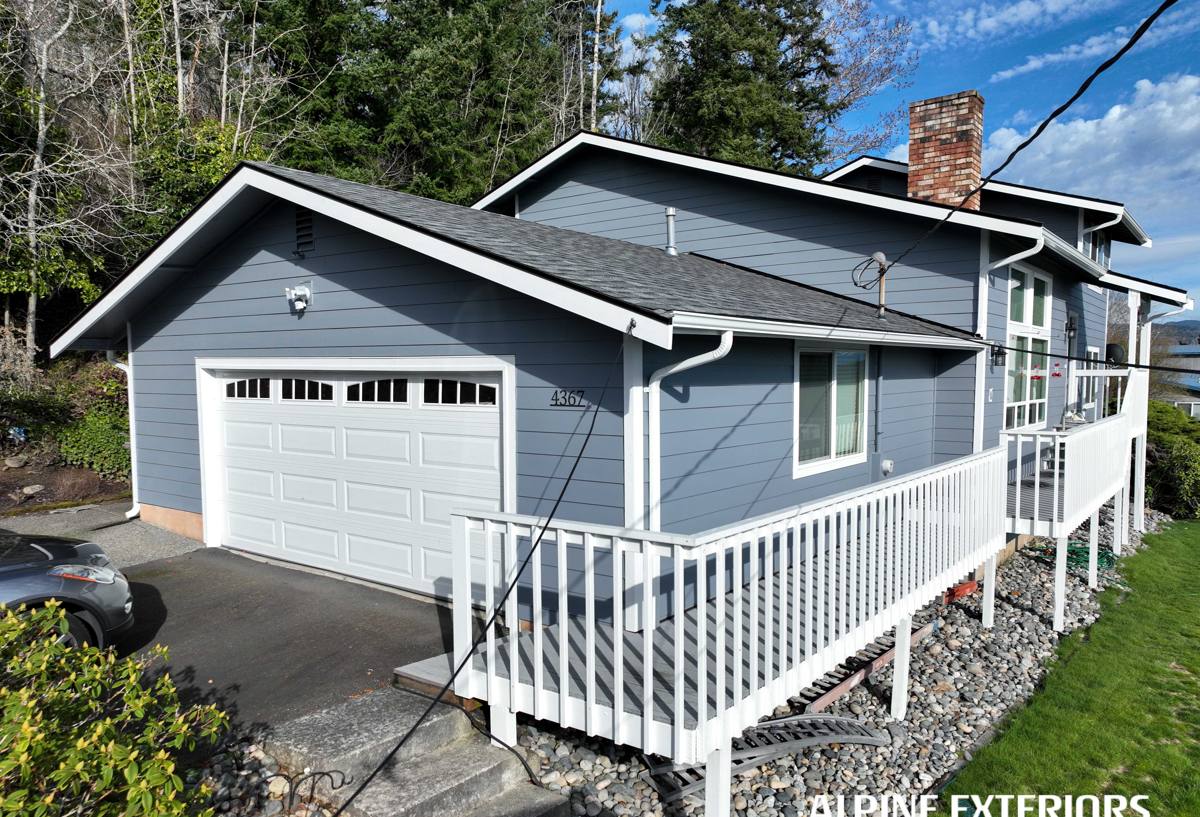
Signs a Birch Bay Roof Needs Replacement, Not Another Patch
Repairs make sense when a roof has isolated damage and years of life left. Replacement makes sense once the roofing system as a whole is worn out, even if it isn't leaking yet. Homeowners near Birch Bay should watch for:
- Shingles that are cupping, curling, or losing granules in patches — a sign the material itself is aging out, not just one damaged spot
- Heavy or recurring moss growth that keeps coming back within a season or two of cleaning
- Rust streaking or corrosion around flashing, vent boots, and metal valleys
- Soft spots in the decking felt underfoot, or daylight visible through the attic roof boards
- Granules collecting in gutters and downspouts after normal rain, not just after a storm
- A roof that's already had two or more repair visits in the last few years for different leaks
- Age — most asphalt roofing in this climate is realistically due for replacement in the 18-25 year range, sooner if ventilation was ever inadequate
If a roof is showing two or more of these at once, a repair is usually a short-term fix on a system that's already failing underneath.
What a Correct Roof Replacement Actually Involves
Full Tear-Off and Deck Inspection
A proper replacement starts by removing the old roofing down to the deck — not layering new shingles over old ones. That's the only way to actually see the condition of the sheathing underneath. Any soft, delaminated, or water-stained decking gets replaced before anything new goes down. Skipping this step is one of the most common corners cut in this trade, and it's the one that causes the most expensive failures later, because a leak eventually finds any weak plywood no matter how good the shingles above it are.
Underlayment and Water-Resistant Barrier
Given how much wind-driven rain this area sees, the underlayment layer matters as much as the shingles themselves. Synthetic underlayment across the full roof, with a self-adhered water-and-ice barrier at eaves, valleys, and any low-slope transitions, gives the roof a second line of defense if wind ever drives rain up under the shingle tabs.
Flashing Done Right
Flashing around chimneys, skylights, walls, and in valleys is where most roof leaks actually originate — not out in the open field of shingles. Near the coast, we use flashing and fasteners rated to hold up against salt-air corrosion, and every flashing detail gets properly lapped and sealed rather than just caulked over old metal.
Ventilation That Matches the House
Balanced intake and exhaust ventilation keeps the attic dry and temperature-regulated, which slows moss growth on the underside conditions and prevents the trapped moisture that rots decking from the inside. A roof can be installed perfectly and still fail early if the attic underneath it can't breathe.
Choosing Materials for Salt Air and a Long Moss Season
There's no single "best" roofing material for every home — the right choice depends on budget, roof pitch, and how much long-term maintenance a homeowner wants to take on. Here's how the common options compare for a coastal, moss-prone property like the ones around Birch Bay:
| Material | Typical Lifespan | Moss/Algae Resistance | Salt-Air Considerations |
|---|---|---|---|
| Standard architectural asphalt shingle | 20-25 years | Moderate — benefits from algae-resistant granules | Fasteners and flashing need corrosion-rated hardware |
| Algae-resistant (copper/zinc-granule) shingle | 25-30 years | High — granules actively inhibit growth | Same flashing/fastener needs as standard shingle |
| Standing-seam metal | 40-50+ years | High — smooth surface sheds moss easily | Requires marine-grade coatings/fasteners near the water to avoid premature corrosion |
| Synthetic/composite shake or slate | 30-50 years | High | Fastener corrosion resistance still matters; material itself is inert |
We steer most Birch Bay homeowners toward algae-resistant shingles or metal specifically because of the moss pressure and salt exposure in that location — not because standard shingles are a bad product, just because the extra resistance pays for itself faster here than it would on an inland roof.
Our Roof Replacement Process
- Free on-site inspection — we walk the roof, check the attic, and look at flashing, ventilation, and decking condition before quoting anything
- Written estimate covering material options, scope of work, and a realistic timeline
- Permitting handled on our end where required
- Material delivery and site protection — landscaping, siding, and windows get covered before tear-off begins
- Full tear-off, deck inspection and repair, then underlayment, flashing, and shingle or metal installation
- Cleanup, including a magnetic sweep for nails and debris removal
- Final walkthrough so the homeowner can see the finished work before we consider the job done
Why Ventilation and Moisture Management Deserve Extra Attention Here
A lot of roof problems in coastal Whatcom County aren't really roofing problems — they're moisture management problems. An attic that traps humid air feeds moss growth from below and accelerates deck rot, even under a brand-new roof. Part of doing this job correctly in Birch Bay is checking existing intake and exhaust venting during the inspection and correcting it as part of the replacement, not treating it as a separate upsell. A roof and its ventilation system have to be sized and balanced together, or the new roofing won't perform the way it's rated to.
Why It Matters to Hire a Crew That Already Works This Area
Roofing crews that mostly work drier, inland jobs don't always default to corrosion-rated fasteners, coastal-grade flashing, or moss-resistant materials unless a homeowner specifically asks. A crew that regularly works Birch Bay and the rest of the Lynden area treats those choices as standard practice, because we've seen what standard-grade hardware looks like after a few winters of salt air and driving rain. That local familiarity also means a more accurate read on how a specific roof's pitch, tree cover, and exposure to wind off the water will affect material choice and ventilation needs — details that matter more in this location than a generic regional average would suggest.
Maintenance Checklist for Birch Bay Homeowners
Regardless of how new a roof is, a few habits extend its life significantly in this climate:
- Clear moss and debris from north-facing and shaded slopes at least once a year, before it has a chance to spread
- Keep gutters and downspouts clear so water doesn't back up under the eaves
- Trim back overhanging branches to reduce shade, debris buildup, and moss growth
- Have flashing around chimneys, skylights, and vents visually checked every year or two, especially after major windstorms
- Watch for granules in gutters or on the ground below downspouts as an early sign of shingle wear
- Check attic ventilation isn't blocked by insulation, storage, or debris
Cost Factors Worth Understanding Before You Get Quotes
Roof replacement pricing varies enough between homes that broad national averages aren't very useful. The factors that actually move the number on a Birch Bay job are roof size and pitch, how many layers of old roofing need to come off, how much decking needs replacing, access difficulty, and the material chosen. A straightforward asphalt shingle replacement on a simple roof will run less than a steep, cut-up roof needing deck repair and metal roofing. The only reliable way to know where a specific home falls is a hands-on inspection rather than a phone estimate.
| Cost Factor | Why It Matters |
|---|---|
| Roof pitch and complexity | Steep or heavily cut-up roofs take longer and need more safety equipment |
| Layers to remove | Multiple old layers add tear-off labor and disposal cost |
| Decking condition | Rotted or soft plywood found during tear-off must be replaced before new roofing goes down |
| Material selection | Standard shingle, algae-resistant shingle, and metal carry different material and labor costs |
| Access | Difficult site access can add setup and material-handling time |
If your Birch Bay roof is showing its age, dealing with recurring moss, or you just want an honest read on how much life it has left, we're happy to take a look. Use the form below to request a free, no-pressure estimate — we'll walk the roof, tell you what we actually see, and give you straight options rather than a one-size-fits-all pitch.