 Lynden Window
 Roof Repair Built for Custer's Weather, Not a Generic Climate
Custer sits close enough to the water and open farmland that its roofs take a specific kind of beating: salt-laden air drifting in off the Strait, driving rain that comes in sideways during winter storms, and long stretches of gray, damp weather that let moss and algae get comfortable on a roof for months at a time. A roof repair that works fine in a drier inland climate can fail here within a couple of seasons if it doesn't account for those conditions. We repair roofs in Custer regularly, and the fixes we recommend are shaped by what actually wears these roofs out, not a one-size-fits-all checklist.
This page is about roof repair specifically — patching, flashing work, moss and moisture damage, leak tracing, and targeted section replacement. If your roof is at the end of its life and repair no longer makes sense, we'll tell you that honestly during the inspection instead of patching something that needs a full replacement.
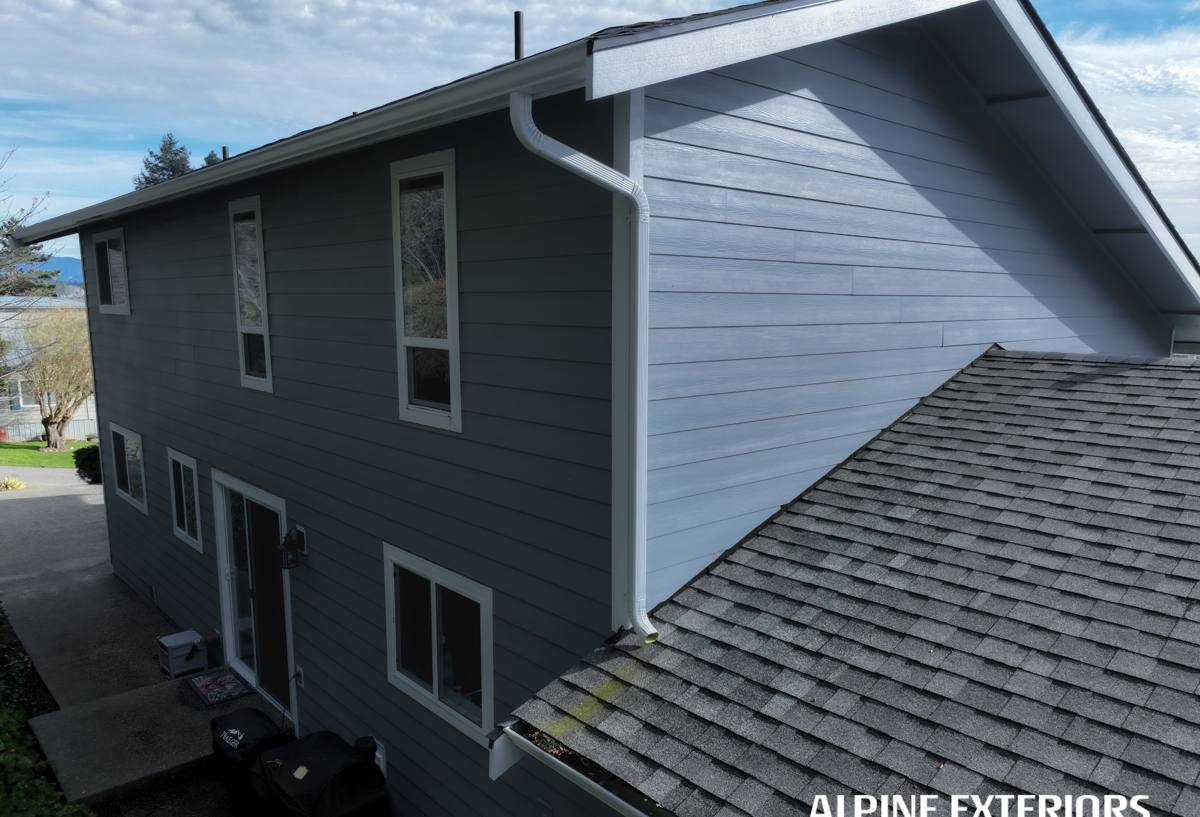
Why Salt Air, Rain, and Moss Matter More Here
Salt Air
Homes closer to the water deal with airborne salt that accelerates corrosion on exposed metal — flashing, fasteners, gutter hardware, and vent caps. Fasteners that would last decades inland can start rusting and losing their grip years earlier out here, which is a common hidden cause of small leaks that show up around chimneys, skylights, and roof-to-wall transitions.
Driving Rain
Whatcom County storms don't just fall straight down — wind-driven rain gets pushed sideways and upward under shingle edges, around vents, and into any flashing gap that's even slightly open. A repair that would hold up fine in calm rain can still leak in a wind-driven storm if the flashing laps and seals weren't done correctly.
Moss Season
Custer's moss season runs long — shaded, north-facing slopes and roofs under tree cover can stay damp for weeks at a stretch. Moss doesn't just look bad; it holds moisture against the roofing material, works its way under shingle tabs and shakes, and lifts edges over time, which is one of the most common root causes behind leaks we're called out to fix in this area.
Signs a Custer Roof Needs Repair
- Water stains on ceilings or in the attic, especially after a wind-driven rain event
- Moss buildup on north-facing slopes or along shaded roof edges
- Granules collecting in gutters, a sign shingles are wearing thin
- Rusted or lifting flashing around chimneys, skylights, and vent pipes
- Curling, cracked, or missing shingles after a storm
- Soft or spongy decking felt when walking the roof (a sign moisture has gotten underneath)
- Daylight visible through the roof deck from inside the attic
Not every one of these means you need a full roof replacement. Most of the time, a properly done repair addresses the problem and buys the roof years of additional service life — but that depends on catching it before the damage spreads to the decking or interior framing.
What a Correct Roof Repair Actually Involves
A roof repair that actually holds up in this climate goes past just replacing the shingles you can see. Here's what we check and address on every repair:
Tracing the Leak to Its Real Source
Water rarely shows up directly below where it entered the roof — it travels along the underlayment or decking before dripping down. We trace leaks back to their actual entry point rather than patching where the stain appears, because patching the wrong spot means the leak comes back.
Flashing First
Given how much flashing failure we see tied to salt-air corrosion and wind-driven rain, flashing gets inspected and, where needed, replaced with corrosion-resistant material and properly lapped so water sheds outward at every transition point — chimneys, skylights, sidewalls, and valleys.
Underlayment and Decking
If water has been getting under the roofing material, the underlayment and sometimes the decking underneath have to be checked for rot before new shingles go back down. Covering damaged decking with new shingles just hides a structural problem.
Moss and Debris Removal Done the Right Way
Moss removal has to be done carefully — aggressive scraping or pressure washing can strip granules and shorten the life of otherwise good shingles. We remove moss using methods that don't damage the roofing material, then address the moisture conditions that let it grow back so fast.
Ventilation Check
Poor attic ventilation traps moisture against the underside of the roof deck, which speeds up rot and makes moss and mold more likely on the topside too. A repair that ignores ventilation is treating a symptom, not the cause.
Common Custer Roof Repair Issues We See
| Issue | Typical Cause | What the Repair Involves |
|---|---|---|
| Recurring leak near chimney or skylight | Corroded or improperly lapped flashing | Remove and replace flashing, reseal transitions, verify proper overlap |
| Moss-lifted shingles on shaded slopes | Prolonged moisture retention, low sun exposure | Careful moss removal, damaged shingle replacement, moisture source check |
| Granule loss and thinning shingles | Age combined with sustained wet weather exposure | Section replacement of affected shingles, condition assessment for full roof |
| Soft decking under a leak area | Long-term undetected water intrusion | Decking repair or replacement before new roofing goes back down |
| Rusted fasteners and vent caps | Salt air corrosion over time | Replacement with corrosion-resistant fasteners and hardware |
Our Repair Process
- Inspection. We get on the roof (weather permitting) and walk the affected areas, checking flashing, decking, ventilation, and the general condition of the roofing material — not just the spot where the leak showed up inside.
- Honest assessment. We tell you what's actually going on, including if the roof is close enough to the end of its life that repair is a short-term fix rather than a long-term answer.
- Written scope and price. You get a clear explanation of what needs to be done and why before any work starts — no vague line items.
- The repair itself. Flashing, decking, underlayment, and shingle work done in the right order, with materials suited to Whatcom County's salt air and rain exposure.
- Cleanup and check. Debris and old material removed, gutters cleared of anything dislodged during the work, and a final check that the repair area sheds water correctly.
Repair or Replace? What Actually Determines It
Homeowners often ask us to just replace the whole roof "to be safe," and sometimes that's right — but often a targeted repair is the more responsible answer, both for your budget and for not throwing away years of remaining shingle life. Here's generally how we think about it:
| Factor | Leans Toward Repair | Leans Toward Replacement |
|---|---|---|
| Age of roof | Under roughly two-thirds of expected lifespan | Near or past expected lifespan |
| Extent of damage | Localized to one section or feature | Widespread across multiple slopes |
| Decking condition | Solid, no significant rot found | Rot or soft spots in multiple areas |
| Shingle condition elsewhere | Remaining shingles still flexible, granules intact | Brittle, curling, or granule loss roof-wide |
| History of repeat leaks | First occurrence or isolated cause | Recurring leaks in different spots over time |
We won't push a full replacement when a repair is the honest answer, and we won't recommend a patch job on a roof that's genuinely done. Broad repair costs for typical Custer-area issues — flashing work, moss remediation, section replacement — usually run in the low hundreds to a few thousand dollars depending on scope; we'll give you an actual number after the inspection, not a guess.
Why Hiring a Crew That Already Works in Custer Matters
Roofing crews unfamiliar with this area sometimes underestimate how much salt air and long moss seasons affect material choices and repair longevity. A crew that regularly works Custer and the surrounding Whatcom County communities already knows which fastener types hold up, which flashing details fail first in wind-driven rain, and which roof orientations need extra attention for moss. That local experience shows up in fewer callbacks and repairs that actually last through multiple wet seasons, not just until the next storm.
It also means faster response. When a leak shows up during a winter storm, having a crew nearby that knows the area — rather than one dispatching from far outside the county — matters for how quickly the damage gets addressed before it spreads.
Simple Roof Maintenance Checklist for Custer Homeowners
- Have moss removed before it spreads across a full slope, not after
- Keep gutters clear so water doesn't back up under the roof edge during heavy rain
- Trim back overhanging branches that keep roof sections shaded and damp
- Check attic insulation and ventilation periodically — poor airflow accelerates moisture damage
- Have flashing inspected every few years, especially around chimneys and skylights
- Address small leaks quickly; a delay of one wet season can turn a repair into a replacement
If you're dealing with a leak, moss buildup, or storm damage on a Custer home, we're happy to take a look and give you a straightforward assessment — no pressure, no upsell. Fill out the form below to request a free estimate and we'll get back to you to schedule a time to inspect your roof.