 Lynden Window
 Roof Repair Built for the Nooksack Area's Climate
Homes around Nooksack and greater Lynden deal with a specific combination of weather that's harder on a roof than most homeowners realize. Long stretches of low, wet clouds keep roof surfaces damp for days at a time. Driving rain off passing fronts pushes water sideways under flashing that would stay dry in a straight-down rain. And the marine air moving in off the Salish Sea, combined with heavy tree cover in this part of Whatcom County, feeds a moss and moisture season that can run eight months or longer. None of that means a roof is doomed — it means repairs have to account for how water actually moves on this style of roof, in this specific climate, instead of following a generic checklist.
A roof repair that works in a dry climate can fail here within a season if it doesn't address moisture intrusion, ventilation, and moss regrowth together. That's the difference between a patch that holds and one you'll be calling someone back for.
Signs a Nooksack-Area Roof Needs Repair
Moss and Organic Growth
Moss on a roof isn't just cosmetic. It holds moisture against the roofing material long after the rest of the roof has dried out, and its root structure works into shingle granules and seams over time. On older cedar or aging asphalt roofs in shaded, tree-covered lots — common around Nooksack — moss buildup is usually the first visible sign that a roof needs attention, well before any leak shows up inside the house.
Leaks That Show Up Only in Certain Storms
A leak that only appears during wind-driven rain, and not in a steady straight-down downpour, almost always points to flashing, a valley, or a sidewall detail — not a failed shingle field. This is one of the most common repair calls in this area because our storms frequently come with sustained wind out of the south or southwest.
Granule Loss and Soft Spots
Asphalt shingles that have gone through many wet-dry-wet cycles shed granules faster than the same shingle would in a drier climate. Combined with any soft or spongy decking underfoot, this usually signals the underlayment beneath is compromised, not just the surface layer.
Interior Signs
- Discoloration or a water stain on ceiling drywall, especially near a chimney, skylight, or where two rooflines meet
- A musty smell in an attic or upper closet that wasn't there before
- Daylight visible through roof decking in an unfinished attic space
- Gutters that overflow even when they're clear of debris, suggesting water is bypassing them from a roof-level problem
What a Correct Roof Repair Actually Involves
A roof repair done right isn't just "find the leak, cover the hole." It's a sequence, and skipping steps is exactly how a repair fails in a year or two in a climate like ours.
Find the Real Source, Not the Symptom
Water travels. A stain on a bedroom ceiling can trace back to a flashing failure ten feet away, following a rafter or sheathing seam before it drips down. A repair that just patches where the stain appears, without tracing the water's actual path, is a temporary fix at best.
Flashing and Valleys First
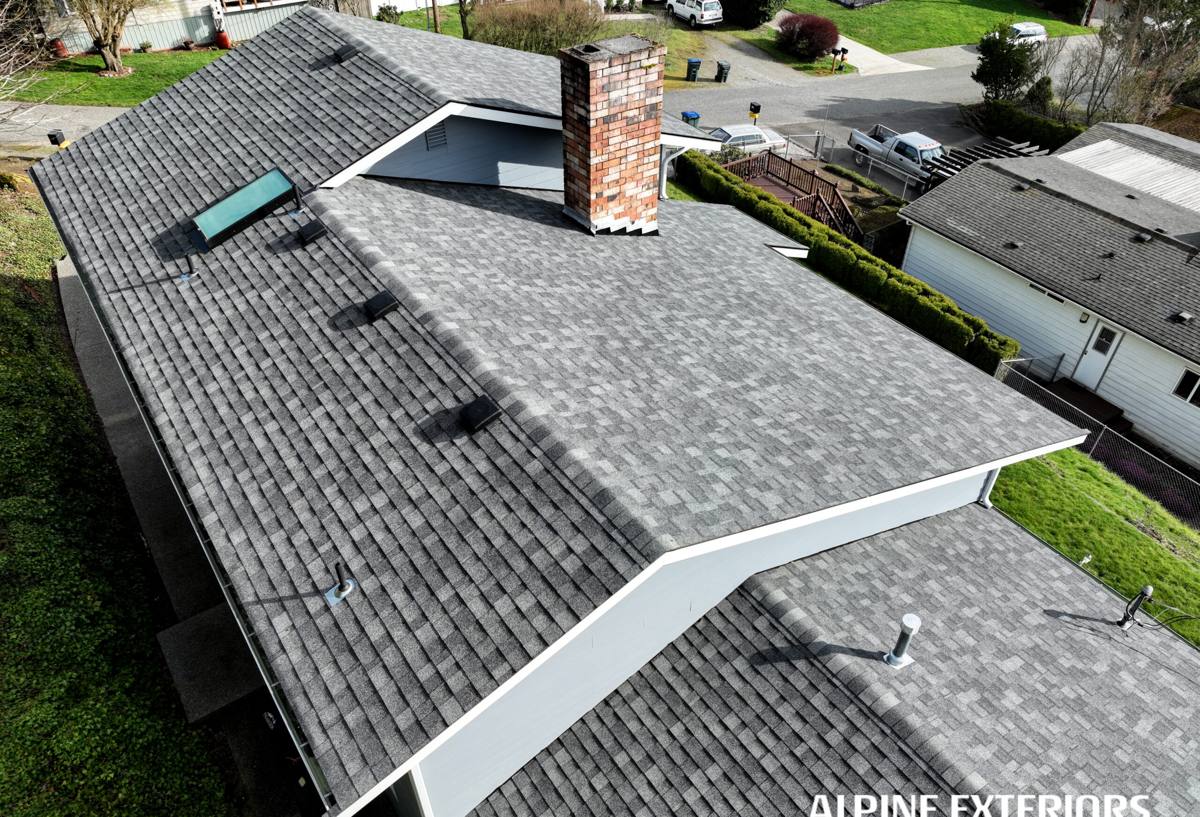
Most roof leaks in this region originate at flashing — around chimneys, skylights, dormers, and where a roof valley collects runoff from two slopes. These details take the most water volume during a driving rain and are the first place we inspect on any repair call.
Matching Materials, Not Just Covering the Gap
A patch using mismatched shingle profile, weight, or granule color will shed water differently than the surrounding roof and often becomes the next failure point. We match existing materials as closely as possible, and when an exact match isn't available, we explain the trade-off honestly rather than leaving a mismatched patch that ages poorly.
Ventilation Check
Poor attic ventilation traps moisture that condenses on roof decking from the inside, which can look and behave like an exterior leak. Any repair on a roof with signs of trapped moisture should include a look at intake and exhaust venting, not just the visible damage.
Roof Types We Commonly Repair in the Nooksack Area
The housing stock around Nooksack and Lynden includes a wide mix of ages and roof materials, from older farmhouses to newer builds. Each material behaves differently under our wet, moss-prone conditions.
| Roof Type | Common Repair Issues Here | What to Watch For |
|---|---|---|
| Asphalt Composition Shingle | Granule loss, curling edges, flashing seal failure | Bald patches, shingle edges lifting after wind events |
| Cedar Shake/Shingle | Moss intrusion, splitting from wet-dry cycling | Dark, spongy shakes; visible moss mats holding moisture |
| Metal Roofing | Fastener backout, sealant failure at penetrations | Rust streaking at screws, gaps at pipe boots or ridge caps |
| Low-Slope/Flat Sections | Ponding water, membrane seam separation | Standing water more than 48 hours after rain stops |
Our Repair Process
- Inspection and diagnosis — We walk the roof (or use safe access methods on steep or fragile sections) and trace suspected leaks to their actual source rather than assuming based on the interior stain location.
- Honest assessment — We tell you plainly whether this is a targeted repair, a larger section replacement, or a sign the roof is nearing the end of its service life. We don't upsell a full replacement when a repair will genuinely hold.
- Written scope and estimate — You get a clear explanation of what's being fixed and why, before any work starts.
- Repair work — Removal of damaged material, moisture-damaged decking replaced where needed, correct flashing and underlayment installed, and material matched to the surrounding roof as closely as possible.
- Final check — We confirm water is shedding correctly off the repaired area and that surrounding shingles or panels weren't disturbed in a way that creates a new weak point.
Why a Crew That Already Works Nooksack Matters
A roof repair crew that regularly works this specific area already knows which failure patterns show up on which roof ages and orientations here — which valleys tend to collect the most moss, which flashing details fail first under our wind-driven rain, and how long a given shingle type realistically lasts under this much sustained moisture exposure. That local pattern recognition means less time spent diagnosing and a repair scope that's right the first time, rather than a series of return trips.
It also means we're accountable locally. If a repair doesn't hold through the next wet season, we're not a crew that drove in from out of the area and moved on — we're still here, working roofs in the same neighborhoods.
What Affects Roof Repair Cost
Every roof repair is different, but the cost of a given repair is driven by a consistent set of factors. We won't quote a number without seeing the roof, but here's what actually moves the price.
| Factor | Why It Matters |
|---|---|
| Roof pitch and access | Steep or high roofs require more safety setup and time |
| Extent of hidden decking damage | Rot found under the surface adds material and labor beyond the visible patch |
| Material match availability | Older or discontinued shingle/shake profiles can take longer to source |
| Number of penetrations involved | Chimneys, skylights, and vents each add their own flashing detail to redo correctly |
| Moss and debris removal needed first | A roof has to be safely cleared before the actual repair area can be properly assessed |
Maintenance Checklist to Extend Your Roof's Life
Between repairs, a few habits go a long way in this climate, especially on shaded lots common around Nooksack.
- Have moss growth treated or removed before it forms thick mats, not after
- Keep gutters clear so water isn't backing up under the roof edge
- Trim back overhanging branches to reduce shade and debris buildup on the roof surface
- After any major windstorm, do a visual check (from the ground) for lifted shingles or displaced flashing
- Address small leaks as soon as they're noticed — a stain that seems minor in July can be a much bigger repair by the following winter's rains
- Have an attic checked periodically for musty odor or condensation signs, not just the roof exterior
If you're seeing moss buildup, a stain on a ceiling, or you just want an honest read on how much life is left in your roof, we're glad to come take a look. We offer free, no-pressure estimates for homes in and around Nooksack and Lynden — use the form below to get one scheduled.