 Lynden Window
 Nooksack's Climate Is Harder on Siding Than It Looks
Nooksack sits in the Nooksack River valley just east of Lynden, close enough to Bellingham Bay and the Salish Sea that marine air moves through the valley most of the year. Combine that with Whatcom County's long, wet winters and the driving rain that comes sideways off the Cascades' foothills, and you get a siding environment that punishes anything not built for sustained moisture exposure. Add a moss season that can run from early fall through late spring on north-facing walls and shaded tree lines, and it's easy to see why siding failures in this area rarely come from one bad storm. They come from years of small moisture events that a weak product, or a rushed installation, couldn't shed fast enough.
Homeowners in Nooksack aren't dealing with hurricane-force wind loads or desert UV degradation. The threat here is patient: salt-tinged air working into seams, rain finding gaps in flashing, and moss holding moisture against a wall long after the rain has stopped. Siding that isn't engineered for that combination looks fine for a few years, then starts showing swelling, staining, or soft spots right where it matters most.
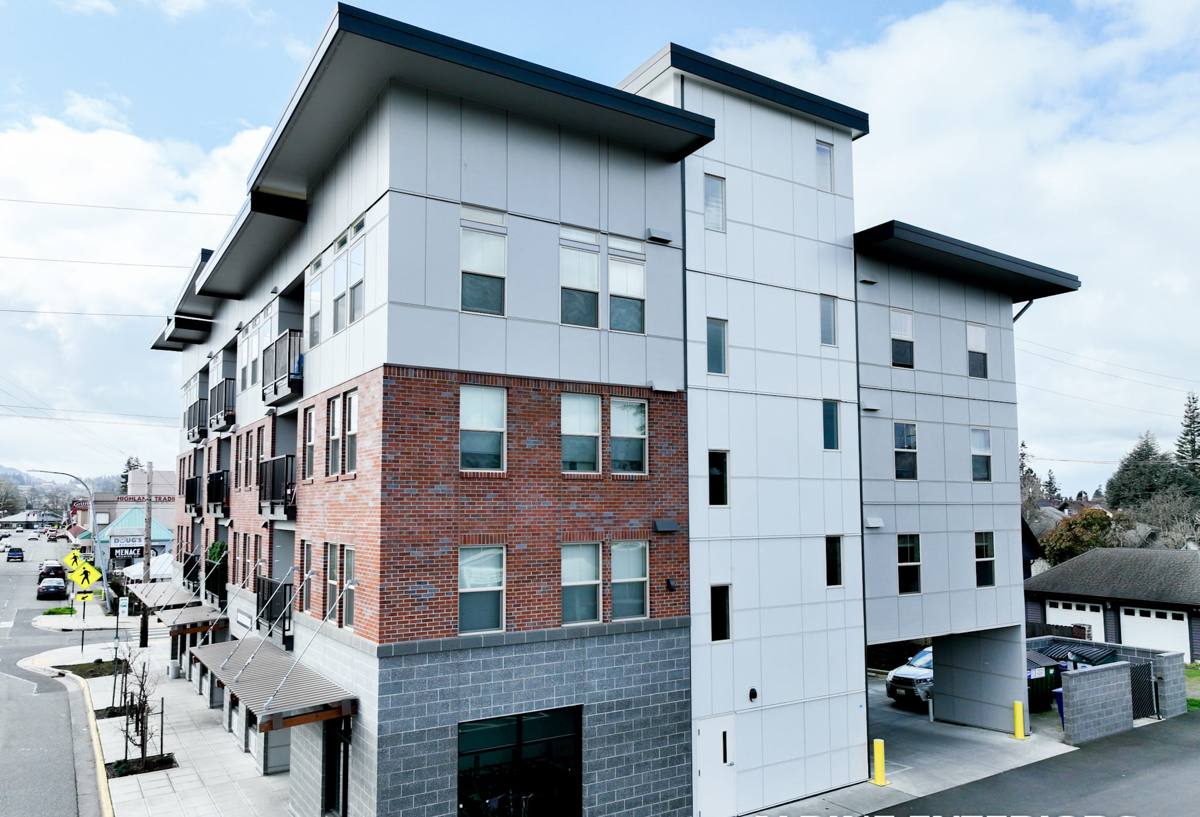
Why We Only Install James Hardie Here
We install James Hardie fiber cement siding exclusively — not vinyl, not LP SmartSide, not Cemplank or Allura, not primed spruce or cedar. That's not a marketing position, it's a standard we hold because of what this climate does to alternatives over time. Vinyl expands and contracts with temperature swings and can warp or crack in cold snaps; wood and engineered wood products need consistent maintenance to keep moisture out of their edges, and a missed year of upkeep in a valley this wet adds up fast. Fiber cement doesn't have those weak points. It's dimensionally stable, it doesn't feed moss the way organic wood fibers can, and it holds paint and factory finish far longer than wood-based products in a marine-influenced climate.
James Hardie's HardieZone system matters specifically for this region. Whatcom County falls in HZ5, and Hardie engineers its plank and panel formulations differently for wetter, cooler climates than they do for dry Southwest markets. That's a meaningful distinction — it means the product landing on a Nooksack home is formulated for the exact moisture and freeze-thaw conditions it will actually face, not a generic national spec.
What ColorPlus Finish Adds
Most of what we install carries Hardie's ColorPlus factory finish — a baked-on, multi-coat finish applied under controlled conditions rather than field-painted on site. In a climate where field-applied paint has a narrower window of dry, mild days to cure properly, a factory finish removes that variable entirely. It resists fading and holds its color line straighter over time, which matters when a home sits under tree cover or gets consistent damp shade for parts of the year.
What a Correct Installation Actually Involves
Fiber cement siding is only as good as the installation behind it. Hardie's own installation instructions are specific for a reason — this is a product that performs when installed to spec and underperforms when it isn't, regardless of how good the material itself is. For Nooksack homes, a handful of details matter more than most:
- Proper clearance and gapping: Siding needs a minimum gap from grade, roofing, decks, and other siding so water has somewhere to go instead of wicking upward into the board.
- Correct flashing at every penetration: Windows, doors, vents, and hose bibs are the most common failure points on any siding job — not the field of the wall itself.
- Weather-resistive barrier done right: A properly lapped and sealed house wrap behind the siding is the actual first line of defense; the siding is the second.
- Fastener placement and spacing: Hardie specifies fastener type, spacing, and embedment depth precisely — get this wrong and you create hundreds of tiny points where water can find its way in.
- Caulking only where Hardie calls for it: Over-caulking traps moisture behind the board just as often as under-caulking lets it in.
- Cut-edge sealing: Any field-cut edge needs to be primed or sealed before installation, since the factory finish doesn't extend to a fresh cut.
None of this is exotic. It's the difference between a crew that treats the manufacturer's installation manual as a suggestion and one that treats it as the job.
Dealing With Moss and Shaded Walls
Moss doesn't damage fiber cement siding the way it damages wood, but it does hold moisture against any surface it grows on, and heavy buildup can trap debris that clogs weep points and drainage paths behind the siding. On Nooksack properties with mature trees or north-facing walls that stay shaded most of the day, we pay extra attention to those areas during installation — making sure drainage planes are clear and flashing details are done correctly so moss growth on the surface stays a cosmetic issue rather than a moisture-management one. Periodic gentle cleaning (never high-pressure washing directly into seams) keeps moss from becoming a long-term problem.
Our Process for Nooksack Homes
1. On-Site Assessment
We walk the property, check existing siding and sheathing condition, identify moisture-prone areas (shaded walls, low clearance points, tree cover), and note anything the prior siding may already be telling us — swelling, staining, or soft spots that indicate where water has been getting in.
2. Prep and Weather Barrier
Removal of old siding as needed, sheathing repair where water damage is found, and installation of a properly lapped weather-resistive barrier before a single piece of Hardie goes up.
3. Installation to Manufacturer Spec
Flashing, fastening, gapping, and caulking are done to Hardie's published specifications — not shortcuts, not "close enough." This is the stage where most long-term siding problems are either prevented or built in.
4. Trim, Color, and Detail Work
Corner treatments, trim boards, and color selection from Hardie's ColorPlus palette, matched to what suits the home and holds up under the valley's light and moisture conditions.
5. Final Walkthrough
We review the finished work with the homeowner and flag any maintenance basics specific to their site — tree cover, drainage, or anything else that affects long-term upkeep.
Why a Crew That Already Works in Nooksack Matters
Siding installation quality depends heavily on whether the crew understands the specific conditions of the area they're building in. A crew that primarily works drier climates may not instinctively over-prioritize flashing details the way a crew that's dealt with Whatcom County's wet season year after year will. Local experience also means fewer surprises with permitting through Whatcom County, realistic scheduling around the region's wet months, and a working knowledge of how homes in this valley — from older farmhouses to newer builds — tend to be framed and sheathed underneath. That local pattern recognition is hard to replace with a generic national install crew passing through.
Cost Factors to Understand
Every home is different, and we won't quote a number without seeing the job, but these are the factors that typically move the price on a James Hardie project in this area:
| Factor | Why It Affects Cost |
|---|---|
| Existing siding removal | Tear-off and disposal of old material adds labor before new siding can start |
| Sheathing/moisture repair | Water-damaged sheathing found during removal must be repaired before installation |
| Home size and wall complexity | Multiple stories, dormers, and cut-up wall lines take more time than simple rectangular walls |
| Product line and profile | Lap siding, panels, and shingle-style profiles have different material and labor costs |
| Trim and detail scope | Corner boards, window trim, and accent details add labor and material |
| Access and site conditions | Tree cover, slope, and staging space affect how efficiently a crew can work |
Maintenance Checklist for Hardie Siding in This Climate
- Rinse siding gently once or twice a year to clear pollen, moss spores, and road or field dust — avoid direct high-pressure spray into seams
- Inspect caulking annually at trim and penetration points; failed caulk is the most common early entry point for moisture
- Keep gutters clear so overflow doesn't run down the wall face repeatedly
- Trim back vegetation and tree limbs that keep a wall section shaded and damp most of the day
- Watch for any soft spots, staining, or paint failure at the bottom courses near grade, decks, or roof lines — these are the first places problems show up
What This Means for Your Home
A Nooksack home doesn't need the most expensive siding on the market — it needs siding engineered for a wet, moss-prone, marine-influenced valley climate, installed by a crew that treats flashing and fastening details as the job rather than an afterthought. That's the entire reasoning behind why we install James Hardie exclusively and why we hold our installation process to the manufacturer's specification rather than a faster, looser version of it. Siding is one of those projects where the visible result looks similar whether it's done right or done adequately — the difference only shows up five, ten, or fifteen years later, and by then it's an expensive lesson.
If you're weighing a siding replacement or new construction project in Nooksack, we're happy to walk your property, look at what your current siding is telling us, and put together a straightforward, no-pressure estimate. There's no obligation — just an honest look at what your home actually needs.