 Lynden Window
 Roofing Built for Maple Falls, Not a Generic Northwest Template
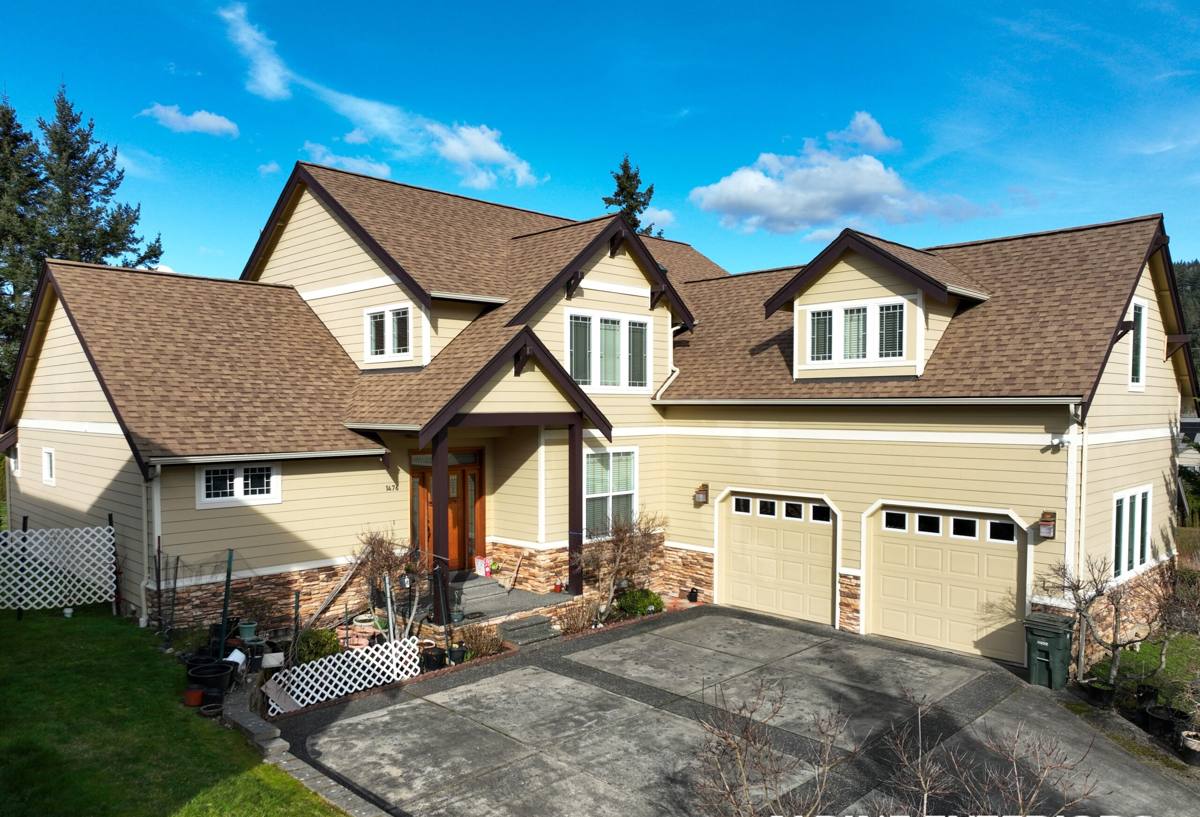
Maple Falls sits up against the foothills of the North Cascades, tucked into forest canopy and elevation changes that most roofing crews working the flatter parts of Whatcom County rarely deal with. Homes here catch more shade, hold more moisture in the air longer through the day, and sit closer to conifers that drop needles and seed litter onto the roof deck year-round. A new roof installation here needs to be planned around those specifics, not just installed from a standard spec sheet built for a suburban lot in Lynden or Bellingham.
When we install a new roof in Maple Falls, the goal isn't just to get shingles or panels on the house. It's to build a roof system — deck, underlayment, ventilation, flashing, and covering — that's matched to how water, moisture, and organic debris actually behave on a property at this elevation and under this much tree cover.
What the Local Climate Does to a Roof Here
Whatcom County's weather is defined by long stretches of driving rain, damp air that lingers under tree cover, and — closer to the water and lowland corridors — salt-laden air that accelerates corrosion on unprotected metal components. In Maple Falls specifically, the bigger day-to-day stress is moisture that doesn't dry out quickly because of shade and forest humidity, plus a moss season that can run most of the year in the right conditions.
Moss and Organic Growth
Moss isn't just cosmetic. It holds moisture against the roofing material, works into shingle tabs and panel seams, and over time lifts edges and traps water where it shouldn't sit. On heavily shaded lots, moss can establish within a couple of years on a roof that wasn't detailed with growth resistance in mind. A correct installation slows this down significantly; it doesn't eliminate the need for occasional maintenance, but it changes how often you need to think about it.
Driving Rain and Wind-Driven Water
Rain in this area doesn't always fall straight down. Wind off the foothills can push water sideways under poorly lapped shingles or through underlayment that wasn't sealed at penetrations. Roofs installed without attention to lap direction, valley detailing, and flashing at chimneys and vents are the ones that develop slow leaks — often not discovered until there's already damage to the deck or interior.
Temperature Swings and Freeze-Thaw
Maple Falls sits at higher elevation than most of the county, which means colder overnight temperatures and more freeze-thaw cycling in winter than homes closer to the water. Trapped moisture that freezes and expands is one of the more common causes of premature material failure on roofs that weren't properly ventilated or underlaid.
What a Correct New Roof Installation Actually Involves
A roof is a system, not a single product. Getting a new roof right in this environment means every layer does its job, not just the visible covering.
- Deck inspection and repair — any soft, delaminated, or water-damaged sheathing gets replaced before anything new goes down. Installing over a compromised deck just hides a problem.
- Ice and water shield at vulnerable areas — valleys, eaves, and roof-to-wall transitions get self-adhering waterproof membrane, not just standard felt.
- Synthetic underlayment across the field — more consistent water resistance and better footing during install than old-style felt, which matters on a job that may see rain mid-project.
- Balanced ventilation — intake at the eaves and exhaust at the ridge, sized to the attic volume, so moisture doesn't get trapped under the deck.
- Properly lapped and fastened covering material — installed to manufacturer spec for nail pattern, exposure, and offset, not just "close enough."
- Flashing at every penetration and transition — chimneys, skylights, plumbing vents, sidewalls, and valleys are where the vast majority of leaks originate on any roof, regardless of material.
- Drip edge and gutter apron — directs water off the roof edge instead of back under the fascia.
Roofing Material Options for Maple Falls Conditions
There's no single "best" roofing material for every home — the right choice depends on your roof's pitch, sun exposure, shading, and budget. Here's how the common options compare for a shaded, moisture-heavy, higher-elevation property like the ones common in Maple Falls.
| Material | Moisture & Moss Resistance | Maintenance | Typical Lifespan |
|---|---|---|---|
| Architectural asphalt shingle | Good with algae-resistant granules; still needs occasional moss removal in heavy shade | Low to moderate | 25–30 years |
| Standard 3-tab asphalt shingle | Fair; more prone to moss lift at tab edges over time | Moderate | 15–20 years |
| Standing seam metal | Excellent; smooth surface sheds moisture and resists moss growth | Low | 40–60+ years |
| Cedar shake | Requires ongoing treatment and cleaning to manage moisture retention | High | 20–30 years with upkeep |
| Synthetic/composite shingle | Good; consistent material resists water absorption | Low | 40–50 years |
We don't push one material on every job. A heavily shaded lot under fir and cedar canopy often does better long-term with metal or a composite product simply because there's less surface texture for moss to grab onto. A sunnier, more open lot may do perfectly well with a quality architectural shingle at a lower upfront cost. We'll walk your specific roof and tell you honestly what fits your situation and your budget — not just what carries the best margin.
Why Ventilation and Attic Detail Matter as Much as the Shingles
Homeowners often focus entirely on the visible roofing material and skip past ventilation, but in a climate like this one, it's arguably just as important. Warm, moist air from inside the home rises into the attic. If it can't escape through properly balanced intake and exhaust venting, it condenses against the underside of the roof deck — especially on cold Maple Falls nights when attic and outdoor temperatures diverge sharply.
Over a few seasons, that trapped moisture can rot sheathing from the inside, degrade insulation, and create ideal conditions for mold — all while the roof's surface looks fine from the ground. Part of every new roof installation we do includes evaluating whether the existing ventilation is adequate, undersized, or blocked, and correcting it before the new covering goes on.
Our Installation Process, Start to Finish
- On-site inspection and estimate — we walk the roof (not just look from the ground), check the deck condition where accessible, and note shading, pitch, and drainage patterns specific to your property.
- Material selection and honest cost breakdown — we explain the trade-offs between options in plain terms so you're choosing based on what matters to you, not a sales pitch.
- Deck prep and repair — any damaged sheathing is identified and replaced before underlayment goes down.
- Waterproofing layer installation — ice and water shield at critical zones, synthetic underlayment across the field.
- Ventilation correction — intake and exhaust balanced to current code and attic volume.
- Covering installation — material installed to manufacturer specification, not shortcuts.
- Flashing and detail work — every penetration, valley, and transition sealed correctly.
- Final walkthrough and cleanup — magnetic sweep for stray fasteners, debris removal, and a final review with you before we consider the job done.
Signs Your Maple Falls Roof May Need Replacement Soon
Not every roofing issue means a full replacement, but these are the signs worth having evaluated before they turn into interior damage:
- Shingles that are curling, cracked, or losing granules in visible patches
- Moss or dark streaking that keeps returning shortly after cleaning
- Soft spots or sagging when walked on (evaluated by a professional, not a DIY walk)
- Daylight visible through the roof deck from inside the attic
- Water stains on interior ceilings, especially after wind-driven rain
- A roof past 20–25 years old that has never had underlayment or ventilation upgraded
Why Local Experience with Maple Falls Homes Matters
A roofing crew that mostly works flatter, more open lots elsewhere in Whatcom County can still do competent work here — but they may not automatically account for the shade patterns, moisture retention, and moss pressure that come with Maple Falls' elevation and tree cover. Knowing which valleys tend to collect debris, which north-facing slopes stay damp the longest, and how ventilation needs shift with elevation isn't guesswork; it's something a crew learns by working these specific conditions repeatedly.
We treat every roof as its own project. What's correct for a sun-exposed roof near Lynden proper isn't automatically correct for a shaded roof tucked into the Maple Falls foothills, and we plan accordingly — material choice, ventilation sizing, and moss-prevention detailing all get adjusted to the actual site, not a one-size-fits-all checklist.
What to Expect for Cost and Timeline
Roofing costs vary widely based on roof size, pitch, material choice, and how much deck repair is needed once the old covering comes off — so we won't quote a number without seeing the roof. In general, expect asphalt shingle replacements to run toward the lower-to-middle end of the cost range, with metal and composite systems costing more upfront but requiring less maintenance and lasting considerably longer. Most straightforward residential re-roofs are completed in a few days once material is on site and weather cooperates; steeper or more complex rooflines, or jobs requiring significant deck repair, take longer. We'll give you a realistic timeline as part of the estimate, including how we plan around Whatcom County's rain patterns to protect your home mid-project.
Ready for an Honest Look at Your Roof
If your Maple Falls roof is showing its age, dealing with persistent moss, or you're just planning ahead before a small leak becomes a bigger repair, we're happy to take a look. We'll give you a straightforward assessment, explain your material options without the sales pressure, and provide a free, no-obligation estimate — just fill out the form below to get started.