 Lynden Window
 Siding Built for the Maple Falls Climate
Maple Falls sits at the edge of the Mt. Baker foothills, and that location comes with a specific set of demands on a home's exterior. Heavy tree cover keeps large sections of most roofs and walls in shade for much of the year, rainfall is frequent and prolonged rather than short and heavy, and the moisture that settles into shaded siding often has weeks to work before a sunny stretch dries things back out. Add in the driving rain that comes through with Whatcom County's winter weather systems and the salt-laden air that moves inland off the Sound during storm events, and you have a climate that is genuinely hard on exterior building materials — harder than what a lot of siding products were designed to handle.
This isn't a page about siding in general. It's about what James Hardie fiber cement siding does specifically for homes in Maple Falls, why that matters more here than in a drier part of the state, and what a correct installation looks like when the crew doing the work already understands the conditions.
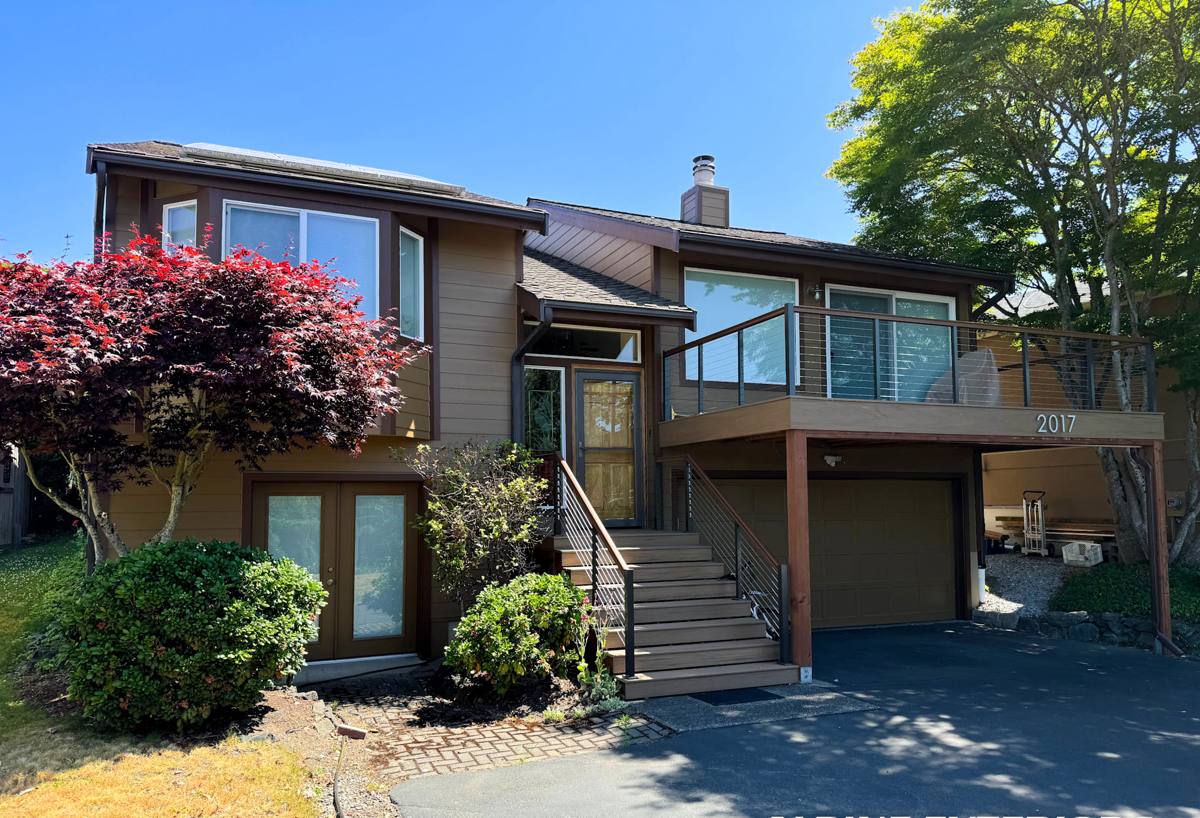
What Shade, Rain, and Moss Actually Do to Siding
Moss and algae aren't cosmetic problems by themselves — they're indicators of a bigger issue. Where moss can establish itself and grow, moisture is sitting on or in the siding surface for extended periods. On materials that absorb water or swell when wet, that sustained dampness leads to real problems over time: soft spots, delamination, warping, and paint or coating failure that leaves the substrate exposed to even more moisture.
Shaded north- and west-facing walls under mature trees are the areas we see this hit hardest in this area. Those walls don't get the direct sun exposure that helps other elevations dry out between rain events, so whatever siding is installed there needs to be able to tolerate prolonged dampness without breaking down. That's the core problem a Maple Falls homeowner is actually solving when they choose a siding material — not "what looks good," but "what can sit wet in the shade for a week in January and still be sound in ten years."
Why We Don't Install Wood, Vinyl, or OSB-Based Siding Here
We get asked regularly why we don't offer cedar, primed spruce, LP SmartSide, or vinyl as options. Each of those products has legitimate uses and each has genuine strengths — cedar's appearance, engineered wood's cost point, vinyl's low maintenance in dry climates. But in a shaded, high-moisture, moss-prone environment like Maple Falls, they share a common weak point: they're either wood-based (meaning the material itself can absorb and hold moisture, swell, or rot at cut edges and seams) or they rely on caulked seams and coatings that need consistent upkeep to keep water out. In a climate where a wall might not fully dry for days at a stretch, that maintenance burden and moisture sensitivity is exactly the trade-off we've decided isn't worth putting on a customer's home. We standardized on James Hardie fiber cement because it removes that specific vulnerability.
Why James Hardie Fiber Cement Fits This Environment
James Hardie siding is a cement-based composite — sand, cement, and cellulose fiber — not a wood product. It doesn't absorb water the way wood substrates do, it doesn't swell or rot, and it isn't a food source for the organic growth (moss, algae, mildew) that thrives in the kind of persistent dampness Maple Falls gets under tree cover. That single difference in material science is the reason it holds up better in shaded, damp conditions than the products it's most often compared to.
James Hardie also engineers its products by climate zone, and the HZ5 line is built specifically for regions with the freeze-thaw cycles, sustained moisture, and weather swings the Pacific Northwest sees. That's not a marketing detail — it affects the composition of the board itself, and it's the line we install on homes in Whatcom County for that reason.
The factory-applied ColorPlus finish is another piece of this. It's baked on under controlled conditions rather than field-applied, which means far more consistent coverage and adhesion than a job-site paint job — and it carries its own finish warranty separate from the substrate warranty. In a climate that's tough on exterior paint generally, starting with a finish that doesn't depend on ideal spraying conditions the day of installation is a real advantage.
Non-Combustible Is Worth Mentioning Too
Fiber cement doesn't burn. That matters everywhere, but it's a genuine consideration for homes near the wooded terrain around Maple Falls, where wildfire risk is a real factor for insurance and for peace of mind in a way it isn't in every neighborhood we work in.
James Hardie Siding: Comparing the Trade-Offs Homeowners Actually Weigh
| Factor | James Hardie Fiber Cement | Wood / Engineered Wood | Vinyl |
|---|---|---|---|
| Moisture behavior in shade | Doesn't absorb or swell; resists moss/algae growth | Can absorb moisture, swell, rot at edges and seams | Won't rot, but seams and J-channels can trap moisture behind panels |
| Finish durability | Factory-baked ColorPlus finish, separate finish warranty | Field-applied paint/primer, needs repainting over time | Color molded in but can fade and chalk over years |
| Fire resistance | Non-combustible | Combustible | Can melt/deform under heat |
| Maintenance in wet climates | Periodic wash, caulk checks | Regular inspection for rot, repainting, caulking | Low, but impact damage and seam gaps are common issues |
| Typical lifespan when installed to spec | Decades, backed by a strong transferable warranty | Shorter, especially in persistent moisture | Long, but appearance and seams degrade over time |
What a Correct Installation Involves
James Hardie siding performs the way it's designed to only when it's installed to the manufacturer's specifications — and in a climate like this one, the installation details matter more, not less. The material can handle sustained moisture; a poorly installed system around it can still let water get where it shouldn't.
- Proper starter strip and clearance from grade, decks, and roof lines so the bottom edge of the siding isn't sitting in standing water or splash-back
- Correct fastener placement and spacing per the Hardie installation manual — under- or over-driven nails compromise the board and void warranty coverage
- Flashing at every window, door, and horizontal transition, installed so water sheds outward rather than behind the cladding
- Proper panel and plank gaps at butt joints and trim, sealed with a high-quality, paintable sealant rated for exterior use
- A drainage plane or rainscreen approach behind the siding where conditions call for it, so any incidental moisture has somewhere to go
- Field-touch-up of ColorPlus cut edges with the matching factory touch-up product, not generic paint
Skipping or rushing any one of these steps is how a homeowner ends up with a product that has a strong reputation for durability performing poorly on their specific house. The material isn't the variable — the installation is.
Our Process for Maple Falls Homes
1. On-Site Assessment
We walk the property, look at tree cover and shade patterns on each elevation, check existing siding and trim for moisture damage, and look at grading, gutters, and roof lines that affect how water moves around the house. Homes with heavy shade or established moss growth get extra attention here, since that tells us which walls need the most careful flashing and drainage detail.
2. Prep and Removal
Old siding comes off, and we inspect the sheathing and framing underneath for any hidden moisture damage before anything new goes up. This is often where a shaded, damp wall reveals problems that weren't visible from the outside — better to find and address that now than to cover it up.
3. Installation to Manufacturer Spec
HZ5 James Hardie products go on following the checklist above — flashing, gapping, fastening, and drainage handled to spec, not shortcuts.
4. Final Walkthrough
We go over the finished work with the homeowner, point out anything they should know about long-term care, and make sure everything matches what was scoped.
Why a Crew That Already Works Maple Falls Matters
Siding installation isn't identical from neighborhood to neighborhood. A crew that regularly works in and around Maple Falls already knows what heavy shade and sustained rain do to a wall over a few seasons, has a feel for which elevations on a typical lot need extra flashing attention, and isn't guessing at how the local weather pattern behaves through a Whatcom County winter. That experience shows up in the small decisions made on site — where to add extra sealant, how tight to run a gap, whether a wall needs a drainage plane — decisions that don't show up on an estimate sheet but show up in how the siding performs five, ten, and twenty years later.
Keeping James Hardie Siding Looking Right in This Climate
Fiber cement is low-maintenance, not no-maintenance. In a moss-prone, shaded environment like Maple Falls, a little regular attention goes a long way:
- Rinse siding periodically to keep moss spores, pollen, and organic debris from building up, especially on shaded walls
- Keep gutters clear so overflow isn't running down the siding face during heavy rain
- Trim back tree branches and brush that keep a wall section shaded and damp longer than necessary
- Check caulking at trim and joints every year or two and re-seal if it's cracked or pulling away
- Touch up any exposed cut edges or nicks with matching ColorPlus touch-up paint promptly
Get a Straight Answer for Your Home
Every lot in Maple Falls handles shade, rain, and moss a little differently depending on tree cover, orientation, and grading. If you're dealing with moss buildup, soft or failing siding, or you're just planning ahead for a home that can handle this climate without constant upkeep, we're happy to take a look and give you a straightforward assessment — no pressure, no pitch for a product we don't stand behind. Reach out for a free estimate using the form below.