 Lynden Window
 James Hardie Siding for Laurel Homes Near Lynden
Laurel is one of the quieter, more rural pockets of Whatcom County — a farming community a short drive from Lynden, where homes tend to sit on larger lots surrounded by open fields rather than packed in close together with neighbors and mature trees on every side. That setting is part of what people like about living there, but it also changes what a house's exterior actually has to deal with. Open ground means wind has room to build speed before it hits a wall. Fewer windbreaks mean rain arrives at the siding sideways as often as it falls straight down. And Whatcom County's marine-influenced climate — salt-tinged air working inland from Bellingham Bay, driving rain off the Pacific, and a moss season that runs most of the year — doesn't stop at the edge of town. If anything, an exposed rural property in Laurel can take a more direct hit from that weather than a sheltered in-town lot a few miles away.
We install James Hardie fiber cement siding exclusively for homes in Laurel and throughout the Lynden area. That's not a marketing angle — it's the product line we've settled on after seeing how differently materials perform on exposed, weather-facing properties compared to sheltered ones, and it's the one we're willing to put our name behind for the long haul.
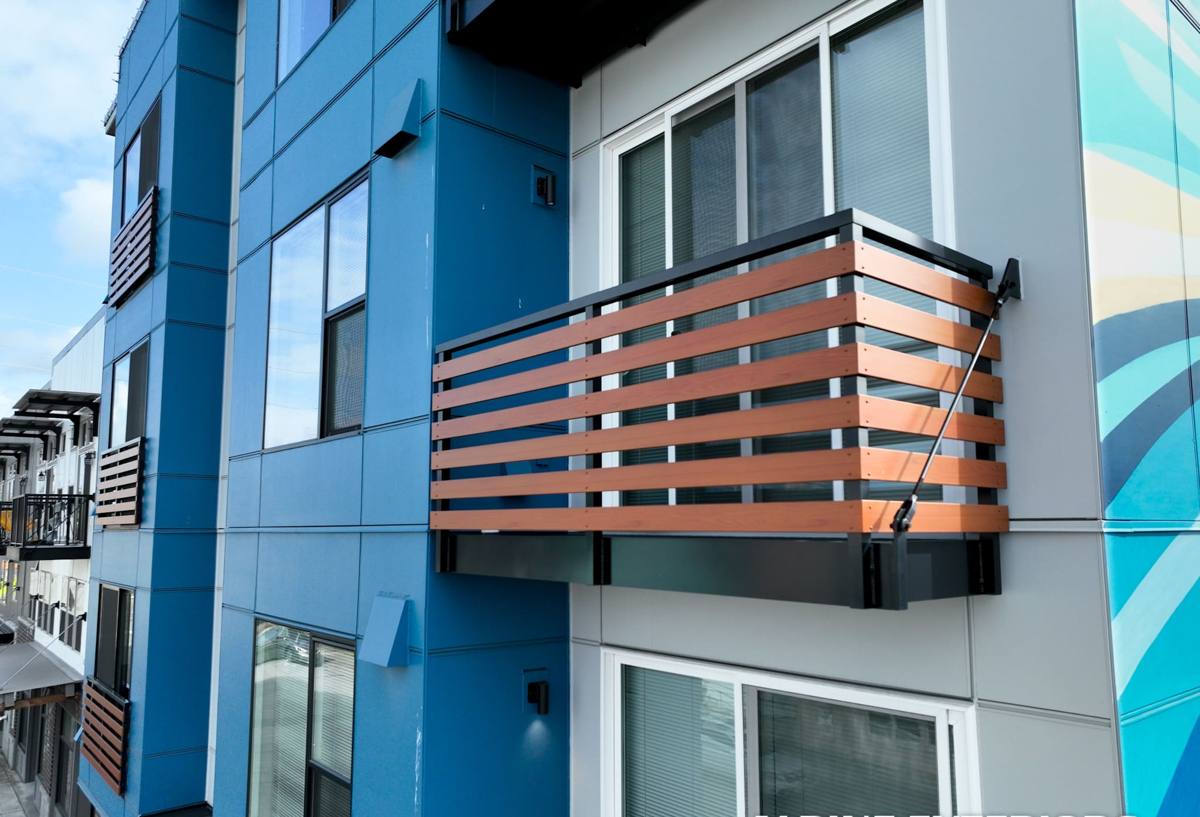
What Laurel's Open, Rural Setting Does to Siding
Salt Air That Reaches Well Inland
Whatcom County sits close enough to Bellingham Bay and the Strait of Georgia that a mild salt content in the air spreads well past the immediate shoreline, and prevailing weather patterns carry it out across the farmland and open country around Lynden and Laurel. It's a slower, quieter form of exposure than a beachfront property faces, but over years it still works on fasteners, trim, and any finish that isn't built to resist it — showing up as premature corrosion, chalking, or a paint job that dulls faster than expected.
Wind and Driving Rain Across Open Ground
This is the exposure factor that sets a property like Laurel apart from a wooded or tightly built neighborhood. With fewer trees, hedgerows, and neighboring structures to slow it down, wind moving across open farmland picks up speed before it reaches a house, and it drives rain into the siding at an angle rather than letting it fall straight and shed off cleanly. That matters most at horizontal seams, around window and door openings, and at any transition where two materials meet — the places where wind-driven rain finds its way behind a wall if the detailing underneath isn't built for it.
A Moss Season That Doesn't Take a Break
Between regular Pacific Northwest rainfall and the humidity that settles over open farmland overnight, surfaces around Laurel rarely get a long, uninterrupted dry stretch for much of the year. North-facing walls and anything shaded by a barn, outbuilding, or tree line hold that dampness longest, and that's exactly the environment moss and mildew need to get established. Siding that holds moisture at the surface instead of shedding it gives moss more time to take hold before the next dry spell arrives.
Why We Only Install James Hardie Fiber Cement Siding
We used to offer a wider range of siding products. We narrowed that down after watching which materials actually held up on exposed, weather-facing properties like the ones around Laurel — and which ones quietly ran into trouble within a handful of years, regardless of how well they were installed.
- Non-combustible core: Fiber cement doesn't feed a fire the way wood-based siding can, which matters for both safety and, often, insurance considerations on a rural property.
- Factory-applied ColorPlus finish: The color is baked on under controlled factory conditions rather than applied on site, which holds up better against salt-tinged air and repeated wet-dry cycling than field-applied paint or stain.
- Climate-engineered HZ product lines: Hardie's HZ5 formulation is built for regions with heavy moisture exposure and freeze-thaw cycling, which fits Whatcom County's marine-influenced weather well.
- Dimensional stability: Fiber cement doesn't swell, cup, or warp the way engineered wood products can after repeated wetting, which matters on a wall that takes direct wind-driven rain.
- Strong transferable warranty: Hardie backs correctly installed siding with one of the more substantial warranty structures in the industry, and that warranty follows the house if it's ever sold.
We don't install LP SmartSide, vinyl siding, Cemplank, Allura, primed spruce, or cedar. Each of those products has a place in the broader market, and there are contractors who install them competently. But on an exposed rural property taking direct wind and rain with fewer natural windbreaks, we've made a professional call to stand fully behind one system rather than offer a lower-cost option that shifts long-term maintenance and moisture risk back onto the homeowner.
| Material | Behavior Under Wind-Driven Rain | Maintenance on an Exposed Lot | Typical Longevity Here |
|---|---|---|---|
| James Hardie fiber cement | Dimensionally stable; resists swelling and warping at seams | Low; factory finish resists fading and moisture intrusion | 30+ years with correct installation |
| Vinyl siding | Panels can flex or gap under sustained wind load | Low upfront, but hidden moisture behind panels is easy to miss | Variable; shorter on directly wind-exposed walls |
| LP SmartSide / engineered wood | Wood-based core is moisture-sensitive at cut edges and joints | Moderate to high; edge sealing is critical in sustained wet conditions | Depends heavily on installation quality and upkeep |
| Cedar / primed wood | Absorbs and releases moisture readily, especially on exposed faces | High; needs regular refinishing on weather-facing walls | Shorter without consistent, disciplined maintenance |
What a Correct Installation Requires on an Exposed Property
Fiber cement only performs the way it's engineered to when it's installed to Hardie's published specifications, and on a property with the kind of open exposure common around Laurel, those details carry more weight than they would on a sheltered in-town lot. A good material installed loosely will still develop problems here — the difference just takes a few wet seasons to show up.
- House wrap or weather-resistive barrier installed and correctly lapped before any siding goes up
- A drainage gap or rainscreen behind the siding so moisture that gets past the surface can dry out instead of sitting against the wall
- Corrosion-resistant fasteners at the manufacturer's specified type and spacing, not just "enough to hold it up"
- Correct clearance from grade and rooflines so water doesn't wick up into the bottom edge of the siding
- Properly flashed and lapped transitions at every window, door, corner, and roof intersection
- Field-cut edges primed and boards cut face-down to preserve the factory ColorPlus finish
Choosing the Right Hardie Product Line for a Laurel Property
HardiePlank Lap Siding
Traditional horizontal lap siding is the most common choice for farmhouse and rural-style homes in the Laurel area, and for good reason — it sheds wind-driven rain efficiently when the laps and flashing are done correctly, and it holds up visually on the kind of larger, more open elevations you see on rural lots.
HardiePanel Vertical Siding and Board and Batten
Vertical profiles work well on gables, accent walls, and outbuildings, giving a property a mix of textures without mixing materials. Because vertical siding has more seams per square foot than lap siding, correct batten clearance and flashing matter even more on an exposed, wind-driven site.
Trim, Soffit, and Accessories
Hardie's trim boards and soffit products are engineered to the same moisture standards as the wall siding, which matters because trim failure — not the field of the wall — is where a lot of exterior problems actually start. Matching the trim system to the siding keeps the whole assembly performing as one system instead of a patchwork of materials aging at different rates.
Cost Factors for a Laurel Siding Project
| Factor | Why It Matters |
|---|---|
| Total wall area and home footprint | Larger rural homes and detached structures mean more material and labor |
| Existing siding condition | Rot or moisture damage found during tear-off needs repair before new siding goes up |
| Product line and profile | Lap, panel, and board and batten differ in material and labor cost per square foot |
| Window, door, and trim count | More openings mean more flashing and finish detail around each one |
| Site access | Long driveways, detached garages, or outbuildings can add setup and staging time |
We'll walk your specific property and give you real numbers rather than a rough per-square-foot estimate — two homes of similar size in Laurel can land at very different costs depending on wall complexity and how much of the existing siding needs to come off first.
Our Process for Laurel Homeowners
Walkthrough and Assessment
We start with an on-site walk of the exterior, paying close attention to which walls face prevailing wind and rain directly and which are more sheltered by outbuildings, tree lines, or the shape of the property itself. That exposure map shapes the plan more than the floor plan does.
A Written Plan Before Install Day
We put together a clear, written scope and timeline before any material gets cut, including how the siding will meet windows, trim, and rooflines, so the crew is executing a plan rather than improvising details in the field.
Installation to Manufacturer Spec
Every fastener, gap, and flashing lap follows James Hardie's published installation requirements for this climate zone. That's what keeps the manufacturer's warranty valid and what actually determines whether the wall performs for decades rather than years.
Final Walkthrough
We walk the finished job with you, explain what little maintenance fiber cement actually needs, and make sure you know what a healthy wall looks like if you ever want to check it yourself down the road.
Why Hire a Crew That Already Works Laurel and Lynden
An exposed rural property doesn't behave like a sheltered in-town lot, and a crew that's worked properties around Laurel and Lynden through multiple wet seasons already knows that. They've seen which orientations take the worst of the wind and rain, how much drainage detailing an open, unsheltered wall actually needs compared to what a generic install guide assumes, and where a rural property's outbuildings and long sightlines change how a job gets staged. That local judgment is the difference between a siding job that looks right on install day and one that's still performing the same twenty and thirty years later.
A short checklist worth going through before hiring anyone for siding work on a property like this:
- Ask what siding material they install and why, and whether it comes with a written, transferable warranty
- Confirm current Washington contractor licensing and active liability insurance
- Ask specifically how they handle wind-driven rain on exposed, open-ground walls versus sheltered ones
- Ask about their experience with rural and farm-adjacent properties, not just general remodeling
- Get a clear, written scope of work and timeline before signing anything
If you're weighing siding options for a home in Laurel or elsewhere around Lynden, we're happy to walk the property with you and give an honest read on what it actually needs. Reach out below for a free, no-pressure estimate.