 Lynden Window
 Kendall Roofs Take a Different Kind of Beating
Kendall sits close enough to the foothills and far enough from town that its roofs see a slightly different mix of weather than homes closer to downtown Lynden. Wind funneling down from the Nooksack valley, long stretches of steady rain rather than short downpours, and a growing season for moss that can run eight or nine months out of the year all add up. None of that is dramatic on its own, but together it wears on a roof faster than most homeowners expect, and it changes what "storm damage" actually looks like out here.
When we talk about storm damage roof repair for Kendall specifically, we mean repairs sized to this climate — not a generic checklist copied from a drier part of the state. Whatcom County roofs deal with sustained moisture exposure more than they deal with hail or extreme heat, and that changes both what fails first and how we fix it.
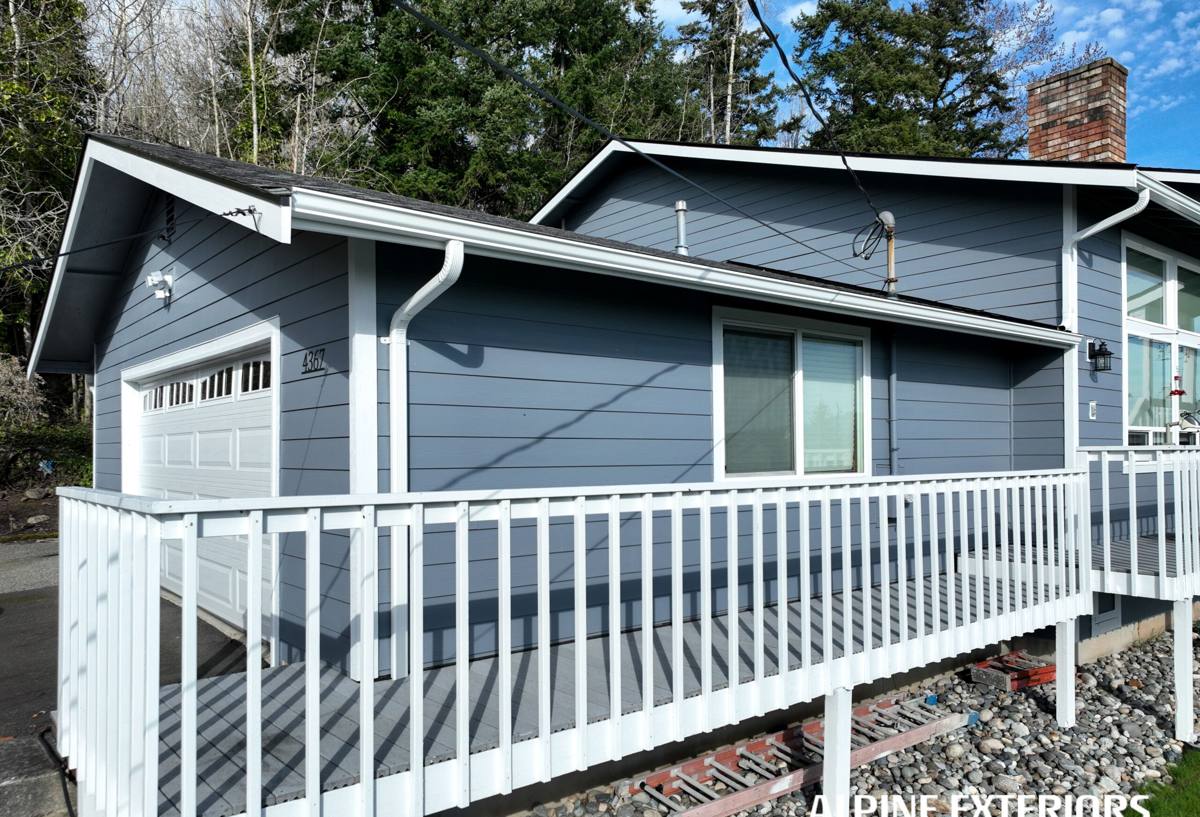
What Actually Counts as Storm Damage Here
Homeowners often picture storm damage as a tree limb through the roof or a whole section of shingles peeled back overnight. Those things happen, but around Kendall the more common damage is quieter and easier to miss:
- Wind-lifted shingle tabs that reseal crooked or not at all, leaving a gap for wind-driven rain
- Flashing around chimneys, skylights, and roof-to-wall transitions worked loose by repeated freeze-thaw and wind cycles
- Granule loss on shingle slopes exposed to sideways rain, which shows up as bald patches and faster aging
- Gutter and downspout damage from wind or debris that redirects water back under the roof edge
- Moss and organic buildup that traps moisture against shingles after a storm and speeds up rot underneath
That last one is worth pulling out on its own, because it's specific to this part of Washington. A storm doesn't have to break anything to cause damage — it can simply saturate an already moss-covered roof for long enough that water starts finding its way under the shingle line. By the time a stain shows up on a ceiling, the actual damage has usually been building for a while.
Why Waiting Costs More Than the Repair Itself
A small storm-related opening in a roof — a lifted shingle, a gapped flashing seam — doesn't leak every day. It leaks when wind direction and rain intensity line up just right, which in Whatcom County can be every few weeks during the wet months. Each cycle pushes a little more water into the roof deck, sheathing, and insulation below.
The practical result is that a repair that would have cost a few hundred dollars right after the storm can turn into a deck replacement and interior drywall repair a season later. We're not saying this to scare anyone into calling immediately — we're saying it because it's the single biggest factor in how much a storm repair ends up costing. Time and continued rain exposure do more damage than the original storm usually does.
How We Handle a Storm Repair Call in Kendall
1. Roof Inspection, Not Just a Patch
We walk the full roof, not just the spot the homeowner points to. Wind and rain damage rarely stays in one place — if one section of shingles lifted, it's worth checking whether nearby flashing or the ridge line took damage too. We check the attic or roof deck from underneath where access allows, since that's often where water damage shows up first.
2. A Straight Answer on Scope
We tell you plainly whether this is a targeted repair, a larger section replacement, or something that's approaching the point where a full roof replacement makes more financial sense. We don't pad a small repair into a bigger job, and we don't undersell a job that genuinely needs more work.
3. Matching Materials and Technique
Repairs get tied into the existing roof correctly — proper shingle lacing, flashing that's actually integrated with the roofing underlayment rather than caulked over the top, and fasteners placed to hold in Whatcom County wind, not just look finished from the ground.
4. Cleanup and a Look at What Caused It
Before we leave, we talk through what made that spot vulnerable in the first place — often moss buildup, an aging flashing seal, or a roof edge that's been catching more wind than the rest of the house. That's information you can use even if you're not doing anything further right now.
Common Repair Scenarios Around Kendall
| Situation | Typical Cause | Repair Approach |
|---|---|---|
| Ceiling stain after a windy rain event | Lifted or missing shingles, or failed flashing | Locate entry point, replace damaged shingles/flashing, check decking underneath |
| Granule buildup in gutters after a storm | Wind-driven rain stripping aged or moss-weakened shingles | Assess remaining shingle life; targeted section replacement if isolated |
| Moss-heavy roof with a new leak | Moss holding moisture against shingles, accelerating a storm-caused gap | Moss removal, damaged shingle replacement, treatment to slow regrowth |
| Flashing separation at chimney or skylight | Wind flexing the roof deck, aging sealant | Re-flash with proper step and counter-flashing, not surface sealant alone |
| Damaged ridge cap after high wind | Ridge caps take the most direct wind load on a roof | Replace ridge cap sections, check underlying ridge vent if present |
Repair or Replace? What Actually Drives That Decision
Not every storm-damaged roof needs full replacement, and not every roof is worth repairing indefinitely either. The honest way to think about it comes down to a few factors:
| Factor | Leans Toward Repair | Leans Toward Replacement |
|---|---|---|
| Roof age | Under 12-15 years, otherwise healthy | Approaching or past typical shingle lifespan |
| Extent of damage | Isolated to one slope or section | Spread across multiple slopes or the ridge |
| Moss/organic condition | Light, recently maintained | Heavy, long-term buildup affecting the whole deck |
| Decking condition | Solid, no soft spots found | Soft, delaminated, or water-stained sheathing |
| History of repairs | First or second repair on this roof | Repeated repairs in the same areas over a few years |
We'll give you our honest read on where your roof falls on that table rather than defaulting to whichever answer is more profitable for us. Plenty of Kendall roofs just need a solid, correctly done repair to be fine for years.
Insurance and Storm Claims
Many storm-related roof repairs are covered under homeowners insurance, particularly when there's a clear wind or storm event tied to the damage. We can document what we find — photos, notes on cause and extent — in a way that's useful if you decide to file a claim, but we're not your insurance adjuster and won't promise a claim outcome. What we will do is give you a straightforward, itemized look at what needs fixing and why, so you have accurate information to bring to your insurer either way.
Why a Crew That Already Works Kendall Makes a Difference
Roofing crews that mostly work drier, calmer parts of the state sometimes underestimate how much wind-driven rain and prolonged moisture matter here. A repair technique that holds up fine in a low-moss, low-wind area can fail within a season on a Kendall roof facing sustained Whatcom County rain and salt-tinged air rolling in off the coast.
Working this area regularly means we're not guessing at how a repair will hold up — we're applying what we've seen actually work and actually fail on roofs with the same exposure. That includes knowing which flashing details tend to loosen first in this wind pattern, and which parts of a roof accumulate moss fastest given the tree cover and moisture common around Kendall properties.
Keeping a Repaired Roof From Becoming a Repeat Call
A good storm repair should hold, not just patch things over until the next windy rain. A few things make the biggest difference in whether it does:
- Clearing moss and organic debris at least once a year, more often under heavy tree cover
- Keeping gutters clear so storm runoff doesn't back up under the roof edge
- Checking flashing around chimneys and skylights every year or two, since these fail before the field of the roof usually does
- Trimming back branches that can drop debris or hold moisture against the roof surface
- Addressing small leaks or lifted shingles as soon as they're noticed rather than waiting for the next storm to make it worse
None of this requires a major investment on a regular basis — it's mostly about not letting small issues sit through another wet season.
If a recent storm has left you with a leak, missing shingles, or just a nagging feeling that something on the roof isn't right, we're glad to take a look. We offer free, no-pressure estimates for Kendall homeowners — you'll get a clear read on what's actually going on and what it would take to fix it, with no obligation to move forward. The form below is the easiest way to get started.