 Lynden Window
 Deck Building for Kendall Homes: Built for the Weather We Actually Get
Kendall sits in the part of Whatcom County where outdoor living space matters — mountain views, big yards, and long summer evenings make a deck one of the most-used parts of a home. But the same weather that makes summer decks worth having is the weather that destroys a poorly built one. Driving rain off the foothills, damp shoulder seasons that stretch for months, and a moss season that can start creeping across shaded boards before you've even had your first barbecue of the year all take a toll on lumber, fasteners, and footings. A deck built to a generic spec sheet from a warmer, drier climate will not hold up here the way one built for this specific corner of Washington will.
This page covers what we actually do when we build or rebuild a deck for a Kendall property: the structural decisions that matter most, the material trade-offs worth understanding before you choose, and what our process looks like from first visit to final walkthrough.
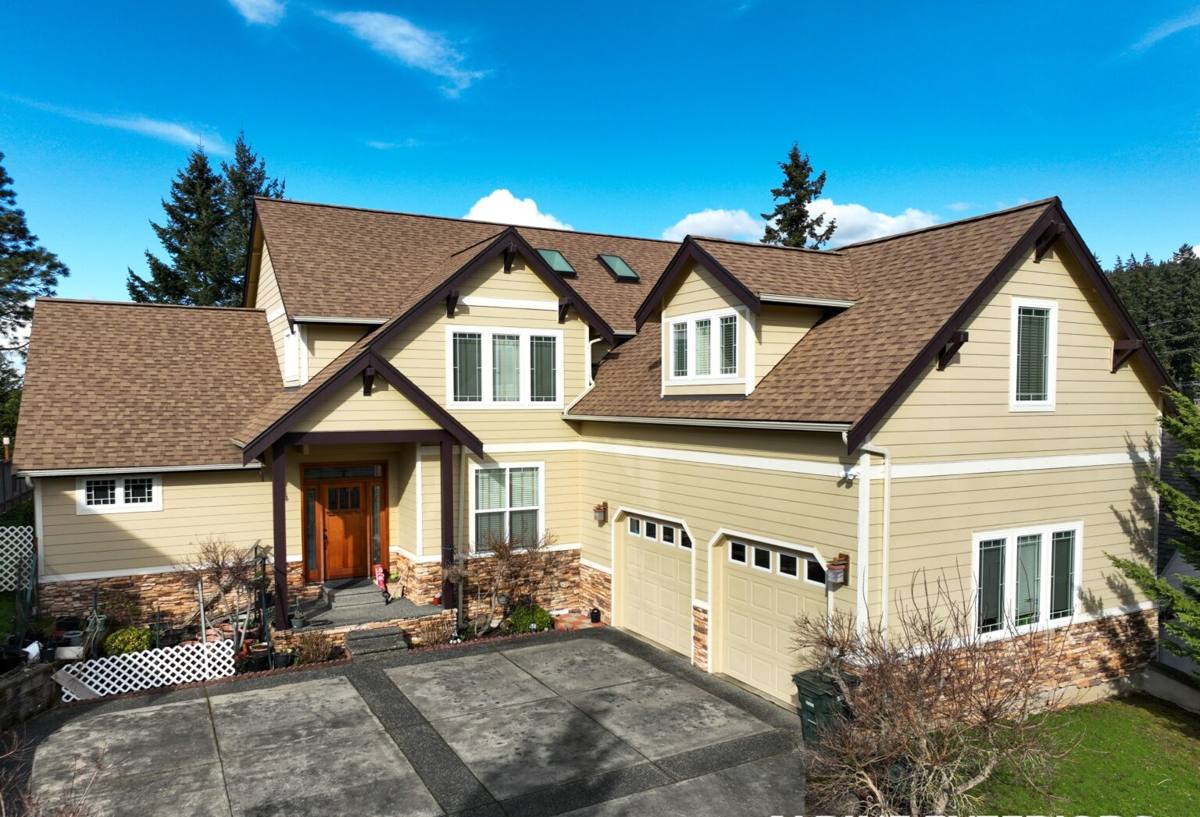
What Kendall's Climate Demands From a Deck
Moisture Is the Enemy, Not the Weather
It isn't any single storm that ruins a deck around here — it's the cumulative effect of moisture that never fully dries out between rain events. Whatcom County's maritime-influenced weather keeps humidity elevated for long stretches, and Kendall's tree cover and terrain mean many decks sit partially or fully shaded for parts of the day. Shade plus moisture is exactly the recipe moss and algae need, and it's also the recipe that rots untreated wood from the inside of a joint outward, long before the surface shows obvious damage.
Moss Season Is Longer Than People Expect
Most homeowners think of moss as a fall-and-winter nuisance. In practice, on a deck with poor airflow underneath or boards installed too tight, moss can persist well into spring and reappear early in the following wet season. Moss holds moisture directly against the wood surface, and on composite or wood decking with grooved or ridged surfaces, it can work its way into texture that's difficult to fully clean without damaging the material.
Wind-Driven Rain Finds Every Gap
Rain that comes in at an angle, which is common with the storm patterns that move through this part of the county, gets pushed into ledger connections, under railing posts, and behind fascia boards in a way that straight-down rain never would. If flashing and fastener placement aren't done correctly at the ledger board — where the deck attaches to the house — that's where the most expensive rot and structural damage shows up years later, often hidden behind the rim joist where nobody looks until there's a problem.
What a Correctly Built Deck Involves
Footings and Framing
Whatcom County soil holds moisture well into the building season, and frost depth requirements still apply even though winters here are milder than inland Washington. Footings need to be sized and set to the depth the local code requires, not just deep enough to "seem solid." Framing lumber should be pressure-treated and rated for ground contact where it's within a few inches of soil or in a permanently damp crawlspace area, and joist spacing should account for the actual decking material chosen, not a generic 16-inch layout applied regardless of what's going on top.
The Ledger Connection
This is the single most important structural connection on most decks and the most common point of failure on decks that weren't built correctly the first time. Proper flashing — installed in the right order relative to the house's existing weather-resistive barrier and siding — keeps water from tracking behind the ledger board and into the house's rim joist. We don't consider a ledger connection finished until the flashing detail is right, regardless of how the rest of the deck looks.
Decking Material Choice
Material choice affects how much moss, mildew, and moisture damage a homeowner deals with for the next fifteen to twenty-five years. There's no universally "correct" material — it depends on budget, how much upkeep the homeowner wants to do, and how much shade the deck gets.
Comparing Decking Materials for a Kendall Property
| Material | Moisture & Moss Behavior | Maintenance | Typical Lifespan Here |
|---|---|---|---|
| Pressure-treated wood | Absorbs moisture readily; needs sealing to resist moss and staining in shaded areas | Annual cleaning, re-sealing every 1-3 years | 10-15 years before major boards need replacing |
| Cedar | Naturally moisture-resistant but still needs upkeep in constant shade or moss-prone spots | Periodic cleaning and oiling to hold color and resist mildew | 15-20 years with consistent care |
| Composite decking | Doesn't rot, but surface moss and algae can build up on shaded or low-airflow sections | Occasional washing; no sealing or staining required | 25+ years, backed by manufacturer warranty |
| PVC decking | Fully moisture-resistant surface; least hospitable material for moss growth | Lowest maintenance of the common options | 25-30+ years |
Whatever material a homeowner chooses, the framing underneath should always be built to handle decades of moisture exposure — the decking surface is only as good as the structure holding it up.
How Our Deck Building Process Works
1. Site Visit and Design
We walk the property, look at sun and shade patterns across the day, check drainage and grade around where the deck will sit, and talk through how the space will actually be used. A deck that catches afternoon sun but sits in a low, poorly draining corner of a Kendall lot needs different detailing than one on a well-drained, open area.
2. Permitting
Deck construction in Whatcom County typically requires a permit once you're past a certain size or height, and inspections happen at key points — footings, framing, and final. We handle the permit process and schedule inspections as part of the build, so the homeowner isn't left tracking down paperwork or wondering if the work will pass.
3. Framing and Ledger Work
This is where the structural decisions from the design phase get executed — footings, posts, beams, joists, and the ledger connection with proper flashing. We don't move to decking material until framing has been checked and is square, level, and properly fastened.
4. Decking, Railing, and Finish Work
Boards get installed with the gap spacing and fastening pattern appropriate to the material — composite and PVC have different expansion behavior than wood, and getting that wrong leads to buckling or gaps that widen over the following winters. Railings, stairs, and any built-in features go in last, along with a final check of every connection point.
5. Final Walkthrough
We go over the finished deck with the homeowner, point out anything they should know about care and maintenance specific to the material they chose, and make sure everything meets both code and our own standard before calling the job done.
Common Deck Problems We Catch or Prevent
- Rotted ledger boards hidden behind siding from years of missing or incorrect flashing
- Undersized or shallow footings that shift or heave over time in wet, seasonally saturated soil
- Moss buildup between boards spaced too tightly for adequate airflow and drying
- Corroded fasteners from using standard hardware instead of fasteners rated for treated lumber and outdoor exposure
- Loose railing posts from connections that weren't through-bolted into solid framing
- Standing water on the deck surface from insufficient slope built into the original framing
- Trapped moisture under composite decking from inadequate clearance and airflow beneath the joists
Railings, Fasteners, and Hardware
Hardware is an easy place to cut corners because it's mostly invisible once the deck is finished, but it's also one of the most common reasons decks fail early in a climate like this one. We use structural screws and connectors rated for exterior and treated-lumber use, and stainless or coated fasteners appropriate to the decking and railing material, so galvanic corrosion and streaking aren't a problem five years down the road. Railing posts get bolted through the rim joist or blocking rather than just screwed to the decking surface, since that connection takes real lateral load every time someone leans on it.
What Maintenance Looks Like After We're Done
No deck in this climate is truly maintenance-free, even the low-upkeep composite and PVC options. What changes by material is how much and how often:
- Sweep debris and standing leaves off the surface regularly, especially in fall when moss growth accelerates
- Rinse or lightly scrub shaded areas where moss tends to establish first
- Check railing posts and stair connections once a year for any looseness
- Re-seal or re-stain wood decking on the schedule appropriate to the product used
- Keep gutters and downspouts near the deck clear so runoff isn't draining directly onto or under it
We tell every homeowner what their specific deck needs before we leave the job site, rather than handing over a generic care sheet that doesn't match what was actually installed.
Why Hire a Crew That Already Works in Kendall
Building a deck that holds up here isn't about a different set of tools — it's about knowing which details actually matter for this climate and building them right every time instead of treating them as optional. A crew that regularly works in and around Kendall and greater Whatcom County has already seen how ledger flashing, footing depth, and material choice play out over years of local weather, not just at the final walkthrough. That experience shows up in the decisions made before the first board goes down, not just in how the finished deck looks on day one.
If you're planning a new deck or need to replace one that's showing its age, we're happy to take a look and give you a straightforward assessment of what your property needs. Fill out the form below for a free, no-pressure estimate — we'll walk the site, answer your questions, and give you honest numbers before any work begins.