 Lynden Window
 Windows Built for the Aldergrove, BC Climate
Aldergrove sits just across the line from Lynden, in the same stretch of marine-influenced weather that runs through the Fraser Valley and Whatcom County. Homes here deal with a long wet season, wind-driven rain off the Salish Sea air mass, and a moss season that seems to start earlier and last longer every year. Windows in this region don't fail because of one big storm — they fail slowly, from years of moisture working into places it shouldn't be, and from seals that were never built to handle this much sustained dampness.
When we talk about "energy-efficient windows" for a house in Aldergrove, BC, we're not just talking about a lower heating bill, though that matters too. We're talking about a window system — glass, frame, and installation — that's specifically suited to a climate where things stay damp for months at a time and where the difference between a good install and an average one shows up as a stuck sash, a fogged pane, or a soft spot in the sill within a few years.
Salt Air and Driving Rain
Even set back from the coastline, homes in this corridor get enough marine air and wind-driven rain to accelerate corrosion on lower-grade hardware and to push water sideways into gaps that would stay dry in a calmer climate. Rain here rarely just falls straight down — it gets pushed by wind, which means flashing details and drainage paths matter more than they would somewhere drier.
Moss Season and Sustained Moisture
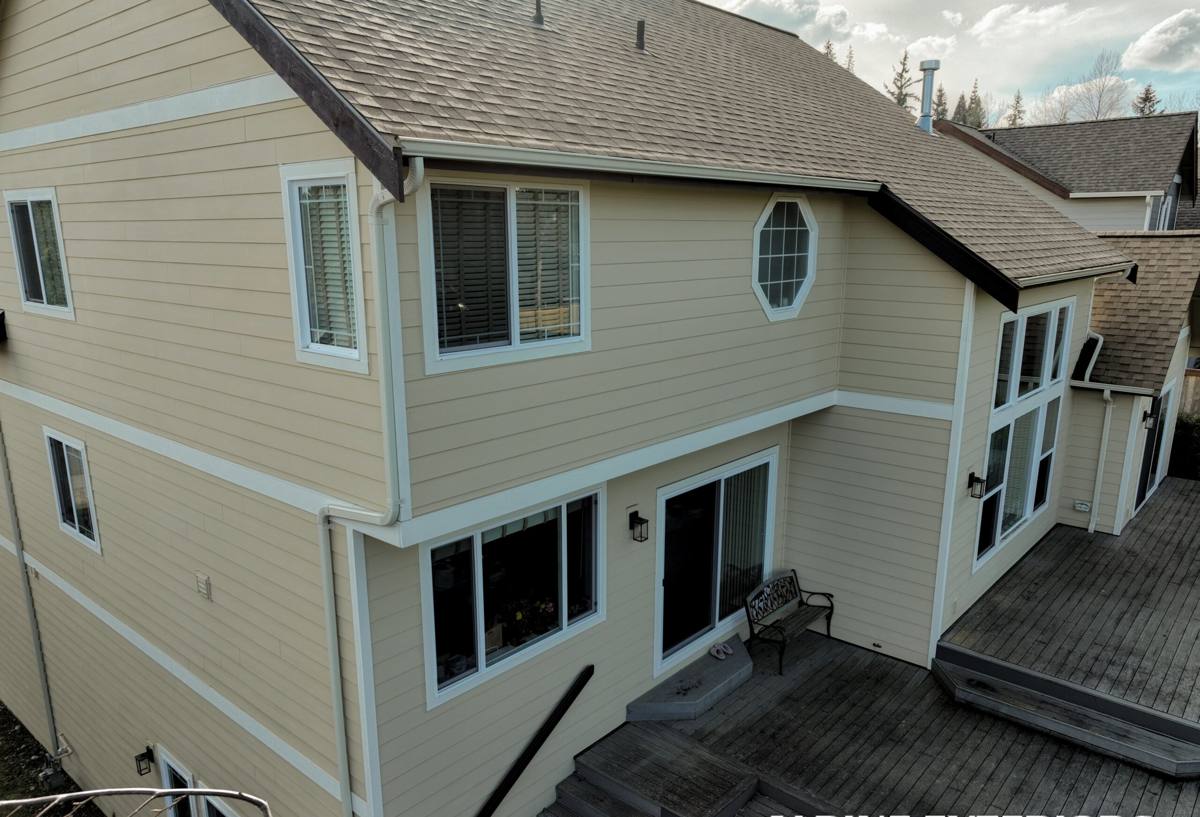
Moss doesn't just grow on roofs. Given a shaded elevation, a north-facing wall, or a window that sits under an overhang without enough clearance, moss and algae will happily take hold on frame trim and sills too. That sustained moisture is hard on wood components, hard on paint and caulk, and it's a slow warning sign that water is sitting somewhere it shouldn't be.
What "Energy-Efficient" Actually Means Here
Energy efficiency in a window comes down to a handful of concrete things, not a marketing label. For this climate, the priorities are keeping conditioned air in, keeping bulk water and vapor out, and doing both without creating a maintenance headache down the road.
Glass and Gas Fill
Dual-pane, low-E coated glass with an argon gas fill is the practical baseline for this region — it cuts heat loss through the glass itself and reduces the cold-glass effect that leads to condensation on the inside of the window during our damp winters. Triple-pane glass adds another layer of insulation and can help in colder exposures or noisier locations, but it also adds weight and cost, so it's worth weighing against your specific house rather than assuming it's automatically the better choice.
Frame Material
The frame matters as much as the glass in a wet climate. A frame that swells, rots, or holds moisture against the glass unit will undercut even the best-rated glazing over time. That's why we lean toward vinyl and fiberglass frames for most installs in this area — both handle sustained moisture without the upkeep that painted wood or bare aluminum demand.
Comparing Frame Options for a Wet, Mossy Climate
There's no single "best" frame material for every house — it depends on budget, the home's style, and how much upkeep you want to take on. Here's how the common options actually perform under the conditions Aldergrove and Lynden homes see most.
| Frame Material | Moisture Resistance | Maintenance | Typical Lifespan |
|---|---|---|---|
| Vinyl | Very good — won't rot or corrode | Low — occasional cleaning | 20–30+ years |
| Fiberglass | Excellent — very stable in moisture and temperature swings | Low | 30+ years |
| Wood (unclad) | Poor without diligent upkeep — vulnerable to rot and moss | High — regular painting/sealing | Varies widely with maintenance |
| Wood-clad | Good if cladding and flashing are done correctly | Moderate | 20–30 years |
| Aluminum | Fair — prone to condensation without a thermal break | Moderate | 20–30 years |
For most homes in Aldergrove, BC, vinyl or fiberglass gives the best balance of upfront cost and long-term performance against this climate. Wood-clad units can still be the right call on a home where the look matters and the owner is comfortable with more upkeep — we'll walk through the trade-offs honestly rather than push one material for every job.
What a Correct Installation Actually Involves
A window is only as good as its installation. We've seen plenty of decent windows fail early because of a rushed or incomplete install — and in this climate, the mistakes show up faster because there's so much moisture available to exploit any gap.
Flashing and Drainage
Every opening needs a sill pan or flashing detail that gives water a way out if it ever gets behind the window — because in a driving-rain climate, eventually it will. Head flashing and properly lapped house wrap matter just as much as the window unit itself. Skipping or shortcutting this step is the single most common cause of hidden rot behind window trim.
Air Sealing and Insulation
The gap between the window frame and the rough opening needs to be sealed and insulated correctly — not just caulked on the outside and called done. Done right, this stops drafts, reduces condensation risk on cold days, and keeps the insulation value of the glass from being undercut by air leaking around it.
Fit and Hardware
A window that's shimmed and squared correctly will operate smoothly for decades. One that's slightly racked will bind, wear out its hardware early, and eventually let air and water past the weatherstripping no matter how good that weatherstripping was to begin with.
Signs Your Current Windows Are Working Against You
Most homeowners don't think about their windows until something's obviously wrong, but there are earlier signs worth watching for, especially in a climate that's this consistently damp.
- Condensation or fogging between the panes (a sign the seal has failed)
- Visible moss, algae, or dark staining on the sill or trim
- Drafts you can feel near the frame on a windy day
- Windows that stick, won't stay open, or are hard to latch
- Soft or spongy wood trim around the window opening
- A noticeable jump in heating costs without another clear cause
- Paint peeling or bubbling on the interior sill
Any one of these on its own isn't necessarily an emergency, but a few of them together usually mean it's worth having someone take a real look before the underlying framing is affected.
How Our Process Works
We keep the process straightforward because most homeowners just want to know what's happening and when.
- On-site assessment — we look at your existing windows, note problem areas, and measure openings.
- Product selection — we walk through frame and glass options suited to your home's exposure, budget, and style.
- Written estimate — clear scope, materials, and price before any work is scheduled.
- Installation — proper removal of old units, flashing and sill work done correctly, new windows set, shimmed, and sealed.
- Cleanup and walkthrough — debris removed, operation checked with you before we call it done.
We don't oversell triple-pane glass or premium hardware to every homeowner — some houses genuinely benefit, others are better served putting that money toward proper flashing and a solid mid-tier window. We'll tell you which situation you're in.
Why a Crew That Already Works Aldergrove, BC Matters
Lynden sits right at the border crossing into Aldergrove, which means a crew based here isn't driving in from across the region — we already know this stretch of climate, the housing stock common to both sides of the line, and the kind of moisture problems that show up on rural and semi-rural properties in this corridor. That familiarity shows up in small ways: knowing which elevations tend to hold moss, which older homes were built with flashing details that don't hold up anymore, and what a realistic timeline looks like for this area rather than a generic estimate.
It also means shorter response times if a problem shows up after the install, and a crew that's genuinely local rather than passing through on a regional contract.
Keeping Your Windows Performing After Installation
Even a correctly installed, high-quality window benefits from a little seasonal attention in this climate. Rinsing moss or algae off sills and trim before it gets a foothold, keeping gutters clear so water isn't sheeting down over the window head, and checking weatherstripping every year or two will keep a good install performing the way it's supposed to for its full lifespan. None of this is heavy maintenance — it's the same kind of upkeep this climate demands of a roof or siding, just applied to the windows too.
If you're in Aldergrove, BC or the surrounding Lynden area and your windows are showing any of the signs above — or you're just planning ahead for a renovation — we're happy to come take a look. The estimate is free, there's no pressure, and you'll get a straight answer about what your home actually needs.