 Lynden Window
 Siding for a Blaine Home Has a Harder Job Than Most
Lynden Window Co is based a short drive away in Lynden, and Blaine is a town we're in often enough to know it isn't the same job as siding twenty minutes inland. Sitting right up against Semiahmoo Bay, Drayton Harbor, and the Canadian border, Blaine homes take on salt air, wind-driven rain, and a moss season that barely lets up, all more directly than most of the rest of Whatcom County. On the siding side, we install James Hardie fiber cement and nothing else. This page isn't the general case for why we made that call — that's covered elsewhere — it's specifically about the James Hardie product itself: which product line actually fits a Blaine home, what the ColorPlus finish and HZ5 engineering are doing for you, and what our process looks like when we put it on a house in this town.
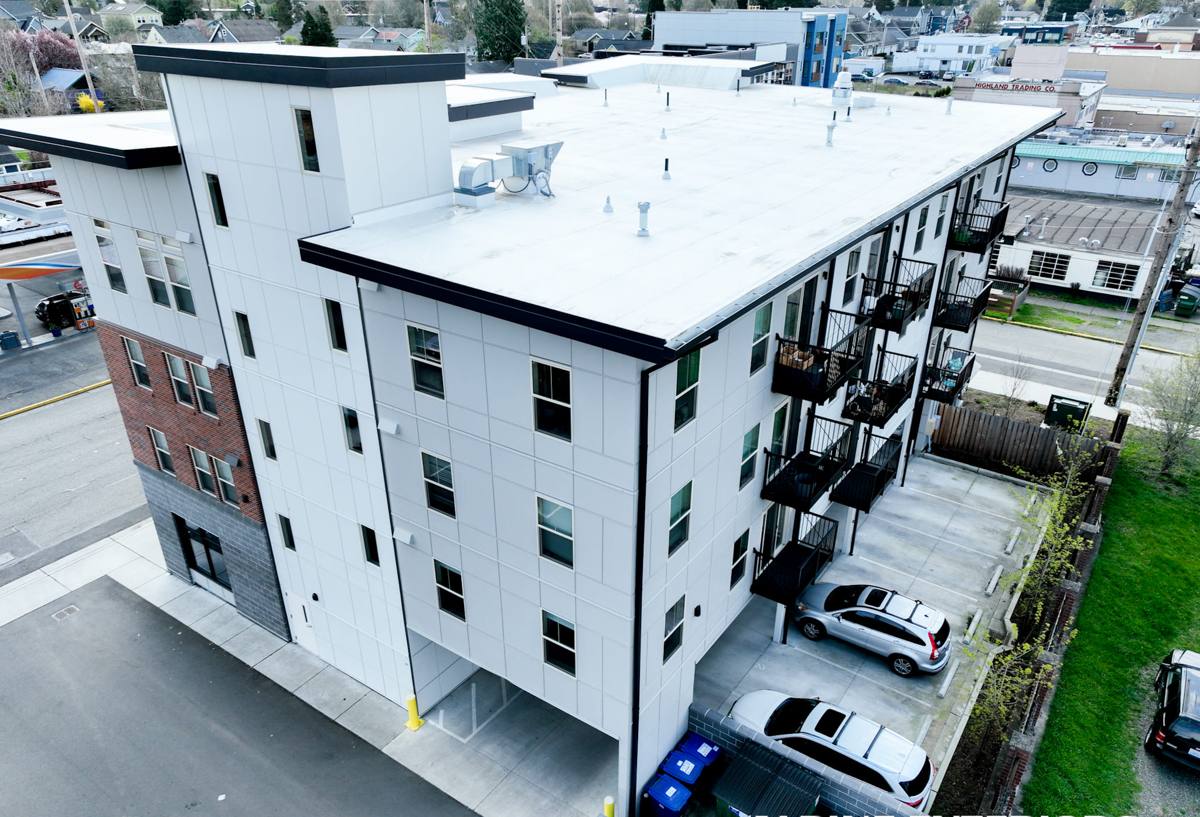
What Blaine's Coastal Exposure Means for a Siding Choice
The short version: salt-laden air off the water speeds up corrosion on fasteners and trim and wears down lesser finishes faster than a drier climate would, driving rain arrives sideways instead of straight down and finds any gap in a lap joint or a piece of trim, and mild, damp weather keeps moss and mildew active on shaded walls for most of the calendar year. None of those three, on their own, is unusual for the Pacific Northwest. Stacked together, at the intensity a town this close to open water and the border sees them, they're a tougher long-term test than most siding products are engineered to handle without real maintenance behind them.
| Climate Factor | What It Does to Siding Over Time |
|---|---|
| Salt-laden air off the bay and harbor | Corrodes fasteners and trim hardware, breaks down weaker factory or field-applied finishes faster |
| Wind-driven rain | Pushes moisture sideways into lap joints, trim seams, and window flashing rather than running straight off |
| A long moss and mildew season | Keeps shaded, north-facing, and tree-covered walls damp for extended stretches, which favors organic growth on porous surfaces |
That table is the reasoning behind everything below it. Every product decision, from which Hardie line we recommend to how we detail flashing on a Blaine job, traces back to those three conditions.
The James Hardie Product Lineup, and What Actually Fits a Blaine Home
"James Hardie siding" isn't one product — it's a family of fiber cement siding, trim, and soffit products, and picking the right one for a given house is part of doing this job correctly. Here's how the main lines break down for a Blaine property.
HardiePlank Lap Siding
This is the traditional horizontal lap look, and it's the most common choice for Blaine homes because it reads as classic Pacific Northwest siding while giving you fiber cement's moisture and fire performance underneath. It comes in a range of plank widths and surface textures, from smooth to a more pronounced woodgrain finish, so it can match a range of architectural styles without looking out of place next to older wood-sided homes nearby.
HardiePanel Vertical Siding and Board-and-Batten
Vertical panel siding, often finished with battens over the seams, shows up more on modern builds, accent walls, gables, and mixed-material exteriors. Structurally it sheds water differently than lap siding — fewer horizontal seams for wind-driven rain to work against — which is one reason it holds up well on exposed gable ends that catch weather directly off the water.
HardieShingle Siding
For homes going for a shingle-style or cottage look, HardieShingle gives you that staggered or straight-edge shingle appearance without the maintenance burden of actual cedar shingles, which are especially vulnerable to the moss and moisture pressure a shaded Blaine lot puts on them.
HardieTrim
Trim boards around windows, doors, corners, and fascia are part of the same system, engineered and finished to match the field siding rather than mixing fiber cement panels with a different, less durable trim material at every transition point — which is exactly where a lot of coastal moisture problems start.
We walk through these options with every Blaine homeowner during the estimate, because the right choice depends on the home's existing architecture, how exposed each wall is to wind off the water, and personal style preference — there isn't one correct answer for every house in town.
ColorPlus Finish: Why the Color Matters as Much as the Board
A siding board is only half the product. The other half is the finish, and this is where a lot of the real difference between fiber cement brands and installation quality shows up over time. James Hardie's ColorPlus technology applies the finish in a controlled factory process, in multiple baked-on coats, before the boards ever reach a job site — a different process than field-applied paint, which goes on outdoors, is more exposed to application variables, and typically doesn't cure under the same controlled conditions.
In a town with this much salt air and near-constant humidity, that difference isn't cosmetic. A factory finish resists fading, chalking, and moisture intrusion at the surface better than most field-applied coatings manage over the same span of years, and it comes with its own finish warranty, separate from the substrate warranty on the board itself. Touch-up paint matched to the specific ColorPlus color is also available for the rare ding or repair, so small damage doesn't mean repainting an entire wall to keep the color consistent.
Primed Siding Is a Different Product
James Hardie also sells a primed product line meant to be field-painted after installation, and it's worth understanding that this is a genuinely different product from ColorPlus, not just a cheaper version of the same thing. Primed siding shifts the finish quality and the ongoing repainting schedule onto the homeowner and whatever paint contractor does that work later. For a coastal town like Blaine, where salt air and moisture put real stress on any exterior finish, we typically steer homeowners toward ColorPlus specifically because of what it does for long-term maintenance.
HZ5: The Engineering Detail That Isn't Marketing Language
James Hardie engineers its siding differently for different climate zones, and the two you'll hear about most are HZ5 and HZ10. HZ5 is formulated for regions with sustained moisture exposure and freeze-thaw cycling — which describes a Whatcom County winter reasonably well — while HZ10 is built for hot, humid, high-UV climates further south that don't see the same freeze-thaw pattern. Installing the wrong climate zone's product isn't a cosmetic mismatch; it means the board's engineering was optimized for a different set of stresses than the ones it's actually facing on a Blaine wall. We specify HZ5 on every siding job we do in this area, and it's worth asking any contractor which zone they're actually installing, rather than assuming "James Hardie" alone tells the whole story.
How We Handle a James Hardie Job in Blaine
- Walk the property. We look at how each wall is exposed to wind and salt air off the water, where shade and tree cover keep surfaces damp longest, and what the existing siding and trim are telling us about past moisture issues.
- Recommend a product line and finish. Based on the home's architecture and exposure, we talk through which Hardie line, texture, and ColorPlus color fits, rather than defaulting to whatever's fastest to install.
- Tear off and check the sheathing. Old siding comes off and we inspect what's underneath before anything new goes up, since covering damaged sheathing just hides a problem instead of solving it.
- Install to Hardie's published spec. Fastener type and spacing, clearances above grade and rooflines, flashing at every penetration, and sealed field cuts — all of it followed as the baseline, since it's also what keeps the manufacturer's warranty valid.
- Final walkthrough. We go over the finished job with the homeowner and cover what basic maintenance looks like on a coastal property.
If you want the deeper technical detail on installation specifically — fastening, flashing sequence, and the mistakes that fail fastest this close to the water — that's a longer conversation than fits on this page, and we're glad to walk through it during an estimate.
What a Blaine James Hardie Project Costs
Every job gets priced from an actual walk of the property, not a flat per-square-foot number, but these are the factors that consistently move the estimate:
| Factor | Why It Affects Cost |
|---|---|
| Product line and texture (HardiePlank, HardiePanel, HardieShingle) | Panel size, install complexity, and material cost vary by line |
| ColorPlus color and finish selection | Some colors and textures carry different material pricing tiers |
| Home size and number of stories | More area and height mean more material, labor, and access equipment |
| Trim complexity around windows, dormers, and rooflines | More transitions mean more cutting, flashing, and trim work |
| Sheathing condition found at tear-off | Rot or water damage adds repair scope before new siding can go up |
| Exposure to open water and wind | Water-facing walls often warrant closer flashing and drainage attention |
A Checklist Before You Sign Off on Any Siding Quote
- Confirm which specific James Hardie product line is being quoted, not just "Hardie siding" as a general term
- Confirm the HZ5 climate zone is what's actually being installed, not a warmer-climate formulation
- Ask whether the finish is factory-applied ColorPlus or primed-for-field-paint, and understand the maintenance difference
- Get the fastener type and spacing spec in writing, especially for a home exposed to open water
- Ask what the warranty covers on both the substrate and the finish, and whether it's transferable to a future buyer
- Ask to see documented clearances planned above grade, decks, and rooflines before installation starts
Why a Crew That Already Works Blaine Matters for This Specific Product
James Hardie's warranty and real-world performance both depend on installation following the manufacturer's spec, not a generic approach carried over from a different siding material. A crew that installs this system regularly in a town facing this much salt air and wind-driven rain builds a different kind of judgment than one installing it occasionally between jobs in milder, more sheltered parts of the county — where the extra flashing attention actually earns its keep, which walls dry out slowest given local wind patterns, and which product line and finish combination holds up best on a specific lot. That's the kind of judgment that comes from doing this work repeatedly in this exact place, not from a spec sheet applied the same way everywhere.
Get a Free, No-Pressure Estimate
If you're weighing James Hardie siding for a Blaine home, we're glad to walk the property, talk through which product line and finish actually fits your house, and give you a straightforward, honest number. Reach out using the form below to schedule a free estimate — no pressure, no upsell script.