 Lynden Window
 Siding Built for the Acme Stretch of Whatcom County
Acme sits in the part of Whatcom County where the valley starts climbing into the foothills — more tree cover, more shade, more standing moisture on the north and west sides of a house than you'll find in town. Add in the driving rain that comes off the Pacific through this whole corner of Washington, plus a moss season that can run most of the year under a tree canopy, and you've got a climate that is genuinely hard on exterior siding. Homes here don't fail from one bad storm. They fail slowly, from siding that never fully dries out between rain events, or from moss and lichen holding moisture against a wall for months at a time.
Salt-influenced air moving in off Puget Sound and the Strait adds another layer to that same problem across Whatcom County — it doesn't take a waterfront lot to feel the effect, just consistent damp, salt-tinged air working on painted wood trim and fasteners year after year. Siding that isn't engineered for this combination of rain, shade, and moisture shows it early: peeling paint, soft trim, streaking, and moss creeping up from the bottom courses.
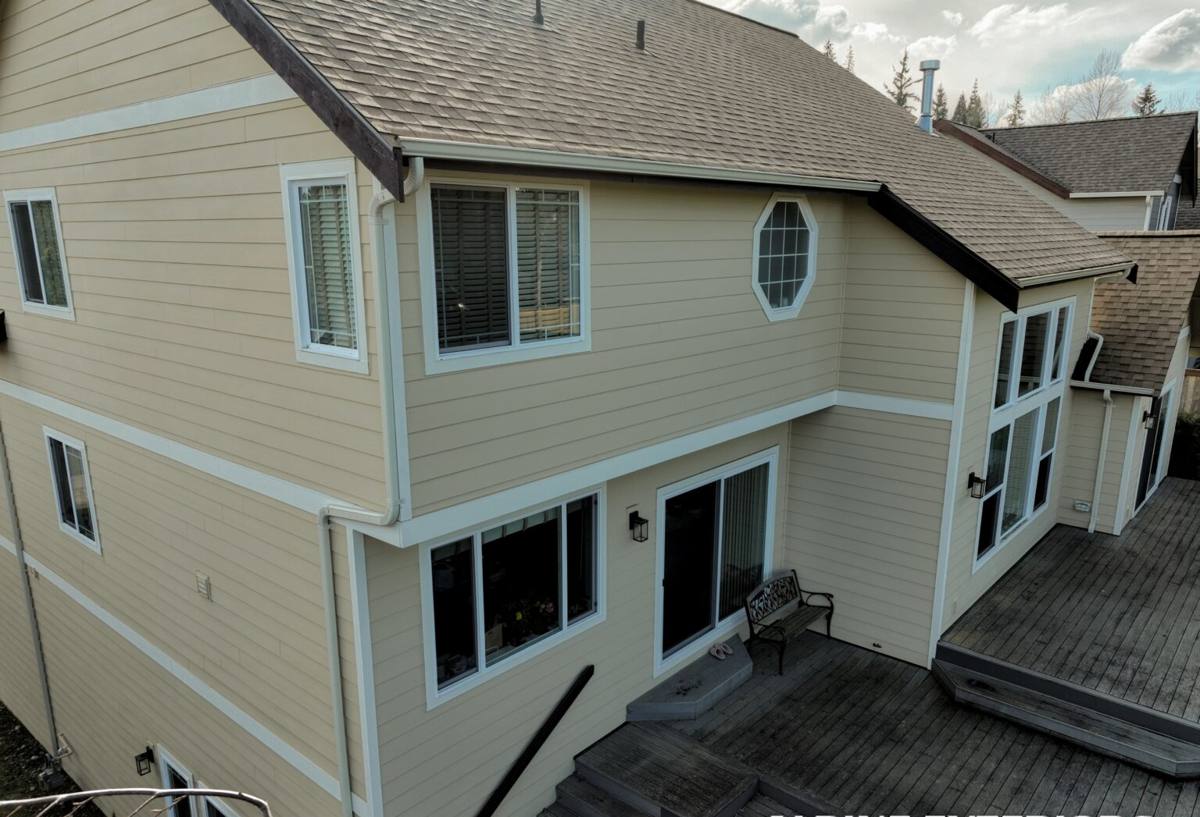
What Acme Homes Actually Need From Their Siding
Before talking about product or installation, it's worth being specific about what this climate demands, because it's different from what a siding job in a dry, sunny part of the state needs to solve for.
- Resistance to moisture absorption — not just shedding rain, but not swelling or softening when it sits damp for days
- A factory finish that holds color and doesn't need repainting every few years, since repainting means scheduling around this area's short dry-weather windows
- Material that doesn't feed mold, algae, or moss growth the way bare wood fiber can
- Correct clearance and drainage details at grade, around windows, and at trim — because in a shaded, high-rainfall setting, a small flashing mistake becomes a multi-year moisture problem instead of a minor one
- Fire resistance, which matters more each year in Whatcom County as dry-season wildfire risk creeps further west and north than it used to
Why We Standardized on James Hardie
We install James Hardie fiber cement siding exclusively. We don't install vinyl, LP SmartSide, Cemplank, Allura, or primed wood siding, and that's a deliberate call, not a default. Every one of those products can be installed correctly and can perform for a while. But after years of doing exterior work in this specific climate, we standardized on one system because it holds up to the conditions Acme and the surrounding Lynden area actually deliver, year after year, without asking the homeowner to maintain it constantly.
Fiber cement is dimensionally stable — it doesn't expand, contract, or absorb moisture the way wood-based products can, which matters directly here because this area doesn't give siding long dry stretches to fully release moisture between storms. Hardie's ColorPlus factory finish is baked on under controlled conditions, not brushed or rolled on a jobsite, and it's warrantied against fading and peeling for far longer than a field-applied paint job will realistically hold up under this area's shade and rain pattern. And because it's non-combustible, it doesn't add fuel load to a home — worth factoring in as regional wildfire risk becomes a bigger part of insurance and building conversations across Western Washington.
None of this means other products are junk. It means that for the specific combination of rain, shade, moss pressure, and long-term maintenance we see on Acme-area homes, Hardie is the product we're willing to put our name on.
James Hardie Product Lines for This Climate
Hardie builds region-specific formulations, and the distinction actually matters here — it's not a marketing tier.
| Product Line | Built For | Why It Fits Acme / Lynden |
|---|---|---|
| HZ5 (Hardie Zone 5) | Wetter, colder, freeze-prone climates | Formulated for regions with sustained moisture exposure and freeze-thaw cycles — the closer match to Whatcom County's winters |
| HZ10 | Hot, humid, high-UV climates | Built for the opposite problem — sun and heat degradation — not the right match for this area |
| ColorPlus Finish | Factory-baked color coat | Removes on-site painting from the equation, which matters when dry install windows are limited |
| Primed for Paint | Custom or matched colors | Available when a homeowner wants a specific color outside the ColorPlus palette |
For Acme and the greater Lynden area, we spec HZ5 as the baseline — it's the formulation actually engineered for the moisture and freeze-thaw pattern this part of Washington sees, not a generic national default.
What a Correct Installation Actually Involves
Fiber cement siding is only as good as the installation behind it. Most of the siding failures we get called out to inspect in this area aren't product failures — they're installation shortcuts that let water in behind a product that was otherwise doing its job.
The details that matter most in a high-moisture, shaded climate
- Correct clearance at grade, roof lines, decks, and porches — Hardie specifies minimum gaps for a reason, and closing them up tight is one of the most common causes of rot we see behind existing siding
- Proper weather-resistive barrier and flashing sequencing at every window, door, and penetration, installed shingle-style so water is always directed out and down
- Fastener pattern and depth per Hardie's spec — over-driven or under-driven nails compromise both the warranty and the weather seal
- Caulking only where Hardie's install guide calls for it — not everywhere, since over-caulking can trap moisture instead of releasing it
- Field-cut edges sealed per manufacturer instructions, since a raw cut edge is the one part of the board that isn't factory-protected
Skip any one of these and the material underneath the paint job can be doing its job perfectly while the wall assembly behind it is still taking on water. That's the gap between a siding job that looks right at handoff and one that's still performing in fifteen years.
Our Process on Acme Jobs
A siding job in this area runs differently than one on an open, sunny lot, and we plan for that up front rather than discovering it mid-job.
- Walk and assessment — we look at grade, drainage, existing moisture damage, tree cover, and shade pattern specific to the property, not a generic checklist
- Tear-off and substrate check — once old siding is off, we inspect sheathing and framing for hidden rot before anything new goes on; this is where shaded, high-moisture properties most often reveal problems that weren't visible from outside
- Weather barrier and flashing — installed and inspected before a single piece of Hardie board goes up
- Hardie installation to spec — correct clearances, fastening, and joint treatment, factory ColorPlus finish so there's no on-site paint cure time to work around
- Final walk-through — trim, caulk lines, and clearances checked against Hardie's installation requirements before we call it done
We also plan around this area's weather rather than fighting it — scheduling tear-off and dry-in phases for the driest stretches available and not leaving open sheathing exposed longer than necessary, which is a bigger risk on a shaded Acme lot than it would be somewhere with more sun exposure to help things dry.
Why a Crew That Already Works This Area Matters
Siding crews that mostly work drier, sunnier parts of the state can install Hardie board correctly on paper and still miss the details that matter specifically here — clearance at grade near a wooded lot line, drainage planning around a shaded north wall, or just knowing which stretches of the season actually give you a reliable dry-in window in this part of Whatcom County. A crew that regularly works Acme and the Lynden area already knows what this climate does to a wall assembly over time, because we've opened up enough old siding here to have seen it firsthand.
Living With Hardie Siding in a Moss-Heavy Climate
Even the right product benefits from basic upkeep in this environment. None of this is heavy maintenance — it's mostly about not letting moisture and organic growth sit against the wall.
- Rinse siding annually, especially on shaded north- and west-facing walls where moss and algae take hold first
- Keep gutters clear so overflow isn't running down the face of the siding
- Trim back vegetation and tree branches that keep a wall section shaded and damp longer than the rest of the house
- Check caulk lines at trim and penetrations every year or two — caulk is the one component that ages faster than the siding itself
- Address any bare, cut-edge exposure right away rather than waiting for a bigger repaint
Because ColorPlus finish is factory-applied and warrantied, none of this involves repainting on any kind of routine schedule — which, in an area where dry, paintable weather windows are limited, is a real practical advantage over field-painted siding options.
Get a Straight Answer for Your Acme Home
If you're dealing with moss creeping up your siding, peeling paint on a shaded wall, or you're just planning ahead for a re-side, we're glad to take a look and give you an honest read on what your home actually needs — no pressure, no upsell to a product we don't stand behind. Use the form below to request a free estimate.